Most diets start with a long list of things you should stop eating.
Less sugar. Less fat. Less carbs. Less joy. More misery.
I’m not here to do that. I found the Mediterranean diet to be a lot more forgiving. It’s less about cutting things out and more about adding better things in. Think vegetables, fruits, whole grains, olive oil, and meals that actually feel like meals. Not punishment.
It comes from countries around the Mediterranean Sea, where people have been eating this way for generations without calling it a “diet.” It is simply how food fits into daily life. Fresh, simple, and shared.
And here is the part that makes it even more interesting. This way of eating is not just popular. It is one of the most studied and consistently ranked eating patterns for long-term health. Researchers have linked it to better heart health, longer life, and improved overall well-being.
So no, this is not another strict plan with rules you forget in a week.
It is a way of eating that people actually stick to, mostly because the food tastes good and makes sense. Let’s break it down.
What is the Mediterranean Diet?
Let us start simple.
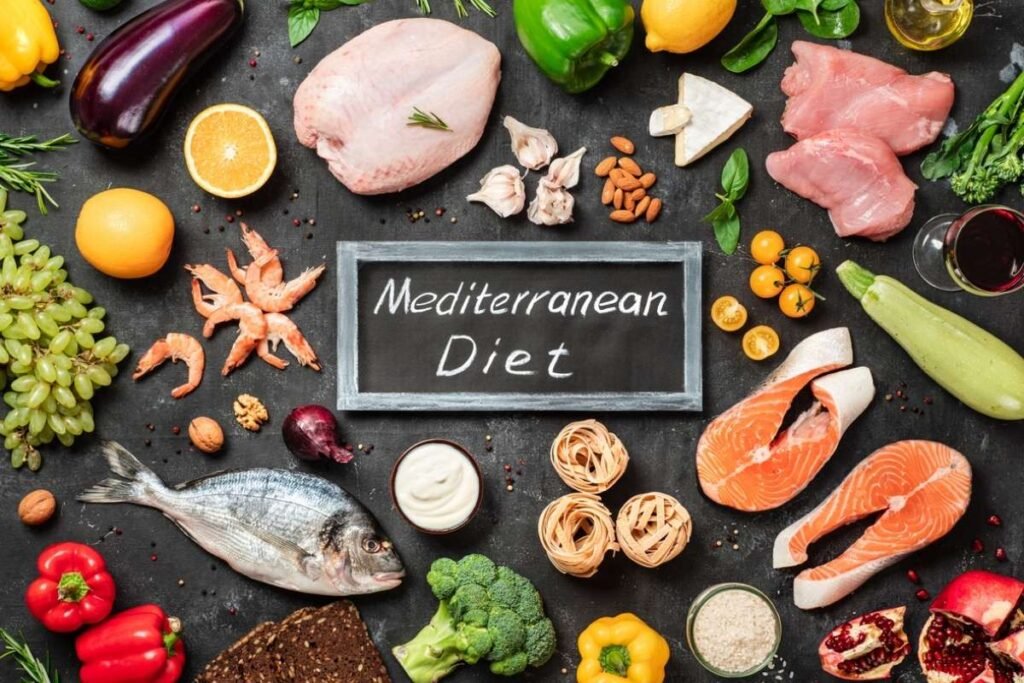
The Mediterranean Diet is a way of eating based on how people traditionally eat in places like Greece, Italy, and other countries along the Mediterranean Sea.
That sounds fancy, but it is not.
It is not a strict plan. There is no rulebook, no calorie math, and no list of foods you are banned from touching. It is more of a pattern. A way people eat day after day without overthinking it.
At its core, this way of eating focuses on real, everyday food. Lots of vegetables, fruits, whole grains, beans, nuts, and olive oil. Fish shows up often. Red meat shows up less. Processed food barely gets an invite.
The important part is this. You are not following a diet plan.
You are copying a lifestyle.
People in these regions do not count macros while eating lunch. They cook simple meals, use fresh ingredients, and sit down to eat. Food is not rushed, and it is not complicated.
That is what makes this approach work. It is not built on strict rules. It is built on habits you can actually keep.
What You Actually Eat (And What You Don’t)?
This is where things get easy.
You do not need a complicated chart or a strict plan for mediterranean diet. Just think in three simple buckets. What you eat often, what you eat sometimes, and what you keep for later.
Eat Often (This is your base)
This is what most of your meals should look like.
- Vegetables
- Fruits
- Whole grains
- Beans and lentils
- Nuts and seeds
- Olive oil
If your plate looks colorful and mostly plant-based, you are already doing it right.
Eat Sometimes (Add a little variety)
These foods still have a place, just not every single meal.
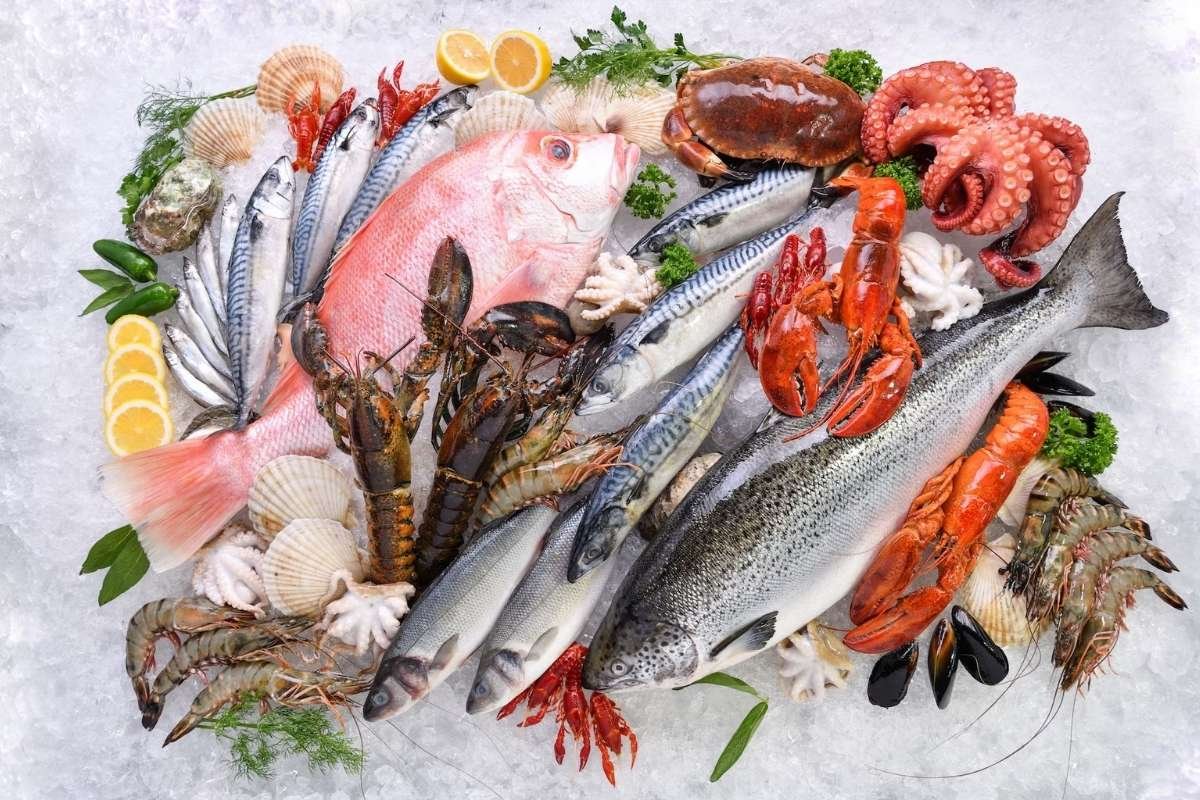
- Fish and seafood
- Eggs
- Dairy, like yogurt and cheese
Think of these as regular guests, just not the main character every day.
Eat Less (Not banned, just limited)
You do not have to avoid these forever. Just do not build your diet around them.
- Red meat
- Processed foods
- Added sugar
A good way to think about it is simple. If it comes in a box with a long ingredient list, it probably belongs here. That is it. No strict rules, no overthinking. Just a simple shift in what shows up on your plate more often.
READ MORE:
- The Best Mediterranean Diet Apps for a Healthier Lifestyle
- How a Diabetic Diet Meal Plan Can Help You Manage Your Sugar Levels?
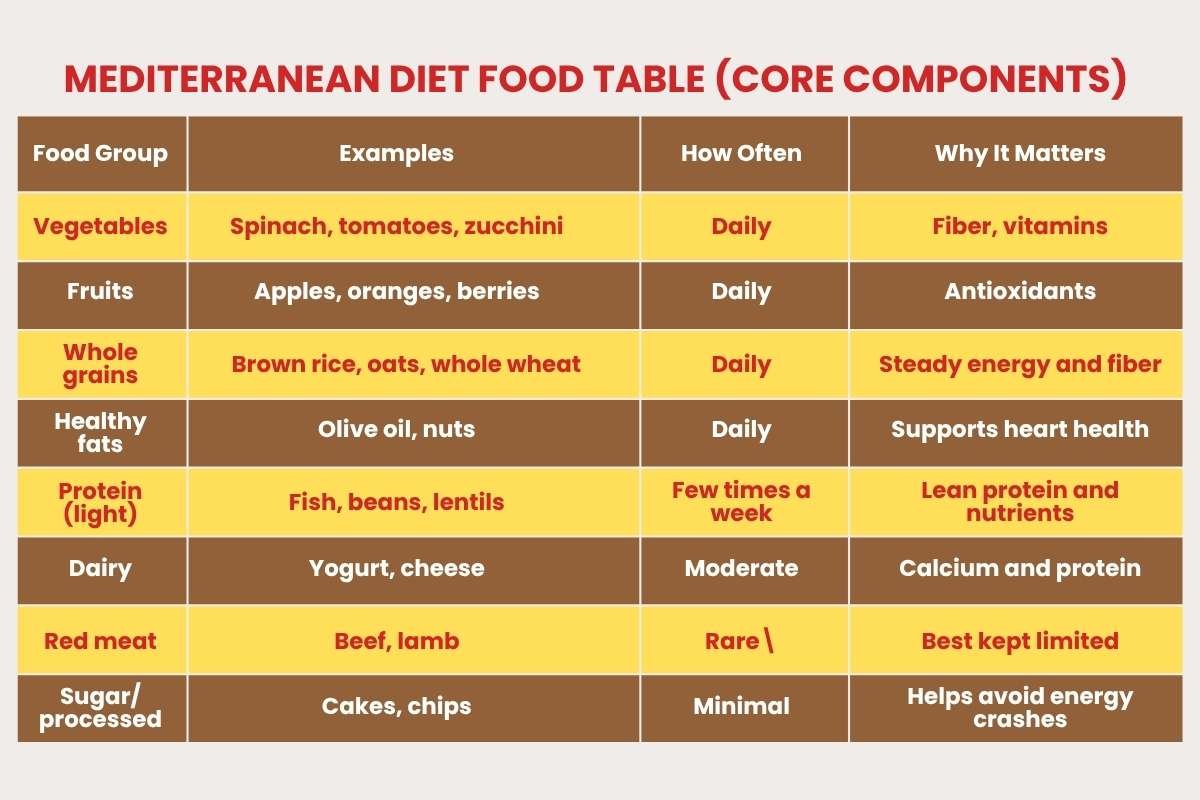
Mediterranean Diet Food Table (Core Components)
If you like things laid out clearly, this helps.
Think of this as a quick cheat sheet. What goes on your plate, how often, and why it actually matters.
| Food Group | Examples | How Often | Why It Matters |
| Vegetables | Spinach, tomatoes, zucchini | Daily | Fiber, vitamins |
| Fruits | Apples, oranges, berries | Daily | Antioxidants |
| Whole grains | Brown rice, oats, whole wheat | Daily | Steady energy and fiber |
| Healthy fats | Olive oil, nuts | Daily | Supports heart health |
| Protein (light) | Fish, beans, lentils | Few times a week | Lean protein and nutrients |
| Dairy | Yogurt, cheese | Moderate | Calcium and protein |
| Red meat | Beef, lamb | Rare | Best kept limited |
| Sugar/processed | Cakes, chips | Minimal | Helps avoid energy crashes |
You do not need to memorize this. If most of your meals come from the top half of this table, you are on the right track.
Why Everyone Talks About This Diet?
Some diets trend for a year and disappear. This one has been around for decades, and it is still going strong. That is usually a good sign.
It is not trendy. It is tested. The Mediterranean Diet has been ranked the best overall diet multiple years in a row by global health experts, based on nutrition, safety, and how easy it is to follow long-term.
And the results back it up. People who follow it closely have about a 24% lower risk of heart disease and around a 23% lower risk of early death compared to those who do not.
But here is the part that the numbers do not fully explain.
People actually enjoy it. In one study, over 80% of people said they were familiar with it and linked it to health and well-being, along with taste and lifestyle.
That is what makes it stick. It is simple, flexible, and does not feel like a short-term fix. It feels like normal eating, just done better.
Proven Health Benefits (Backed by Research)

This is where it stops sounding like a nice idea and starts looking like solid evidence.
- Heart Health
People who follow this way of eating have about a 24% lower risk of heart disease. Some clinical trials have even shown close to a 30% drop in major heart events like heart attacks and strokes.
- Diabetes Control
It helps improve insulin sensitivity and keeps blood sugar levels more stable. Studies show better control of key markers like glucose and inflammation.
- Brain Health
Research suggests this eating pattern is linked to slower cognitive decline and a lower risk of conditions like Alzheimer’s. It is not a guarantee, but the trend is consistent across studies.
- Longer Life
In long-term studies, higher adherence to mediterranean diet is linked to around a 23% lower risk of early death. That is not a small difference.
- Mental Health
People who follow it closely tend to report lower rates of depression and better overall well-being. The mix of nutrients seems to support both body and mind.
Why It Works (Simple Explanation)?
This works because it gives your body what it actually needs:
- Healthy fats from olive oil and nuts help reduce inflammation. That is a big deal because inflammation is linked to many long-term health issues.
- Fiber from vegetables, fruits, and whole grains slows digestion and keeps you full. This keeps your blood sugar steady and your energy from crashing halfway through the day.
- Antioxidants from plant foods like fruits, vegetables, nuts, and whole grains. They help protect your cells and keep things running smoothly in the background.
Put all of this together, and the pattern is pretty clear. You are not relying on one “superfood” or a strict rule. You are eating a mix of foods that support your body from different angles.
Think of it as feeding your body things it actually recognizes.
A Sample Day on the Mediterranean Diet
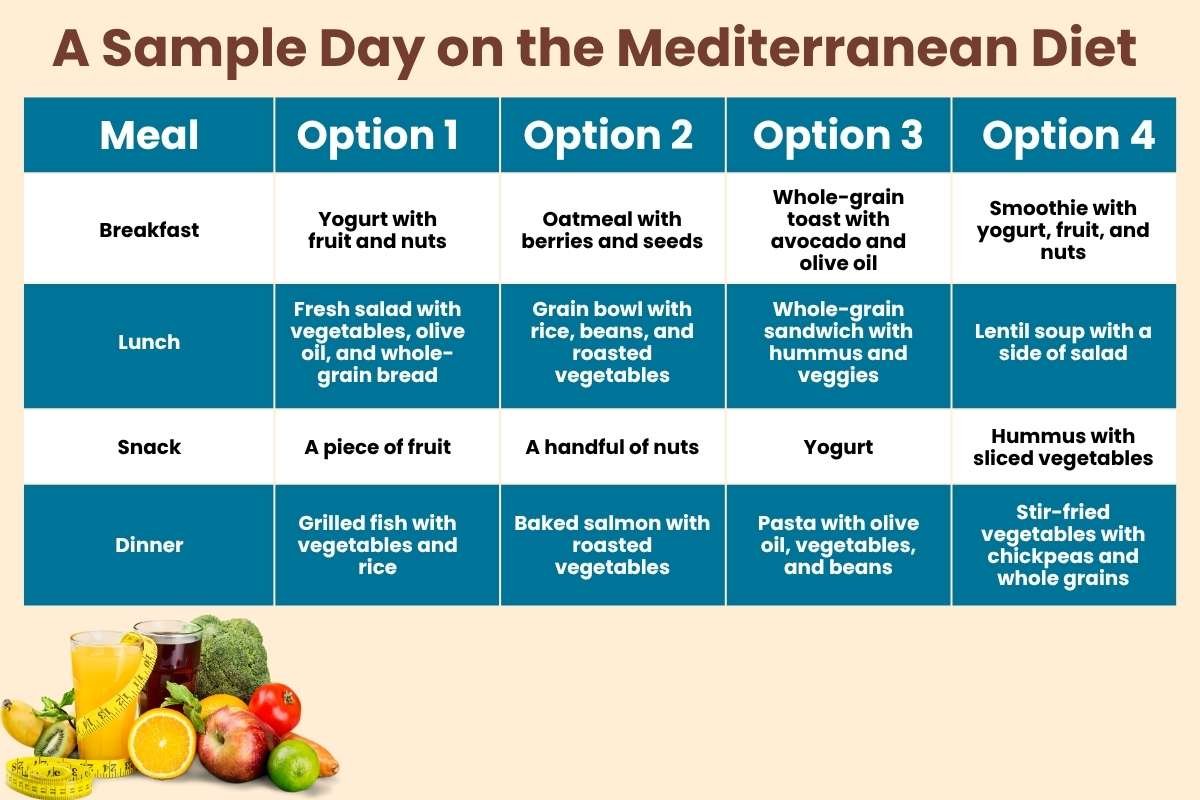
This is what a normal day can look like. No calorie counting, no complicated prep, just simple food that works.
| Meal | Option 1 | Option 2 | Option 3 | Option 4 |
| Breakfast | Yogurt with fruit and nuts | Oatmeal with berries and seeds | Whole-grain toast with avocado and olive oil | Smoothie with yogurt, fruit, and nuts |
| Lunch | Fresh salad with vegetables, olive oil, and whole-grain bread | Grain bowl with rice, beans, and roasted vegetables | Whole-grain sandwich with hummus and veggies | Lentil soup with a side of salad |
| Snack | A piece of fruit | A handful of nuts | Yogurt | Hummus with sliced vegetables |
| Dinner | Grilled fish with vegetables and rice | Baked salmon with roasted vegetables | Pasta with olive oil, vegetables, and beans | Stir-fried vegetables with chickpeas and whole grains |
Nothing fancy. Just balanced meals, you can mix and match based on what you feel like eating.
Before You Go All In on This
This way of eating is simple, but people still get it wrong sometimes.
One common mistake is thinking it is all about olive oil. Yes, it matters, but it is not the whole diet. If everything else stays the same, a drizzle of olive oil will not fix it.
Another easy trap is eating too much pasta or bread and calling it Mediterranean. These foods are part of it, but they are not meant to take over your plate.
Portion size also matters. Even healthy food adds up if you overdo it. And skipping vegetables kind of defeats the whole point.
This is not a pizza-and-wine diet.
Before you go all in, a quick note. This works for many people, but it is not universal.
If you have specific health conditions or higher needs for nutrients like iron or vitamin B12, you may need to adjust things a bit.
For example, eating less red meat means you have to be more mindful about where those nutrients come from. Healthy does not mean identical for everyone.
Mediterranean Diet vs Other Popular Diets
There is no shortage of diets out there. The real question is not what works for a week, but what you can actually stick to.
| Diet | Style | Food Flexibility | Long-Term Fit | Best For |
| Keto | Very low carb | Low | Hard to sustain | Fast weight loss |
| Paleo | Restrictive | Low | Moderate | Whole food focus |
| Intermittent Fasting | Time-based eating | Medium | Moderate | Simplicity |
| Vegan | Plant-based only | Medium | Moderate | Ethical eating |
| DASH | Low sodium | High | High | Blood pressure |
| Mediterranean Diet | Balanced | High | High | Overall health |
Some diets are strict by design. That can work short-term, but it often gets harder to maintain as time goes on.
The Mediterranean Diet stands out because it does not remove entire food groups or rely on strict timing. It gives you structure without making your life revolve around it.
And that is usually the difference between something you try and something you actually keep doing.
READ MORE:
- The Basics of a Balanced Diet Explained for Better Everyday Health (with a Sample Meal Plan)
- Is Your Diet Linked To Your Brain? Try These Brain Boosting Foods For A Healthy Brain
Final Thoughts
The Mediterranean Diet works because it does not try too hard. It is built on simple food, everyday habits, and a way of eating people have followed for generations without needing a name for it. No extremes, no rules you forget by next week, just a pattern that makes sense and holds up over time.
That is why people stick with it. Most diets feel like a short-term project. This one fits into real life. You are not forcing change; you are just shifting what shows up on your plate more often. More plants, better fats, fewer processed foods. It works without asking for too much from you.
And that is really the point. This diet is not about doing everything perfectly. It is about eating in a way you can repeat without thinking twice. If it feels normal, you will keep going.
FAQs
1. Is the Mediterranean Diet good for weight loss?
Yes, but it is not built for quick results. It focuses on high-fiber, whole foods that keep you full longer, which helps reduce overeating over time.
2. Can you eat eggs and dairy on the Diet?
Yes. Eggs, yogurt, and cheese are included, just in moderate amounts rather than every meal.
3. Do you have to give up meat completely?
No. Red meat is limited, not banned. It is eaten less often, while fish and plant-based proteins show up more regularly.
4. Is the diet expensive to follow?
It does not have to be. Staples like beans, grains, seasonal vegetables, and olive oil are simple and affordable in most places.
5. How long does it take to see results?
It depends, but most benefits build over time. You may notice better energy and digestion first, while bigger health changes happen with consistency.