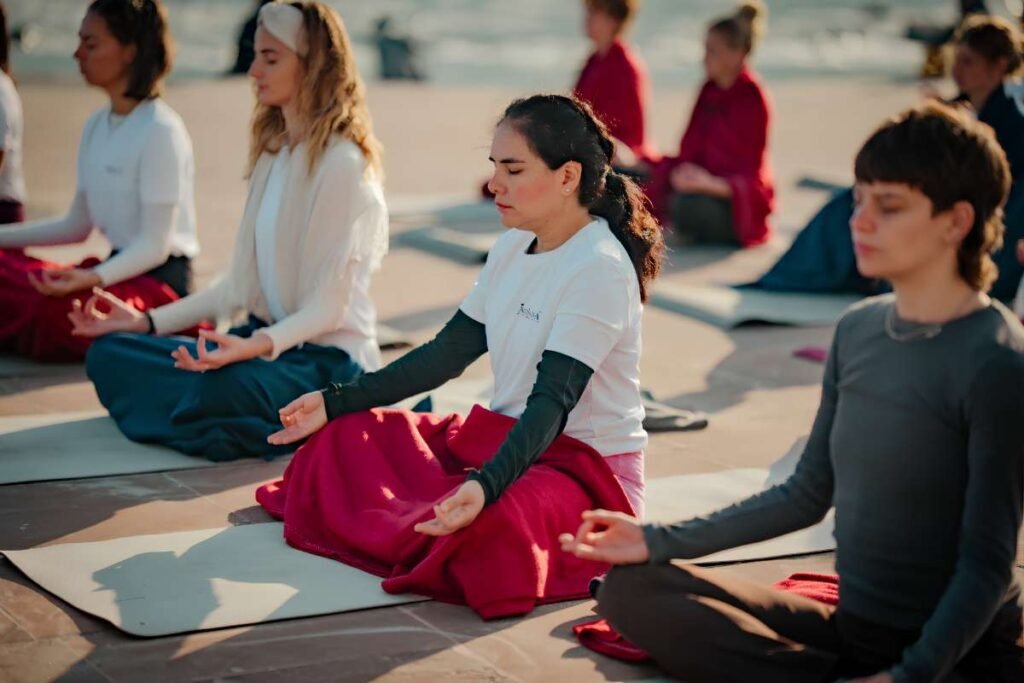
Yoga for stress works, and science backs it up. This article covers 7 beginner-friendly poses with step-by-step instructions. It also has two breathing techniques that calm your nervous system and a clear breakdown of how often to practice. You’ll also learn exactly why yoga reduces cortisol and what happens in your body when stress hits. Everything you need to start today, in one place.
Stress is everywhere. Work deadlines, poor sleep, and constant notifications. Your body absorbs it all. Over time, chronic stress raises cortisol, tightens muscles, and disrupts sleep. It also raises your risk of anxiety and heart disease.
Yoga for stress is one of the most well-researched non-medication tools available. A 2024 systematic review in Frontiers in Psychiatry found that yoga reduced stress in adults. This was a result of multiple randomized controlled trials. And you don’t need to be flexible or experienced to start.
This guide gives you specific poses with instructions and breathing techniques. Additionally, you’ll understand how much yoga you actually need and why yoga works for stress relief.
Yoga for stress relief: top poses with step-by-step instructions
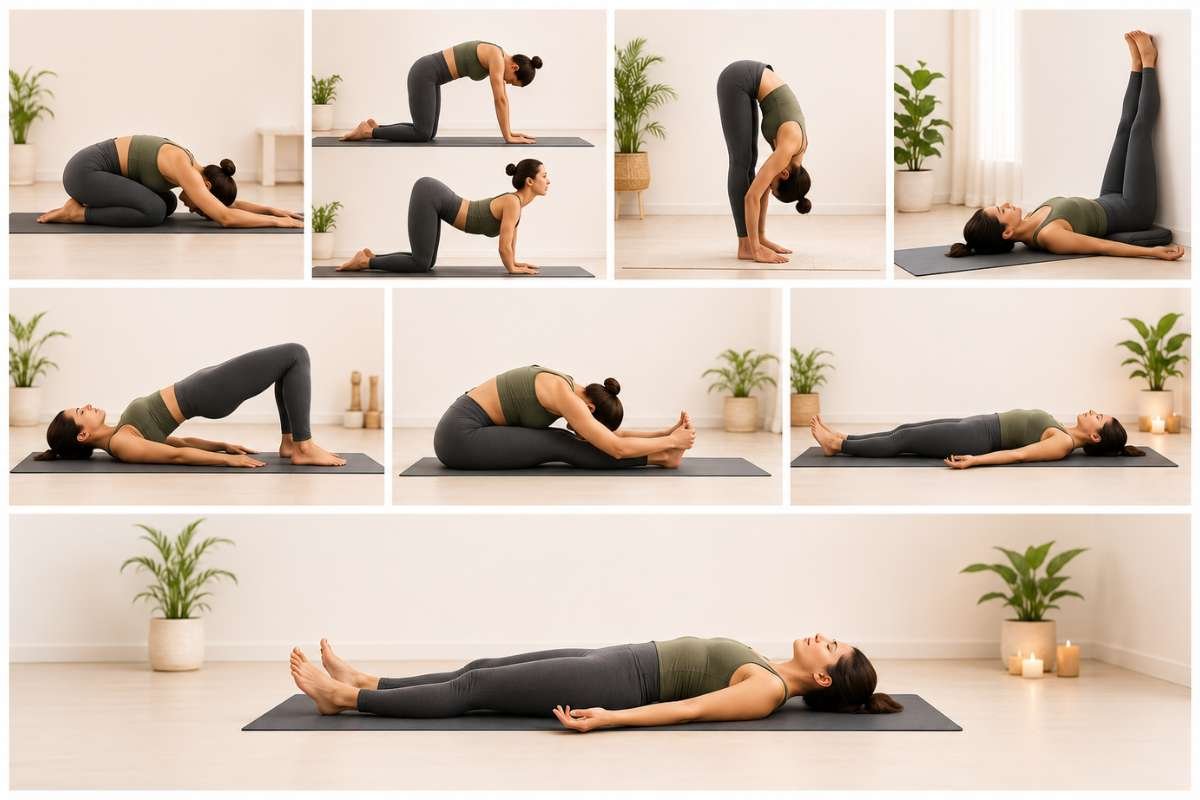
These poses are the core of any yoga practice. They focus on calming the nervous system, releasing physical tension, and slowing your breath. They work even if you’ve never done yoga before.
1. Child’s pose (balasana)
This is one of the first poses most yoga teachers turn to when students feel overwhelmed. It folds your body inward, which naturally signals safety to your nervous system. Holding it with slow breaths releases tension in your lower back and quiets mental noise fast.
How to Do It?
- Kneel on a mat, big toes touching, knees wide apart.
- Sit your hips back toward your heels.
- Reach both arms forward on the floor, forehead resting on the mat.
- Breathe slowly, 4 counts in, 4 counts out.
- Hold for 5–8 breaths (about 40–60 seconds).
Beginner Tip: Place a folded blanket between your hips and heels if they don’t touch.
“Child’s pose is my go-to reset. Focusing on expanding your breath into your back ribs releases mid and lower back tension within a few breaths.” — Victoria Smith, PT, DPT, Hinge Health
2. Cat-cow (marjaryasana-bitilasana)
Stress locks up your spine. This gentle flow between two shapes loosens that tension with almost no effort. It also syncs movement with breath, which pulls your attention away from anxious thoughts and into your body.
How to Do It?
- Start on hands and knees. Wrists under shoulders, knees under hips.
- Inhale: Drop belly toward the floor, lift chest and tailbone (Cow).
- Exhale: Round spine toward the ceiling, tuck chin to chest (Cat).
- Move slowly, letting breath lead movement.
- Repeat for 8–10 breath cycles.
Beginner Tip: If your wrists hurt, rest on fists or forearms instead.
3. Standing forward bend (uttanasana)
When stress hits, your shoulders rise, your neck tightens, and your upper body braces for impact. This pose undoes all of that. Letting your head hang heavy relieves tension in the neck and spine, while mild inversion calms your brain by increasing blood flow to it.
How to Do It?
- Stand with feet hip-width apart.
- Exhale and hinge forward from your hips (not your waist).
- Let your head hang heavy. Grab opposite elbows.
- Bend knees as much as needed (this isn’t about touching the floor).
- Hold for 5–6 breaths, then slowly roll up.
Beginner Tip: Keep a generous bend in the knees. The goal is a relaxed spine, not straight legs.
4. Legs-up-the-wall (viparita karani)
This pose looks simple, but it is one of the most effective forms of restorative yoga for stress. Lying flat while your legs rest vertically against a wall triggers your parasympathetic nervous system within minutes. This lowers heart rate and reduces blood pressure noticeably.
How to Do It?
- Sit sideways next to a wall, then swing your legs up as you lie back.
- Rest arms by your sides, palms facing up.
- Close your eyes. Breathe naturally.
- Hold for 5 to 15 minutes.
Beginner Tip: Place a folded blanket under your hips for more comfort.
5. Bridge pose (setu bandhasana)
Sitting for long hours shortens your hip flexors and compresses your spine. Both of these feed physical stress in your body. The bridge pose reverses that by opening your chest and hips at the same time. It also activates calming pressure points along the spine as you lift.
How to Do It?
- Lie on your back, knees bent, feet flat on the floor, hip width apart.
- Press your feet and arms into the floor as you lift your hips.
- Optionally, clasp hands under your back.
- Hold for 4 to 6 breaths, lower slowly, repeat 2 to 3 times.
Beginner Tip: Don’t squeeze your glutes hard, just lift and breathe.
READ MORE:
- Embarking on a Tranquil Journey: Yoga Poses for Beginners
- Mind-Body Workouts: Unlocking Stress-Relieving Benefits
6. Seated forward bend (paschimottanasana)
This pose is quieter than it looks. Folding forward over your legs creates a sense of withdrawal from the outside world, which yogic tradition calls pratyahara. It stretches the entire back of your body and has a direct calming effect on the nervous system.
How to Do It?
- Sit with legs straight in front of you.
- Inhale and lengthen your spine.
- Exhale and reach toward your feet: grab shins, ankles, or feet.
- Let your head relax downward.
- Hold for 5 to 8 breaths.
Beginner Tip: Loop a yoga strap or towel around the soles of your feet if you can’t reach.
7. Corpse pose (savasana)
Many people skip this one. That is a mistake. Savasana is where your body processes the entire yoga for stress practice. Your heart rate drops, your muscles fully release, and your brain shifts into a restful state that is hard to reach any other way.
How to Do It?
- Lie flat on your back, arms slightly away from your body, palms up.
- Let your feet fall open naturally.
- Close your eyes and breathe naturally.
- Starting from the top of your head, consciously relax each body part down to your toes.
- Hold for 5 to 10 minutes.
Beginner Tip: If your lower back is uncomfortable, place a rolled blanket under your knees.
Breathing techniques that calm stress fast

Breathwork is arguably the most underused part of yoga for stress. Your breath directly controls your autonomic nervous system. Slow it down, and your body follows. These two techniques are backed by strong evidence.
1. Diaphragmatic breathing (belly breathing)
Best for: Acute stress, anxiety spikes, before sleep.
How to Do It?
- Lie down or sit comfortably.
- Place one hand on your chest, one on your belly.
- Inhale slowly through your nose for 4 counts: belly rises, chest stays still.
- Exhale through your mouth for 6 counts.
- Practice for 5 minutes.
The extended exhale is key. It activates the vagus nerve, which signals the brain to lower cortisol.
2. Alternate nostril breathing (nadi shodhana)
Best for: Mental stress, scattered thinking, pre-presentation nerves.
How to Do It?
- Close the right nostril with the thumb. Inhale left nostril (4 counts).
- Close both nostrils. Hold (2 counts).
- Release the right nostril. Exhale slowly (6 counts).
- Inhale right nostril (4 counts). Hold (2 counts).
- Release the left nostril. Exhale (6 counts). That’s 1 round.
- Do 5 to 10 rounds.
This is backed by a 2026 study published by Taylor & Francis (Anxiety, Stress, & Coping). It proved that just one minute of structured breathwork instantly reduces anxiety and sharpens focus.
How much yoga do you need for stress relief?
This is one of the most common questions, and the research has a clear answer.
Does one session help?
Yes. Even a single session of yoga for stress can reduce stress reactivity. You don’t need weeks of practice to feel a difference.
How often should you practice?
| Goal | Recommended Frequency | Session Length |
| Immediate stress relief | 1 session as needed | 10–20 minutes |
| Reduce weekly anxiety | 2–3 times per week | 20–30 minutes |
| Long-term stress management | 4–5 times per week | 30–45 minutes |
| Burnout or chronic stress | Daily, lighter sessions | 15–20 minutes |
Beginners can start with 10 to 15 minutes, 3 days a week. Even that small commitment builds real change over a month.
When will you notice results?
Most people doing yoga notice reduced tension and calmer breathing after 1 or 2 sessions. Measurable changes in cortisol and heart rate variability (HRV) appear after 4 to 6 weeks of consistent practice.
How does yoga for stress work? (the science, simply explained)
You may already be aware that yoga works for stress. But do you know why? Here’s what happens in your body.
The stress response and your nervous system
When you’re stressed, your brain activates the HPA axis (hypothalamic pituitary adrenal axis). This triggers cortisol release and puts your body in “fight-or-flight” mode. Heart rate rises, muscles tighten, and digestion slows.
Chronic activation of this system damages your cardiovascular health, immune system, and memory.
How Yoga Reverses It?
Yoga targets the parasympathetic nervous system (your “rest-and-digest” mode) through three pathways:
- Slow breathing activates the vagus nerve. The vagus nerve runs from your brain to your gut. Slow, controlled exhalations directly stimulate it, telling your brain it’s safe to relax. This lowers heart rate and cortisol within minutes. This is a major reason why yoga for stress is so effective.
- Movement releases physical tension. Stress lives in the body as muscle tension, especially in the neck, shoulders, hips, and jaw. Yoga poses mechanically stretch and release these areas. This sends signals to the brain that the physical threat has passed.
- Mindful attention reduces rumination. Focusing on breath and movement during yoga interrupts the stress-thought loop. This reduces activity in the amygdala (fear center) and increases prefrontal cortex engagement (rational thinking). This is why yoga works where pure relaxation often doesn’t. It gives the anxious mind something to do.
Conclusion
Yoga is not just about flexibility or quiet studios. It’s a physiological tool that directly targets how your body responds to pressure. Start with even 10 minutes of the poses and breathing techniques above, and most people notice a shift within the first session.
Using yoga for stress consistently compounds benefits over time, but you don’t have to wait weeks to feel something. Pick one pose. Pair it with slow breathing. That’s enough to begin.
FAQs
1. Can yoga help with anxiety, too?
Yes. Yoga reduces both stress and anxiety symptoms, particularly when breathwork is included.
2. What type of yoga is best for stress?
Hatha yoga, Restorative yoga, and Yin yoga are most effective for stress relief.
3. Can yoga stop overthinking?
Yes. It interrupts the overthinking loop by shifting attention to breath and body movement. This quiets the amygdala and reduces the mental “noise”.
4. Is yoga for stress effective if I have no experience?
Absolutely. The poses above require no prior yoga experience. Even first-time practitioners experience benefits.
5. Can I do these poses at work or at my desk?
Cat-Cow, seated forward bends, and diaphragmatic breathing can all be done at a desk or in a chair with minimal modification.