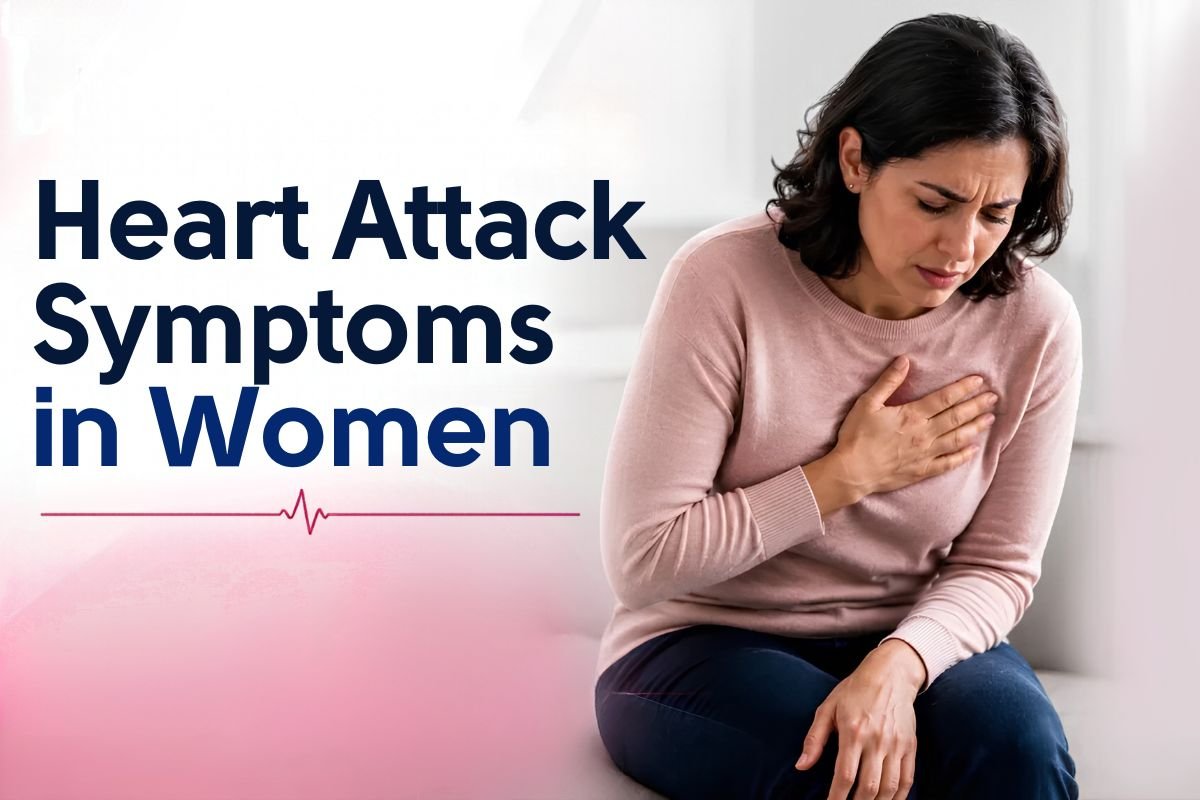
Think a heart attack always announces itself with sudden, crushing chest pain? That misconception can cost women precious time. In a review of 27 studies, 74% of women with acute coronary syndrome reported chest pain, so it remains the most common symptom, just as it is in men (79%). But women were also more than twice as likely to feel pain between the shoulder blades and 64% more likely to have nausea or vomiting.
This guide explains heart attack symptoms in women, from chest discomfort to unusual fatigue, back pain, and breathlessness, so you can recognize the warning signs early and know exactly when to call emergency services right away.
What Are the Heart Attack Symptoms in Women?
Heart attack symptoms in women can include chest discomfort, pain in the arms, back, neck, or jaw, shortness of breath, nausea, sweating, and unusual fatigue. Symptoms may occur together or separately, and not every woman has chest pain.
What Does a Heart Attack Feel Like Beyond Chest Pain?
| Symptom | How it may feel |
| Chest discomfort | Pressure, squeezing, tightness, or fullness |
| Back pain | Pressure or discomfort in the upper back |
| Jaw or neck pain | Unexplained aching or discomfort |
| Arm pain | Discomfort in one or both arms |
| Shortness of breath | Difficulty breathing, sometimes without chest pain |
| Nausea | Feeling sick, vomiting, or indigestion-like discomfort |
| Unusual fatigue | Unexpected exhaustion or weakness |
Why Can Heart Attack Symptoms in Women Be Overlooked?
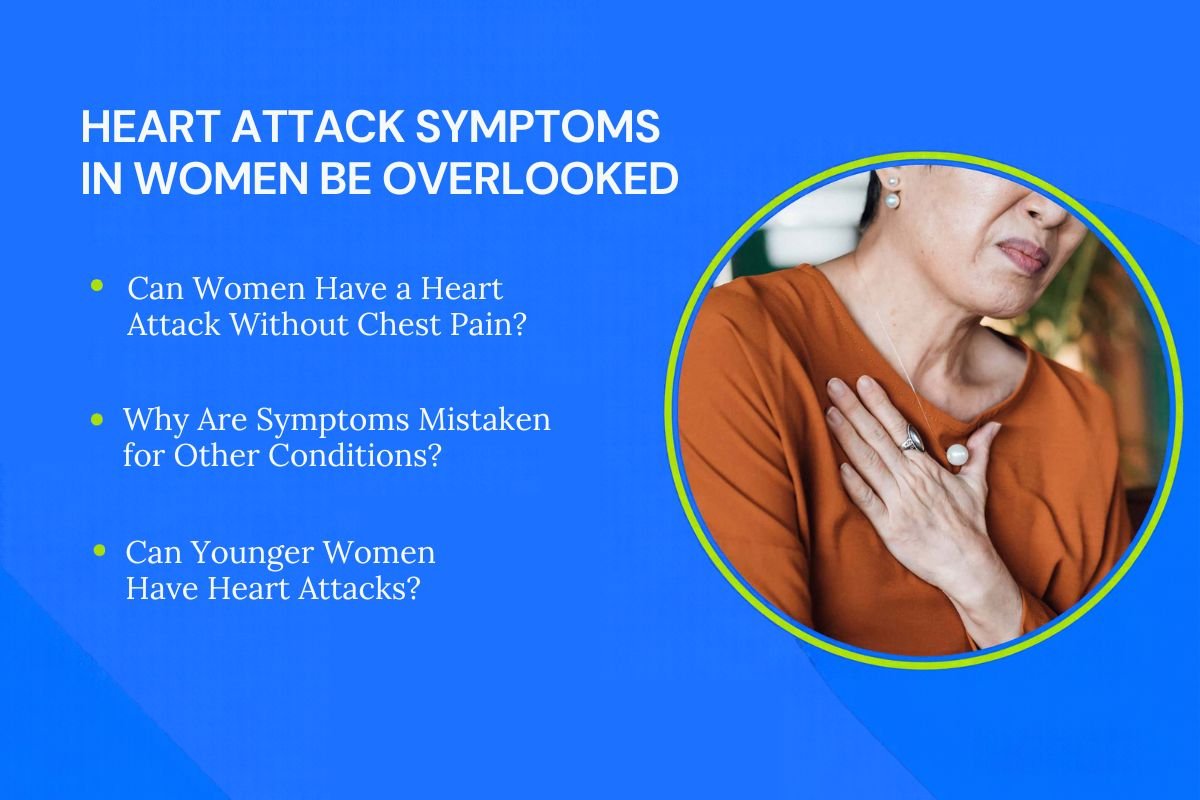
Heart attack symptoms in women can be overlooked because they are often mild, vague, or resemble common non-heart problems.
Can Women Have a Heart Attack Without Chest Pain?
Yes. Some women have a heart attack with little or no noticeable chest discomfort. Symptoms such as shortness of breath, fatigue, nausea, or back, jaw, shoulder, or arm pain may occur instead.
A silent heart attack causes either no symptoms or symptoms so mild that they are easy to dismiss. It differs from a heart attack with mild or unusual symptoms because the person may not realize anything is wrong until testing reveals heart damage. Silent heart attacks are more common in older adults and people with high blood sugar or diabetes.
Also Read: Not Just Chest Pain: 10 Warning Signs of Heart Disease to Recognize
Why Are Symptoms Mistaken for Other Conditions?
Women’s symptoms may be attributed to acid reflux or indigestion, muscle strain or back Women’s symptoms may be attributed to acid reflux or indigestion, muscle strain, anxiety or stress, or ordinary tiredness. They may be downplayed or delayed rather than treated as emergencies. Symptoms cannot be reliably identified as cardiac or noncardiac based on how they feel alone, which is why they should be checked rather than explained away.
Can Younger Women Have Heart Attacks?
Yes. Heart attacks are not limited to older or postmenopausal women. Smoking, diabetes or high blood sugar, high blood pressure, high cholesterol, obesity, and stress can raise risk. Pregnancy complications such as gestational diabetes, preeclampsia, or eclampsia are linked to later cardiovascular risk. Younger age does not rule out a heart attack.
What Should Women Do If They Experience Heart Attack Symptoms?
Act fast, even if you are not sure. Do not wait to see whether symptoms worsen, wait for chest pain to appear, or assume they are harmless because they fade and return.
When Should You Seek Emergency Medical Help?
Call 911 at the first sign of a possible heart attack. Symptoms can come and go, and emergency responders can begin treatment on the way to the hospital, which may save heart muscle and improve outcomes.
Emergency responders can begin treatment on the way to the hospital, which may save heart muscle and improve outcomes.
What to Do While Waiting for Emergency Help
- Call 911 immediately. Do not delay taking aspirin or wait for symptoms to improve.
- Stop activity and rest in a safe place while help is on the way.
- Do not drive yourself to the hospital; emergency medical services are safer and can start care en route.
- Tell responders when symptoms began and exactly what you felt, including whether symptoms returned.
- Follow dispatcher and emergency-professional instructions. Take aspirin only if the 911 operator or clinician advises it, after checking for allergy or other risks.
How Are Heart Attacks Diagnosed in Women?

In a U.S. emergency department, doctors assess heart attack symptoms in women promptly, even when they seem mild, using a few key tests.
Common Tests Used to Diagnose a Heart Attack
- Electrocardiogram (ECG/EKG): Usually one of the first tests. It records the heart’s electrical activity and can show signs of a heart attack or abnormal rhythm.
- Cardiac troponin test: A blood test that measures troponin, a protein released when heart muscle is damaged. It is commonly repeated to see whether levels are rising or falling.
- Additional tests: Depending on results, clinicians may use a chest X-ray, CT, echocardiogram, stress testing, or coronary angiography to assess heart function and blocked arteries.
Why Early Diagnosis Matters
Early assessment allows treatment to restore blood flow sooner, which can limit permanent heart-muscle damage. A single initial ECG or troponin result may not settle the diagnosis, particularly soon after symptoms begin, so repeat tests may be needed. Persistent or concerning symptoms deserve urgent medical evaluation even if the first test is not diagnostic.
Also Read: Warning Signs of a Heart Attack for Women: Symptoms You Should Never Ignore
Conclusion:
Heart attack symptoms in women don’t always look like the dramatic chest-clutching moment portrayed in movies. Chest discomfort is still the most common sign, but women’s symptoms can be subtler and easy to dismiss as stress, indigestion, or tiredness. When something feels wrong, speed matters more than certainty, so call 911 rather than waiting it out.
Trust your instincts, and share this guide with the women in your life so they can recognize the signs too.
FAQ:
1. What are the most overlooked heart attack symptoms in women?
Unusual fatigue, nausea, shortness of breath, jaw pain, and upper back discomfort can be overlooked warning signs of a heart attack.
2. Can women have a heart attack without chest pain?
Yes, some women experience a heart attack without noticeable chest pain, although chest discomfort remains the most common symptom.
3. Can back pain be an early sign of a heart attack in women?
Yes, unexplained discomfort or pressure in the upper back can accompany other heart attack symptoms in women.
4. How long before a heart attack do symptoms start in women?
Symptoms may appear suddenly or develop gradually over hours or days, but there is no predictable warning period.
5. What should a woman do if she suspects a heart attack?
She should call emergency services immediately, avoid driving herself, and follow the emergency responder’s instructions.