Have you noticed your periods acting differently, or your sleep and mood feeling off lately? Perimenopause symptoms are the physical, emotional, and reproductive changes that show up as your body moves toward menopause, and they can start years earlier than you might expect. Irregular periods are often the first clue, but sleep, mood, concentration, and sexual health can all be affected too. It isn’t just a late-40s thing, and hot flashes aren’t guaranteed. This guide helps you recognize possible signs, understand how they shift over time, and know when to seek medical evaluation.
This guide helps you recognize possible signs, understand how symptoms shift over time, and know when to seek medical evaluation.
What Are the First Signs of Perimenopause?
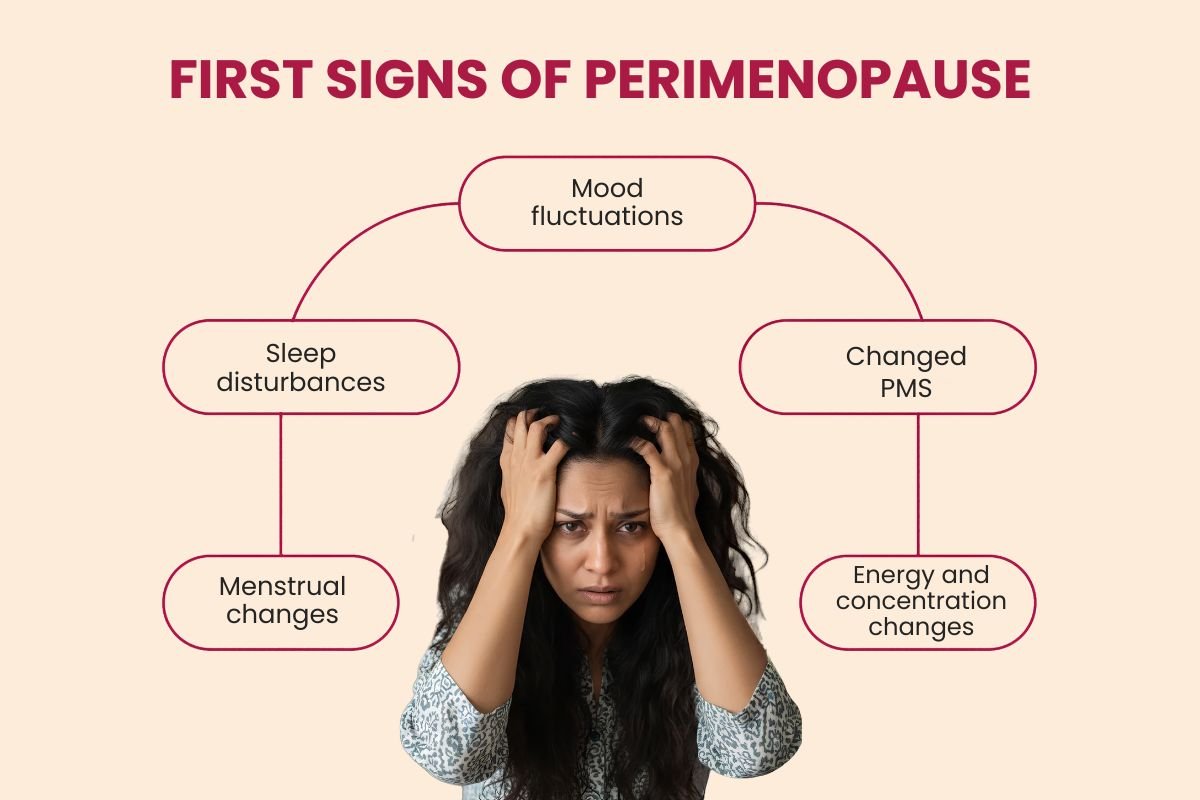
Early perimenopause often begins with subtle changes in your menstrual cycle, sleep, mood, and energy. Sometimes, periods become noticeably irregular. These signs can overlap with other health conditions, so they are clues to discuss with a clinician rather than a self-diagnosis checklist.
Common early signs
- Menstrual changes: Periods may become shorter or longer, lighter or heavier, arrive more or less often, or become unpredictable. This is often the first noticeable change.
- Sleep disturbances: You may have trouble falling asleep, wake frequently, or experience night sweats that disrupt rest.
- Mood fluctuations: Irritability, anxiety, low mood, or unexplained emotional shifts can occur, sometimes worsened by poor sleep.
- Changed PMS: Premenstrual symptoms such as bloating, breast tenderness, irritability, or fatigue may feel different or more intense as hormones fluctuate.
- Energy and concentration changes: Persistent tiredness, forgetfulness, and difficulty focusing, sometimes called “brain fog.” They are common and may be amplified by interrupted sleep.
How Do Menstrual Cycle Changes Indicate Perimenopause?
Menstrual cycle changes are often the clearest sign of perimenopause because fluctuating hormones disrupt ovulation, which makes cycle length and flow less predictable. Clinicians use the pattern of these changes to estimate where someone is in the menopausal transition.
- Early transition: Cycle length becomes more variable, with a persistent difference of seven or more days between consecutive cycles. For example, a 28-day cycle followed by a 36-day cycle.
- Late transition: Gaps of 60 days or more between periods become more common, and skipped periods are more frequent.
- Menopause: Menopause is confirmed after 12 consecutive months without a period.
Flow can also change. Periods may become lighter, heavier, or shorter, and spotting between periods can occur.
Also Read: A Complete Guide for Hormone Imbalance Symptoms
What Physical and Emotional Changes Can Perimenopause Cause?

Perimenopause can affect your body, sexual and urinary health, and mood, because estrogen influences many systems and its levels swing unpredictably. Perimenopause symptoms also vary widely in strength and duration, so what feels manageable for one person can be disruptive for another.
Physical changes
Hot flashes and night sweats can interrupt sleep and lead to daytime fatigue. Other physical effects include breast tenderness, headaches or migraines, joint and muscle aches, changes in weight or body composition, hair thinning, and dry or itchy skin.
Vaginal, urinary, and sexual changes
Lower estrogen can cause vaginal dryness, itching, or irritation. This may make intercourse uncomfortable or painful. Urinary urgency or frequency can also increase and may resemble a urinary tract infection. Sexual desire may rise, fall, or feel unpredictable.
Emotional and cognitive changes
Anxiety, irritability, mood swings, and low mood can affect relationships, work, and daily life. Many people also notice brain fog and memory lapses, which poor sleep can make worse.
A 2025 Nature study found a significant symptom burden even among people aged 30-45, including hot flashes, vaginal dryness, painful penetration, frequent urination, and irregular cycles associated with perimenopause status.
Irregular periods alone do not confirm perimenopause, since stress, thyroid problems, and PCOS can also disrupt your cycle. A clinician can help identify the cause.
How Do Perimenopause Symptoms Change Over Time?

Perimenopause does not follow a predictable sequence. Hormone levels rise and fall unevenly, so symptoms can appear, improve, return, or change in intensity from month to month.
How symptoms may evolve
Menstrual irregularity often becomes more noticeable as the transition progresses. Early on, periods may be slightly shorter or longer. Later, cycles become much less predictable, with longer gaps before periods stop. Symptoms like hot flashes, sleep disruption, low mood, or vaginal dryness can also come and go in strength.
Some bleeding changes are expected, but see a healthcare provider if you have:
- Very heavy bleeding that soaks a pad or tampon every hour
- Periods lasting longer than seven days
- Bleeding between periods or after sex
- Any bleeding after 12 months without a period
| Early transition | Later transition |
| Periods may become slightly shorter or longer. | Periods may become increasingly irregular. |
| Cycle-length variation becomes noticeable. | Longer gaps between periods may occur. |
| Symptoms may be subtle or intermittent. | Symptoms may become more disruptive for some women. |
Symptoms don’t follow a set order. Some people notice headaches or other changes before their periods become irregular, and the transition varies widely from person to person.
Also Read: The Best Uterine Fibroids Exercises to Try for Pain, Pressure, and Better Mobility
Conclusion:
Perimenopause symptoms vary widely, from irregular periods and disrupted sleep to mood shifts, brain fog, and changes in sexual and urinary health. Because hormone levels fluctuate unevenly, your experience may change from month to month, and no two people follow the same path. Recognizing early patterns helps you separate typical changes from signs that need attention, such as very heavy bleeding, bleeding after sex, or bleeding after 12 months without a period.
Tracking your cycle, sleep, and mood gives you clear details to share with a clinician. If something feels off, trust your instincts and book an appointment to talk through your symptoms.
FAQ:
1. Can perimenopause cause weight gain?
Yes, falling estrogen can shift fat toward the abdomen, and poor sleep and a slower metabolism can add to it.
2. How long do perimenopause symptoms last?
Perimenopause typically lasts about four years, though it can stretch beyond ten.
3. Can perimenopause cause brain fog?
Yes, fluctuating estrogen and disrupted sleep can cause forgetfulness and trouble focusing, which usually improves after the transition.
4. Can you get pregnant during perimenopause?
Yes, ovulation becomes irregular but does not stop, so use contraception until you have gone 12 months without a period.
5. How do you know if you are in perimenopause?
It is usually identified by your age, symptoms, and cycle changes, and a clinician can rule out other causes such as thyroid problems.