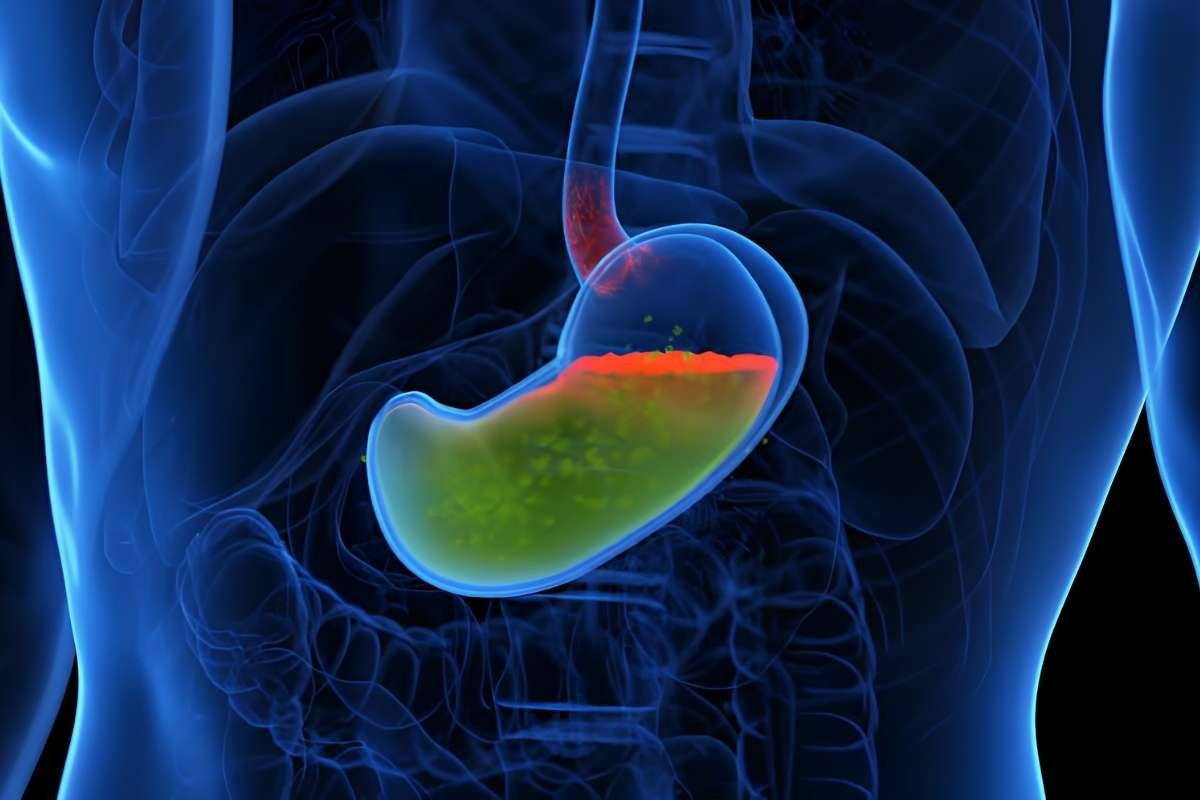
Do you struggle with diabetes? Managing the sugar levels in your blood is vital if you are a diabetic patient. Doing this can be extremely draining and limiting, especially when it comes to what you eat. The different foods that you eat can vastly affect your blood sugar levels. Hence, it is important to maintain a healthy and balanced diet.
For keeping your sugar level in check and maintaining a healthy lifestyle, you will need a diabetic diet meal plan. But how do you go about curating one? Why exactly do you need it in the first place?
Why Do You Need A Diabetic Diet Meal Plan?
Approximately 37.3 million people in the U.S. have diabetes. Diabetic patients are often required to have a strict diet. It regulates sugar levels in the blood, and also reduces the risk of heart disease and manages your weight. Eating a lot of carbohydrates and calories can increase your sugar levels. If this growth is not kept in check, then it can lead to various health complications. It can ultimately lead to hyperglycemia. It occurs when the body is unable to produce insulin or has a low amount of it.
A diabetic diet meal plan is based on eating healthy food at regular times. Eating at regular times helps the body in the production of insulin. Along with your diet, weight loss can also be beneficial if you are diabetic.
How To Create A Diabetic Diet Meal Plan?
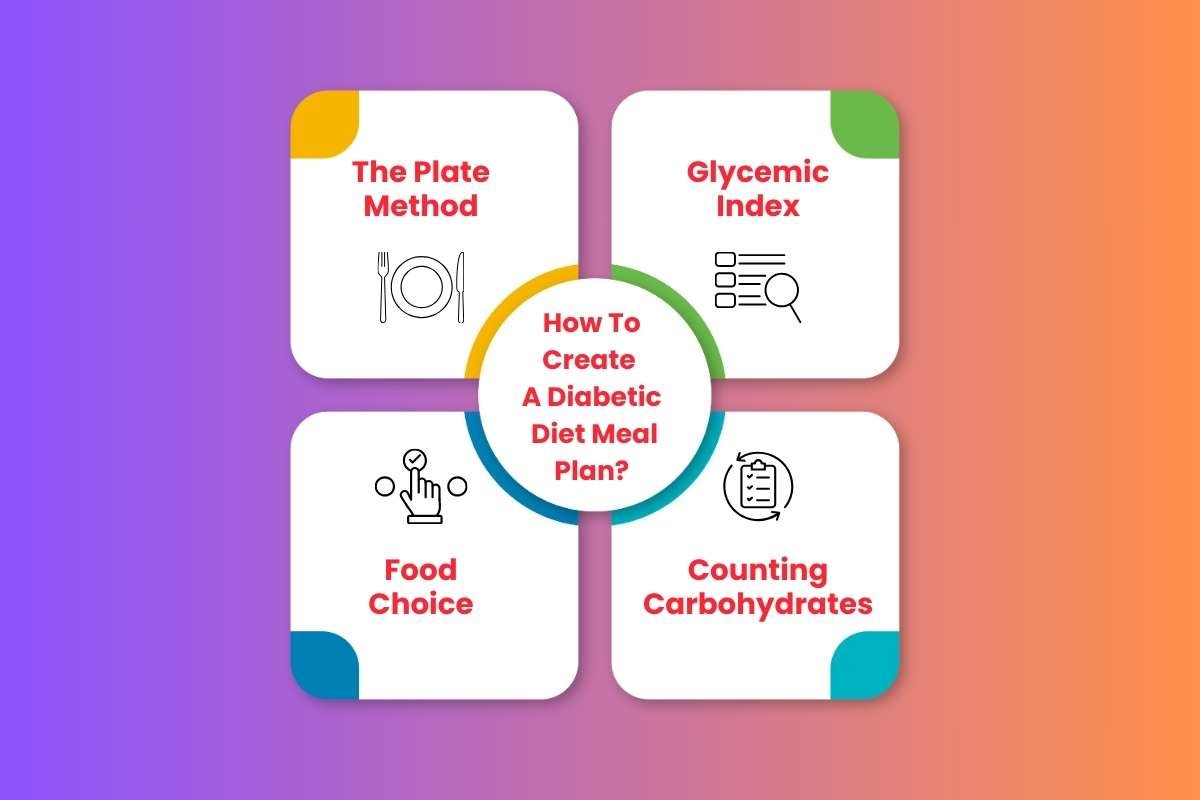
There are different methods in which you can go about building your diet plan. But there are some common ways it can be done:
1. The Plate Method:
The Plate Method is a method that focuses on eating many vegetables. It was introduced by the American Diabetes Association. It outlines how a healthy plate of food should look. According to the plate method, over half of your plate should contain non-starchy vegetables. A quarter of your plate should be lean protein, while the remaining quarter should be carbohydrates.
2. Glycemic Index:
The glycemic index ranks foods that are high in carbohydrates. The ranking is done based on how much effect each food has on the sugar levels in your blood.
3. Counting Carbohydrates:
Another way to craft a diabetic diet meal plan is by counting carbohydrates. As the name suggests, this method involves counting the amount of carbohydrates in every meal. You can learn how to measure food portions and serving sizes. One can do this with the help of a dietitian, or you can take the help of the Diabetes Self-Management Education and Support services (DSMES).
4. Food Choice:
In this method, you choose foods from different categories, like proteins, fats, and carbohydrates. One serving in a category is called a choice. A choice should have the same amount of fats and calories.
You can pick any of these methods to make a meal plan. But what foods should actually be included in one? There are certain meal patterns that you can use. What are they?
Here are the 6 Types of Diabetic Diet Meal Plan
and Meal Patterns
1. Low-Fat Meal Pattern:
This type of pattern is focused on foods that have low fat. Foods in this pattern can be vegetables, fruits, lean protein, and low-fat dairy products.
| Meal | Plan |
| Breakfast | Oatmeal with skim milk, banana, blueberries, boiled egg (egg white), green tea |
| Lunch | Grilled chicken breast, steamed broccoli and carrots, brown rice, green salad with lemon vinaigrette |
| Dinner | Baked salmon with lemon and herbs, steamed asparagus and zucchini, small baked sweet potato |
2. Very Low-Fat Meal Pattern:
This meal pattern helps in reducing blood pressure and managing weight. People whose diet comprises of very low-fat meal pattern consume food that has 30% lower calories than fat.
| Meal | Plan |
| Breakfast | Whole-grain toast with fruit jam, oatmeal with skim milk, sliced apple, black coffee, or herbal tea |
| Lunch | Steamed vegetables (broccoli, carrots, green beans), brown rice, grilled skinless chicken breast, side salad with lemon juice |
| Dinner | Baked cod with herbs, quinoa, roasted zucchini and bell peppers, mixed fruit bowl |
3. Low Carbohydrate Meal Pattern:
This meal pattern is great for people looking to lose weight and blood pressure. Non-starchy vegetables, eggs, and fish are low in carbohydrates.

| Meal | Plan |
| Breakfast | Scrambled eggs with spinach and mushrooms, half avocado, black coffee, or unsweetened tea |
| Lunch | Grilled salmon over leafy greens and cucumbers, olive oil dressing, walnuts or almonds |
| Dinner | Grilled chicken thighs, roasted cauliflower, sautéed green beans, and zucchini noodles with garlic and olive oil |
4. Very Low Carbohydrate Meal Pattern:
This diabetic diet meal plan is similar to the low-carbohydrate meal pattern but further limits the intake of carbohydrates. This type of meal usually contains more than half of the calories from fats.
| Meal | Plan |
| Breakfast | Scrambled eggs with spinach and cheese, half avocado, black coffee, or green tea |
| Lunch | Grilled salmon with leafy greens, cucumber, olive oil dressing, and almonds |
| Dinner | Grilled chicken thighs with roasted zucchini and mushrooms, sautéed spinach, and cauliflower rice |
5. Vegetarian and Vegan Meal Pattern:
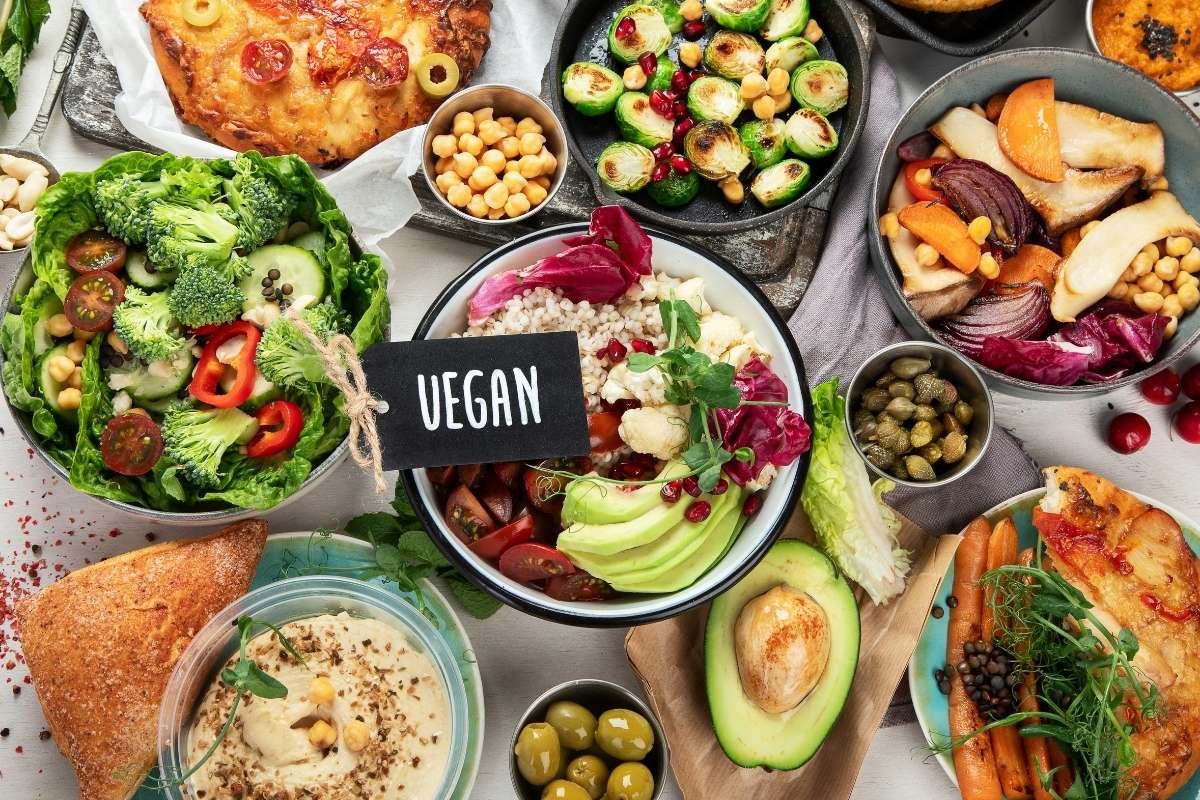
This type of meal plan can reduce the effects of diabetes. It can also control cholesterol levels and help achieve weight loss. Plant-based foods are the main highlight of this pattern. It also excludes any animal-based dairy product.
| Meal | Plan |
| Breakfast | Chia seed pudding with almond milk, strawberries, walnuts, green smoothie with spinach, kale, apple, flaxseeds |
| Lunch | Lentil and quinoa salad with cherry tomatoes and cucumbers, tahini dressing, steamed broccoli, and carrots |
| Dinner | Stir-fried tofu with bell peppers, mushrooms, snap peas, brown rice or quinoa, roasted chickpeas |
6. Mediterranean Style Meal Pattern:
A Mediterranean-style meal pattern helps in reducing cardiovascular risks. It includes seafood, olive oil, and plant-based foods. It can also include red meat and wine in low amounts.
| Meal | Plan |
| Breakfast | Greek yogurt with honey, walnuts, fresh berries, whole-grain toast with olive oil, and herbal tea |
| Lunch | Grilled sardines, tabbouleh (parsley, bulgur, tomato, lemon, olive oil), hummus with cucumber slices |
| Dinner | Grilled lamb or chicken kebabs, roasted eggplant, zucchini, peppers, whole-grain couscous, small glass of red wine (optional) |
These foods might have you heading towards your kitchen or the grocery store. But beware, some foods can have negative effects. There are some foods that you need to avoid while making a diabetic diet meal plan. What are they?
Types of Foods To Avoid in Your Diabetic Diet Meal Plan

1. Trans Fats:
If you have diabetes, then you need to avoid trans fats. They are usually found in processed snacks and baked goods.
2. Cholesterol:
Another type of food to put a limit on is foods with high cholesterol levels. These include egg yolk, organ meats, and dairy-based products.
3. Sodium:
Reduce the amount of sodium that you consume. Foods high in sodium can be frozen meals, canned goods, cheese, and pizzas.
Conclusion:
Managing health conditions like diabetes is vital. Not doing so can lead to serious health risks and issues. Having a diabetic diet meal plan can play a key role in reducing these challenges. And, as you can see, there are a variety of different meals to choose from. So, you are not stuck to any specific types of food. At the end of the day, eat everything in moderation.
FAQ
1. What are some ways apart from food to manage diabetes?
A. You can take insulin as recommended by your doctor. Exercise can also help manage diabetes.
2. What gluten-free food is best for diabetes?
A. Whole grains like buckwheat and quinoa are good gluten-free options to manage diabetes.
3. What is the most common type of diabetes?
A. The most common type of diabetes is type 2 diabetes.
Also Read :- Diabetic Diet: A Comprehensive Guide to Managing Diabetes through Nutrition