
Do you enjoy fitness challenges that push both strength and endurance? A Hyrox workout brings a mix of running and functional training that feels intense, fast, and exciting. This style of training is certain to keep you hooked. Every session blends familiar movements like lunges, rowing, carries, and sled pushes with steady runs, creating a race-like rhythm that tests your full body.
Hyrox is designed for all fitness levels, so whether you’re a beginner or a seasoned athlete, you can scale it and still get a powerful training effect. This approach helps you build stamina, improve strength, and train with purpose while keeping every workout fresh and motivating.
What Is a Hyrox Workout?
A Hyrox Work is the full race format used in every event. Athletes complete eight stations, and each station follows a 1 km run. This setup creates a mix of endurance, strength, and skill. A Hyrox Workout often mirrors the same pattern, which helps athletes train for race day. The structure stays the same across all events, so athletes can compare times worldwide.
What to Expect?
Hyrox challenges both the body and the mind. You run one kilometer, reach a station, finish it, and then run again. This rhythm continues until all eight stations are complete. The style forces steady pacing while under rising fatigue. It also builds confidence because the order never changes.
The 4 Divisions in a Hyrox Workout
Hyrox offers several divisions so athletes with different skill levels can compete. These divisions change weights and sometimes pacing expectations, but the layout stays the same. Each division helps athletes choose the best challenge for their current fitness.
Also Read : What Makes the Perfect Diet for Athletes?
Open Division: This division fits most everyday athletes. It uses moderate weights and a steady difficulty level. Many beginners start here because it balances challenge with safety. It also gives athletes enough room to learn proper pacing.
Pro Division: The Pro Division uses heavier weights at each station. It targets trained athletes who want a harder Hyrox Workout experience. Strong pacing skills and good strength levels help athletes complete this category. Many experienced racers choose this path as they chase faster global rankings.
Doubles Division: Doubles allows two athletes to race as a team. Both partners run every kilometer together. They split the work on each station based on strength or strategy. This division builds teamwork and helps new athletes enter the sport without facing the full load alone.
Relay Division: Relay teams have four athletes. Each person runs two kilometers and completes two stations before tagging the next teammate. The relay format brings a fast, intense style to the event. Many gyms and fitness groups enjoy this category because it feels social and competitive.
The 8 Workstations of a Hyrox Workout Explained
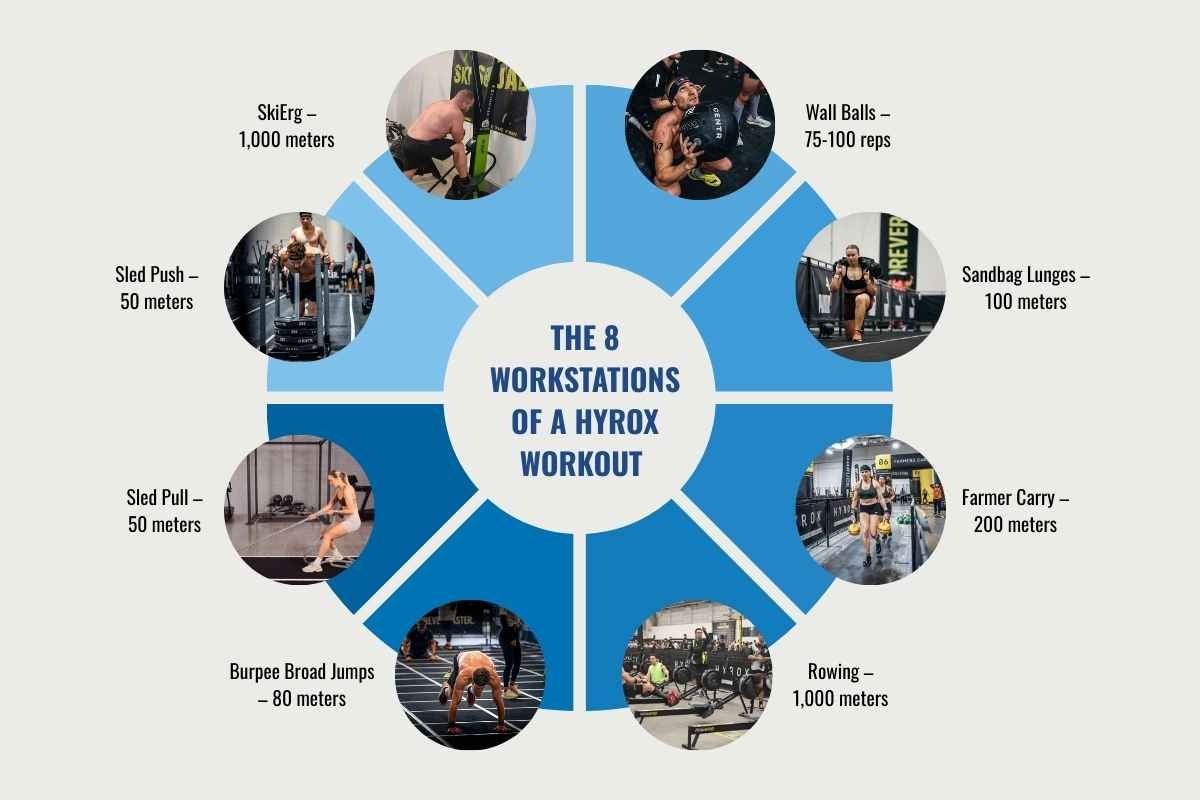
Each station forms one major part of the Hyrox. The format never changes, and that makes training easier. Below are all eight stations in order, followed by standard distances and rep counts.
1. SkiErg – 1,000 meters
- Men: No added weight; focus on power output
- Women: No added weight; focus on stroke control
The SkiErg begins the station lineup and sets the tone for the entire Hyrox Workout. Athletes pull downward using arms, lats, hips, and core. The movement feels smooth, but fatigue arrives fast if pacing is poor. This station trains upper-body endurance while teaching breathing control. It also prepares the body for the heavy stations that come later.
2. Sled Push – 50 meters
- Men: 150+ kg depending on division
- Women: 100+ kg depending on division
The Sled Push feels heavy from the first step. The station forces athletes to drive through the legs, keep a solid torso, and push with firm hip pressure. The hardest part is holding form while the legs burn from the repeated drive. Breathing becomes shallow, and athletes must keep a steady rhythm to move the sled. This station teaches raw leg strength, grit, and short-burst power.
3. Sled Pull – 50 meters
- Men: 100+ kg depending on division
- Women: 75+ kg depending on division
The Sled Pull shifts the workload to the back, grip, and posterior chain. Athletes pull the rope hand over hand while stepping backward. It demands strong hips, stable shoulders, and smooth footwork. The rope pull slows as fatigue grows, and athletes must reset their stance often. This station adds balance to the Hyrox Workout because it targets muscles that the push does not.
4. Burpee Broad Jumps – 80 meters
- Men: Bodyweight
- Women: Bodyweight
Burpee Broad Jumps look simple at first, but drain energy fast. Athletes drop into a burpee, rise, and then jump forward before repeating the pattern. The work taxes the entire body because it mixes strength, coordination, and explosive power. The movement also stresses breathing, since the jumps require focus even when tired. Many athletes plan their pace carefully here, because the station can break rhythm if rushed.
5. Rowing – 1,000 meters
- Men: No added weight
- Women: No added weight
Rowing feels smoother than burpees but still demands serious output. The rower pulls power from the legs first, then the hips, back, and arms. Athletes must stay calm and protect their pacing because the next stations become more strength-heavy. A steady rhythm helps conserve energy while still hitting a good speed. This station tests power endurance and mental control.
6. Farmer Carry – 200 meters
- Men: 24 kg per hand or heavier
- Women: 16 kg per hand or heavier
The Farmer Carry looks simple, but it challenges grip and core stability. Athletes pick up two weights and walk the full distance without dropping them. The hands start to burn first, followed by the forearms and shoulders. Good posture protects the lower back and helps maintain speed. This station trains real-world strength and mid-race stamina, which are key for any Hyrox Workout plan.
7. Sandbag Lunges – 100 meters
- Men: 20 kg sandbag
- Women: 10 kg sandbag
Sandbag Lunges test single-leg strength, balance, and control. Athletes must hold the sandbag on their shoulders while stepping forward into each lunge. The legs fatigue quickly because the work stays constant throughout every rep. Core strength helps keep the body upright and stable. This station prepares athletes for the final push toward the end of the course.
8. Wall Balls – 75-100 reps
- Men: 6 kg ball
- Women: 4 kg ball
Wall Balls finishes Hyrox and often decides the final race time. Each rep combines a full squat with a strong throw to a target above eye level. Timing matters because poor rhythm wastes energy. Athletes must stay calm and control their breathing to avoid early fatigue. This station blends endurance, technique, and mental toughness.
Always check the official Hyrox Rulebook for updated weights and standards, as event requirements can change by division and location. This structure helps both new and experienced racers track progress with confidence.
How to Train for the Hyrox Race?
Training for a Hyrox Workout requires balance between running, station skill, and strength. Runners with little strength often fade on sleds and carries. Strong lifters without cardio struggle through the eight kilometers of running. A good plan blends both systems to support even pacing. With the right mix, athletes improve times across all stations.
Build your base
A strong aerobic base supports the entire workout. Use long runs to build steady endurance. Mix in short runs at faster paces to train leg turnover. These runs help athletes manage fatigue during the later stations. Base work also teaches control and rhythm.
Add strength work

Strength training supports sleds, carries, and lunges. Use squats, deadlifts, lunges, and hip-drive movements two to three times a week. Good technique protects joints and boosts performance on heavier stations. Grip work helps with the Farmer Carry. Short strength circuits also build strong conditioning.
Practice Specific Stations
Gym sessions should include station practice. Train the SkiErg, rower, wall balls, and burpees regularly. Pair them with short runs to simulate the real race format. This pattern helps athletes understand how stations feel with elevated heart rates. The more familiar the movement, the smoother race day becomes.
Use brick workouts
Brick workouts mix running and station work without long rests. For example, run 800 meters and then complete a mini station. Repeat this cycle several times. These workouts teach pacing and station transitions. They also reveal weaknesses that need more focus.
Test yourself with mock races
-.jpg)
Mock Hyrox events help athletes measure progress. Set up four or five stations and add 1 km runs between them. The goal is not only speed but also control. This test shows how much energy you can hold through multiple transitions. Small improvements create faster race times over weeks of training.
What is the Current and Future Outlook of the Competition?
Hyrox began in 2017 and grew faster each year. Reports from industry groups show large jumps in participation numbers and global events. Early seasons had only a handful of races, but now major cities host multiple events with strong attendance. Media coverage also increased as more athletes shared Hyrox Workout training online. Sponsors joined after seeing the steady rise in community growth.
Plans include more events across Asia, Europe, and North America. Organizers continue to expand their broadcast coverage and partner with global fitness brands. Many expect the sport to reach hundreds of thousands of athletes within a few years. Training gyms offer classes that follow the Hyrox format, which makes the sport more accessible. The clear, fixed race structure also helps long-term growth because athletes know exactly what to expect.
Conclusion:
A Hyrox workout gives you a clear and balanced way to train your body for strength, speed, and endurance. It challenges you in stages, keeps your energy high, and helps you see real progress over time. As you build confidence with each session, you gain better conditioning and sharper focus.
The structure makes training feel purposeful and exciting, whether you’re preparing for a race or just improving your fitness. With consistency and the right mindset, Hyrox can become a strong part of your routine and a fun path toward better health.
1. Do I need experience to start Hyrox training?with mock races
No. Hyrox workouts work for beginners and advanced athletes because movements can be scaled based on strength and fitness levels.
2. What equipment is used in a Hyrox training?
Common equipment includes sleds, rowers, kettlebells, sandbags, wall balls, and running space. Many exercises can be modified if you don’t have access to everything.
3. Can a Hyrox workout help with weight loss?
Yes. The mix of running, strength training, and high-intensity intervals burns calories and boosts metabolism, which supports weight management.