It can be worrying to feel your heart race, skip a beat, or thump harder than usual. Many people jump to the worst conclusion, wondering if something serious is happening. That concern can often lead to questions like: Are they palpitations? Arrhythmia?. No matter the cause, it is important to know the difference between heart palpitations vs arrhythmia.
Heart palpitations are sensations that you feel. An arrhythmia is a change in the heart’s actual rhythm. Understanding how they differ helps you know when a moment of discomfort is harmless and when it needs proper medical attention.
In this article, you’ll learn how each one works, why they happen, and what signs you should never ignore.
Heart Palpitations vs Arrhythmia Symptoms:

Symptoms of Heart Palpitations
- Fluttering feeling in the chest
- Fast heartbeat
- Skipped beats
- Flip or flop sensation
- Mild chest discomfort
- Short bursts of strong beats
Symptoms of Arrhythmia
- Irregular heartbeat
- Fast or slow heart rate
- Dizziness
- Shortness of breath
- Lightheadedness
- Chest pressure
- Fatigue during simple tasks
Heart palpitations feel like your heart is racing or jumping. They often last for a few seconds. Some people feel a soft thud. Others notice a quick run of strong beats. You may sense this while resting or after mild activity. Many cases of palpitations do not signal danger. Still, you should watch for chest pain, breathlessness, or fainting. These signs may point to a deeper concern linked to heart palpitations and arrhythmia.
Arrhythmia happens when the heart does not beat in a steady pattern. The rhythm may speed up or slow down. Some people feel dizzy when this occurs. Others sense a drop in energy because the heart does not pump well. Shortness of breath is common in more serious forms. You should look out for fainting, pressure in the chest, or sudden weakness. These symptoms may require care right away. When comparing heart palpitations vs arrhythmia symptoms, the pattern and intensity help show the difference.
Heart Palpitations vs Arrhythmia: Causes
| Heart Palpitations: Common Causes | Arrhythmia: Common Causes |
| Stress | Heart disease |
| Caffeine | High blood pressure |
| Nicotine | Thyroid disorders |
| Alcohol | Electrolyte imbalance |
| Intense exercise | Medication reactions |
| Lack of sleep | Structural heart issues |
| Low blood sugar | Sleep apnea |
Heart palpitations happen when something triggers the body’s natural rhythm. Caffeine can push the heart to beat faster. Stress can add tension that sparks quick flips in the heartbeat. Strong exercise can lead to a short spell of fast beats. Dehydration and low blood sugar may also create rhythm changes. These triggers often fade once the body settles. Still, repeated episodes may point to a concern tied to heart palpitations and arrhythmia, so it helps to track your habits.
Arrhythmia has deeper causes. Structural problems in the heart can weaken the system that controls the rhythm. High blood pressure may thicken the heart muscle. This makes it harder for the heart to keep a steady beat. Thyroid problems can speed up or slow down the heart rate. Low levels of potassium or magnesium can interrupt electrical signals. Some medications can also disrupt rhythm. When looking at heart palpitations vs arrhythmia causes, arrhythmia is more likely to come from long-term health issues rather than short-term triggers.
Heart Palpitations vs Arrhythmia: Risks
| Risks Linked to Heart Palpitations | Risks Linked to Arrhythmia |
| Temporary discomfort | Reduced blood flow |
| Anxiety during episodes | Stroke risk in some types |
| Sleep disturbance | Heart failure risk in long-term cases |
| Rare link to deeper rhythm issues | Repeated dizziness or fainting |
| Signs of dehydration or stress | Worsening symptoms without care |
Heart palpitations usually carry a low health risk. They may feel sudden or sharp but often fade quickly. Some people feel anxious after an episode. Others struggle with disrupted sleep if palpitations happen late at night. These episodes may reveal dehydration or rising stress levels. Although palpitations rarely cause long-term harm, frequent episodes should be checked. They may uncover patterns linked to heart palpitations and arrhythmia that need attention. But a study published by the National Library of Medicine showed that palpitations increased the risk of atrial fibrillation.
Arrhythmia carries a higher risk because it affects the heart’s ability to pump blood. Reduced blood flow can cause weakness, dizziness, or fainting. Some types raise the risk of stroke when blood collects inside the heart chamber during irregular beats. Long-term arrhythmia can weaken the heart muscle. The heart may struggle to move enough blood through the body. These symptoms may grow more serious without treatment. This is why heart palpitations vs arrhythmia risks differ so much.
Heart Palpitation vs Arrhythmia: Treatments
Treatments for Both Heart Palpitations and Arrhythmia
- Lifestyle changes
- Medication
- Avoiding triggers
- Medical monitoring
- Stress control techniques
- Treatment of underlying conditions
Treatment can include:
1. Lifestyle Changes
Lifestyle changes help manage both conditions. Reducing caffeine helps many people feel calmer. Getting enough sleep keeps the heart steady. Drinking enough water supports a normal rhythm. Many people also feel better when they avoid nicotine and limit alcohol. Slow breathing can also relax the body and reduce episodes.
Key Takeaways:
- Cut caffeine, alcohol, and nicotine.
- Sleep well and stay hydrated.
- Use slow breathing to reduce episodes.
2. Medications
Medications help steady the heartbeat in more complex cases. Some drugs lower the heart rate, while others control electrical activity. These medicines work best when taken on a schedule. Report side effects quickly because early action helps. Medication may not cure every arrhythmia, yet it often reduces symptoms.
Key Takeaways:
- Follow a set medication schedule.
- Some drugs slow the heart, others control signals.
- Report side effects early.
3. Avoiding Triggers
Avoiding triggers is a major part of care. Energy drinks can cause strong reactions. Spicy food or heavy meals may also start episodes. Tracking patterns in a small journal helps find triggers. This makes treatment easier and guides daily choices.
Key Takeaways:
- Notice which foods or habits cause episodes.
- Track patterns in a journal.
- Avoid energy drinks and very heavy meals.
4. Medical Monitoring
Medical monitoring helps doctors understand your rhythm. An ECG checks your heartbeat. Some people wear a small device for a day or two. This shows how the heart behaves during daily activity. The results help doctors find hidden rhythm problems.
Key Takeaways:
- ECG helps check rhythm issues.
- Wearable monitors track daily heart activity.
- Monitoring finds hidden problems.
5. Treating Underlying Conditions
Treating root problems also improves rhythm. Thyroid issues may need hormone treatment. Blood pressure may need diet changes or medicine. People with sleep apnea may use a night device that helps them breathe. Fixing these problems often reduces episodes.
Key Takeaways:
- Fixing thyroid or blood pressure issues improves rhythm.
- Sleep apnea treatment reduces episodes.
- Addressing root causes leads to fewer palpitations and arrhythmias.
Heart Palpitations vs Arrhythmia: Differences
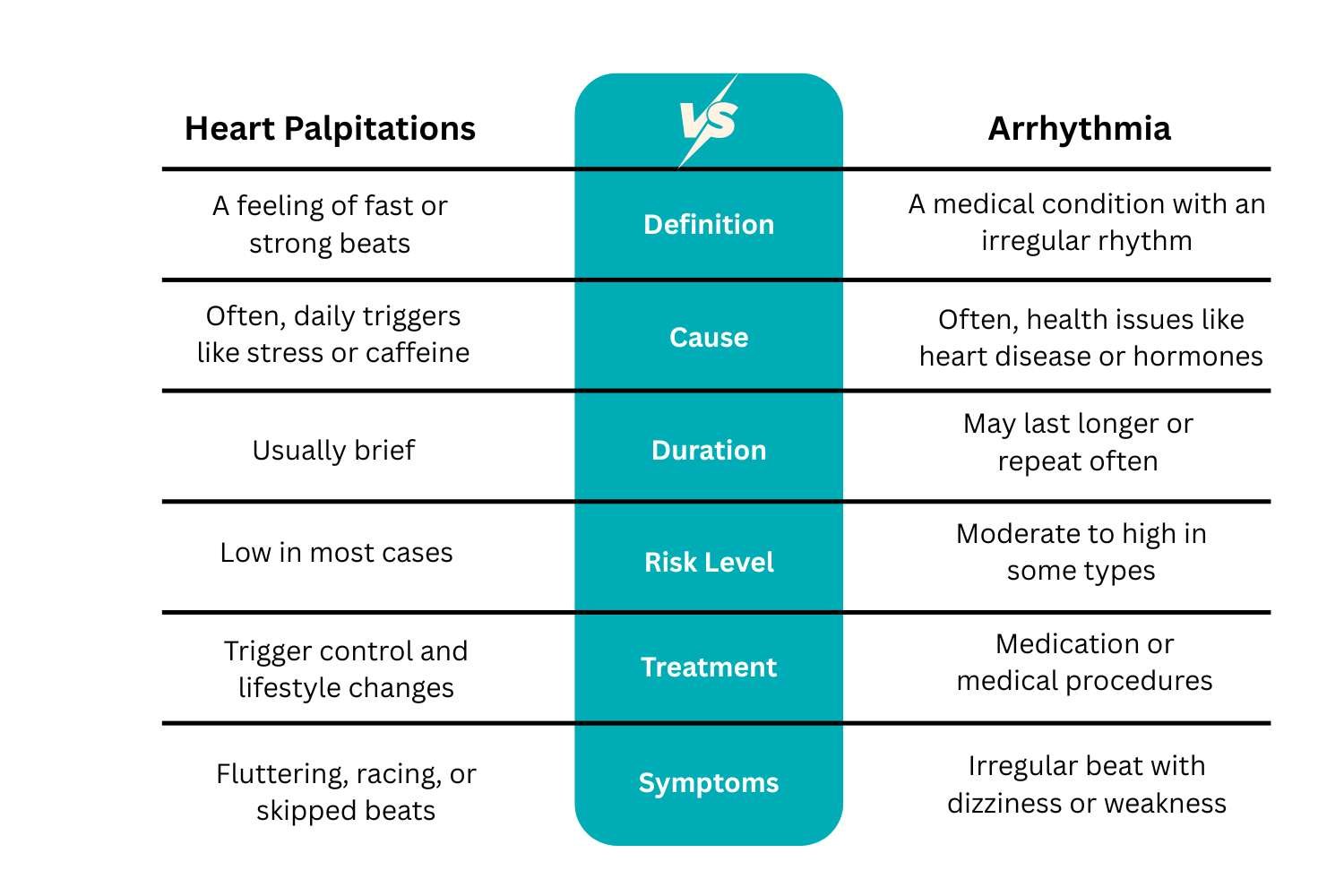
Heart palpitations describe a feeling. Arrhythmia describes a medical rhythm problem. This is the simplest way to see the difference. Palpitations may feel strange, but they do not always mean the heart is unhealthy. Arrhythmia means the electrical signals in the heart are not working in a steady pattern. Some arrhythmias are mild. Others can be serious. This is why doctors study rhythm patterns carefully.
The cause is another key difference. Palpitations often come from triggers like caffeine, stress, or intense exercise. They appear quickly and fade the same way. Arrhythmia can come from heart disease or hormone issues. Some people develop arrhythmia as they age. Others are born with it. When comparing heart palpitations vs arrhythmia, the cause helps guide treatment.
The symptoms differ in intensity. Palpitations feel like quick or strong beats. They may scare you, but many are harmless. Arrhythmia can cause weakness, sudden dizziness, or extreme fatigue. These symptoms can disrupt daily tasks. They may also grow worse over time if untreated.
The risks are not the same. Most palpitations do not harm the heart. They can still feel uncomfortable, but they rarely point to danger. Arrhythmia may reduce blood flow. Some forms increase the risk of stroke. Certain types can lead to heart failure over time. This does not happen in every case, yet it shows why arrhythmia needs close monitoring.
The treatment approach also differs. Palpitations often improve with simple lifestyle changes. A person may learn what triggers their episodes and adjust their routine. Arrhythmia often needs long-term care. Some cases require medication that controls electrical activity. Other cases may need procedures that help reset the rhythm. When people search for heart palpitations and arrhythmia information, they often want to understand these treatment differences clearly.
Conclusion:
Understanding the difference between heart palpitations vs arrhythmia can give you peace of mind and help you respond in a smarter way. Palpitations often feel scary, but many are harmless and linked to stress, caffeine, or lack of sleep. Arrhythmias, on the other hand, involve actual rhythm changes that may need medical attention. Knowing how each one feels and what signs to watch for helps you decide when simple lifestyle changes are enough and when it’s time to see a doctor. With the right awareness, you can stay informed, stay calm, and take better care of your heart.
FAQs
1. Are heart palpitations always a sign of arrhythmia?
No. Many palpitations happen due to stress, caffeine, dehydration, or anxiety. They only point to arrhythmia when the rhythm itself becomes abnormal.
2. How do I know if my symptoms are from an arrhythmia?
If you feel dizziness, fainting, chest pain, or shortness of breath along with irregular beats, it may be an arrhythmia. A doctor can confirm this with an ECG.
3. Can exercise cause palpitations or arrhythmias?
Intense exercise can trigger palpitations, especially if you’re dehydrated or tired. Arrhythmias during exercise are less common but need medical review.