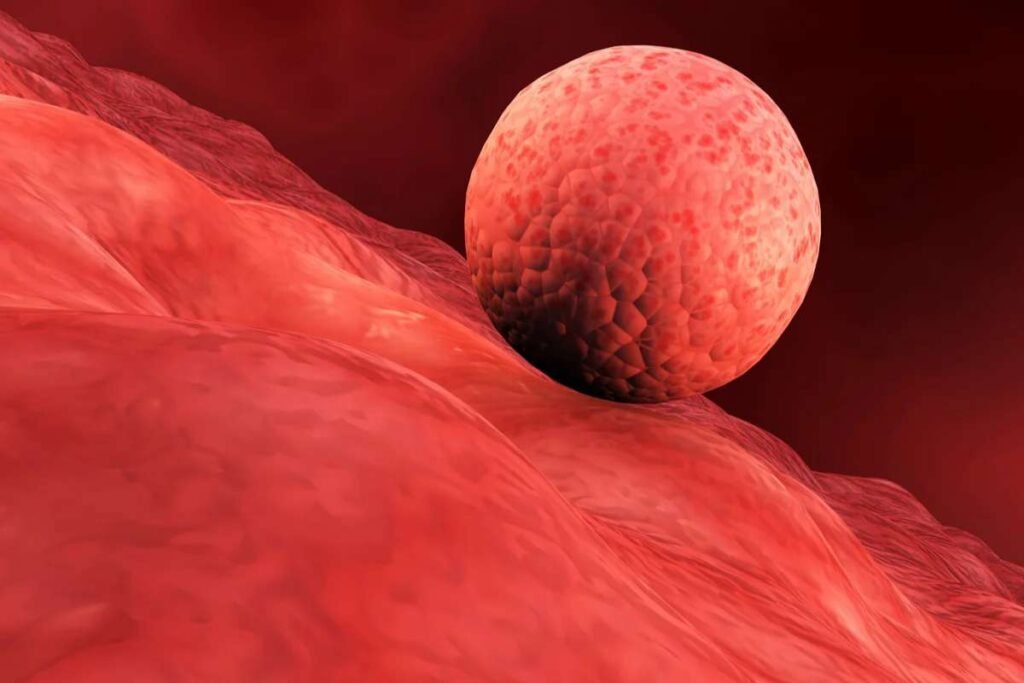
Scientists have developed a laboratory model of the human womb lining that allows early-stage embryos to implant and begin key steps of early pregnancy. The breakthrough offers new insight into one of the least understood phases of human development and may help explain why many pregnancies fail before they are detected.
In the study, researchers successfully recreated the inner lining of the uterus using human cells donated through biopsy samples. When early-stage embryos from IVF treatments were placed onto this engineered tissue, they attached and embedded in a way that closely mirrors what happens inside the human body. After implantation, the embryos began producing hormones and chemical signals associated with early pregnancy.
This work provides scientists with a rare window into implantation, a process that normally occurs deep inside the body and remains difficult to observe. Implantation usually happens about a week after fertilisation and is essential for a pregnancy to continue. Despite its importance, much of what is known about it comes from limited historical data.
Recreating the womb lining in the lab
To build the replica tissue, scientists isolated two main cell types from donated uterine samples. Stromal cells, which give structure and support, were embedded in a soft biodegradable gel. Epithelial cells, which form the surface of the human womb lining, were layered on top. Together, these cells formed a functional tissue that responds to embryos in a realistic way.
When tested with donated IVF embryos, the tissue supported implantation and early growth for up to 14 days after fertilisation. This is the current legal limit for human embryo research. During this time, embryos developed specialised cells and began processes linked to early placenta formation.
One of the most significant findings was the production of human chorionic gonadotropin, or hCG. This hormone is the signal detected by standard pregnancy tests and confirms that the embryo and human womb lining are communicating as expected.
Understanding early pregnancy signals
Using advanced molecular analysis, researchers examined the chemical messages exchanged between the embryo and the human womb lining at the point of implantation. These signals guide how the placenta forms and how the pregnancy becomes established. Disruptions at this stage are thought to be a major reason why implantation often fails.
Scientists estimate that around half of all embryos do not successfully implant, even when they appear healthy. Until now, there has been little understanding of why this happens. The new model allows researchers to test how changes in signals affect development and to identify where problems may begin.
In one experiment, blocking a specific communication pathway led to serious defects in placental tissue. This demonstrated how sensitive early pregnancy is to precise biological signals and how small disruptions can have major effects.
Implications for fertility and pregnancy care
The ability to study implantation in detail could have important implications for reproductive health. Researchers hope the model will lead to better understanding of miscarriage, implantation failure, and pregnancy complications linked to placental development.
Similar work by other research teams has already begun identifying compounds that may improve implantation rates in patients who experience repeated IVF failure. While these findings are still at an early stage, they point to future possibilities for improving fertility treatments.
Experts in reproductive medicine say implantation has remained a major challenge despite decades of progress in assisted reproduction. By revealing what happens during the earliest days of pregnancy, the new approach offers a powerful tool for advancing knowledge of human development and improving outcomes for patients.
The research marks a significant step forward in understanding how life begins at the cellular level, with potential benefits for fertility care, pregnancy health, and early diagnosis of complications.