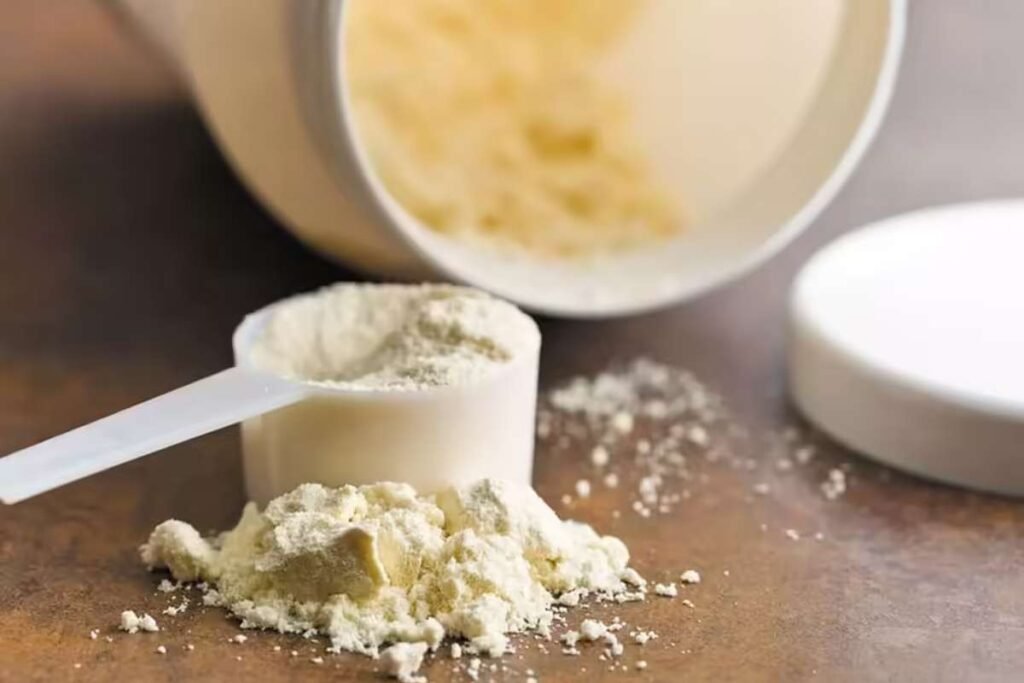
The Consumer Report on Protein Powder revealed that more than two-thirds of tested products contained elevated lead levels, with some exceeding daily safety limits. Experts advise consumers to prioritize protein-rich foods and fiber over supplements to support healthier nutrition.
Investigation Finds Elevated Lead in Popular Supplements
The Consumer Report on Protein Powder revealed that 23 protein powders and ready-to-drink shakes were tested, and more than two-thirds contained lead levels per serving that exceeded what experts deem safe for daily consumption—sometimes by more than ten times.
Two plant-based powders were especially concerning, containing roughly 1,200% to 1,600% of the organization’s daily lead concern level.
“Protein powders and shakes have become immensely popular,” said Brian Ronholm, director of food policy, as the Consumer Report on Protein Powder urged the U.S. Food and Drug Administration to establish stricter limits.
Lead exposure can accumulate in the body and has been linked to immune suppression, kidney damage, reproductive problems, and high blood pressure in adults.
Researchers noted that plant-based powders averaged nine times more lead than dairy-based options, partly because plants naturally absorb heavy metals from soil.
“There’s no reason to panic,” said Tunde Akinleye, the chemist who led the Consumer Report on Protein Powder testing project, though regular users are advised to consider reducing their consumption.
Experts Say Most People Don’t Need Supplements
Consumer Reports scientists emphasized that protein supplements are not necessary for most people to meet nutritional needs.
Adults typically require about 0.5 to 0.7 grams of protein per pound of body weight daily, a target that can usually be achieved through ordinary foods.
When diets rely heavily on supplements, “you’re putting yourself at greater risk,” said Nicholas Burd, a professor of health and kinesiology at the University of Illinois Urbana-Champaign.
Nutrition experts recommend meat, poultry, fish, eggs, and dairy as reliable sources of protein. Beans, lentils, tofu, nuts, and seeds also provide protein along with vitamins, minerals, healthy fats, and fiber.
Rather than consuming large amounts at once, spreading protein intake across meals helps the body use it more efficiently, according to nutrition specialists cited in the report.
New Tests Show Improvement but Highlight Oversight Gaps
A newer round of testing on five chocolate-flavored powders found significantly lower levels of heavy metals, with four products testing below the organization’s lead safety threshold.
Still, the investigation underscores inconsistent contamination across the industry and a lack of federal oversight for supplements, experts said.
The Consumer Report on Protein Powder called for clearer guidelines and stronger accountability to better protect consumers, especially as high-protein diets continue to rise in popularity.
Nutrition professionals also cautioned that while many consumers focus on protein, fiber remains a commonly overlooked nutrient. Increasing fiber intake alongside whole-food protein sources can improve overall diet quality, experts said.