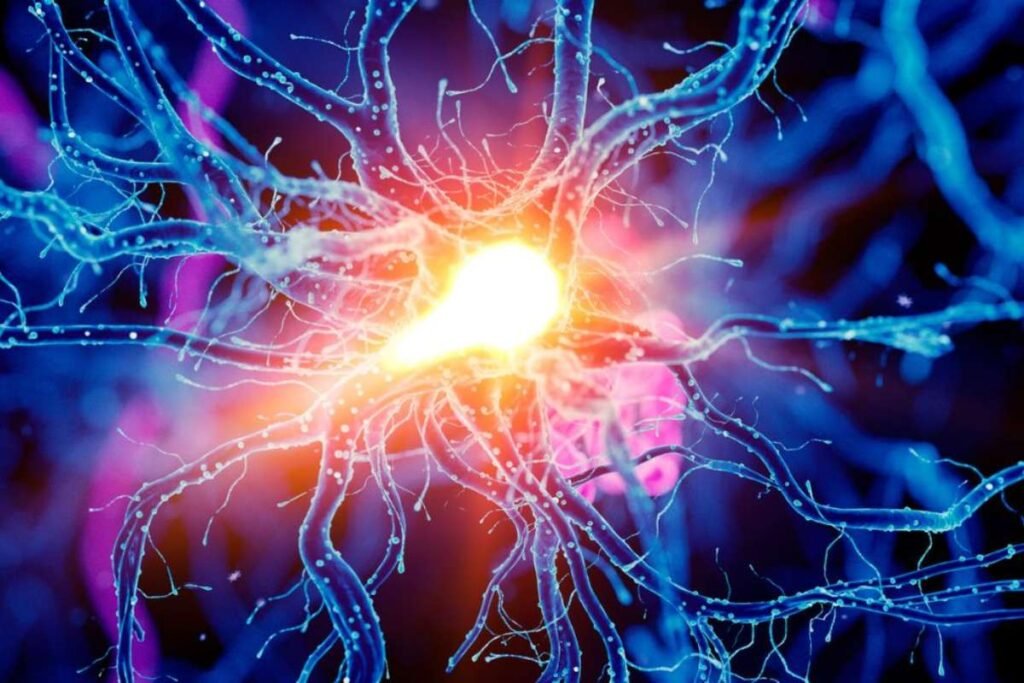
Researchers at the University of Pennsylvania report that a newly identified brain circuit endurance pathway strengthens physical stamina in mice after repeated exercise, challenging long‑held beliefs that improvements in stamina stem mainly from muscles and the heart.
Scientists have discovered a key signal in the brain that appears to enhance endurance and coordinate how the body adapts to repeated physical activity, according to a study published in Neuron.
The findings suggest that exercise does more than condition muscles. It may also reshape neural pathways that help regulate energy use across the body.
Researchers Link Brain Activity to Endurance Gains
For decades, scientists largely attributed improvements in endurance to changes in peripheral systems, such as skeletal muscles, bones, and cardiovascular function. The new study instead points to the central nervous system as a critical driver of those adaptations.
Researchers observed that mice trained on treadmills displayed heightened activity in neurons located in the ventromedial hypothalamus, a region linked to brain circuit endurance and responsible for balancing energy expenditure with the body’s needs.
The neurons are most responsive to exercise. It is known as steroidogenic factor-1 neurons — remained highly active for at least one hour after the animals stopped running.
After three weeks of training five days a week, mice ran longer and faster while showing less fatigue. Signals from these neurons were also significantly higher compared with the start of the experiment.
When scientists blocked the neurons’ activity, the endurance benefits disappeared. Artificially activating the same neurons, however, improved performance, reinforcing their apparent role in stamina.
Study Suggests Exercise May Strengthen the Brain
“When we lift weights, we think we are just building muscle,” said biologist J. Nicholas Betley, a senior author of the study. “It turns out we might also be strengthening brain circuit endurance when we exercise.”
The research adds to growing evidence that physical activity can sharpen brain function and potentially slow aspects of neurological aging.
Scientists often evaluate exercise’s cognitive effects separately from its physical benefits, but the new findings indicate the two may be closely intertwined.
“A lot of people say they feel sharper and their minds are clearer after exercise,” Betley said. “So we wanted to understand what happens in the brain after exercise and how those changes influence the effects of exercise.”
The researchers also noted that these neurons help integrate signals such as insulin and glucose levels, allowing the body to access appropriate energy stores during physical exertion.
Findings Could Inform Future Mental Health Treatments
Repeated exercise appeared to physically remodel the neurons, as trained mice showed nearly double the density of dendritic spines—tiny projections that receive messages from other brain cells—suggesting enhanced communication within the brain circuit endurance pathway.
Without these neurons, prior research indicates mice struggle to mobilize energy reserves or properly adapt their skeletal-muscular systems for sustained activity.
The discovery supports the theory that exercise forms a biological bridge between brain and body, potentially opening avenues for therapies targeting conditions such as depression.
Still, researchers caution that additional studies are needed to determine whether humans experience similar neural changes.
If confirmed, the findings could reshape how scientists understand endurance training and highlight brain circuit endurance as a central factor in physical performance.
For now, the study underscores a simple message: the benefits of exercise may begin in the brain as much as in the body.
Visit Healthcare 360 Magazine For The Most Recent Information.