If you have hemorrhoids, you know how hard daily life can feel. Straining in the bathroom, burning, or itching that will not stop. Pain when you sit for too long. Some people even feel nervous before a bowel movement because they expect discomfort.
Many people reach for creams first. Creams can soothe the skin and reduce pain for a short time. But they do not fix the root problem. The real issue is often hard stool and straining. When stool is dry and difficult to pass, it puts pressure on the veins in the lower rectum. Over time, that pressure can make hemorrhoids worse. According to the National Institute of Diabetes and Digestive and Kidney Diseases, eating more fiber can help soften stools and make it easier to pass.
This is where a high fiber diet becomes important. Fiber adds bulk to stool and helps it hold water. Softer stool means less pushing. Less pushing means less pressure and irritation.
In this guide, you will learn how a high fiber diet for hemorrhoids works, how much fiber you need each day, and which foods help the most. By the end, you will have a clear and practical plan you can start right away.
Why Fiber Matters and How Much You Need?
Hemorrhoids often worsen when stool is hard and dry. Straining increases pressure in the lower rectum, which can swell the veins and cause pain. A high fiber diet for hemorrhoids helps by making stool softer and easier to pass.
Fiber works in two ways. It adds bulk to stool, so it moves more smoothly through the intestines. It also absorbs water, which keeps stool soft and reduces straining. Soluble fiber softens stool by forming a gel, while insoluble fiber adds bulk. Both are important.
Health Experts Recommend:
- Women: about 25 grams per day
- Men: about 30 to 38 grams per day
- Aim toward the higher end if you struggle with constipation.
- Increase slowly, about 5 grams per week.
- Drink 2 to 3 liters of water daily to help fiber work properly.
Example of a 30-Gram Fiber Day
| Meal / Food | Serving Size | Fiber (Approx.) |
| Oatmeal | 1 cup cooked | 4g |
| Chia seeds | 1 tablespoon | 5g |
| Apple (with skin) | 1 medium | 4g |
| Lentils | 1 cup cooked | 15g |
| Broccoli | 1 cup cooked | 5g |
| Almonds | Small handful | 3g |
Small daily changes like this make high fiber diets easier to follow and more effective over time.
Top 21 Best Foods in a High Fiber Diet for Hemorrhoids
| Category | Food | Fiber (Per Serving) | How It Helps? |
Whole Grain | Oats | ~4g per 1 cup cooked | Contains soluble fiber that holds water in the stool and softens it. |
| Brown rice | ~3.5g per 1 cup cooked | Adds bulk to stool and supports smoother bowel movements. | |
| Whole wheat bread | ~2g per slice | Increases stool size and helps prevent constipation. | |
| Quinoa | ~5g per 1 cup cooked | Provides both types of fiber for steady digestion. | |
Fruit | Pear (with skin) | ~5–6 g per medium | High fiber and water content help soften stool naturally. |
| Apple (with skin) | ~4g per medium | Pectin softens stool while skin adds bulk. | |
| Raspberries | ~8g per 1 cup | High fiber improves regularity and stool bulk. | |
| Banana (ripe) | ~3g per medium | Gentle fiber supports smoother bowel movements. | |
| Prunes | ~3g per 5 prunes | Fiber plus sorbitol helps draw water into stool. | |
Vegetable | Broccoli | ~5g per 1 cup cooked | Adds bulk and supports healthy stool movement. |
| Carrots | ~3–4g per 1 cup | Insoluble fiber reduces straining. | |
| Spinach (cooked) | ~4g per 1 cup | Supports digestion and bowel regularity. | |
| Sweet potato (with skin) | ~4g per medium | Skin provides fiber that prevents hard stool. | |
| Brussels sprouts | ~4g per 1 cup cooked | Supports softer stool and less rectal pressure. | |
Legume | Lentils | ~15g per 1 cup cooked | Very high fiber helps reduce constipation. |
| Chickpeas | ~12g per 1 cup cooked | Improves stool consistency and regularity. | |
| Black beans | ~15g per 1 cup cooked | Softens stool and reduces pressure when passing stool. | |
| Kidney beans | ~13g per 1 cup cooked | Supports steady digestion and prevents hard stool. | |
Seed | Chia seeds | ~10 g per 2 tbsp | Forms a gel that keeps stool moist. |
| Flaxseeds (ground) | ~4g per 1 tbsp | Helps improve stool movement when taken with water. | |
| Supplement | Psyllium husk | ~5g per 1 tbsp | Forms a soft gel that reduces straining. |
These foods support a high fiber diet for hemorrhoids by softening stool, adding bulk, and reducing straining. Fiber values are based on standard serving sizes from reliable nutrition databases.
Whole Grains
1. Oats
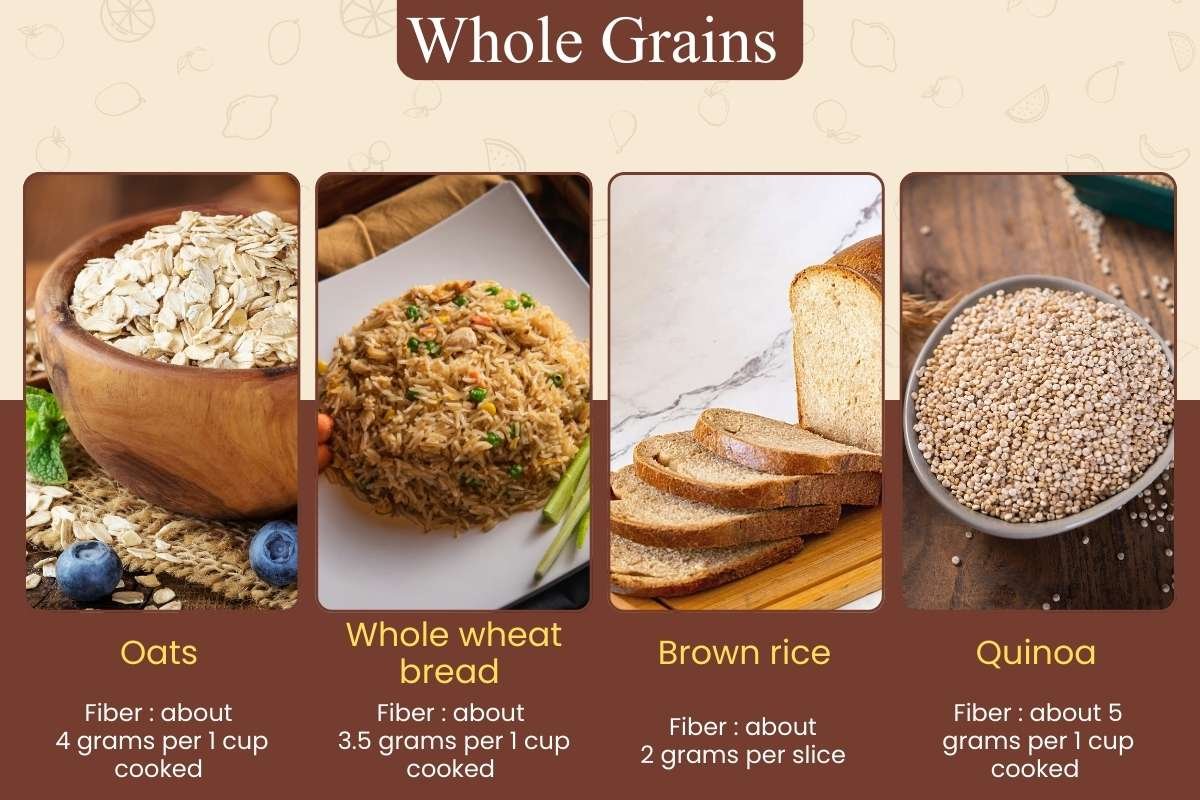
Oats are rich in soluble fiber called beta-glucan, which helps hold water in the stool. This makes bowel movements softer and easier to pass, reducing pressure on swollen veins. Adding oats to breakfast is an easy way to support a high-fiber diet every day.
- Fiber: about 4 grams per 1 cup cooked
2. Brown rice
Brown rice keeps its outer bran layer, which contains most of its fiber. This fiber adds bulk to stool and helps it move more smoothly through the intestines. Swapping white rice for brown rice can slowly improve stool consistency over time.
- Fiber: about 3.5 grams per 1 cup cooked
3. Whole wheat bread
Whole wheat bread provides insoluble fiber that increases stool size and improves movement through the gut. Choosing 100 percent whole wheat helps prevent constipation linked to refined grains. Whole wheat bread helps keep bowel movements regular when eaten consistently.
- Fiber: about 2 grams per slice
4. Quinoa
Quinoa contains both soluble and insoluble fiber. They work together to support healthy digestion. Quinoa helps improve stool texture and supports steady bowel habits. Quinoa is also a good option if you need a gluten-free whole grain choice.
- Fiber: about 5 grams per 1 cup cooked
Fruits That Soften Stool Naturally
5. Pears (with skin)
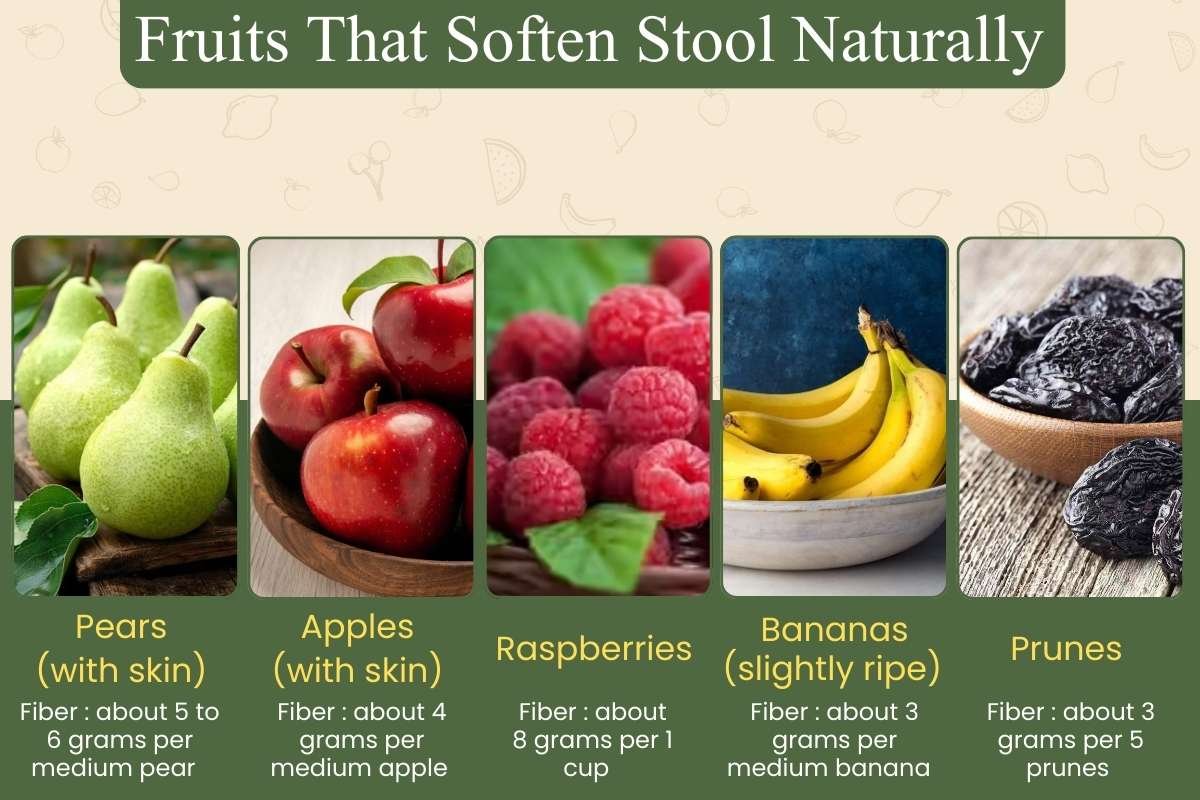
Pears are high in fiber and natural water content, both of which help soften stool. Eating the skin adds extra insoluble fiber that supports easier bowel movements. Eating pears regularly can help make bowel movements more predictable.
- Fiber: about 5 to 6 grams per medium pear
6. Apples (with skin)
Apples contain pectin, a type of soluble fiber that helps stool hold water. Leaving the skin on adds insoluble fiber that increases bulk and reduces straining. An apple a day can gently increase daily fiber without upsetting the stomach.
- Fiber: about 4 grams per medium apple
7. Raspberries
Raspberries are one of the highest fiber fruits available. Their fiber content helps increase stool bulk and improve regularity. A small bowl of raspberries can significantly boost your daily fiber intake.
- Fiber: about 8 grams per 1 cup
8. Bananas (slightly ripe)
Ripe bananas are gentle on the digestive system and help support smooth bowel movements. They provide steady fiber that helps prevent hard stool. They are easy to digest and convenient for daily use.
- Fiber: about 3 grams per medium banana
9. Prunes
Prunes contain both fiber and sorbitol, a natural sugar alcohol that pulls water into the stool. This combination helps soften stool and reduce constipation. Prunes are often recommended for people who struggle with occasional constipation.
- Fiber: about 3 grams per 5 prunes
READ MORE:
- Can Supplements Help Digestive Issues? Here Are The Best Dietary Fiber Supplements
- How the 7-Dukan Diet Plan Can Transform Your Fitness Journey?
Vegetables That Prevent Constipation
10. Broccoli
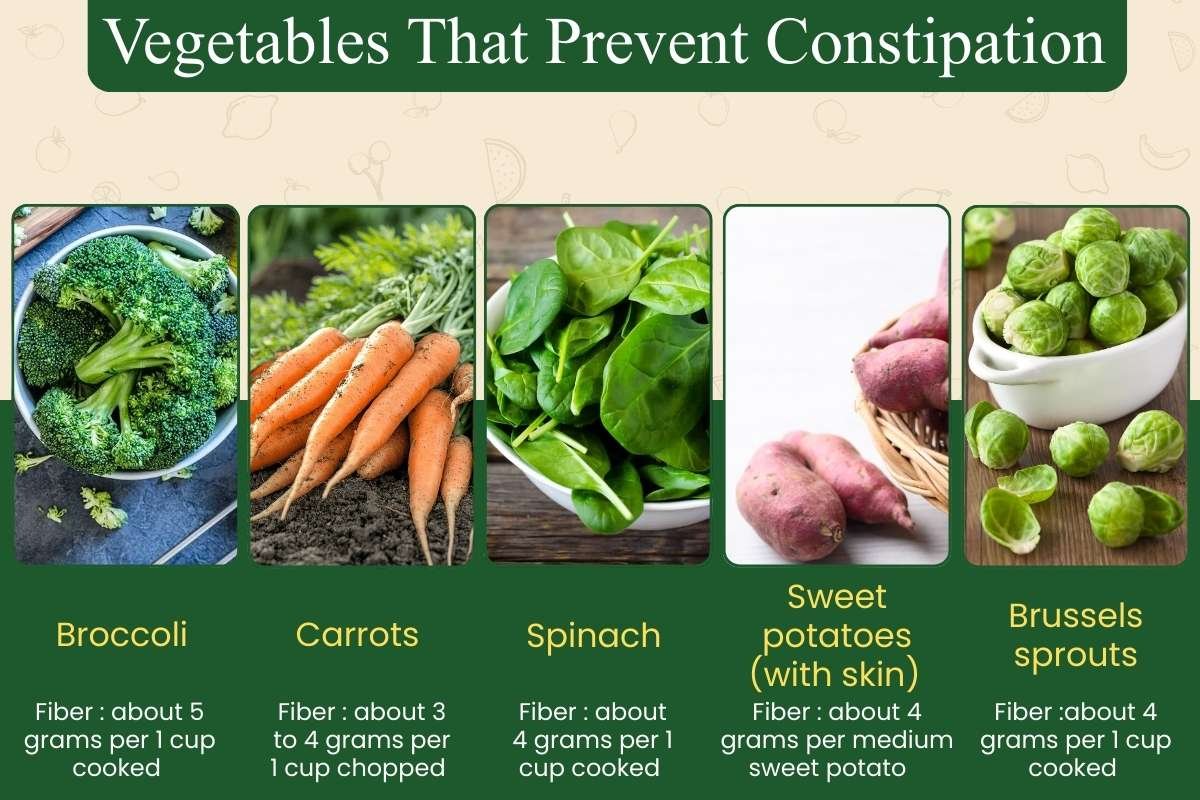
Broccoli provides a mix of fiber and water that supports healthy stool movement. It helps add bulk while keeping stool soft enough to pass easily. Lightly steaming broccoli helps preserve its fiber and makes it easier to digest.
- Fiber: about 5 grams per 1 cup cooked
11. Carrots
Carrots offer steady insoluble fiber that increases stool size. This helps reduce the need to strain during bowel movements. Raw or cooked, carrots are a simple way to add steady fiber to meals.
- Fiber: about 3 to 4 grams per 1 cup chopped
12. Spinach
Cooked spinach adds fiber that supports smoother digestion. It also contains magnesium, which may help promote regular bowel movements. Cooked spinach shrinks in size, making it easy to eat more in one serving.
- Fiber: about 4 grams per 1 cup cooked
13. Sweet potatoes (with skin)
Sweet potatoes contain fiber in both the flesh and the skin. The skin is especially helpful for adding bulk and preventing dry, hard stool. Leaving the skin on increases the fiber content and digestive benefit.
- Fiber: about 4 grams per medium sweet potato
14. Brussels sprouts
Brussels sprouts provide both soluble and insoluble fiber. This supports softer stool and reduces pressure in the rectal area. Roasting them can improve taste while keeping their fiber intact.
- Fiber: about 4 grams per 1 cup cooked
Legumes (Fiber Powerhouses)
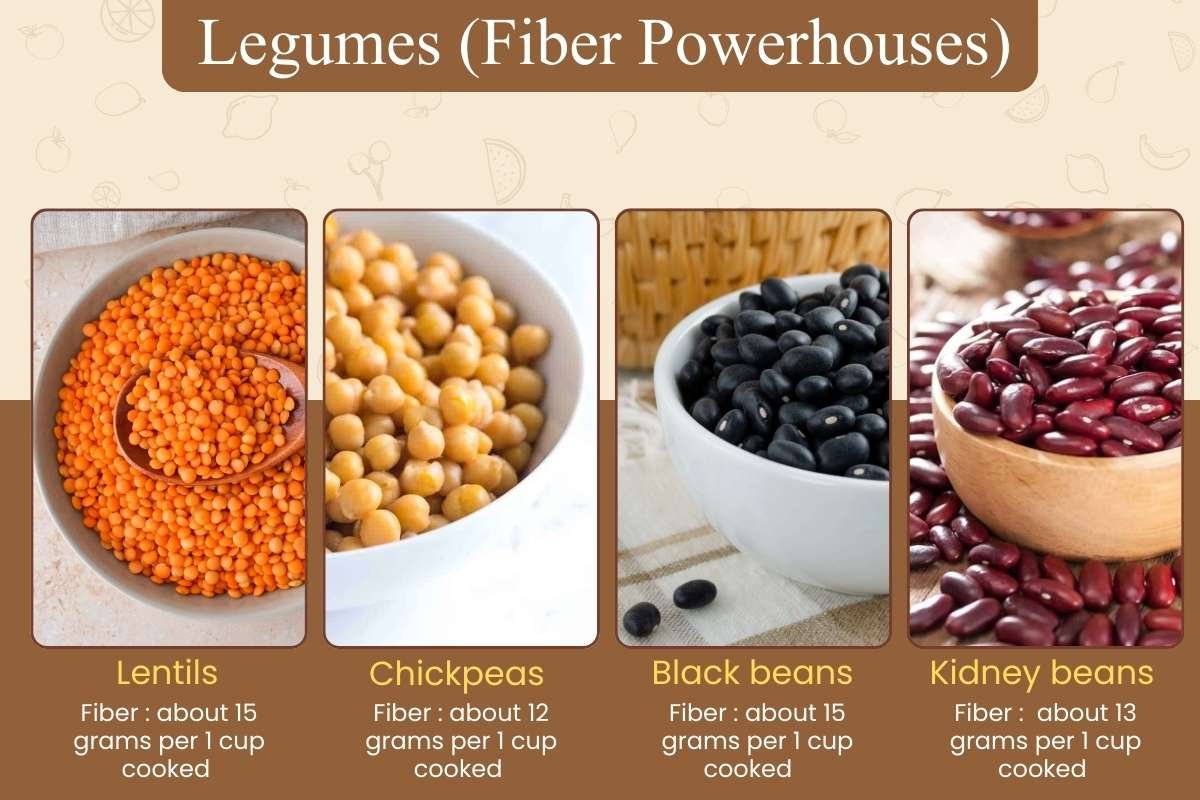
Legumes are key foods in a high fiber diet for hemorrhoids because they deliver large amounts of fiber in one serving.
15. Lentils
Lentils are one of the richest sources of dietary fiber. They greatly increase stool bulk and help reduce straining. Lentils cook quickly and can be added to soups, salads, or rice dishes.
- Fiber: about 15 grams per 1 cup cooked
16. Chickpeas
Chickpeas contain both types of fiber, which improve stool consistency. They support regular bowel habits and reduce constipation. They can be blended into hummus or added to salads for extra fiber.
- Fiber: about 12 grams per 1 cup cooked
17. Black beans
Black beans provide high levels of fiber that soften stool and increase its size. This helps lower pressure during bowel movements. Black beans work well in bowls, wraps, and simple home meals.
- Fiber: about 15 grams per 1 cup cooked
18. Kidney beans
Kidney beans are rich in fiber that supports steady digestion. They help prevent hard stool and reduce discomfort linked to hemorrhoids. Rinsing canned beans can reduce excess sodium while keeping the fiber.
- Fiber: about 13 grams per 1 cup cooked
Seeds and Add-Ons That Make a Difference
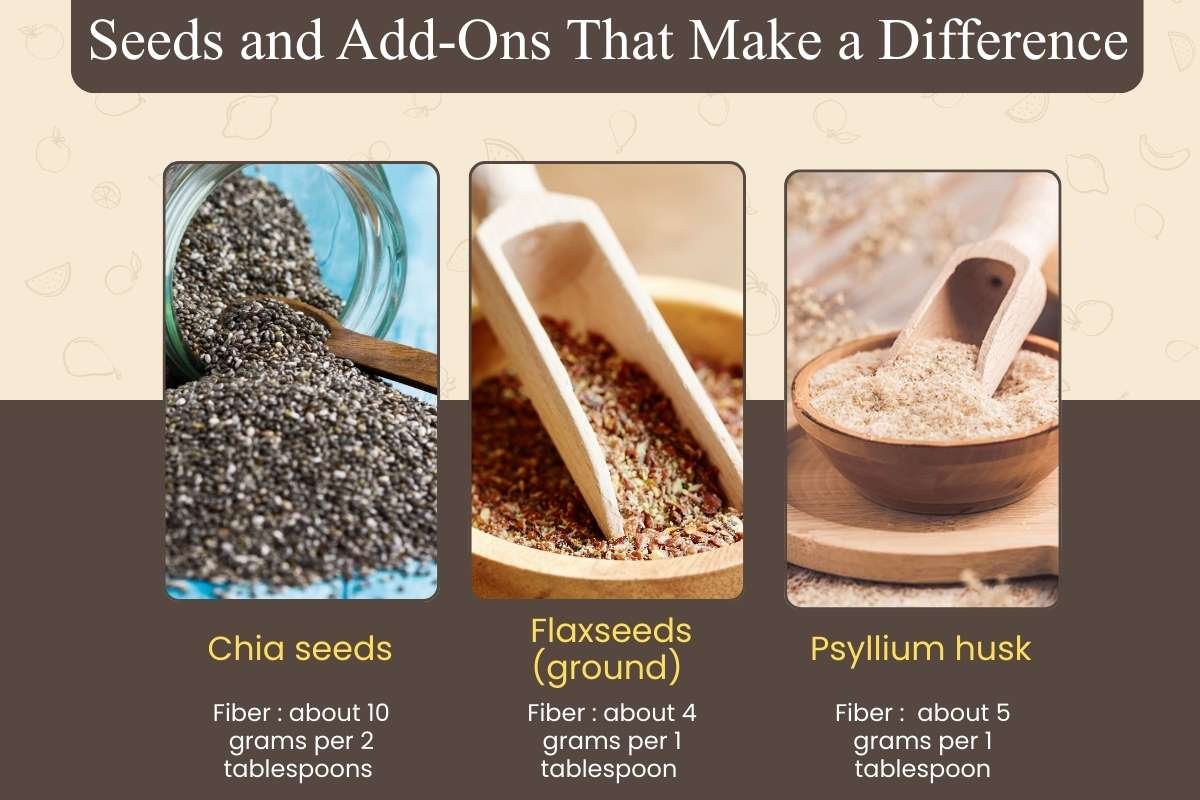
These small additions can strengthen a high fiber diet for hemorrhoids without changing your meals too much.
19. Chia seeds
Chia seeds absorb water and form a gel-like texture in the gut. This helps keep stool moist and easier to pass. They also increase stool softness. They can be stirred into yogurt, oatmeal, or smoothies without changing the taste.
- Fiber: about 10 grams per 2 tablespoons
20. Flaxseeds (ground)
Ground flaxseed supports smoother bowel movements when mixed into food. It works best when taken with enough water. Ground flaxseed is easier to digest than whole flaxseeds. They also contain healthy fats that support overall digestive health.
- Fiber: about 4 grams per 1 tablespoon
21. Psyllium husk
Psyllium is a soluble fiber that forms a soft gel when mixed with water. It is often used to reduce straining and improve stool softness. It should always be taken with a full glass of water to work properly.
- Fiber: about 5 grams per 1 tablespoon
Including these foods regularly can make a high fiber diet for hemorrhoids practical and easier to follow every day.
Can a High Fiber Diet for Hemorrhoids Prevent Flare-Ups?
A high fiber diet can make a big difference, but it cannot always prevent hemorrhoids completely. Things like pregnancy, long hours of sitting, heavy lifting, and aging can still increase risk.
What fiber does very well is prevent constipation. A softer stool means you do not have to push as hard. Less straining means less pressure on the veins in the rectum. Over time, this can lower the chance of future flare-ups.
Research shows that increasing fiber is very beneficial. It can reduce bleeding and improve symptoms in people with hemorrhoids. For best results, fiber should be paired with enough water and regular movement.
A high fiber diet for hemorrhoids is not a quick fix. It is a steady, long-term way to reduce discomfort and protect against repeat problems.
Best Fiber Supplements for Hemorrhoids
Sometimes food alone is not enough. If you struggle to meet your daily fiber needs, supplements can support a high fiber diet. Doctors often recommend fiber supplements as a first step because they help soften stool and reduce straining.
1. Psyllium Husk
Psyllium is a soluble fiber that forms a gel when mixed with water. This gel helps stool hold moisture, making it softer and easier to pass. Studies show psyllium can reduce bleeding and improve overall hemorrhoid symptoms.
Best for: People with constipation or hard stool who need stronger stool-softening support.
2. Methylcellulose
Methylcellulose is a synthetic fiber that also absorbs water in the gut. It is known to cause less gas and bloating compared to some natural fibers.
- Best for: People who feel bloated or gassy with other fiber supplements need a gentler option.
3. Wheat Dextrin
Wheat dextrin is a soluble fiber that dissolves completely in liquids. It is easy to mix into water, juice, or soft foods without changing taste or texture.
- Best for: Daily maintenance and mild constipation support as part of a high fiber diet for hemorrhoids.
4. Inulin
Inulin is a plant-based fiber that also acts as a prebiotic. It is found in foods like chicory root and onions. It feeds healthy gut bacteria and supports digestion.
- Note: Some people may experience bloating at first. Start with a small amount and increase slowly.
When Are Fiber Supplements Helpful?
Fiber supplements can support a high fiber diet for hemorrhoids when food alone is not enough. They are helpful if:
- You cannot reach 25 to 38 grams of fiber per day through meals.
- You deal with frequent constipation.
- Your doctor recommends extra fiber support.
Supplements should not replace whole foods. Grains, fruits, vegetables, and legumes should still be the base of your diet because they provide nutrients beyond fiber.
When choosing a fiber supplement, look for:
- No added sugar
- No artificial sweeteners
- Clear fiber content per serving
- Minimal fillers or unnecessary ingredients
Increase fiber slowly to avoid gas or bloating. Drink enough water each day, since fiber needs fluid to soften stool and reduce straining.
Warning Signs and Foods that can Worsen Hemorrhoids
A high fiber diet for hemorrhoids helps many people feel better, but sometimes symptoms need medical care. It is important to know when to get checked.
When to See a Doctor?
| Symptom | Why You Should Not Ignore It? |
| Bleeding that does not stop. | Ongoing bleeding should always be checked to make sure nothing more serious is causing it. |
| Strong or sharp pain | Severe pain is not normal and may need treatment. |
| A hard, painful lump | This could be a thrombosed hemorrhoid, which can be very uncomfortable. |
| Symptoms lasting more than a week | If home care is not helping, a doctor may suggest other options. |
Getting medical advice does not mean something is wrong. It simply helps you rule out other causes and get the right care.
Foods That Can Make Symptoms Worse
| Food | Why It Can Cause Problems? |
| White bread and refined grains | Low in fiber, which can lead to hard stool. |
| Packaged and processed snacks | Usually low in fiber and may slow digestion. |
| Fried foods | Heavy and harder to digest, which may worsen constipation. |
| Too much dairy | Can make stool firmer for some people. |
| Large portions of red meat | Contains little fiber and may slow bowel movements. |
| Alcohol | Can dry out the body and make stool harder. |
| Too much caffeine | May increase fluid loss if you do not drink enough water. |
These foods do not directly cause hemorrhoids, but they can increase constipation and straining. A steady high fiber diet for hemorrhoids is optimal. Along with enough water and light activity, it gives your body the best chance to heal and stay comfortable.
5 Common Mistakes That Slow Down Recovery
A high fiber diet for hemorrhoids can work very well, but small mistakes can delay relief. Here are common ones to avoid.
1. Increasing Fiber Too Quickly
Adding too much fiber at once can cause gas, bloating, and stomach cramps. This can make you feel worse instead of better. Increase fiber slowly so your body has time to adjust.
2. Not Drinking Enough Water
Fiber needs water to soften stool. Without enough fluids, stool can become hard and difficult to pass. Aim to drink water regularly throughout the day.
3. Ignoring Physical Activity
Moving your body helps your bowels move, too. Even a daily walk can support regular bowel movements and reduce pressure from long sitting hours.
4. Overusing Laxatives
Laxatives may give quick relief, but using them too often can make your body depend on them. A steady, high fiber diet is safer for long-term support.
5. Sitting for Long Periods
Sitting for too long, especially on the toilet, increases pressure on the rectal veins. Take breaks, stand up, and avoid scrolling on your phone in the bathroom.
Avoiding these mistakes can help fiber do its job and support smoother recovery.
Conclusion
Hemorrhoids can be uncomfortable, but small daily changes can make a real difference. A high fiber diet for hemorrhoids works by softening stool, reducing straining, and lowering pressure on sensitive veins. It is not about a quick fix. It is about building steady habits that support your body over time.
Eating enough fiber, drinking enough water, and staying active all work together. When these habits become part of your routine, bowel movements become smoother and less stressful. Many people find that symptoms improve and flare-ups become less frequent.
The key is consistency. Add fiber slowly, choose whole foods often, and listen to your body. With patience and steady effort, a high fiber diet can help you feel more comfortable and more in control each day.
FAQs
1. How long does fiber take to help hemorrhoids?
Some people notice softer stools within a few days. For steady improvement in symptoms like bleeding or discomfort, it may take a few weeks of consistent fiber intake.
2. Can too much fiber make symptoms worse?
Yes. Adding fiber too quickly can cause gas, bloating, and cramps. Increase slowly and drink enough water to avoid discomfort.
3. Is psyllium safe to take every day?
For most healthy adults, psyllium is safe for daily use when taken with enough water. If you have medical conditions or take medications, ask your doctor first.
4. Can fiber cure hemorrhoids permanently?
Fiber does not remove existing hemorrhoids overnight. However, a steady high fiber diet for hemorrhoids can reduce symptoms and lower the risk of future flare-ups.
5. When should I see a doctor?
See a doctor if bleeding continues, pain is severe, or symptoms last more than a week despite home care.