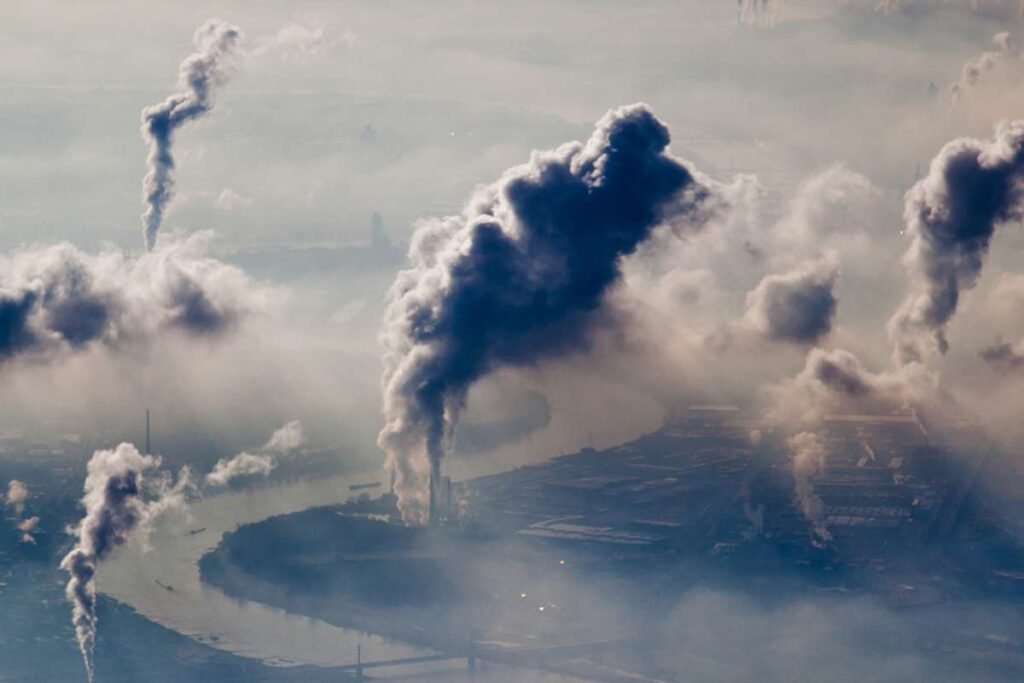
Long-term exposure to fine particulate air pollution, known as PM2.5, has been shown to increase Air Pollution and Alzheimer Risk in adults 65 and older. According to an 18-year study by Emory University, which analyzed 27.8 million U.S. health records, this connection remains strong even after accounting for other medical conditions.
The study strengthens evidence that tiny airborne particles may contribute directly to neurodegenerative disease, rather than only worsening related health problems such as high blood pressure or depression. The findings were published in the journal PLOS Medicine.
Researchers Analyze 27.8 Million Records Over 18 Years
Investigators examined medical records of more than 27.8 million Medicare beneficiaries age 65 and older across the United States. They tracked diagnoses over 18 years and compared them with five-year average PM2.5 exposure estimates based on ZIP code data.
PM2.5 refers to microscopic particles small enough to enter the bloodstream and potentially cross into the brain. Researchers found that higher exposure levels were strongly associated with increased Alzheimer’s risk.
“Alzheimer’s disease is the most common form of dementia and a growing public health challenge, especially in aging populations,” the research team wrote in the study.
The association between Air Pollution and Alzheimer Risk remained significant even after adjusting for related illnesses that are also linked to pollution, including cardiovascular disease and depression.
Findings Suggest Direct Brain Impact Beyond Heart Disease
Previous studies suggested that Air Pollution and Alzheimer Risk may be heightened indirectly by increasing rates of heart disease, stroke, and other related conditions. However, the new analysis indicates that PM2.5 could influence the brain more directly.
“Our findings suggest that PM2.5 exposure was associated with increased Alzheimer’s disease risk, primarily through direct rather than comorbidity-mediated pathways,” the authors wrote.
Researchers cautioned that the study is observational and does not prove cause and effect. Exposure levels were estimated from environmental monitoring data rather than measured individually, and indoor or workplace exposure was not included.
The team also noted that they examined the five-year average exposure preceding diagnosis and could not assess earlier life exposure because of limited historical data. They said disease processes likely begin years before diagnosis.
Experts Urge Cleaner Air To Protect Aging Populations
The study found that individuals who had experienced a stroke faced a slightly higher chance of developing Alzheimer’s when exposed to elevated pollution levels. Researchers explained that stroke-related damage may weaken the blood-brain barrier, making Air Pollution and Alzheimer Risk more pronounced by allowing harmful particles or inflammatory substances to enter the brain more easily.
“The observed effect modification by stroke may reflect an underlying biological vulnerability in cerebrovascular pathways,” the authors wrote.
Simone Reppermund, a psychologist at the University of New South Wales who was not involved in the research, said neighborhood environments play a critical role in cognitive health.
“Neighborhood environments that support healthy living are essential for sustainable, population-level disease prevention, including dementia,” Reppermund said. “This influence is even greater in later life, when people spend more time in their local area due to retirement or poor health and are at higher risk of cognitive decline.”
Alzheimer’s disease affects millions of Americans and still has no cure. Researchers note that addressing Air Pollution and Alzheimer Risk could be one of several strategies to reduce population-level vulnerability, alongside managing cardiovascular conditions and encouraging healthy aging.
The findings add to growing evidence that environmental factors contribute to brain health, particularly among older adults whose defenses against environmental stressors may be weaker.
Visit Healthcare 360 Magazine For The Most Recent Information.