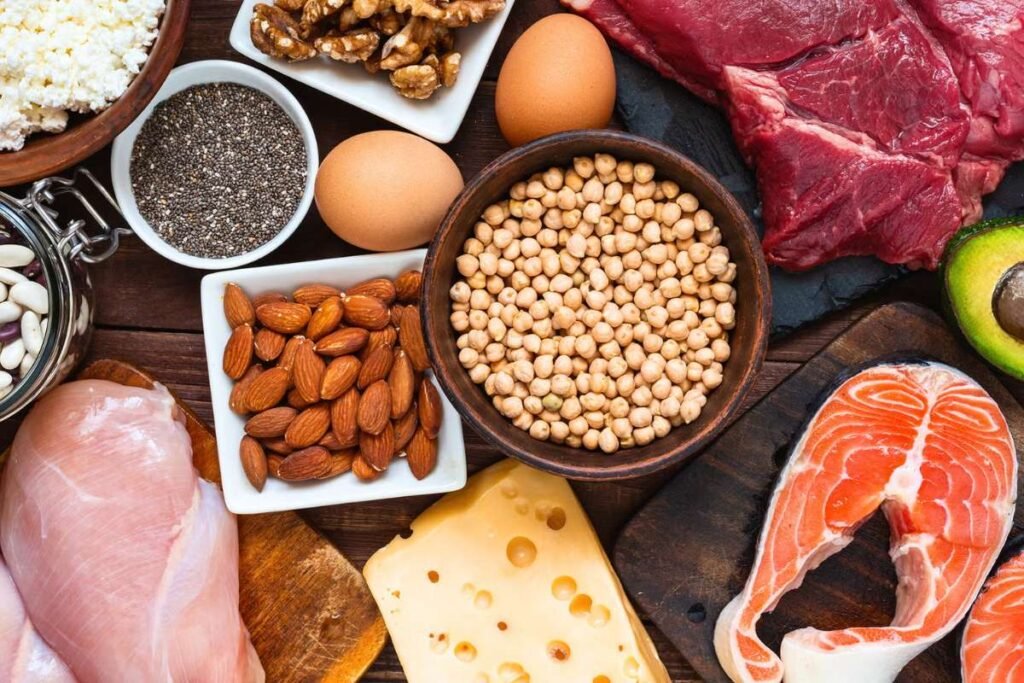
Most Americans already consume enough protein, according to the U.S. Department of Agriculture, but experts emphasize that Americans Protein Need varies by age, activity, and health. They urge personalized calculations rather than relying on social media trends.
Experts Explain Protein’s Essential Role In The Body
Protein is dominating grocery aisles and social media feeds, from cottage cheese recipes to protein-infused coffee drinks. Yet federal data show that Americans Protein Need is already being met at recommended daily levels without relying on special products.
The U.S. Department of Agriculture reports that average protein intake in the United States generally satisfies baseline nutritional guidelines. Health professionals caution that while protein is vital, many consumers may be overestimating their needs.
“Protein is an essential macronutrient,” said Isabel Balady, a registered dietitian at Lenox Hill Hospital in New York. She said the body requires large amounts of protein daily, alongside carbohydrates and fats, to function properly.
Protein forms the structural basis of muscles and tissues and helps build cells, regulate hormones, and support immune health, experts said. It also plays a role in metabolism, bone strength, and organ function.
Registered dietitian Maddie Pasquariello said protein supports nearly every biological process in the body. “It contributes to immunity, metabolism, hormonal balance, and overall body composition,” she said.
Dietitians Outline How To Calculate Daily Protein Needs
Federal guidelines recommend adults consume 0.8 grams of protein per kilogram of body weight daily as a minimum. That equals about 0.36 grams per pound.
To calculate baseline needs, experts advise dividing body weight in pounds by 2.205 to convert to kilograms, then multiplying that number by 0.8. The result reflects the minimum recommended daily intake in grams, offering a clear way to understand Americans Protein Need.
For example, a person weighing 150 pounds weighs about 68 kilograms and would require roughly 54 grams of protein per day under minimum guidelines.
But dietitians stress that formulas provide only a starting point.
“Protein needs vary widely depending on age, sex, activity level, and health status,” Balady said. People aiming to build muscle or increase strength may require closer to one gram per kilogram or more, she said.
Older adults, people recovering from illness or surgery, and highly active individuals may also benefit from increased intake. Those pursuing weight loss or body recomposition goals sometimes need higher protein levels to preserve muscle mass.
Experts recommend consulting a registered dietitian to tailor recommendations, distribute protein evenly throughout meals, and adjust intake for medical conditions.
Specialists Urge Balance, Variety And Consistency
Despite growing attention to high-protein diets, dietitians say daily perfection is unnecessary.
“What matters most is consistency over time, not hitting an exact number every single day,” Balady said. Appetite, stress, physical activity, and schedule changes can naturally shift intake.
Pasquariello advises people to do so gradually. “Start slow and build toward your goal,” she said, noting that sudden increases may cause digestive discomfort.
Experts also say total daily intake matters more than protein consumed at any single meal, including post-workout snacks.
Beyond quantity, dietitians encourage variety and heart-healthy choices. Lean protein sources such as chicken breast, fish, seafood, eggs, beans, and lentils can help meet Americans Protein Need. Choosing options lower in saturated fat also supports cardiovascular health.
While protein remains essential for survival and muscle maintenance, specialists say most consumers do not need specialty beverages or dramatic dietary overhauls.
Instead, they recommend focusing on balanced meals, whole foods, and individualized guidance rather than trending recipes.
Visit Healthcare 360 Magazine For The Most Recent Information.