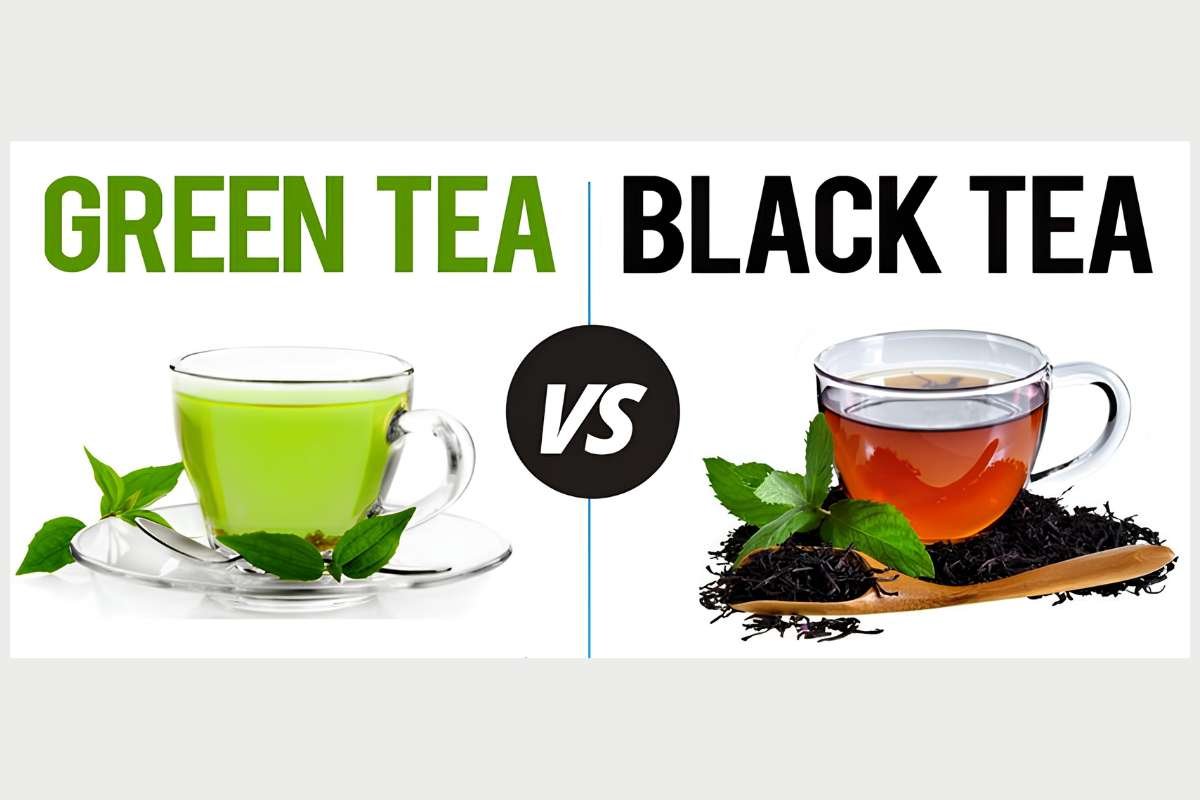
Choosing between black tea and green tea? Both come from the same plant, Camellia sinensis. Yet a single processing step sets them apart: oxidation. Green tea is minimally oxidized, preserving catechins like EGCG. Black tea undergoes substantial oxidation that converts those compounds into theaflavins. Giving it a darker color and bolder flavor. Caffeine content also varies considerably depending on the leaf and brewing method. Neither type deserves an automatic “healthier” label based on color alone.
This black tea vs. green tea comparison breaks down what actually changes during processing. How their polyphenol profiles differ and which characteristics may matter most for your daily cup. So you can choose with the full picture, not just assumptions.
Black Tea vs. Green Tea: What’s the Difference?
Both black tea and green tea come from the same plant, Camellia sinensis. But the major difference is processing. Specifically, how much the leaves are allowed to oxidize.
Quick comparison
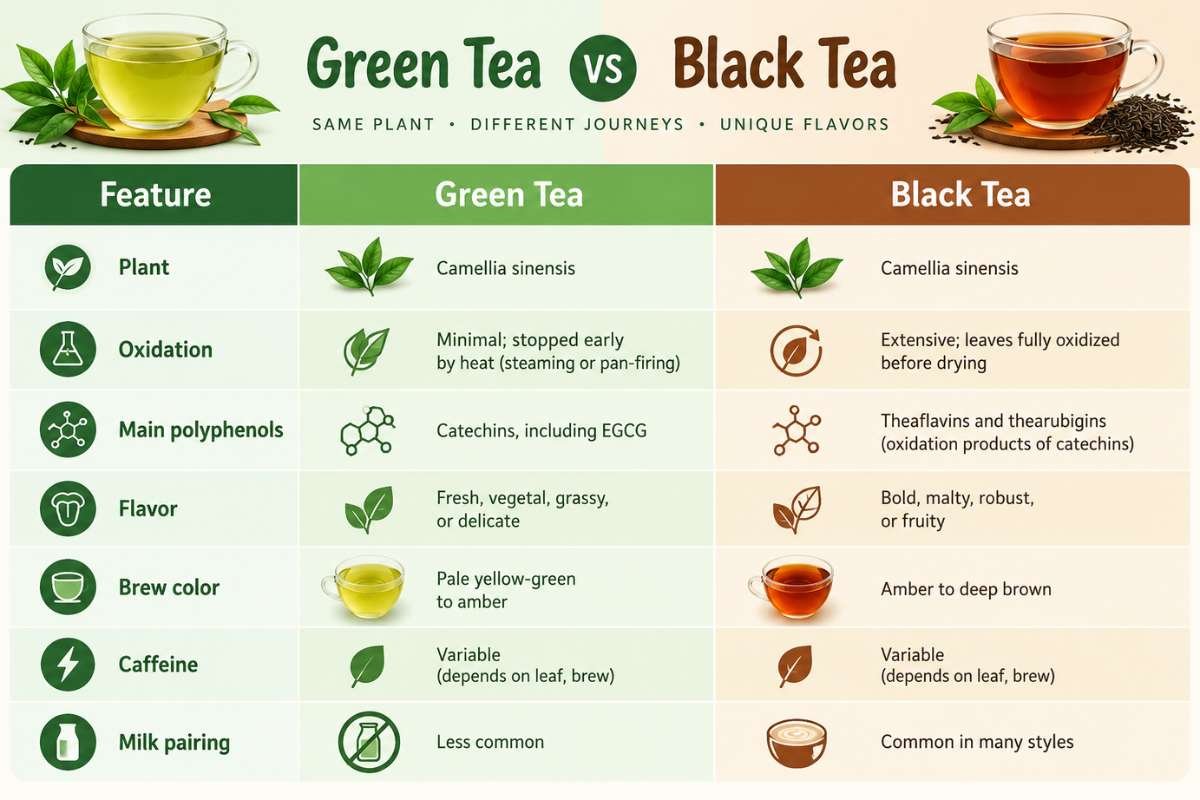
| Feature | Green Tea | Black Tea |
| Plant | Camellia sinensis | Camellia sinensis |
| Oxidation | Minimal; stopped early by heat (steaming or pan-firing) | Extensive; leaves fully oxidized before drying |
| Main polyphenols | Catechins, including EGCG | Theaflavins and thearubigins (oxidation products of catechins) |
| Flavor | Fresh, vegetal, grassy, or delicate | Bold, malty, robust, or fruity |
| Brew color | Pale yellow-green to amber | Amber to deep brown |
| Caffeine | Variable (depends on leaf, brew) | Variable (depends on leaf, brew) |
| Milk pairing | Less common | Common in many styles |
Why processing matters
Stopping oxidation quickly keeps green tea leaves rich in catechins, giving a lighter color and fresher taste. Black tea, by contrast, is rolled and exposed to air, letting enzymes convert catechins into theaflavins and thearubigins. This results in a darker liquor and bolder, maltier flavor.
In this tea debate, the color difference isn’t cosmetic. It reflects real chemical change that shapes both flavor and polyphenol content.
As Kusmi Tea and Harvard’s Nutrition Source note, it’s oxidation level, not plant species, that drives these differences.
Black Tea vs. Green Tea: How Processing Changes Their Antioxidants
Search “which tea has more antioxidants?” and you’ll find conflicting answers. Here’s why: it’s the wrong question. The real story is which antioxidants, not how many.
Also Read: Is Green Tea Bad for You? The Truth About Green Tea Benefits
Green tea: catechins and EGCG
Because oxidation is stopped early, green tea holds onto most of its natural catechins. Plant compounds long studied for their antioxidant punch. The star player is EGCG (epigallocatechin gallate), which shows strong antioxidant activity in lab and cell studies.
But here’s the catch: lab results ≠ guaranteed human results. Human studies show associations between green tea and certain health markers. It is not proof that EGCG alone drives them. Diet, genetics, and lifestyle all factor in.
Black tea: theaflavins
Full oxidation transforms catechins into an entirely different compound family: theaflavins (and thearubigins, formed later in processing). This isn’t a downgrade. It’s a different antioxidant identity.
As Health’s comparison puts it: think green tea’s catechins vs. black tea’s theaflavins, not more vs. less.
Caffeine in Black Tea vs. Green Tea
Black tea generally packs more caffeine. But brew it weak and a long-steeped, heavily-leafed green tea can easily overtake it. Per 12 ounces, Health and FDA-linked data put black tea at 71 mg versus green tea’s 37 mg. But the numbers vary elsewhere depending on cup size and prep. So comparing figures across different serving sizes is like comparing apples to oranges. Bottom line for the black tea vs. green tea caffeine question: leaf quantity, steeping time, and water temperature matter more than the label on the box.
| If you’re looking for… | What to know |
| More caffeine | Black tea often provides more, depending on preparation. |
| Less caffeine | Green tea often provides less, but check the specific tea. |
| Evening tea | Both contain caffeine, so consider timing. |
| Consistent caffeine | Use the same brand, serving size, and brewing method. |
If caffeine is your primary concern, decaffeinated tea is a separate option. Decaf teas still contain a small amount (often around 2 mg per cup), but roughly 96% less than regular tea.
Health Benefits: What Both Teas Can Offer
1. Heart health
Observational studies link regular tea drinking with modestly lower blood pressure and better vascular function, especially endothelial-dependent vasodilation. Meta-analyses of randomized trials report small average reductions in systolic and diastolic blood pressure with tea intake, on the order of 1–2 mmHg. These findings support a potential role for tea polyphenols in cardiovascular risk factors, but they do not prove that tea prevents or treats heart disease.
2. Brain function and alertness
Both teas contain caffeine and L-theanine, which together can improve alertness, attention, and task performance more smoothly than caffeine alone for some people. L-theanine appears to promote a relaxed-but-focused state, which may feel less jittery than coffee’s sharper caffeine hit. Effects are acute and vary by dose and individual.
3. Weight and metabolic health
Research on tea polyphenols and metabolism shows small, short-term effects on body weight and fat in some trials, particularly with green tea extracts and higher catechin intakes. However, evidence quality is mixed, and polyphenol supplementation is not supported as a stand-alone weight-loss strategy. Tea can be part of a healthy diet, but it is not a treatment for obesity or metabolic syndrome.
4. What they have in common
When comparing black tea vs. green tea, both contribute polyphenols to the diet and can support hydration and routine. Neither needs to be treated as an all-or-nothing health choice; benefits are modest and work best alongside overall diet and lifestyle.
Also Read: Why are these the 10 Largest Tea-Producing Countries in the World? Here is the Answer
Taste, Acidity, and Brewing: How the Cups Compare
Brewing isn’t just about taste: water temperature and steeping time control how much bitterness, astringency, and flavor are extracted from the leaves. Too-hot water or overlong steeps can make tea harsh, while under-brewing can leave flavors thin.
| Factor | Green Tea | Black Tea |
| Flavor | Fresh, vegetal, grassy, delicate | Bold, malty, fruity, or robust |
| Bitterness | Can become bitter when over-brewed | Can become bitter/astringent when over-brewed |
| Typical brewing | Lower temperature | Higher temperature |
| Milk | Less commonly paired | Commonly paired |
| Sweetener | Optional | Optional |
Health and the UK Tea & Infusions Association recommend around 80°C (about 175°F) for green tea and 90–98°C (near-boiling) for black tea. While specialty guides similarly emphasize cooler water for delicate green teas and hotter water for most black teas. These ranges help balance flavor and limit harsh tannins, but exact settings depend on the specific tea and style.
When you compare black tea vs. green tea in the cup, think of temperature and time as dials: lower and shorter for tender green leaves, higher and longer for oxidized black leaves. Adjust within these bands based on taste rather than following one universal rule.
Which Tea Should You Choose?
Choose based on your preference and routine, not a single “winner.”
If you want a bolder, fuller cup:
Black tea may suit you, with its malty, robust profile that stands up well to milk and longer steeps.
If you prefer a lighter, vegetal cup:
Green tea may be more appealing, offering fresh, grassy, and delicate flavors with a lighter body.
If caffeine is your priority:
Compare actual serving sizes and product labels rather than assuming every black tea is stronger; brewing method often matters more than tea type.
If you want a tea with milk:
Many black tea styles (such as Assam and breakfast blends) are traditionally better suited to milk, while green tea is less commonly paired this way.
If you’re sensitive to caffeine:
Either can contribute caffeine. Consider lower-caffeine varieties or decaffeinated options, which typically contain about 2–7 mg per cup.
If you’re choosing for general wellness:
Both can fit into a balanced diet. There isn’t enough evidence to treat one as universally superior. Benefits are modest and work best alongside overall diet and lifestyle.
Use these priorities to guide your choice, then adjust variety, brand, and brewing to match your taste and tolerance.
Also Read: How Much Does The Most Expensive Tea in the World Cost? These 12 Will Surprise You
Conclusion:
The Black Tea vs. Green Tea debate isn’t really about picking a “healthier” winner. It’s about picking the profile that fits your palate and routine. Green tea offers a lighter cup rich in catechins; black tea brings bolder flavor and a theaflavin profile all its own. Caffeine and extracted polyphenols depend on both the tea itself and how you brew it.
So next time you’re reaching for a box, let your preference lead: bold and malty, or fresh and delicate? Try both, brew mindfully, and see which one earns a permanent spot in your daily cup.
FAQ:
1. Which has more antioxidants, black tea or green tea?
Green tea generally retains more catechins, while black tea contains oxidation-derived compounds such as theaflavins.
2. Can I drink black tea and green tea every day?
Both can fit into a healthy diet, provided your overall caffeine intake and individual tolerance are appropriate.
3. Is black tea healthier than green tea?
Both offer beneficial plant compounds, and evidence does not establish one as universally healthier.
4. Which has more caffeine, black tea or green tea?
Black tea often has more, but caffeine varies by tea type, serving size, and brewing method.
5. Which tea is better for weight loss?
Neither should be considered a weight-loss treatment. Tea can be part of an overall healthy eating pattern.