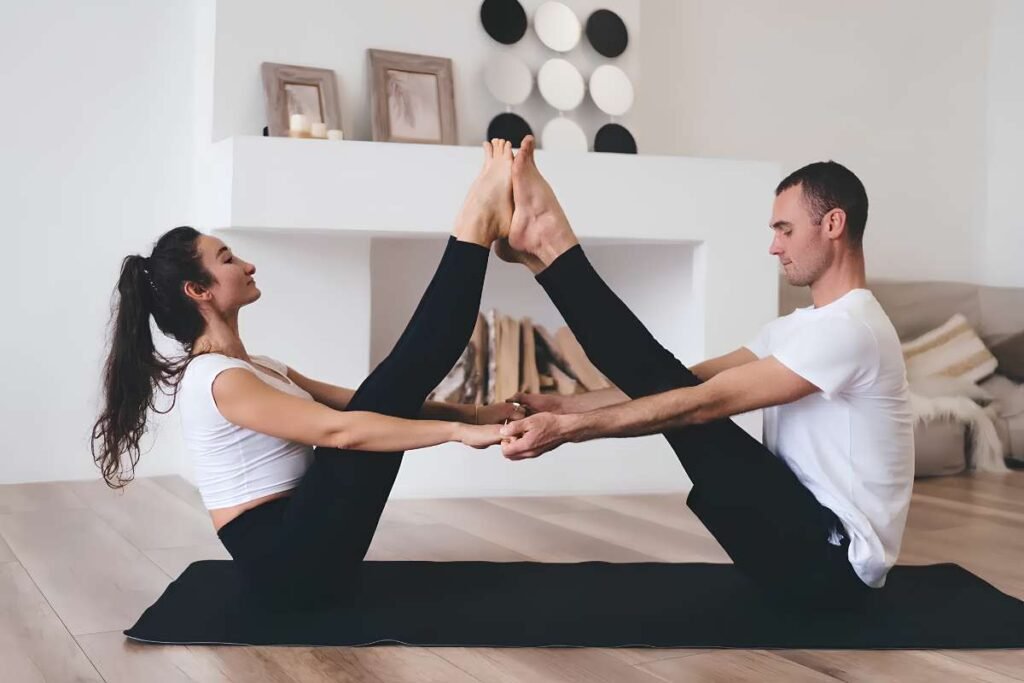
Bond-building yoga poses are partner movements that use synchronized breathing and gentle touch to lower stress and improve heart health. You can start with beginner-friendly moves like seated breathing or back-to-back twists before trying more advanced stretches. Always prioritize safety by communicating with your partner and respecting your physical limits. Read on to find out easy-to-try yoga poses with your partner.
You probably think of yoga as a solo habit. A quiet time to focus on your own rhythm. But practicing with a partner adds a fun, supportive side to your routine.
These bond-building yoga poses are not about being perfect or having great skills. Instead, they use simple breathing and gentle touch to help you relax and feel closer to the people you care about. Here is how to try these moves safely.
What are the best bond-building yoga poses?
We have grouped these moves by skill level so you can pick the ones that work best for you. Start with the beginner section to find your rhythm before moving on to the more complex poses.
1. Seated back-to-back breathing
- How to do it: Sit cross-legged with your backs touching. Close your eyes. Focus on the rise and fall of your partner’s spine against yours. Sync your inhales and exhales so you are breathing at the same speed. This helps calm your nervous system and puts you both in the same headspace.
- Safety tip: If your back feels stiff, sit on a folded blanket or a cushion to keep your spine straight.
2. Partner child’s pose
- How to do it: Partner A rests in a Child’s Pose (knees wide, forehead on the floor). Partner B sits on their heels, facing away from Partner A, and leans their back gently against Partner A’s spine, letting their arms rest overhead. This provides a gentle stretch that releases tension in the lower back and shoulders.
- Safety tip: If you have knee pain, place a blanket under your knees for extra comfort.
3. Seated spinal twist
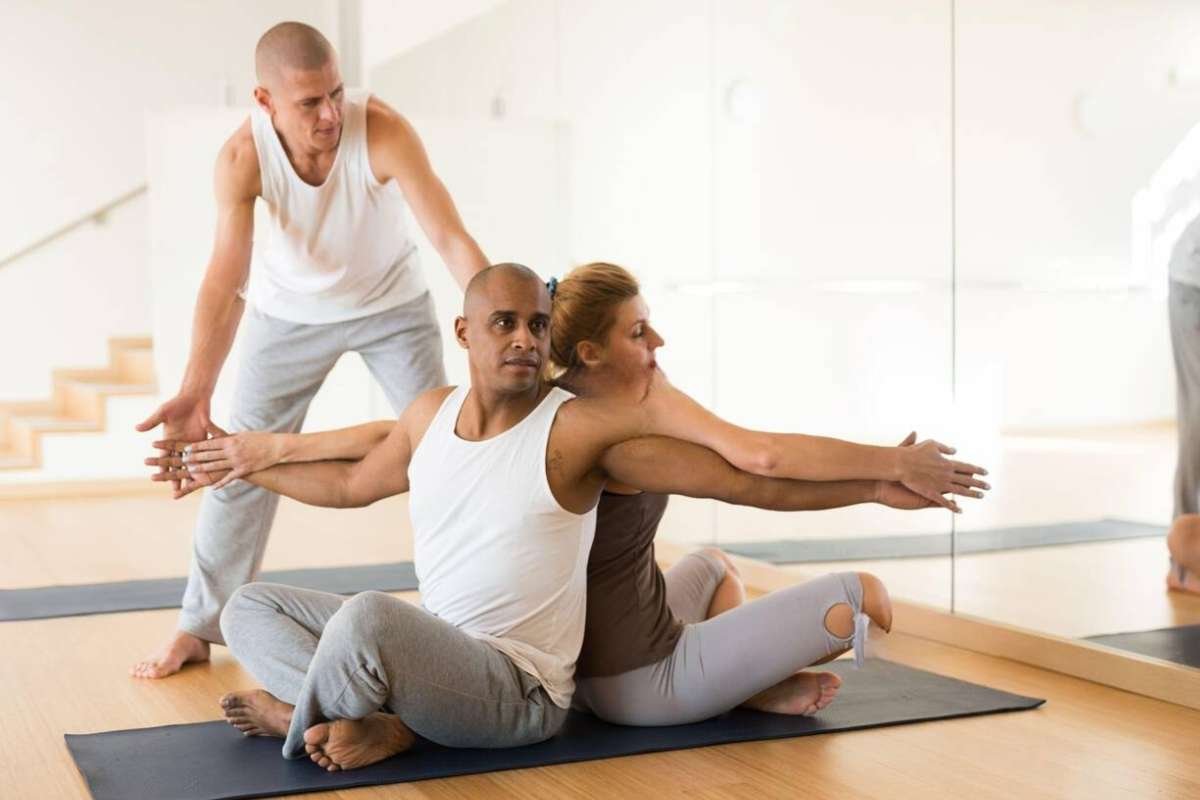
- How to do it: Sit back-to-back. Inhale to sit tall. As you exhale, both of you twist to the right. Place your right hand on your partner’s left knee and your left hand on your own knee. Hold for a few breaths, then switch sides. This helps your spine move and improves your lung capacity.
- Safety tip: Don’t pull or force the twist. Move only as far as feels comfortable for your back.
Level 2: intermediate
These poses involve more physical contact and coordination. Move slowly and listen to your partner’s body through touch.
1. Partner forward fold (v-sit)
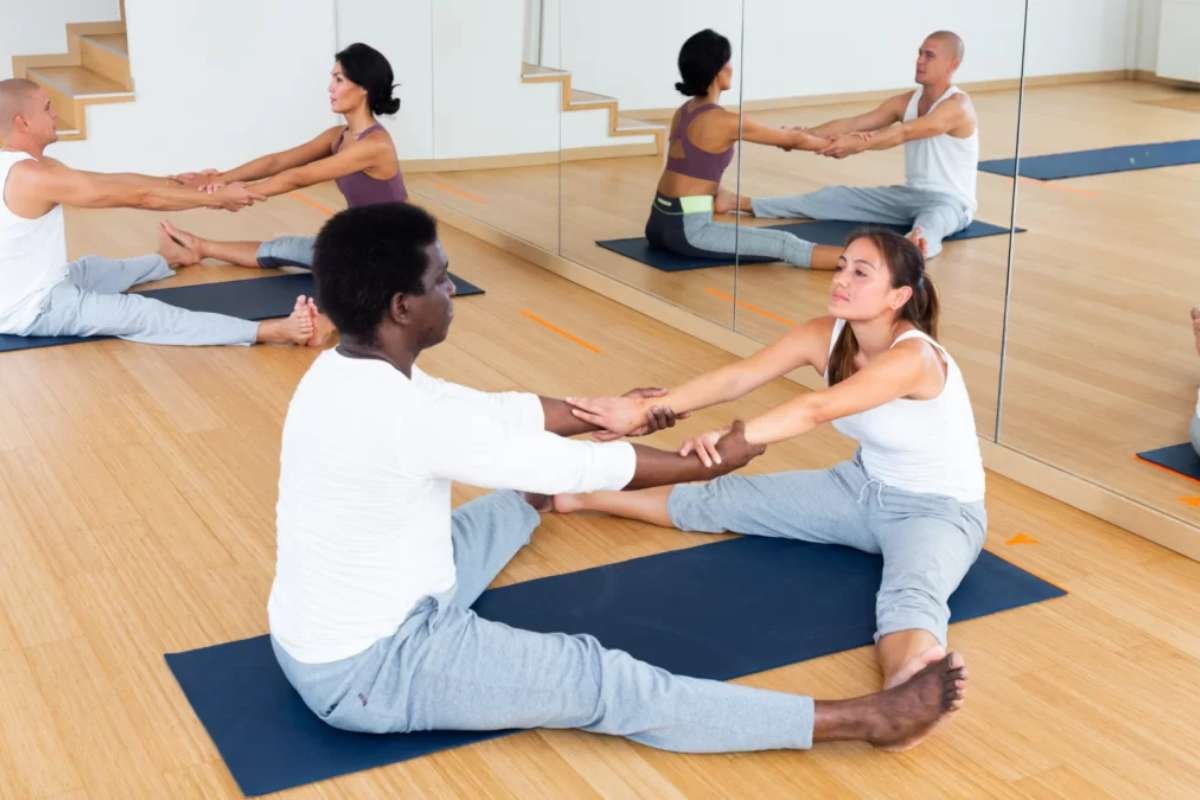
- How to do it: Sit facing each other with legs wide in a ‘V’ shape, feet touching. Hold each other’s forearms.
Partner A exhales and leans back, gently pulling Partner B into a forward fold. Switch roles after a few breaths. This stretches your hamstrings and helps your body shift into a relaxed state.
- Safety tip: Communication is key here. Before you lean back, ask your partner, “How does this feel?” to make sure the stretch isn’t too intense.
2. Back-to-back chair pose
- How to do it: Stand back-to-back and link your elbows. Walk your feet forward, about a foot away from each other. Slowly slide down as if you are sitting in a chair, keeping your backs pressed firmly together for support. This builds leg strength and forces you to rely on each other for balance.
- Safety tip: Before you slide down, agree on a signal to stand back up. If you feel shaky, stop immediately.
READ MORE:
- Find Relief Naturally with the Best Yoga Poses for Back Pain
- What Are the Best Prenatal Yoga Poses for Every Stage of Pregnancy? Here’s the Complete List of 40
Level 3: advanced
Warning: Only attempt these if you are both injury-free and have a strong core and have mastered the poses above.
1. Double downward dog
- How to do it: Partner A moves into a standard Downward Dog (hips high, hands and feet on the floor).
Partner B stands facing Partner A’s feet, placing their hands on Partner A’s hips for stability. Partner B then carefully steps their feet onto Partner A’s lower back, creating their own Downward Dog shape.
This builds core stability and deepens trust between partners.
- Safety tip: Always have a spotter nearby to prevent falls, and make sure your exit strategy is clear. If Partner A feels back strain, Partner B must step down immediately.
Quick reference: which bond-building yoga poses are right for you?
| Level | Pose | Best For |
| Beginner | Seated Breathing | Stress relief |
| Beginner | Partner Child’s Pose | Back tension |
| Intermediate | Partner Forward Fold | Hamstrings |
| Intermediate | Back-to-Back Chair | Leg strength |
| Advanced | Double Downward Dog | Core strength |
How bond-building yoga poses improve your physical health
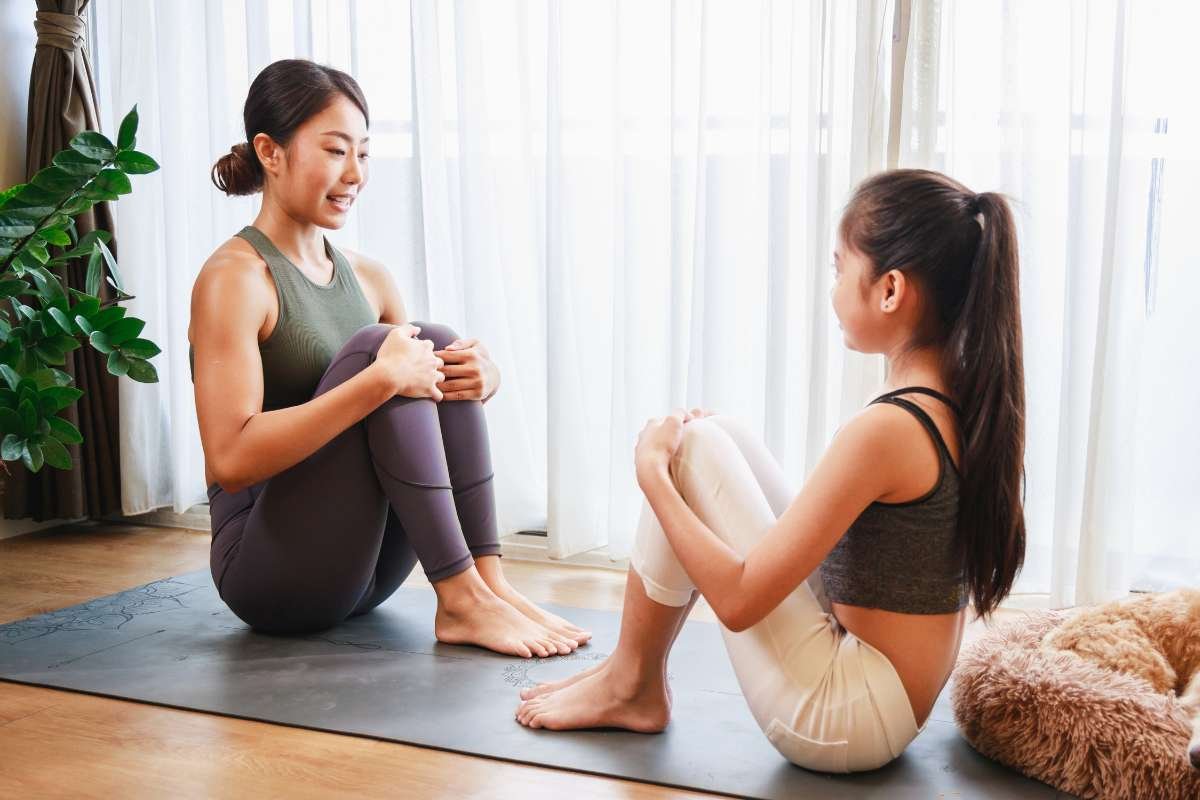
When you move in sync with a partner, your body experiences something called co-regulation. This is simply your nervous system mirroring the calm state of the person next to you.
It turns out that movement is much more effective at lowering stress when shared with someone else.
Research shows that synchronized movement helps lower cortisol, your body’s primary stress hormone, according to the National Institutes of Health (NIH). As cortisol levels drop, you may notice your resting heart rate slows down.
Here are the main health benefits of practicing these poses:
- Sharing a physical task helps you offload daily tension. This lowers your body’s overall stress response.
- Synchronized breathing and movement help lower your heart rate, which reduces the workload on your cardiovascular system.
- This type of movement encourages the release of oxytocin, a hormone that promotes trust and feelings of safety.
- Gentle, supported stretching can help loosen tight muscles in the back and shoulders, which often hold onto physical stress.
How to practice bond-building yoga poses safely?
These movements should never cause pain. If you feel sharp pain or discomfort, stop immediately. Here is how to keep your session safe and supportive.
- Agree on a simple signal before you start, like a gentle squeeze of the hand or a specific word. If one of you feels pain, use this signal to stop immediately.
- Everybody is different. What is easy for you might be difficult for your partner. Never push or pull your partner into a deeper stretch.
- Before and during each pose, ask your partner, ‘How does this feel?’ or ‘Is this stretch okay?’ This keeps the experience positive and safe.
- Never jump straight into deep stretches with cold muscles. Do some light walking or gentle shoulder rolls for five minutes before you begin.
Conclusion:
Bond-building yoga poses can help you lower your stress and feel more connected to the people around you.
Just pick one move to try today, keep the conversation going with your partner, and enjoy the relief that comes with simply slowing down. It’s a gentle, effective way to take better care of your heart and your relationships.
FAQs
1. Do I need to be flexible to do these?
No. These poses are not about how far you can bend. The goal is to breathe together and feel grounded. Modify the poses to fit your own comfort level.
2. Can these poses help with daily anxiety?
Yes. Focusing on your partner and your breath helps you stop anxious loops in your brain. It pulls your focus to the present moment.
3. How often should we practice?
Consistency is key. Even 10 minutes, three times a week, can help you feel more connected and less stressed.
4. Is this just for romantic partners?
Not at all. You can do these poses with a friend, a family member, or a caregiver. The science of co-regulation works with any safe and supportive person.
5. Are these poses safe for seniors?
Many of the beginner poses are low-impact and gentle. However, always clear it with your primary doctor first, especially if you have balance issues or chronic pain.