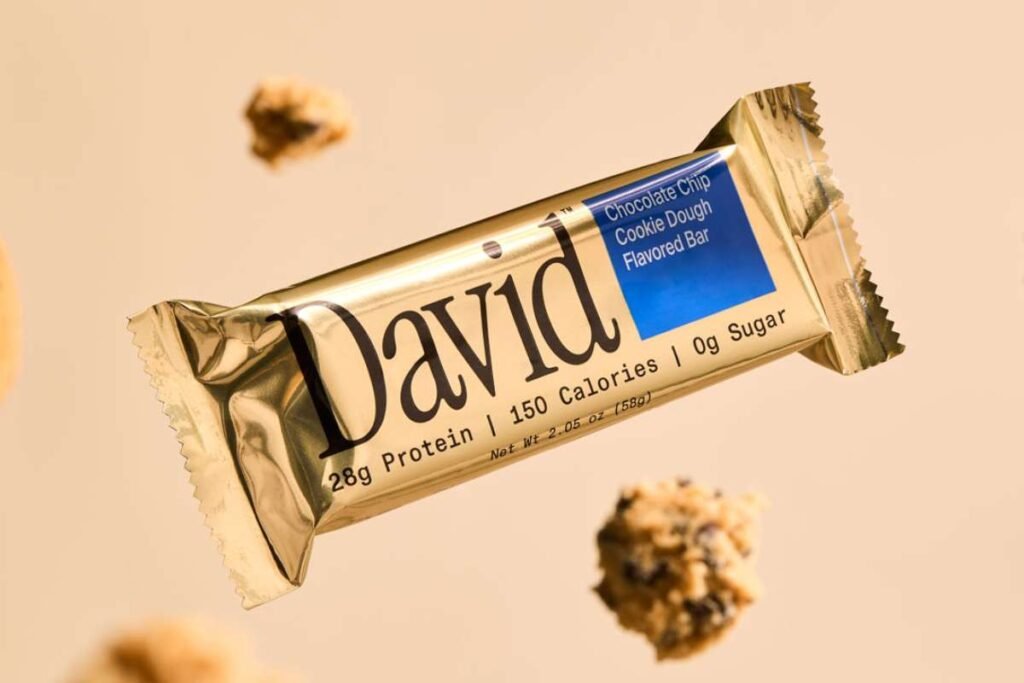
The David Protein Bars Lawsuit claims the viral bars contain up to 80% more calories and over 400% more fat than advertised, but founder Peter Rahal argues that flawed testing methods caused the discrepancy.
Lawsuit Claims Bars Exceed Declared Calories And Fat
The David Protein Bars Lawsuit, filed in January, alleges that the bars significantly understate their calorie and fat content, raising concerns about labeling accuracy for the fast‑growing wellness brand.
The lawsuit says independent testing found each bar contained between 268 and 275 calories and as much as 13.5 grams of fat. The label lists 150 calories and 2 grams of fat per serving.
Plaintiffs argue the discrepancy violates standards set by the U.S. Food and Drug Administration, which require the nutrient content of a food product to remain within 20% of the declared value.
The controversy quickly spread across social media, with users comparing the situation to the 2004 film Mean Girls. In the movie, the character Regina George unknowingly gains weight after eating “diet” bars that are secretly high in calories.
Other users referenced a classic episode of the sitcom Seinfeld in which characters discover their beloved “nonfat” yogurt actually contains fat.
David protein bars, available in flavors like fudge brownie, blueberry pie, and cake batter, have gained popularity among wellness influencers and high‑protein diet advocates. The David Protein Bars Lawsuit, filed in January, alleges that the bars significantly understate their calorie and fat content, raising concerns about labeling accuracy for the fast‑growing wellness brand.
Founder Says Testing Method Misrepresents Calories
Rahal rejected the allegations and said the lawsuit relies on an incorrect scientific method for measuring calories.
“No one is getting Regina Georged,” Rahal wrote Wednesday on the social platform X.
In an interview, Rahal said the dispute centers on an ingredient used in the bars called esterified propoxylated glycerol, or EPG. The modified plant-based fat substitute mimics the taste and texture of fat but passes through the body without being digested.
“This is what makes David have 150 calories,” Rahal said. “It’s a special ingredient that allows the food to taste like fat but doesn’t have the caloric impact.”
Rahal said the laboratory cited in the lawsuit measured the bars using a bomb calorimeter, a device that calculates total heat energy in a sample. According to Rahal, that method counts calories in nondigestible ingredients like EPG, which the human body does not absorb.
“The science is unequivocal,” he said. “You don’t use a bomb calorimeter to measure nonnutritive things.”
The company’s calorie figures are based on the calories the body absorbs during digestion, Rahal said, adding that David Protein complied with federal labeling requirements when developing the bars.
The laboratory referenced in the lawsuit, Anresco Laboratories, declined to comment, citing confidentiality agreements.
Experts Say Ingredient Can Confuse Consumers
Nutrition experts say EPG has existed for decades but has only recently become more common in consumer foods.
Registered dietitian Amy Goodson said the ingredient yields about 92% fewer calories than traditional fat because it resists digestive enzymes.
“It’s going through your system, but it’s not actually digesting,” Goodson said.
However, she said the science behind nondigestible fat substitutes can be difficult for consumers to understand.
“We look at a nutrition facts label and assume that what’s on the label is what’s in the product,” Goodson said.
David Protein, founded in 2024, quickly gained traction among health and longevity influencers. Investors include neuroscientist and podcaster Andrew Huberman and physician-author Peter Attia.
Attia stepped down last month as the company’s chief science officer following backlash related to past email exchanges with financier Jeffrey Epstein.
The dispute unfolds amid surging demand for protein‑focused foods. New federal dietary guidelines released in January emphasize protein consumption at every meal, prompting companies to introduce protein‑fortified snacks and drinks. The David Protein Bars Lawsuit, filed in January, alleges that the bars significantly understate their calorie and fat content, raising concerns about labeling accuracy for the fast‑growing wellness brand.
Major brands, including Doritos and Starbucks, have launched protein-focused products in recent months.
Rahal said David Protein intends to contest the lawsuit in court.
“Any time you’re on the forefront of innovation, there’s confusion,” Rahal said. “We stand by our product fully.”
Visit Healthcare 360 Magazine For The Most Recent Information.