Key Takeaway:
- FDA testing of 300+ samples found U.S. infant formula contains very low or undetectable contaminant levels and is considered safe.
- Experts support findings but stress continued monitoring, especially for synthetic chemicals like PFAS and phthalates.
- Regulators and industry call for clear federal limits on contaminants to strengthen long-term safety standards.
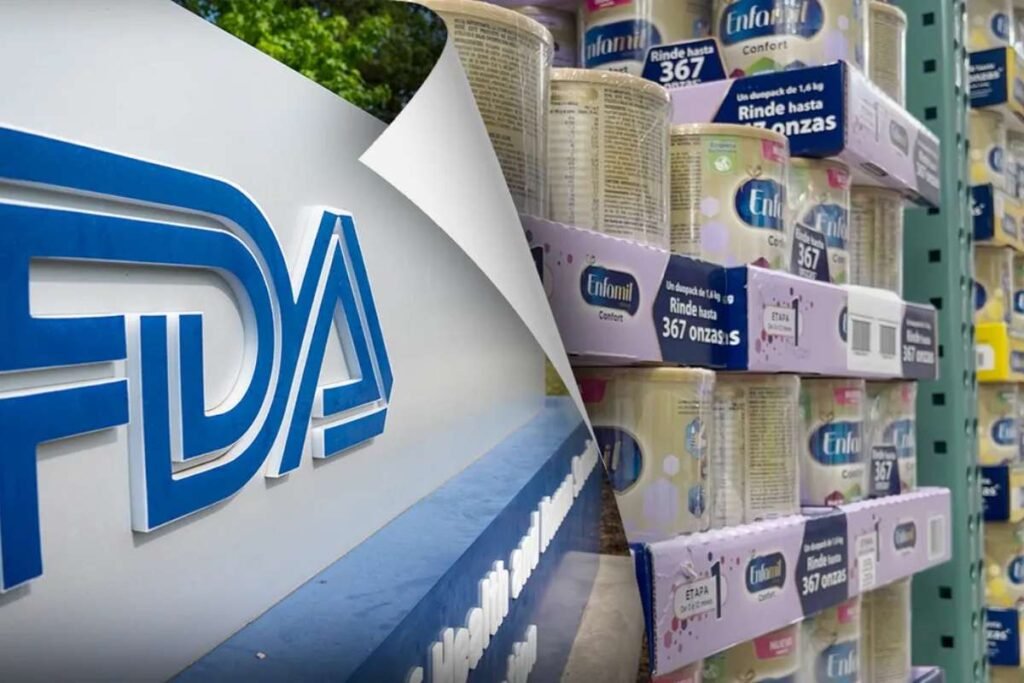
Federal health officials said Wednesday that testing of more than 300 infant formula samples found very low or undetectable levels of contaminants, concluding the U.S. supply remains safe for infants.
FDA Testing Finds Low Levels Of Heavy Metals And Chemicals
A new federal analysis finds the U.S. infant formula supply safe after extensive testing for heavy metals, pesticides and industrial chemicals, according to officials from the Food and Drug Administration.
The review, conducted under the agency’s Operation Stork Speed initiative, analyzed samples collected between 2023 and 2025. Officials described it as the largest and most rigorous safety review of infant formula to date.
Researchers tested for lead, arsenic, cadmium and mercury, along with pesticides, phthalates and PFAS, often called “forever chemicals.” The FDA reported that contaminant levels were either undetectable or far below federal safety thresholds.
Heavy metals detected in some products measured well under Environmental Protection Agency drinking water limits. Pesticides were absent in 99% of samples, and no PFAS were detected for 25 of the 30 compounds evaluated.
“There’s no reason not to use any available formula” in the United States, said Dr. Steven Abrams, a pediatrics professor at the University of Texas at Austin who reviewed the findings.
Experts Support Findings But Urge Continued Monitoring
Outside researchers largely agreed with the agency’s conclusion that small amounts of certain substances occur naturally in the environment and are difficult to eliminate entirely.
However, some experts cautioned that synthetic chemicals detected in limited amounts still warrant attention.
“These chemicals are completely synthetic,” said Dr. Sheela Sathyanarayana, a pediatrics professor affiliated with UW Medicine and the Seattle Children’s Research Institute. “The detection of some of these compounds at all is concerning.”
She said the results highlight the need for continued surveillance of infant formula and broader monitoring across the U.S. food system.
Health researchers note that exposure to heavy metals at elevated levels can affect brain development, learning and behavior in children, making routine testing critical even when risks appear low.
Industry, Advocates Call For Clear Federal Standards
Operation Stork Speed was launched in March 2025 under the Trump administration to reassess infant formula safety and quality standards, many of which had not been comprehensively reviewed in decades.
Despite the reassuring findings, the FDA still lacks enforceable limits for heavy metals in infant formula, unlike regulatory frameworks in the European Union, Canada and Australia.
Consumer advocacy groups have long pressed the agency to establish mandatory contamination limits. Public concern intensified last year after Consumer Reports published its own analysis suggesting higher levels of contaminants in some formulas. That study used stricter thresholds than European standards and prompted some parents to avoid commercial formula, even when medically necessary, Abrams said.
Formula manufacturers also support clearer regulations. Abbott, one of the nation’s largest producers, urged federal officials to adopt science-based standards.
“We believe that producing infant formula at scale in the U.S. is a matter of national security,” Abbott spokesman John Koval said in an email. “These results affirm the safety of our current domestic supply.”
FDA officials said monitoring efforts will continue and emphasized transparency in sharing future testing results to maintain public confidence.
The Associated Press Health and Science Department receives support from the Howard Hughes Medical Institute’s Department of Science Education and the Robert Wood Johnson Foundation. The AP is solely responsible for all content.
Visit Healthcare 360 Magazine For The Most Recent Information.