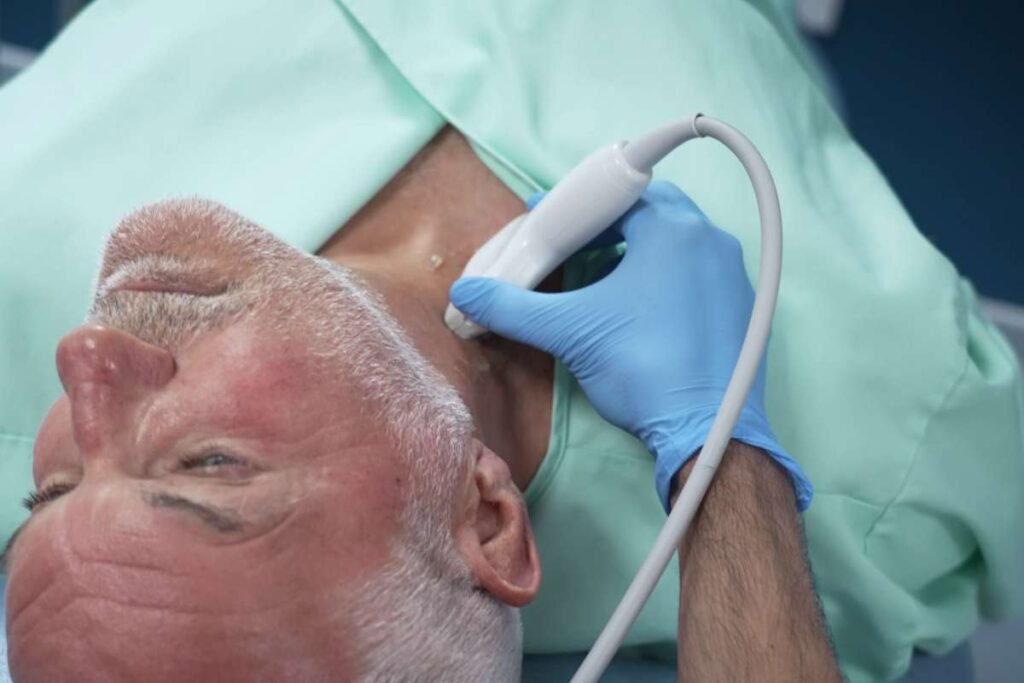
A simple neck ultrasound heart risk scan of blood vessels in the neck may help identify men at higher risk of heart attack and stroke, according to new research published Thursday. The study, carried out in the UK, found that reduced flexibility in the carotid arteries was strongly linked to future heart failure, highlighting the growing importance of understanding neck ultrasound heart risk factors.
How the Test Works
Researchers from University College London (UCL) examined whether a routine neck ultrasound could detect early arterial changes in adults over 60. The scan works similarly to pregnancy ultrasounds. A handheld device is placed on the neck, allowing clinicians to measure how much the carotid arteries stretch with each heartbeat, offering a simple way to assess neck ultrasound heart risk in older adults.
Key Findings From the Study
The research, published in the Journal of the American Heart Association, followed 1,631 men aged 71 to 92. The team reported that one quarter of participants had the least flexible arteries. These men were 2.5 times more likely to develop heart failure than those with the most flexible arteries, reinforcing how neck ultrasound heart risk measurements may provide valuable early warnings.
Scientists said the arteries supplying blood to the brain, neck and face typically remain elastic. However, stiffness can increase with age or disease, leading to high blood pressure and added strain on the heart.
Dr. Atinuke Akinmolayan, who led the study at UCL and now works as a GP, said the findings highlight how useful the scan could be in routine checks. “The carotid ultrasound is a safe, cheap and painless investigation, and our findings suggest it may be able to provide an early warning sign for heart failure,” Akinmolayan said. She added that more research is needed, especially to understand its effectiveness in women.
Broader Health Impact
The British Heart Foundation (BHF), one of the funders of the study alongside the National Institute for Health and Care Research, estimates that about 920,000 people in the UK live with heart failure. Professor Bryan Williams, chief scientific and medical officer at the BHF, said the results align with long-standing concerns about arterial stiffening. “The findings of this study are interesting and show that stiffening of arteries is associated with increased risk of heart failure, most likely due to the heart having to work harder against the resistance caused by these stiffer arteries,” he said.
The study also reported that a 0.16 millimetre increase in vessel thickness was associated with a roughly 29% increase in heart attack risk.
Current Use and Future Potential
At present, carotid ultrasounds are typically reserved for people who have experienced a stroke or are considered high-risk. The scans can detect fatty deposits that break off and travel to the brain or block blood flow by narrowing the artery.
Researchers said that expanding access to the test could help identify heart issues earlier in older adults, particularly men over 60, improving how neck ultrasound heart risk is evaluated in routine care. They noted that when the carotid arteries lose elasticity, they do not expand enough to maintain normal blood flow, which may increase blood pressure and contribute to the development of heart failure.
GPs could consider offering the scan to older patients when appropriate, the researchers said, though they emphasized that additional studies are needed before widespread adoption.
The team said their findings open the possibility of using a quick, non-invasive and low-cost test to identify cardiovascular risk earlier than current methods improving health outcomes and strengthening awareness of neck ultrasound heart risk in older adults.