Key takeaway:
- A lab mix-up led 32 people to take preventive antibiotics after a harmless bacterium was mistaken for the deadly Neisseria meningitidis.
- State testing later confirmed the organism was nonpathogenic, and no one was infected despite the exposure scare.
- Investigators found failures in labeling, inventory control, and biosafety practices, prompting the university to strengthen laboratory protocols.
A college microbiology lab mix-up led 33 people to believe they had been exposed to the deadly bacterium Neisseria meningitidis, prompting 32 to take preventive antibiotics before testing confirmed the organism was harmless.
Lab Misidentification Triggers Public Health Response
A microbiology laboratory exercise intended to teach students how to identify bacteria instead sparked a major public health response after every student identified a harmless sample as Neisseria meningitidis, the bacterium that can cause meningitis and bloodstream infections.
According to a recent report published in the Morbidity and Mortality Weekly Report, university officials determined that 33 people, including students, instructors, and laboratory staff, were potentially exposed. State public health officials were notified and recommended a 10-day course of post-exposure antibiotics for those at risk.
Thirty-two of the 33 exposed individuals began the preventive treatment. Two people later sought emergency care for mild headaches and underwent lumbar punctures to rule out meningococcal infection. No infections were confirmed.
State Testing Confirms Harmless Bacterium
The laboratory exercise originally used what instructors believed was Plesiomonas shigelloides, a bacterium that can cause diarrhea but is generally considered far less dangerous than Neisseria meningitidis.
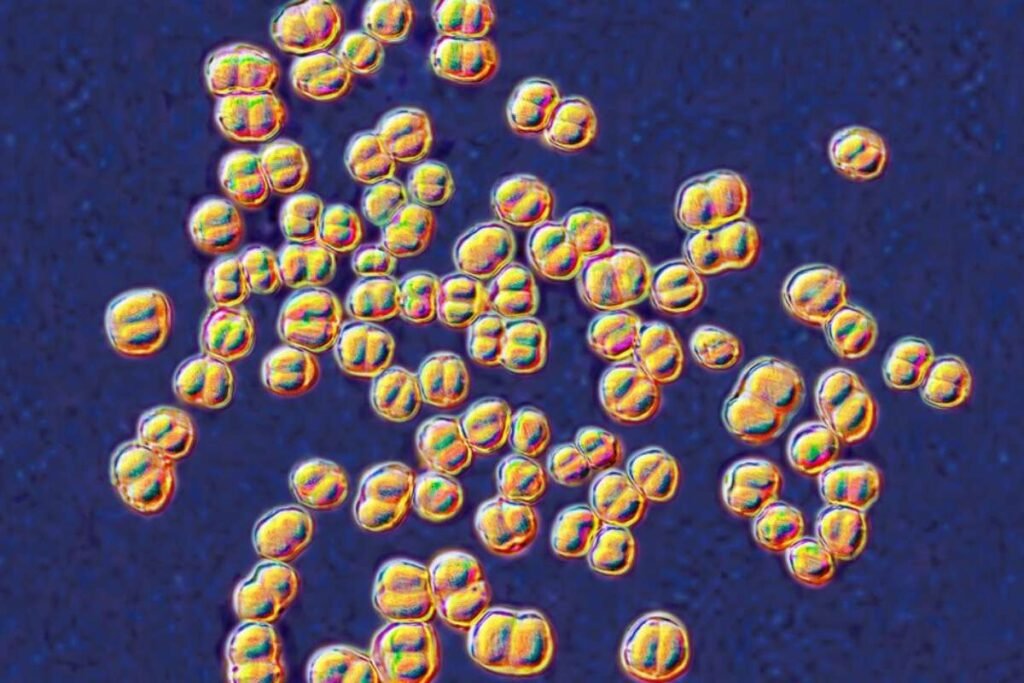
When instructors reviewed the students’ findings, they found the laboratory test results supported the identification of N. meningitidis. The bacteria appeared as gram-negative, oxidase- and catalase-positive diplococci with carbohydrate fermentation patterns consistent with the dangerous pathogen.
State public health laboratory testing later identified the organism as Neisseria sicca, a nonpathogenic relative of N. meningitidis. Officials used mass spectrometry and whole-genome sequencing to confirm the result.
Investigators also repeated the same carbohydrate fermentation tests used in the classroom and reproduced the misleading findings. They concluded the isolate was an “atypical carbohydrate fermenter” that closely mimicked Neisseria meningitidis, leading to the false identification.
Investigation Finds Safety and Inventory Failures
The investigation also uncovered broader laboratory management problems that contributed to the incident.
Officials found that a university stockroom freezer contained a vial labeled Neisseria meningitidis alongside teaching materials intended for routine laboratory classes. Investigators determined the labeling and storage practices created conditions that allowed the mix-up to occur.
“The investigation found inadequate inventory controls for identifying, labeling, storing, and segregating biological materials according to handling practices and containment conditions,” investigators reported.
Officials also cited limited supervision of stockroom employees, inadequate availability and use of personal protective equipment, and insufficient documentation of biological sample inventories and chain of custody.
The report said the university has since revised its laboratory procedures and safety protocols to strengthen inventory management, improve documentation, and prevent similar Neisseria meningitidis identification incidents.
Although the exposure ultimately proved harmless, health officials said the case highlights the importance of strict biosafety practices, accurate specimen labeling and proper storage procedures when handling biological materials, particularly organisms that resemble dangerous pathogens.
Visit Healthcare 360 Magazine to read more.