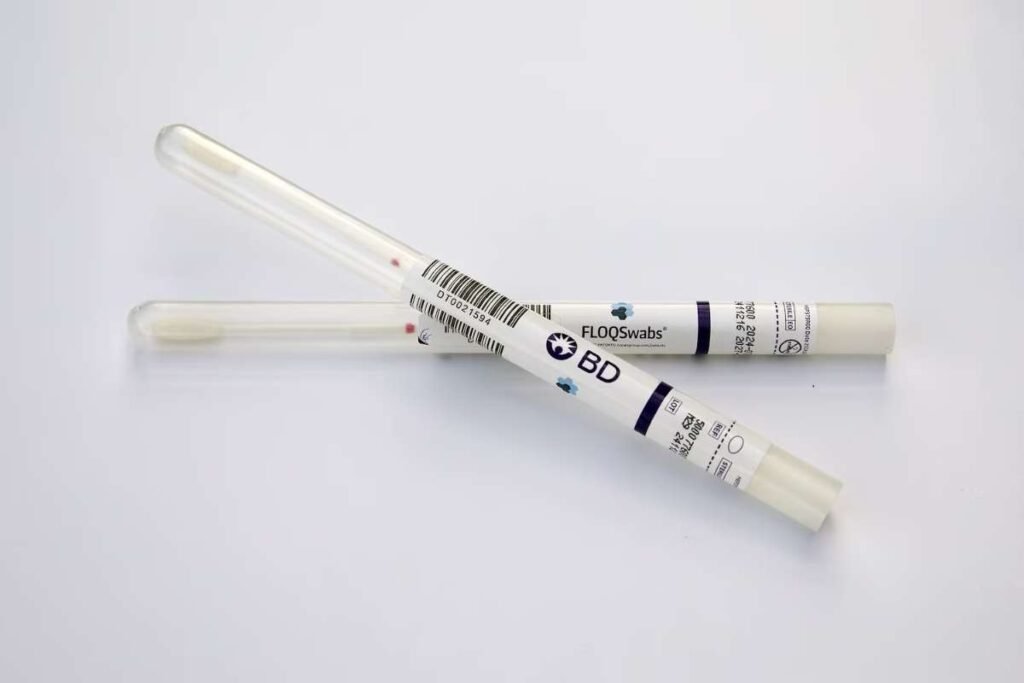
The American Cancer Society on Thursday recommended self-swab HPV test for cervical cancer screening after the FDA approved three self-administered options designed to increase access and reduce discomfort.
FDA Approvals Expand Screening Options
The updated guidelines allow patients to collect vaginal swab samples in clinics and, in some cases, at home. The tests detect high-risk strains of human papillomavirus, which cause nearly all cervical cancers.
“HPV is such a strong indicator of cervical cancer, we know now that screening for HPV is screening for cervical cancer,” said Jane Montealegre, an associate professor at the University of Texas MD Anderson Cancer Center. “This gives more options to women.”
The FDA began approving self-swab HPV test in 2024, including one at-home kit that can be mailed to a laboratory. The agency now authorizes three such tests, marking a significant shift from long-standing clinician-collected screenings.
Experts Cite Better Access, Higher Screening Rates
Cervical cancer rates have been falling for decades in the United States, largely due to improved self-swab HPV test screening and widespread HPV vaccination since 2006. Still, more than 20 percent of women are not currently on screening, according to a JAMA Network Open study.
Robert Smith, senior vice president of early cancer detection science for the American Cancer Society and senior author of the update, said the new tests may remove barriers that deter women from undergoing pelvic exams.
“A woman would be given a kit and could go some place, either the exam room or bathroom, and collect her own sample,” Smith said. “Self-sampling allows for better access.”
Both the American Cancer Society and the U.S. Preventive Services Task Force recommend self-swab HPV test every five years for women who screen negative, with follow-up by a clinician if the test is positive.
The groups also continue to support Pap tests every three years or co-testing every five years. Their guidance differs on when to begin self-swab HPV test. The American Cancer Society recommends starting at age twenty-five, while the task force recommends age thirty.
Montealegre said she does not expect the task force to change its starting age but noted the group is expected to update its guidelines to include self-administered testing.
Insurance coverage is expected for clinic-administered self-swab tests, she added, because cervical cancer screening is covered under the Affordable Care Act.
Guidelines Clarify When Screening Can Stop
Experts say broader agreement between the two major organizations reinforces self-swab HPV test as the leading screening method. “There is growing agreement that it is the gold standard,” Smith said.
Dr. Diane Harper, a professor at the University of Michigan, said intervals could lengthen in the future. “We have data showing now that in a highly vaccinated population, you can screen every 10 years, but we in the U.S. are lagging behind,” she said.
The American Cancer Society also clarified guidance on when screening may end. Women may stop screening at age sixty-five only if they have had consistent negative results for at least ten years.
Smith said too few women meet that standard. “It’s important for women to understand that there is a record they will want to have by the time they are sixty-five,” he said. “That record will tell them it’s safe to stop screening.”
Source: