Key takeaway:
- Sniffing Chocolate Boost workout was shown to help participants perform more leg repetitions without increasing their perceived effort.
- The dark chocolate scent also reduced hunger and increased feelings of fullness, unlike milk chocolate.
- Researchers say familiar food aromas may improve fasted workouts, but larger studies are needed to confirm the findings.
According to a Malaysian study, Sniffing Chocolate Boost workout helped young men complete more leg repetitions and feel less hungry, suggesting that scent alone may influence exercise performance without the need to eat.
Researchers Link Chocolate Scent to Better Exercise Performance
Researchers in Malaysia report that Sniffing Chocolate Boost workout may enhance strength training performance, based on a study of 23 healthy men in their early to mid‑20s.
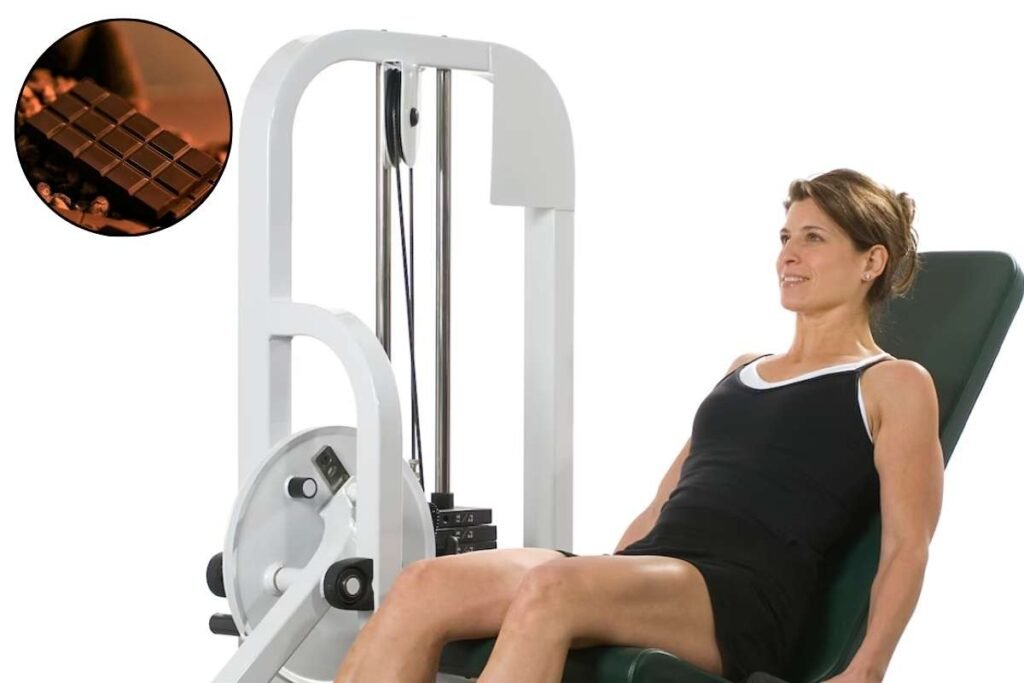
Participants completed morning workouts before eating their first meal. They were assigned to smell either liquid dark chocolate containing 90% cocoa, liquid milk chocolate containing 60% cocoa, or water before performing leg extension exercises.
The group exposed to the dark chocolate scent completed an average of 18 additional repetitions, while those who smelled milk chocolate completed nine more repetitions. The water group did not experience similar gains.
“We know olfaction is powerfully wired into the brain’s appetite and emotion networks, but surprisingly, no study has systematically looked at the three-way interaction between smell, appetite and actual resistance exercise capacity,” senior study author Mohamed Nashrudin bin Naharudin said in a statement.
Dark Chocolate Also Appears to Reduce Hunger
Researchers found that participants who smelled dark chocolate also reported feeling less hungry, more satisfied, and less interested in eating after exercising. Those who smelled milk chocolate described the aroma as more pleasant but did not report meaningful changes in appetite.
The study also found that participants did not perceive their workouts as more physically demanding despite completing more repetitions.
“That is a fascinating psychobiological outcome,” Naharudin said, noting that the results suggest the brain may respond to food-related scents in ways that influence both appetite and physical performance.
Researchers believe that Sniffing Chocolate Boost workout may trigger learned associations with rich, filling foods, creating an anticipatory sense of fullness without actual food intake.
“The dark chocolate scent serves as a learned cue for a rich, bitter and highly satiating food, which essentially tricks the system into an anticipatory state of fullness,” Naharudin said.
Researchers Say Findings Need More Study
The research team said chocolate itself is unlikely to be unique and that other familiar food scents may produce similar effects if they create positive psychological associations.
“We don’t think chocolate is unique, though it is a food cue with incredibly strong, universally recognized reward associations,” Naharudin said.
He added that people are more likely to benefit from scents they recognize and find appealing rather than unpleasant.
The findings may have practical value for athletes and recreational gym users who exercise before breakfast or while following intermittent fasting schedules. Previous research indicates that about 38% of athletes choose to train before their first meal, believing it may improve body composition or performance.
Researchers cautioned that the study involved a small sample of young men performing one type of resistance exercise. Additional research involving larger and more diverse groups is needed to determine whether the findings apply to women, older adults, different sports, or other food aromas.
The researchers emphasized that smelling chocolate is not a substitute for proper nutrition but could become a simple strategy to support workouts under specific conditions.
Visit Healthcare 360 Magazine For The Most Recent Information.