In hospitals, patient records, lab systems, and medical devices are all connected online. A potential cyberattack could expose sensitive data or disrupt care. In such cases, quick detection and response are crucial to prevent harm.
What is MDR in healthcare? MDR stands for Managed Detection and Response, a cybersecurity service that continuously monitors healthcare systems, detects threats, and responds to attacks before they escalate.
MDR in healthcare combines advanced technology with expert security teams to identify suspicious activity, investigate potential breaches, and act swiftly. This ensures patient data stays secure, critical systems remain operational, and healthcare organizations maintain compliance.
In this article, we explain what MDR in healthcare means, how Managed Detection and Response works, and why it is essential for protecting modern healthcare systems from cyber threats.
What is Managed Detection Response and How Does It Work?
Managed Detection Response, or MDR, is a cybersecurity service. It watches systems at all times and looks for signs of attacks. MDR combines security software with trained security analysts. Together, they detect threats early and stop them before damage spreads.
MDR collects data from many sources. These include endpoints, servers, networks, and cloud systems. The service analyzes logs, user behavior, and system activity. It looks for patterns that signal risk or misuse. When MDR detects something unusual, the response phase begins. Security analysts investigate the alert to confirm if it is a real threat. If needed, they isolate systems, block access, or remove malicious files. This fast response limits downtime and data loss.
MDR also runs proactive threat hunting. Analysts search for hidden attackers that traditional tools often miss. This approach reduces dwell time and strengthens overall security posture.
What is MDR in Healthcare?
Managed Detection Response in healthcare focuses on protecting patient data and clinical systems. Hospitals rely on electronic health records, imaging systems, and connected medical devices. These systems handle sensitive data and must remain available at all times.
What is MDR in healthcare monitors hospital networks, endpoints, and cloud platforms. It tracks access to patient records and detects suspicious behavior. This helps stop data breaches and insider threats before patient privacy is compromised.
- MDR protects patient data and critical clinical systems from cyber threats.
- It monitors hospital networks, endpoints, and cloud platforms continuously
Healthcare MDR also covers medical devices connected to the network. Many devices lack strong security controls. MDR profiles device behavior and flags abnormal activity. This reduces the risk of attackers using devices as entry points.
MDR supports healthcare compliance needs. It maintains detailed logs and incident records. These records help during audits and regulatory reviews. Healthcare teams gain visibility without managing security alone.
- MDR monitors connected medical devices for abnormal behavior.
- Healthcare teams gain visibility without running security operations themselves.
Benefits of Using MDR in Healthcare
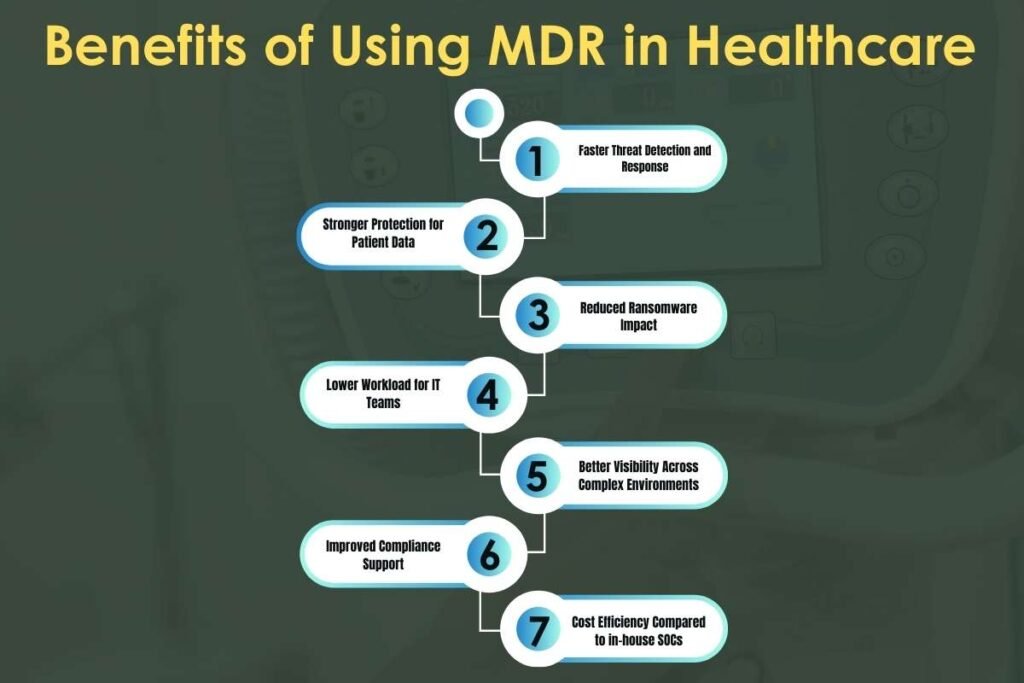
Understanding the benefits of What is MDR in healthcare helps organizations see why proactive security matters. Managed Detection and Response goes beyond basic protection to actively detect threats and reduce risk. These benefits directly support patient safety, data security, and operational continuity
1. Faster Threat Detection and Response
MDR monitors systems continuously without breaks. It detects suspicious behavior early, often within minutes. This speed limits attacker movement and reduces damage before systems fail. Quick response also protects clinical operations. Attacks stop before they affect patient records or treatment systems. Healthcare teams avoid long recovery cycles.
2. Stronger Protection for Patient Data
Patient records hold high value for attackers. MDR tracks access to electronic health records and user behavior. It flags unusual access patterns quickly. This reduces the risk of data leaks and misuse. Healthcare providers maintain patient trust and data integrity.
3. Reduced Ransomware Impact
Ransomware spreads fast in hospital networks. MDR detects early signs like unusual file activity or privilege misuse. Analysts isolate affected systems immediately. This containment prevents network-wide encryption. Hospitals avoid service shutdowns and delayed patient care.
4. Lower Workload for IT Teams
Security tools generate thousands of alerts daily. MDR filters alerts and investigates real threats. IT teams only handle confirmed risks. This reduces burnout and improves focus. Staff spend more time supporting clinical systems instead of chasing false alarms.
5. Better Visibility Across Complex Environments
Healthcare environments include servers, cloud platforms, and medical devices. MDR brings visibility across all systems in one view. Analysts see how threats move across environments. This clarity improves decision-making. Security teams respond with confidence and accuracy.
6. Improved Compliance Support
Healthcare regulations require proof of security controls. MDR keeps detailed logs of threats and response actions. These records support audits and reviews. Organizations reduce compliance stress. They also lower the risk of fines and penalties.
7. Cost Efficiency Compared to in-house SOCs
Running a full security operations center costs heavily. MDR provides skilled analysts and tools at a predictable cost. Healthcare budgets stay under control. This model works well for growing organizations. Security improves without large staffing investments.
How to Select the Right MDR Provided for Healthcare?
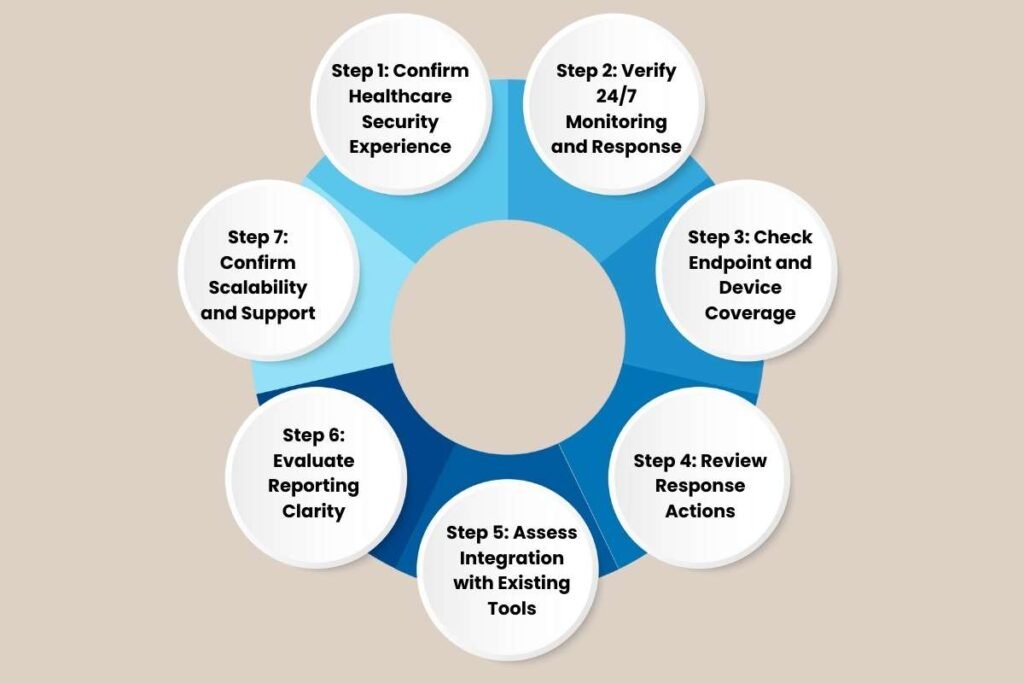
Healthcare environments have unique security, compliance, and uptime needs. Knowing what to look for helps organizations select an MDR solution that fits their risk profile and resources.
Step 1: Confirm Healthcare Security Experience
Choose a provider with proven healthcare clients. They should understand patient data risks and clinical system dependencies.
Step 2: Verify 24/7 Monitoring and Response
Threats do not follow business hours. Ensure the provider offers continuous monitoring with active response authority.
Step 3: Check Endpoint and Device Coverage
Hospitals rely on endpoints and medical devices. The MDR service should monitor workstations, servers, and connected devices.
Step 4: Review Response Actions
Some providers only notify. Strong MDR providers contain threats directly. This includes isolation, blocking, and remediation.
Step 5: Assess Integration with Existing Tools
The MDR service should integrate with EHR systems, endpoint tools, and cloud platforms. Integration improves accuracy and speed.
Step 6: Evaluate Reporting Clarity
Healthcare leaders need clear updates during incidents. Reports should explain what happened, what actions were taken, and what comes next.
Step 7: Confirm Scalability and Support
Healthcare environments evolve fast. The MDR provider should support growth, mergers, and new technologies without security gaps.
Case Study: Montage Health

Montage Health, a nonprofit healthcare system in California, strengthened its cybersecurity posture by adopting a Managed Detection and Response service. The organization needed continuous visibility across endpoints and a faster response to modern threats without increasing internal workload.
How MDR Was Used by Montage Health?
The MDR service provided 24/7 monitoring of endpoints and system behavior across Montage Health’s environment. Security analysts reviewed activity in real time and used behavioral detection to identify suspicious patterns. When abnormal activity appeared, the MDR team investigated, confirmed the risk, and took response actions such as isolating affected endpoints and blocking unauthorized access. This allowed threats to stop before spreading.
Outcome

The MDR service reduced alert noise and shortened response time from hours to seconds. Montage Health improved visibility across clinical and corporate systems while easing pressure on internal IT teams. The organization gained consistent protection, faster incident handling, and stronger security resilience without disrupting patient care.
Conclusion:
Managed Detection and Response provides continuous monitoring, fast threat detection, and expert-led response when incidents occur. This proactive approach helps protect patient data, reduce downtime, and limit the impact of security breaches. Knowing what is MDR in healthcare is essential as cyber threats continue to target hospitals and healthcare systems.
By adopting what is MDR in healthcare organizations gain visibility into their networks and access to skilled security teams without building everything in-house. It strengthens compliance efforts and supports uninterrupted patient care. As healthcare environments grow more digital, MDR becomes a critical layer of defense for long-term security and resilience.
FAQs
1. What is MDR in healthcare?
MDR stands for Managed Detection and Response. It is a cybersecurity service that monitors systems, detects threats, and responds to incidents in real time.
2. Is MDR suitable for small healthcare facilities?
Yes. MDR is often more cost-effective than building an internal security team. It gives smaller facilities access to advanced security expertise.
3. Does MDR help with healthcare compliance requirements?
Yes. MDR supports compliance by improving monitoring, incident reporting, and response processes required by healthcare regulations.