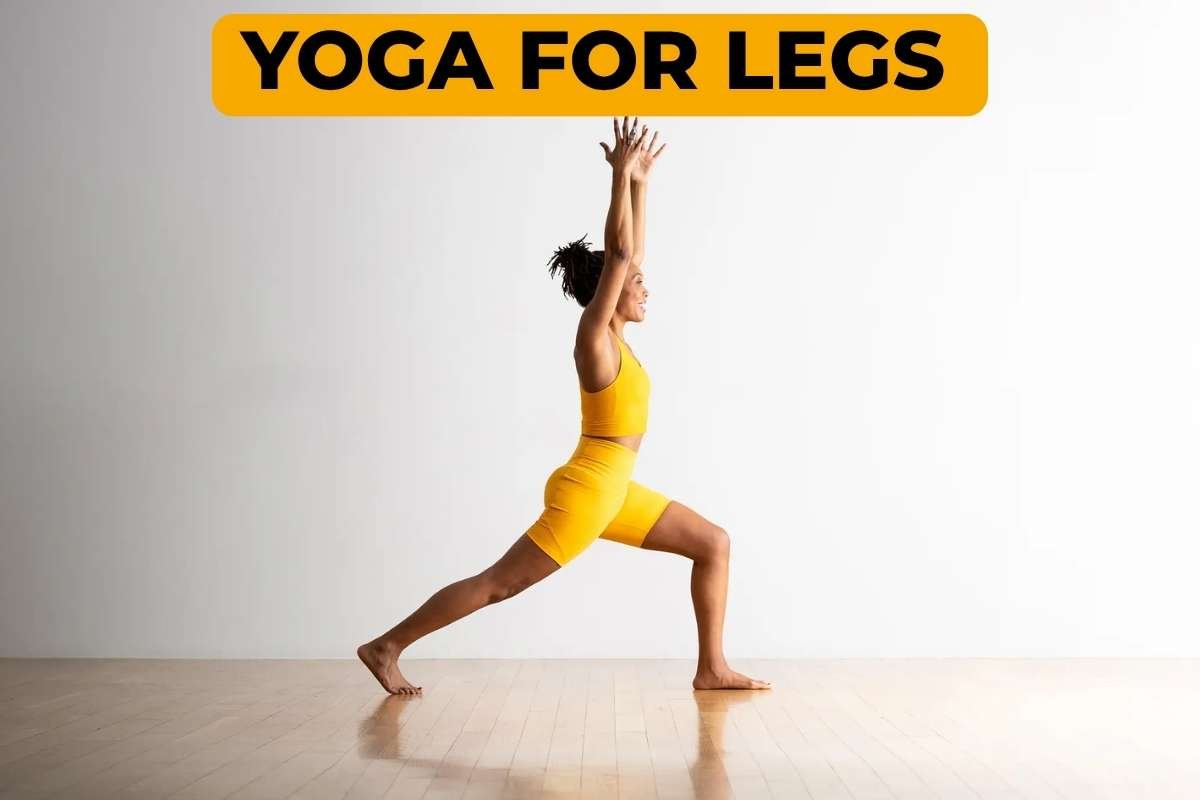
Ever notice how your legs feel tight after a long day of sitting, standing, or working out? You’re not alone. Prolonged sitting can contribute to stiffness and reduced flexibility in the hips and hamstrings. That’s where yoga for legs comes in.
But not all poses work the same way. Some stretch, some build strength, and some do both. So the right pick depends on what your legs actually need.
In this guide, you’ll learn targeted poses to improve flexibility, support lower-body strength, and build stability. Whether you’re recovering from a workout or just craving relief after sitting all day.
Yoga For Legs: What Can It Actually Help With?
Yoga offers targeted benefits for the lower body, but not every pose delivers every outcome. Yoga for legs works best when you match poses to specific goals: some build strength, others improve flexibility, and a few enhance balance or mobility. Understanding these distinctions helps you practice more effectively and avoid unrealistic expectations.
Different poses place different demands on your muscles and joints. Standing postures like Warrior II and Chair Pose strengthen quadriceps, hamstrings, and glutes through sustained loading. Forward folds and reclined stretches lengthen tight hamstrings and calves. Single-leg balances such as Tree Pose or Warrior III challenge stability and proprioception. Meanwhile, controlled transitions through ranges of motion, like lunges or half-splits. They can support joint mobility and movement awareness.
| If your goal is… | Focus on… |
| Less stiffness | Hamstring, calf, and hip stretches (e.g., Downward Dog, Seated Forward Fold) |
| Stronger thighs | Squat/lunge-style poses (e.g., Chair Pose, Warrior I/II) |
| Stronger glutes | Bridge and standing poses (e.g., Bridge Pose, Warrior III) |
| Better balance | Single-leg standing poses (e.g., Tree Pose, Eagle Pose) |
| Better mobility | Controlled range-of-motion work (e.g., Low Lunge pulses, Half-Splits) |
This approach ensures you’re not just moving through poses, but practicing with purpose. Align your sequence with your objectives. Whether it’s reducing post-run tightness or building functional leg strength. This can make your practice more focused and easier to adjust as your needs change.
Best Yoga Poses for Stiff or Tight Legs:
If your legs feel stiff after sitting, walking, or training, certain yoga poses may help improve flexibility or temporarily ease the feeling of tightness. The science backs this up: a 2024 meta-analysis of 189 studies and over 6,654 adults found that just 10 minutes of static stretching per muscle group, per week, is enough to produce measurable long-term gains in range of motion. Separately, a systematic review of 79 studies (n=3,287) confirmed that consistent stretching produces a moderate, statistically significant improvement in lower-limb flexibility (Hedges’ g = 0.851, p < 0.001).
Here are five beginner-friendly options, each with a simple modification to reduce strain:
1. Downward-Facing Dog
Stretches hamstrings, calves, and the entire posterior chain.
Modification: Bend your knees slightly to protect tight hamstrings while still lengthening the calves.
2. Standing Forward Bend
Targets the back of the legs and lower back.
Modification: Keep a generous bend in the knees. Let your hands rest on shins or the floor rather than forcing straight legs.
3. Triangle Pose
Opens hamstrings and inner thighs while encouraging hip mobility.
Modification: Rest your bottom hand on a block or shin to maintain length in the spine.
4. Half Splits
A focused hamstring stretch that builds flexibility over time.
Modification: Use a strap around the foot if you can’t reach your toes, and keep the spine long.
5. Legs Up the Wall
A gentle recovery pose ideal for cooldowns. It doesn’t build strength but may help circulation and relaxation after activity.
Hold each pose for 30–60 seconds, breathing steadily. Consistency matters more than depth. Consistent, comfortable practice is generally more sustainable than occasionally forcing a deeper stretch.
Also Read: These Everyday Yoga Poses for Neck Pain Could Change Your Morning Routine
Yoga Poses for Stronger Legs and Better Stability
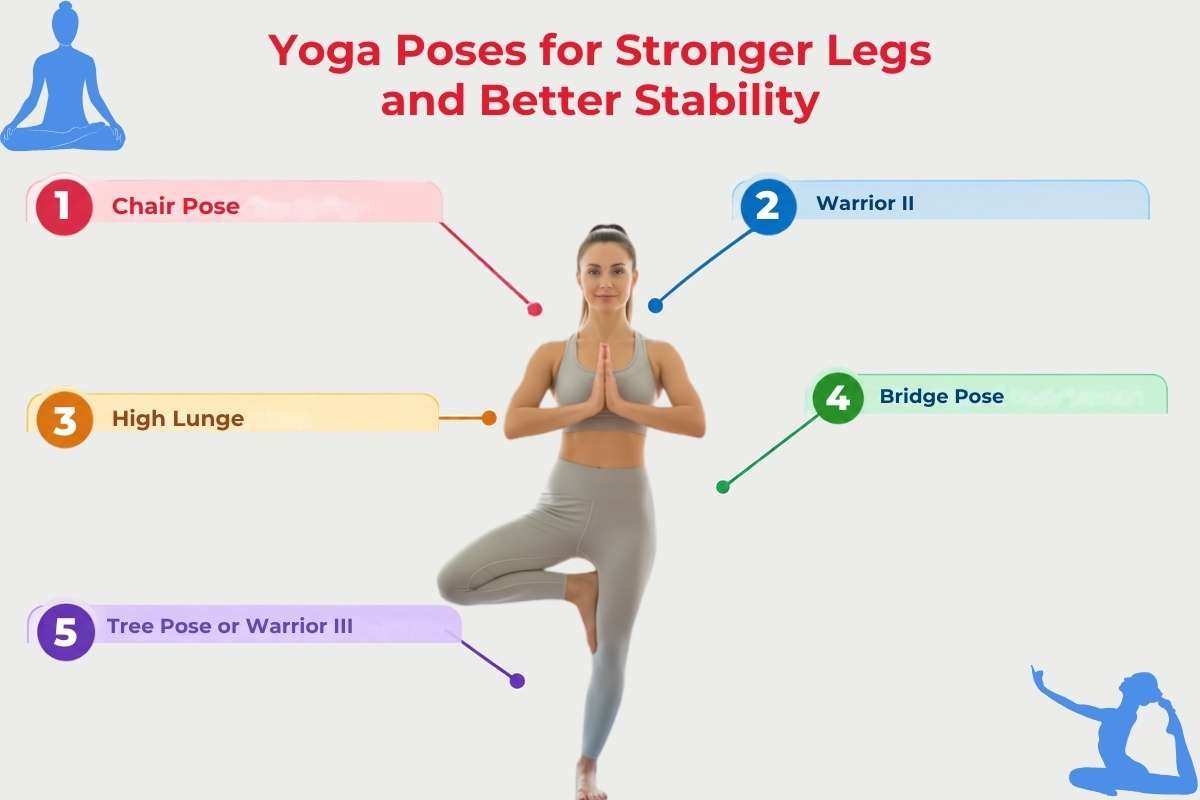
Once you’ve addressed tightness, the next step is building functional strength and stability. Yoga for legs isn’t just about stretching. It’s also about loading muscles through standing, lunging, and balancing postures that mimic real-world movement. These poses can challenge lower-body muscular endurance, strength, balance, and control without equipment.
Here are five targeted options, each chosen for a specific strength or stability goal:
1. Chair Pose:
Builds quadriceps and glute strength while improving lower-body endurance. Hold for 30–60 seconds to challenge muscular stamina.
2. Warrior II:
Strengthens quads, glutes, and adductors while training lateral stability. The wide stance teaches proper knee tracking and hip alignment under load.
3. High Lunge:
Develops front-leg strength and hip flexor control while demanding balance. Ideal for runners or anyone seeking dynamic lower-body power.
4. Bridge Pose:
Activates glutes and hamstrings through hip extension, complementing standing work with posterior-chain strengthening.
5. Tree Pose or Warrior III:
Challenges single-leg balance, ankle stability, and supporting-leg strength. The tree is more accessible; Warrior III adds core and hamstring engagement.
Why choose one over another? If your goal is endurance, prioritize Chair and Warrior II. For a more dynamic challenge, add controlled High Lunge pulses. For posterior-chain strength and balance, include Bridge and single-leg poses.
Hold strength poses for 3–5 breaths (or 20–40 seconds), repeating 2–3 rounds. Focus on controlled movement and steady breathing, not depth or speed.
For alignment cues and safe progression, refer to guidance from certified yoga instructors and physical therapy–backed resources.
Also Read: Understanding the Science Behind Yoga for Anxiety and Stress Relief
How to Choose the Right Pose for Your Goal
You don’t need to perform every pose in a long sequence to see results. Yoga for legs can be more focused and practical when you match 2–3 targeted postures to your primary goal, whether that’s relieving tightness, building strength, or improving balance. This focused approach saves time and reduces overwhelm.
Use this simple decision table to start:
| Your main goal | Start with | Why |
| Tight hamstrings | Downward Dog, Half Splits | Posterior-leg stretching with controlled range |
| Tight calves | Downward Dog, Legs Up the Wall | Calf-focused movement or gentle recovery |
| Weak thighs | Chair, Warrior II | Strength and endurance through sustained loading |
| Weak glutes | Bridge, High Lunge | Glute and hip engagement via extension and lunge |
| Poor balance | Tree, Warrior III | Single-leg stability and ankle strengthening |
| General mobility | Triangle, Warrior II | Controlled lower-body movement through multiple planes |
Pick one row that matches your current need. Practice those poses 3–5 times per week, holding each for 30–60 seconds (or 5–8 breaths). As your body adapts, rotate to another goal. There’s no need to do everything at once.
Matching poses to your goal can make your practice more focused and practical. A passive stretch is not a substitute for strength-focused training, while balance work has a different primary purpose than flexibility training. By aligning pose selection with intent, you get clearer, faster progress.
Also Read: Stressed Out? This Yoga for Stress Guide Backed by Science Will Help
A Simple Yoga for Legs Routine to Try at Home:
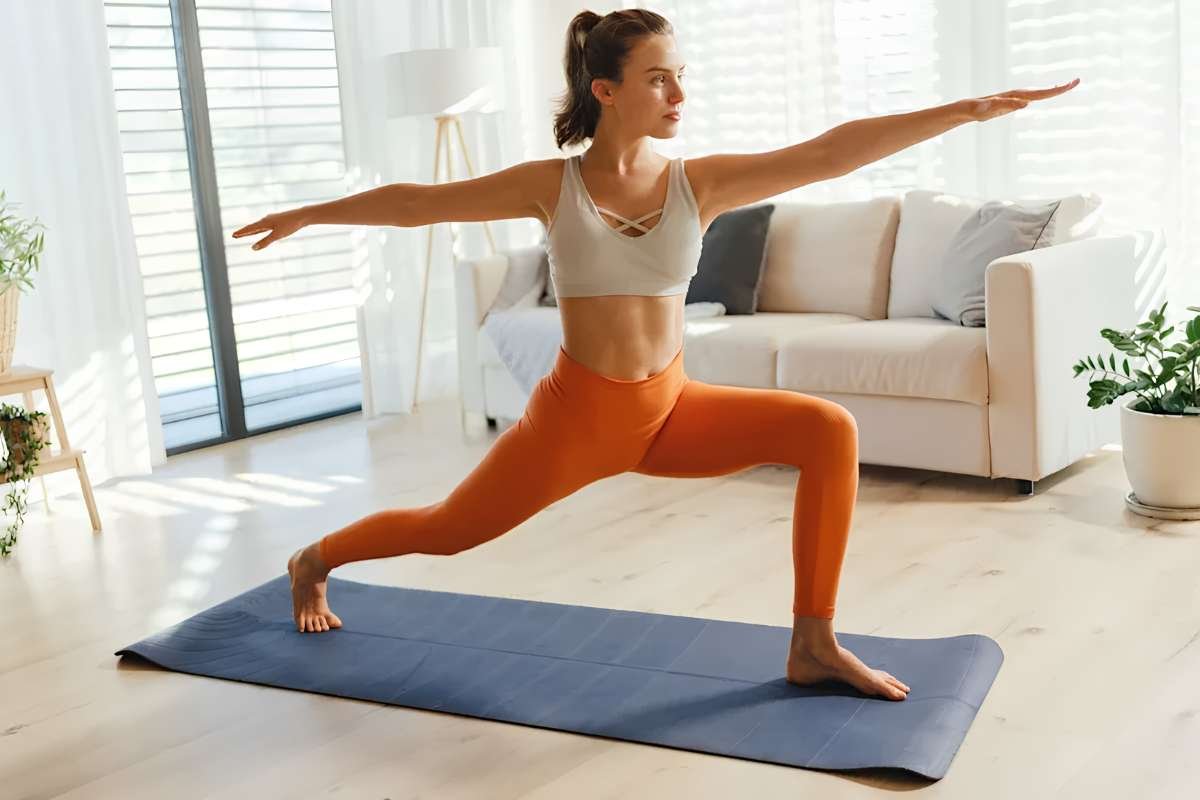
You don’t need a studio or equipment to build leg strength and flexibility. Yoga for legs can be practiced anywhere with just a mat, or even a towel. And 10 to 15 minutes of focused time. This routine balances mobility, strength, balance, and recovery in a logical sequence.
Warm-up (1 minute)
- Mountain Pose – 30 seconds: Stand tall, feet hip-width apart, weight evenly distributed.
- Gentle ankle/calf circles – 30–60 seconds: Lift one foot, rotate ankle; switch sides.
Mobility (2 minutes)
- Downward-Facing Dog – 30 seconds: Pedal feet to stretch calves and hamstrings.
- Triangle Pose – 30 seconds each side: Hinge at hips, reach arms wide, keep spine long.
Strength (2–2.5 minutes)
- Chair Pose – 30 seconds: Sink hips low, engage quads and glutes.
- Warrior II – 30 seconds each side: Bend front knee, arms parallel to floor.
- Bridge Pose – 30–45 seconds: Lift hips, squeeze glutes, press into feet.
Balance (1 minute)
- Tree Pose – 20–30 seconds each side: Foot to calf or ankle (never knee), hands at heart or overhead.
Cooldown (2–5 minutes)
- Legs Up the Wall – 2–5 minutes: Hips close to the wall, legs relaxed, breathe deeply.
Total time: 10–15 minutes. Repeat 3–5 times per week for best results. Modify as needed: bend knees in forward folds, use a wall for balance, or shorten holds if you’re new.
How to Practice These Poses Safely?
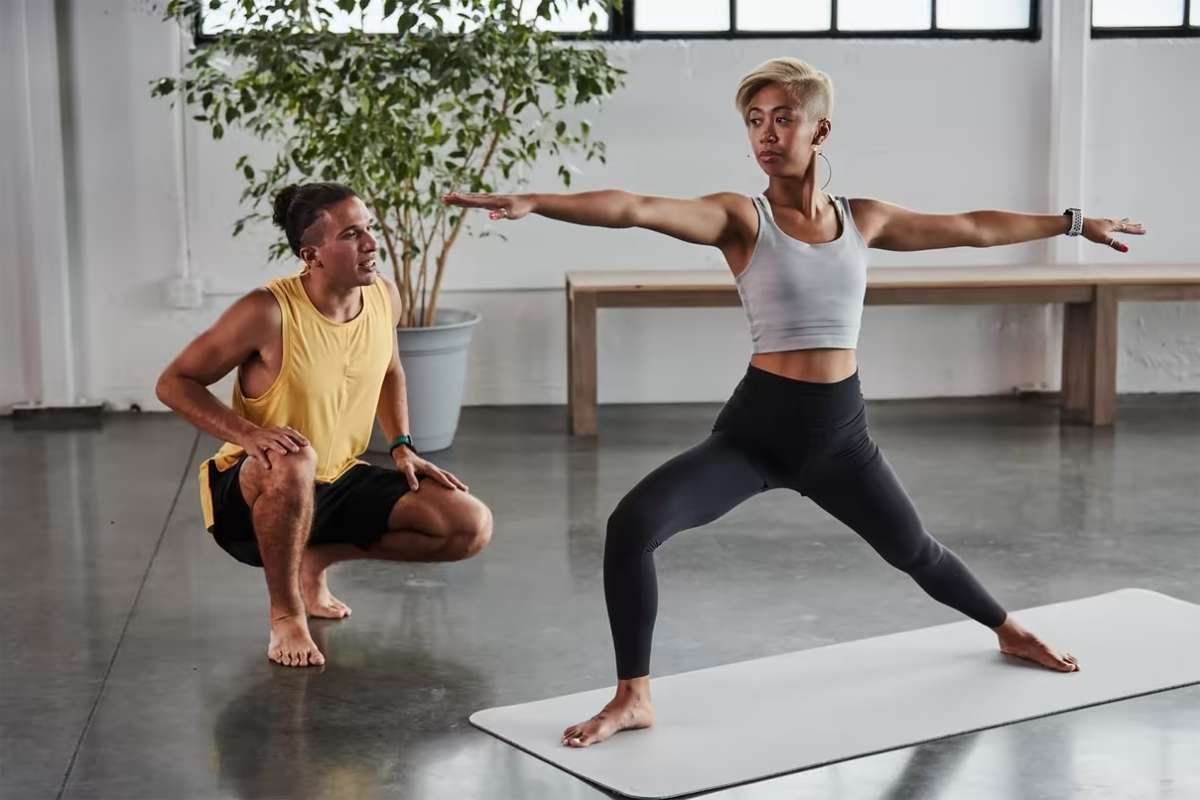
Practicing yoga for legs safely means respecting your body’s current limits while building strength and mobility over time. Start with 2–5 minutes of gentle movement. Ankle circles, seated forward folds with bent knees, or cat-cow. This helps to warm up before deeper stretches.
Never force a range of motion. A healthy stretch feels like mild tension along the muscle, not sharp or severe pain in joints. If you feel pinching in the knee, lower back, or hips, ease off immediately.
Bend your knees generously in forward folds and standing poses to protect hamstrings and lower back.
Use props: place hands on blocks in Triangle or Downward Dog if the floor is out of reach; press into a wall for balance in Tree Pose.
Progress gradually. Hold poses for shorter durations at first (15–20 seconds). Then build to 30–60 seconds as your body adapts. Don’t chase a deeper pose just because someone else can do it. Alignment matters more than depth.
Modify as needed: lower your back knee in High Lunge, use a folded blanket under your knees in kneeling poses, or practice Chair Pose with your back against a wall for support.
Listen to your body daily. Mild muscle soreness is normal; joint pain that lingers into the next day means you did too much. When in doubt, consult a certified instructor or physical therapist for personalized guidance.
When Leg Stiffness or Pain Needs More Than Yoga
Not all leg discomfort is the same. Normal tightness, often from sitting, training, or daily activity. Typically eases with gentle movement and doesn’t involve significant pain. It may feel stiff in the morning but loosens within minutes of walking or stretching.
Yoga for legs can support flexibility and recovery in these cases. But it should never be used to push through unexplained or worsening symptoms. Seek medical assessment if you experience any of the following:
- Persistent or worsening pain that doesn’t improve with rest
- Significant swelling, especially if sudden or in one leg
- Sudden weakness, numbness, or loss of sensation
- Difficulty walking or bearing weight
- Symptoms following a significant injury (fall, twist, impact)
- Redness, warmth, or discoloration in the leg or calf
- Pain accompanied by fever, shortness of breath, or chest discomfort
These signs may indicate issues like blood clots, nerve compression, fractures, or circulatory problems. These symptoms can indicate conditions that require professional evaluation rather than self-treatment.
Also Read: Embarking on a Tranquil Journey: Yoga Poses for Beginners
Conclusion:
Your legs carry you through every part of your day, so they deserve more than an afterthought. Yoga for legs isn’t about perfecting every pose. It’s about matching the right movement to what your body actually needs, whether that’s easing stiffness, building strength, or improving balance.
Start small: pick one goal, practice a few targeted poses consistently, and let your body adapt at its own pace. Progress shows up in how you move, not just how deep you stretch.
Roll out your mat today and try just one pose from this guide. Your legs will thank you tomorrow.
FAQ:
1. Can yoga tone your legs?
Yoga can strengthen and condition your leg muscles through weight-bearing and standing poses. However, visible muscle definition also depends on factors such as overall muscle mass and body composition.
2. Can yoga make your legs more flexible?
Regular yoga that includes stretching can improve flexibility over time. Consistency matters more than forcing deeper stretches, and flexibility gains vary from person to person.’
3. Can beginners do yoga for legs?
Yes. Beginners can start with gentle poses and use modifications such as bent knees, yoga blocks, or a wall for support.
4. Can yoga tone your legs?
The quickest way to tone your legs is to combine high-intensity lower-body strength circuits with a clean, protein-rich diet.
5. How often should I do yoga for my legs?
You can practice leg-focused yoga several times a week, depending on your fitness level and recovery.