
Feeling bloated or uncomfortable from trapped gas? A few gentle yoga positions may help encourage gas movement and ease abdominal discomfort. While yoga cannot guarantee instant relief, poses such as Wind-Relieving Pose, Child’s Pose, and Cat-Cow can be simple options to try.
Below are some Yoga Positions to Relieve Gas. These postures will enable the person to feel more comfortable and to ease any unpleasant feelings. Certain postures can be of help in expelling gas.
Yoga Positions to Relieve Gas: Which Ones Should You Try First?
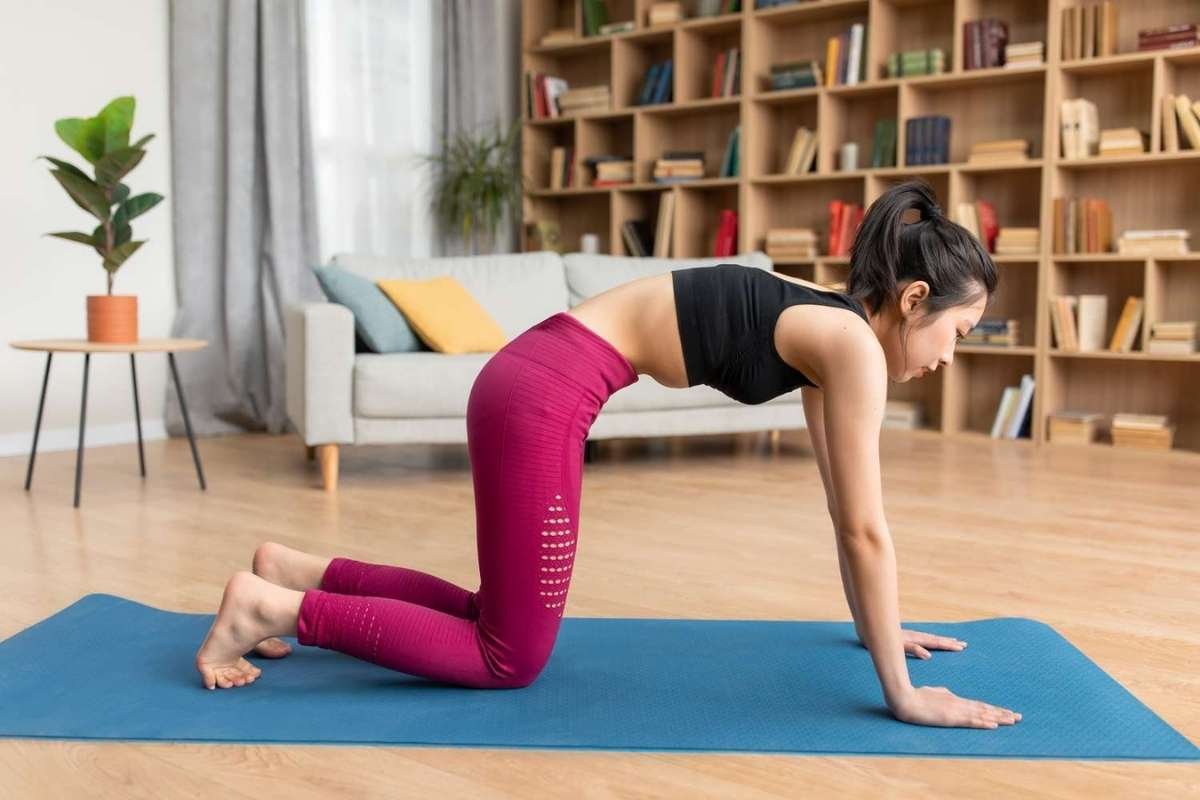
There isn’t one scientifically proven “best” yoga pose for everyone, because bodies and digestive patterns differ. Instead, pick the pose that matches how you feel and how much movement you want right now.
| If you… | Try… |
| Want the simplest option. | Wind-Relieving Pose (knees-to-chest) |
| Prefer a resting pose. | Child’s Pose |
| Want gentle movement | Cat–Cow |
| Feel comfortable twisting | Supine Spinal Twist |
| I want a deeper hip/abdominal position. | Happy Baby |
- Wind-Relieving Pose gently compresses the lower abdomen and is often highlighted as a top choice for trapped gas.
- Child’s Pose offers calming, restorative pressure on the belly while you breathe slowly.
- Cat–Cow rhythmically mobilizes the spine and can help “massage” the digestive tract with each breath.
- Supine Spinal Twist and Happy Baby add mild rotation or hip opening that may encourage gas to move along.
Important caveat: yoga may help relieve discomfort or encourage gas movement, but it cannot guarantee that you will pass gas immediately. Think of these as comfort and mobility tools, not instant cures.
If symptoms are severe, persistent, or accompanied by red flags (fever, vomiting, blood in stool, unexplained weight loss), seek medical advice rather than relying on yoga alone.
For many people, starting with the simplest option that feels good, then adding one or two others, works better than hunting for a single “best” pose.
5 Yoga Positions to Relieve Gas and Bloating:
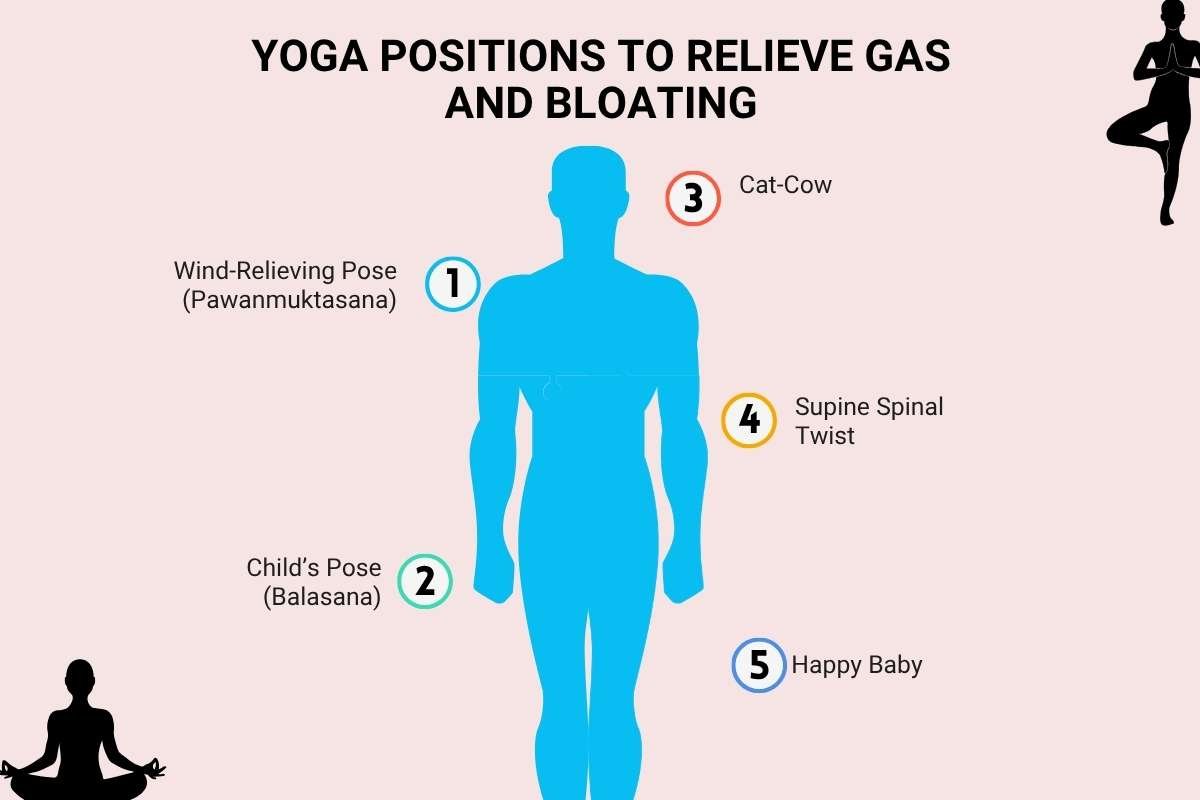
Gas and bloating often ease with poses that gently compress the abdomen and calm the nervous system, encouraging trapped air to move along. Some poses gently change pressure around the abdomen, while rhythmic movement may help support normal gastrointestinal movement. These effects may make gas easier to pass for some people, although relief isn’t guaranteed. While deep breathing shifts the body into a “rest and digest” state that’s healthier for the gut. Here are five simple poses to try:
1. Wind-Relieving Pose (Pawanmuktasana)
Lie on your back and hug both knees to your chest. Hold for 5–10 slow breaths. The gentle pressure on the belly may help ease trapped gas.
Modification: hug one knee at a time if both feel too intense.
2. Child’s Pose (Balasana)
Kneel with big toes touching, sit back on your heels, and fold forward with your forehead resting down. Hold for 5–10 breaths. This grounding pose can help relieve discomfort from bloating by applying gentle pressure to the abdomen.
Modification: Place a pillow or block under your torso or forehead.
3. Cat-Cow
On hands and knees, alternate arching and rounding your spine with your breath for 5–10 cycles. This gentle movement massages the belly without prolonged compression. It is useful if lying down feels uncomfortable.
4. Supine Spinal Twist
Lying on your back with knees bent, gently drop both knees to one side for 5–10 breaths, and then switch. Twists are widely favored because they gently massage internal organs and help gas move through the system more quickly.
5. Happy Baby
On your back, draw your knees toward your armpits and hold your feet (use a strap if needed). This pose is considered helpful for releasing gas and relieving a bloated belly.
“Wind-relieving pose directly targets bloating by gently compressing the abdomen, and the repeated hold-and-release movement helps to release trapped gas,” says Melissa Leach, certified yoga instructor at Yoga-Go.
Also Read: 7 Yoga Poses to Help Promote Digestion (Plus a Simple Daily Routine)
How Yoga May Help Move Trapped Gas?
Yoga doesn’t “cure” gas, but three plausible mechanisms may help trapped air move and ease discomfort.
1. Gentle movement
Light, rhythmic motion can support gastrointestinal motility. This may help gas travel through the digestive tract rather than staying stuck in one spot.
2. Abdominal compression and release
Poses such as knees-to-chest, gentle forward folds, and mild twists change pressure around the abdomen. This “compress–release” pattern may encourage gas to shift along the colon for some people.
3. Relaxation and breathing
Slow breathing and restorative postures can reduce physical tension and support the body’s “rest-and-digest” (parasympathetic) state via the gut–brain axis. When stress drops, digestive symptoms like bloating and gassiness may feel less intense.
These are possible mechanisms, not guaranteed outcomes; responses vary by person and by cause of the gas. Framing them this way avoids overclaiming.
Use alongside sensible eating habits and medical advice when needed. These ideas help explain why many people find relief with specific yoga positions to relieve gas.
A Simple 5–10 Minute Yoga Routine for Gas Relief:
Do these poses in sequence, rather than randomly. It helps guide trapped gas through the digestive tract while keeping your body relaxed. Move slowly, breathe through your nose, and never force a stretch. Stop immediately if pain increases, and feel free to shorten the sequence if anything feels uncomfortable.
- Deep belly breathing — 1 minute, seated or lying down.
↓ - Cat-Cow — 5–10 slow rounds
↓ - Wind-Relieving Pose — 5 breaths
↓ - Child’s Pose — 5 breaths
↓ - Supine Spinal Twist — 5 breaths per side
↓ - Happy Baby (optional) — 5 breaths
Total time: 5–10 minutes, depending on how long you hold each pose.
Slow, diaphragmatic breathing isn’t just a warm-up. It directly activates the parasympathetic (“rest-and-digest”) system, and slow, controlled breathing can promote relaxation and may support parasympathetic activity. Pairing relaxed breathing with gentle movement can make the routine more comfortable. In gut-related trials, diaphragmatic breathing has improved vagal activity and reduced reflux symptoms, supporting its role in helping digestive organs work more efficiently.
Practiced consistently, these short yoga positions to relieve gas can become a simple, repeatable habit for easing discomfort after meals or during flare-ups.
Also Read: Eating but Still Bloated? Here’s What May Help and Ways to Reduce Bloating
How to Practice Safely and When to Stop
Abdominal compression should be done gently without pressing or squeezing too hard onto your belly. Breathe normally while keeping the positions. Do not hold your breath in twisting positions. Make sure you turn until you feel comfortable with twisting. If you have trouble doing the practice, do use yoga props under your knees, hips, or head. Always stop your session if you feel either strong, and constant or never felt pain.
Who should check with a clinician first?
- Pregnant individuals (some twists and compressions aren’t recommended)
- Anyone with recent abdominal or pelvic surgery
- People with significant back or hip injuries
- Those with balance or musculoskeletal conditions affecting movement
- Anyone with a GI condition where movement worsens symptoms (e.g., IBD flare-ups)
Always stop your session if you feel sharp, worsening, or unusual pain. Mild pressure or a stretching sensation is normal, but sharp or intense pain is not.
When Gas May Need Medical Attention?
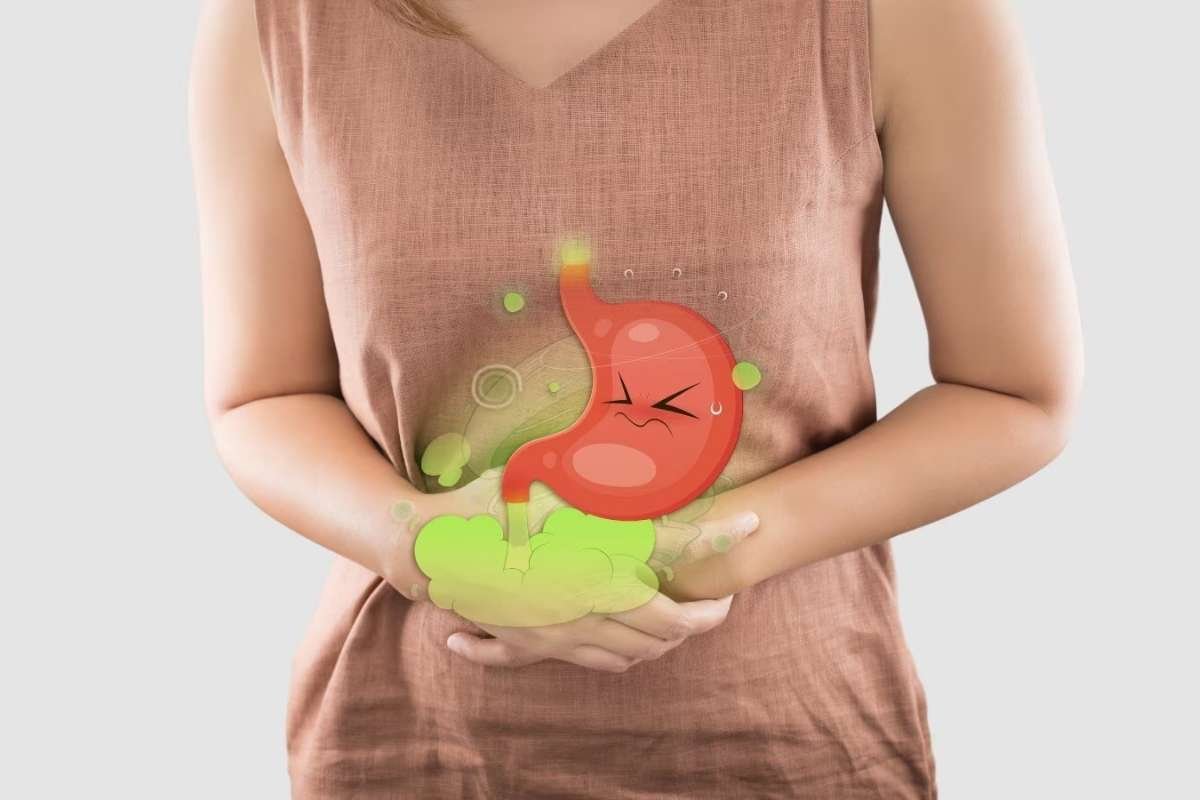
Occasional gas and mild bloating are common, but persistent or severe symptoms shouldn’t be dismissed as “just trapped gas.” While yoga poses to relieve gas can help with everyday discomfort, medical evaluation is important when red-flag signs appear. Sources advise seeing a doctor if gas or bloating is accompanied by:
- Severe or persistent abdominal pain
- Repeated or worsening bloating
- Unexplained weight loss
- Blood in stool or black, tarry stools
- Persistent vomiting
- Major changes in bowel habits lasting weeks
- Symptoms that repeatedly interfere with daily life or wake you at night
These patterns can signal underlying conditions that need proper diagnosis and treatment, not just home remedies. If you notice any of these warning signs, consult a healthcare professional promptly.
Conclusion:
Gas trapped in your system can be bothersome, but that shouldn’t ruin your day. A few gentle yoga poses combined with slow breathing and mindful movement may help relieve the tension caused by gas and aid digestion. If these yoga poses to relieve gas feel comfortable and seem to help, you can incorporate them into your routine. It is also important to listen to your body and make adjustments.
If you have persistent bloating or discomfort, it is advisable to consult a doctor. Otherwise, try your yoga poses the next time gas builds up.
FAQ:
1. What position for instant gas relief?
The wind-relieving pose may help some people move trapped gas, but there is no proven yoga position that guarantees instant relief.
2. How do I release trapped gas quickly?
To release trapped gas quickly, try doing a light 10- to 15-minute walk or practicing the knee-to-chest yoga pose to stimulate your digestive tract.
3. Can yoga make you fart?
Yes. Gentle yoga movements and abdominal positions may help trapped gas move and make it easier to pass. However, relief isn’t guaranteed or immediate.
4. Can walking help trapped gas?
Yes. Gentle walking can encourage movement through the digestive tract and may help trapped gas pass while easing bloating and discomfort.
5. What are the best yoga positions to relieve gas and bloating?
Specific yoga poses like the wind-relieving pose, child’s pose, and supine spinal twists gently compress and massage the abdominal organs.