Key Takeaway:
- Japanese researchers developed a drug candidate that may extend the stroke recovery window by blocking the ZFP384 protein.
- The treatment keeps brain immune cells producing IGF1, helping sustain motor function recovery in mice.
- Human treatment is still experimental, with clinical use estimated 10–20 years away.
Researchers at the Institute of Science, Tokyo, have identified a promising drug candidate that could enhance Stroke Recovery by extending the brain’s ability to repair itself. According to findings published Wednesday in Nature, the treatment works by suppressing a protein that normally limits the brain’s repair mechanisms.
Scientists Target Protein That Limits Brain Recovery
A research team in Japan says it has developed a potential treatment that could prolong the window for restoring motor functions lost after a stroke, a period currently limited to roughly two months.
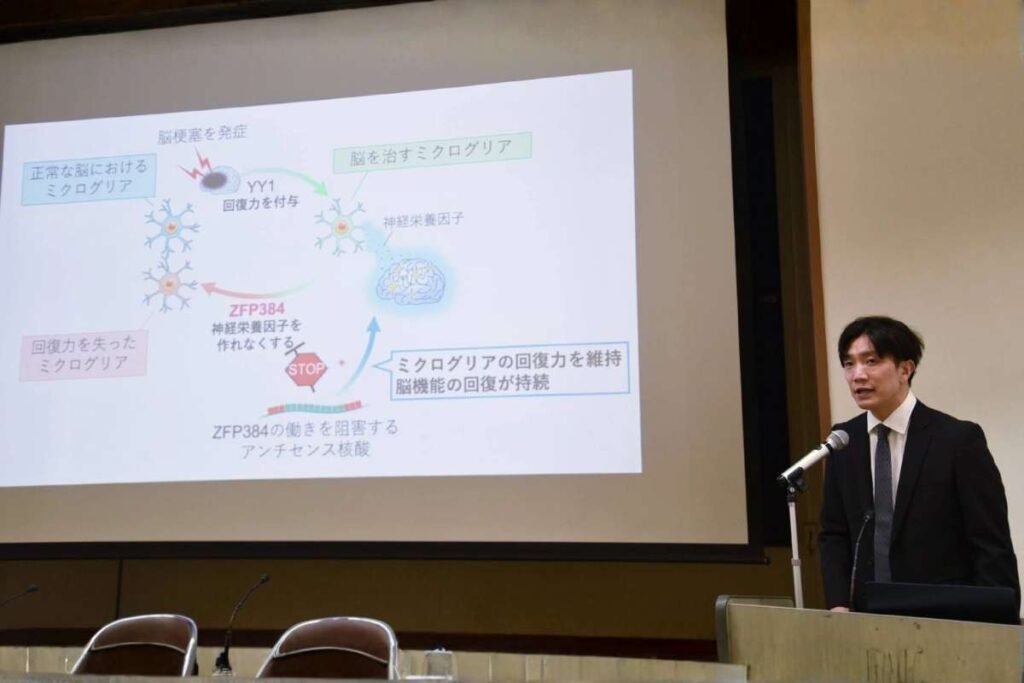
Stroke patients often regain speech or movement through rehabilitation because surviving brain cells rebuild damaged neural networks. Immune cells in the brain, known as microglia, aid this repair by releasing a protein called insulin-like growth factor one, or IGF1.
The team, led by Professor Takashi Shichita, discovered that microglia eventually stop producing IGF1 after a stroke. Researchers found that this shutdown occurs due to the activity of another protein, ZFP384, which suppresses the repair process.
“Our findings suggest that controlling this protein could extend the brain’s natural recovery phase,” Shichita said.
Mouse Studies Show Improved Functional Recovery
Using genetically modified mice, researchers blocked production of ZFP384 and observed continued secretion of IGF1 by microglia. The sustained release helped maintain recovery of motor functions beyond the normal rehabilitation window.
The team confirmed the same biological mechanism in brain samples from deceased stroke patients, suggesting the process also occurs in humans.
Scientists developed an experimental drug designed to inhibit ZFP384 production. The treatment belongs to a class of therapies known as antisense oligonucleotides, or ASOs, which bind to messenger RNA and prevent harmful proteins from forming.
After injections of the drug candidate, mice demonstrated extended recovery of brain function compared with untreated animals, according to the study.
ASO therapies are increasingly used to treat rare neurological disorders, raising hopes that similar approaches could aid stroke recovery.
Human Use Still Years Away, Researchers Say
Despite promising early results, researchers cautioned that the treatment remains in preclinical stages and requires significant refinement before human trials.
Shichita said scientists must improve the drug’s effectiveness and delivery methods to ensure safety and long-term benefits.
“We will work hard toward delivering the drug to patients in 10 to 20 years,” he said.
Stroke Recovery remains one of the most critical challenges in healthcare, as many patients permanently lose mobility or speech once the brain’s natural healing window closes. Extending that period could greatly improve rehabilitation outcomes and enhance overall quality of life.
The findings, published online Wednesday, mark an early step toward therapies aimed at enhancing the brain’s natural repair mechanisms rather than replacing damaged tissue.
Researchers said further studies will focus on optimizing dosage, testing long-term effects, and preparing for eventual clinical development.
Visit Healthcare 360 Magazine For The Most Recent Information.