Key Takeaway:
- California launched a public review of acrolein and ethylene oxide after new data showed that these California air carcinogens pose higher cancer risks than previously estimated.
- Officials plan expanded monitoring and a proposed $2.5 million funding request to identify sources and reduce exposure.
- Public comments run through June 29 as regulators move toward scientific review and potential approval of new risk standards.
California regulators today released draft findings on acrolein and ethylene oxide, two chemicals now classified as California air carcinogens. The announcement launches a yearlong public review after new monitoring data revealed that these substances pose higher cancer risks than previously understood across the state.
State Begins Scientific Review Of Known Air Toxics
California officials announced draft cancer risk values for acrolein and ethylene oxide, two air toxics long present in the state but now considered more dangerous based on updated monitoring research.
The findings begin a public review process that will include scientific evaluation, public comment, and ultimately a vote by the Scientific Review Panel on Toxic Air Contaminants.
“We expect this process to take about a year,” said Kris Thayer, director of the state Office of Environmental Health Hazard Assessment.
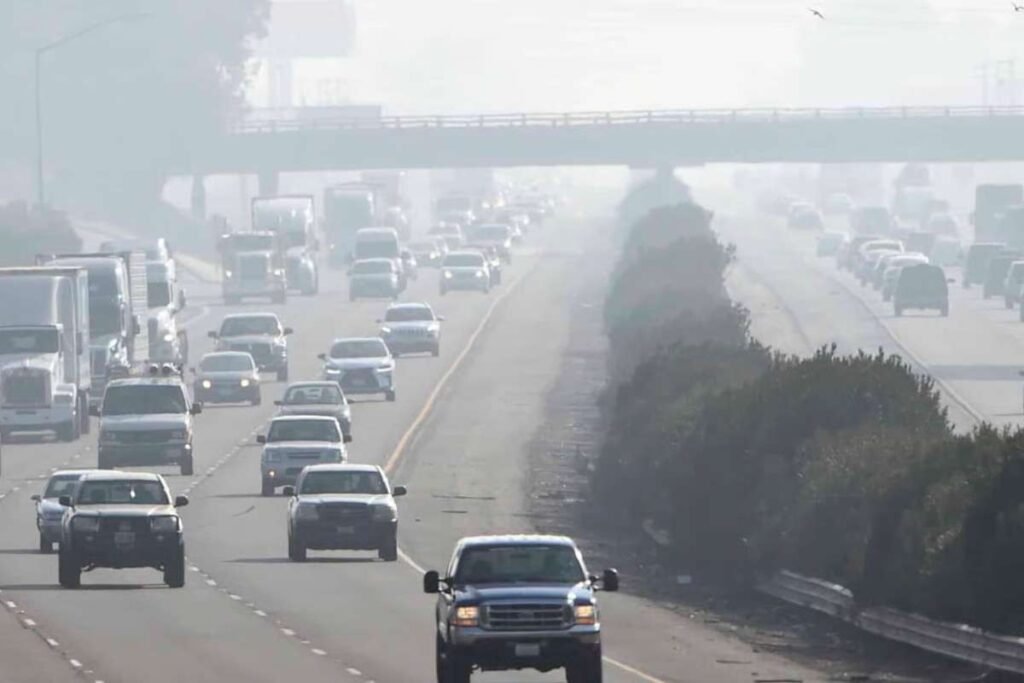
State regulators said each chemical carries roughly 10 times the cancer risk of benzene, a pollutant commonly found in gasoline and vehicle exhaust. Officials said both substances appear more carcinogenic than earlier estimates suggested.
Acrolein is emitted from aircraft exhaust, wildfire smoke, and certain pesticides, while ethylene oxide is used as a sanitizing agent and also occurs in cigarette smoke. Small amounts form naturally in the human body, said David Edwards, chief deputy director with Thayer’s office.
“The risk is based on limited air monitoring data,” Edwards said.
Limited Data Prompts Calls For More Testing
Researchers have known about ethylene oxide in California air since 1987 and acrolein since 1993. However, new studies prompted the state to reassess health risks and begin a formal regulatory review.
Courtney Smith, principal deputy executive officer of the California Air Resources Board, said monitoring data remain scarce. Ambient measurements for ethylene oxide, one of the California air carcinogens, have been collected at only two sites in Southern California.
State officials said additional testing is needed to identify major pollution sources and develop strategies to reduce exposure.
Gov. Gavin Newsom plans to request $2.5 million in the revised fiscal year 2026-27 budget to expand research and monitoring efforts, Smith said.
The funding proposal comes as the U.S. Environmental Protection Agency considers rolling back federal rules governing ethylene oxide emissions and reevaluating related science.
California Environmental Protection Agency Secretary Yana Garcia said the state intends to continue advancing independent research on California air carcinogens despite federal changes.
“We must stay focused on improving air quality,” Garcia said in a statement. “California is doubling down on independent, best-in-class science that paves the way to healthier air for all Californians.”
Health Effects Highlight Need For Public Awareness
Health officials said breathing either chemical can irritate the nose, throat, and respiratory system. Cyrus Rangan, public health medical officer and director of the Children’s Environmental Health Center, emphasized that the pollutants themselves are not discoveries.
“The presence of the chemicals in our air is nothing new,” Rangan said.
State data show that about 94% of Californians regularly breathe air containing unhealthy levels of pollutants. Because acrolein and ethylene oxide are now recognized as California air carcinogens that exceed state safety guidelines, regulators said further study is required before risk‑reduction measures are finalized.
Officials pointed to California’s transition toward zero-emission vehicles as a long-term strategy to reduce emissions linked to both chemicals.
Individuals can also lower exposure risks by avoiding smoking and vaping, improving home ventilation while cooking, and closing windows during heavy traffic periods, Rangan said. He added that large lifestyle changes are unlikely to be necessary.
“This is much more about awareness,” he said.
The public comment period on the draft findings opens today and runs through June 29. State agencies will hold workshops statewide before a second comment period and peer review. The scientific panel will then vote on whether to approve the findings.
Visit Healthcare 360 Magazine For The Most Recent Information.