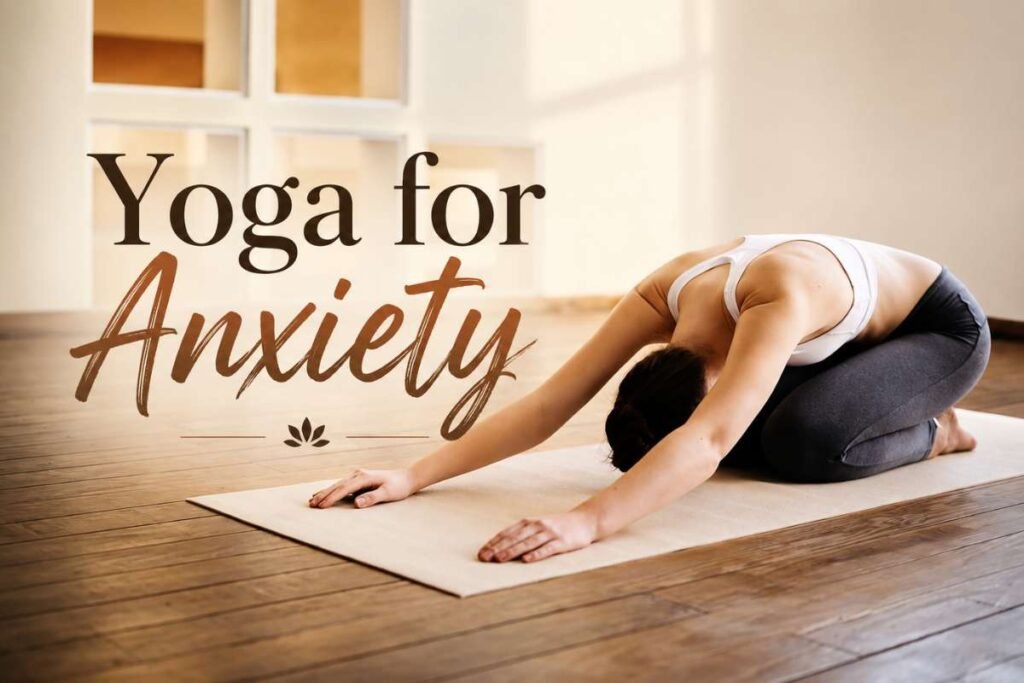
Yoga for anxiety is a clinically recognized practice that helps regulate your nervous system. By using styles like restorative yoga, Hatha, or breathwork, you stimulate the vagus nerve to lower cortisol and shift your body from fight-or-flight to rest-and-digest. Consistent practice builds long-term stress resilience, serving as a powerful, non-pharmaceutical tool for your mental well-being. Read the full guide to learn how to get started today.
Anxiety affects more than 40 million adults in the United States each year.
For many, finding effective, non-pharmaceutical tools to manage day-to-day stress is a top priority for long-term health.
More health professionals are now recommending yoga for anxiety as a safe and accessible way to help your mind reset.
This article studies how simple movement and focused breathing can act as a steady anchor, helping you find calm when life feels a bit too much.
Does yoga actually calm the nervous system?
When you’re feeling anxious, your body shifts into fight-or-flight mode. That is why your heart starts racing, and your muscles feel tight. Your body is flooding with stress hormones like cortisol and adrenaline to prepare you for a threat.
Yoga is like hitting the brake pedal on that reaction. It helps stimulate your vagus nerve, which tells your body to switch over to rest-and-digest mode.
By focusing on slow, gentle movements, you are sending a physical signal to your brain that you are safe. This helps your heart rate slow down and lets your muscles finally release that pent-up tension.
Is there scientific evidence for yoga for anxiety?
According to the National Center for Complementary and Integrative Health (NCCIH), yoga is a valuable, complementary tool for reducing stress.
While it isn’t a replacement for professional treatment for anxiety disorders, research shows it is highly effective at calming the physical signs of stress in your body.
You will get the most out of your practice if you do it consistently. Think of it less like a quick fix and more like building your own stress resilience.
By practicing regularly, you are training your body to recover faster after stressful events instead of staying stuck in that high-alert, anxious state.
Which styles of yoga for anxiety should you try?
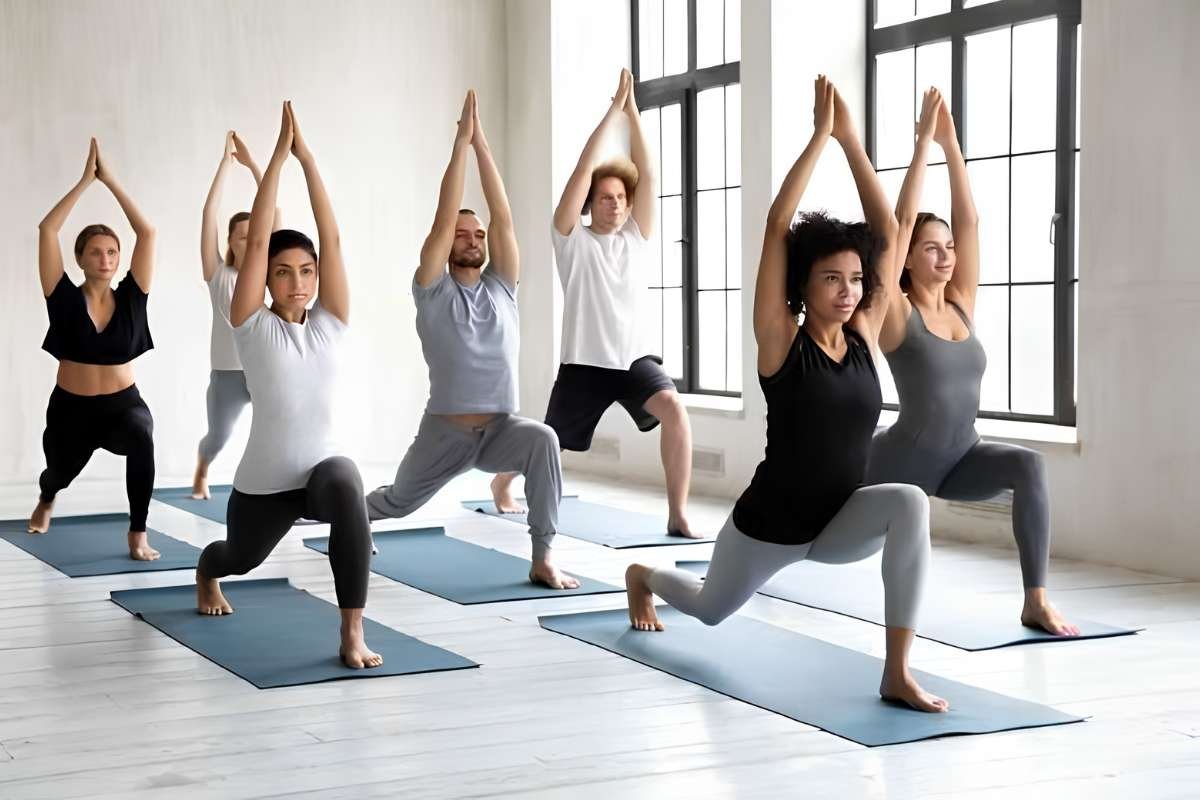
For anxiety management, the goal is to shift your nervous system out of fight mode. You should prioritize styles that focus on slow, rhythmic movement and breath control rather than high-intensity calorie burning or complex acrobatic poses.
The following table provides a quick reference for styles recommended by clinical practitioners for stress reduction.
| Yoga Style | Primary Benefit | Best For |
| Restorative | Deep, total body relaxation | Want to deeply unwind at the end of a long day. |
| Hatha | Gentle, steady movement | Building consistent, gentle habits |
| Yoga Nidra | Offers guided mental rest | Overactive minds; better sleep |
| Pranayama | Uses focused breathing | Calming acute stress; grounding |
If you are ready to get started, here is a breakdown of each style, how to practice it, and why it works so well for calming your anxiety.
Restorative yoga
This practice uses props like blankets, bolsters, or sturdy pillows to support your body in passive poses. Because your body is fully supported, you can hold positions for 5 to 20 minutes without physical strain.
How to do it: Find a quiet space and prop yourself up with pillows so that your body feels completely relaxed and held. A simple Child’s Pose with a bolster under your torso is a great start. Focus on deep, slow exhales.
The lack of physical effort signals to your brain that there is no immediate threat, which effectively lowers your cortisol levels. It is highly effective for evening routines when your goal is to wind down your nervous system.
READ MORE:
- Stressed Out? This Yoga for Stress Guide Backed by Science Will Help
- What Are the Best Prenatal Yoga Poses for Every Stage of Pregnancy? Here’s the Complete List of 40
Hatha yoga
Hatha is a foundational style that focuses on holding individual poses with a deliberate focus on breath. Because the movements are slower, it is much easier for beginners to follow than faster-paced classes.
How to do it: Start with basic poses like Mountain Pose or a gentle Forward Fold. Hold each shape for 3 to 5 breaths, focusing on how your muscles feel rather than how perfect you look. If you are new, look for Gentle Hatha classes online.
By moving slowly, you develop better body awareness and grounding. This focus on the present moment makes it easier to quiet an overactive mind and move your focus away from anxious thoughts.
Yoga nidra
Often called yogic sleep, this is a guided meditation practice where you lie still and follow a voice-led script. You do not perform any physical postures, which makes it perfect if you are feeling fatigued.
How to do it: Lie down in a comfortable position, cover yourself with a blanket, and listen to a guided Yoga Nidra recording (you can easily find these on free apps or YouTube). Simply follow the voice’s instructions to relax different parts of your body.
The practice guides your brain waves into a state similar to deep sleep while you remain conscious. Research suggests this helps significantly with sleep quality and reduces symptoms of emotional burnout.
Pranayama (breathwork)
Pranayama is the formal practice of controlling your breath. It is perhaps the most accessible tool you have, as you can use it anywhere at your desk, in your car, or before a stressful meeting.
How to do it: Try Nadi Shodhana (alternate nostril breathing). Gently close your right nostril with your thumb, inhale through the left, close the left, and exhale through the right. Repeat this cycle for a few minutes.
This technique balances your autonomic nervous system, providing a rapid physiological intervention. It is one of the fastest ways to hit the reset button when you feel an anxiety spike approaching.
How can I add yoga for anxiety into my mental health routine?
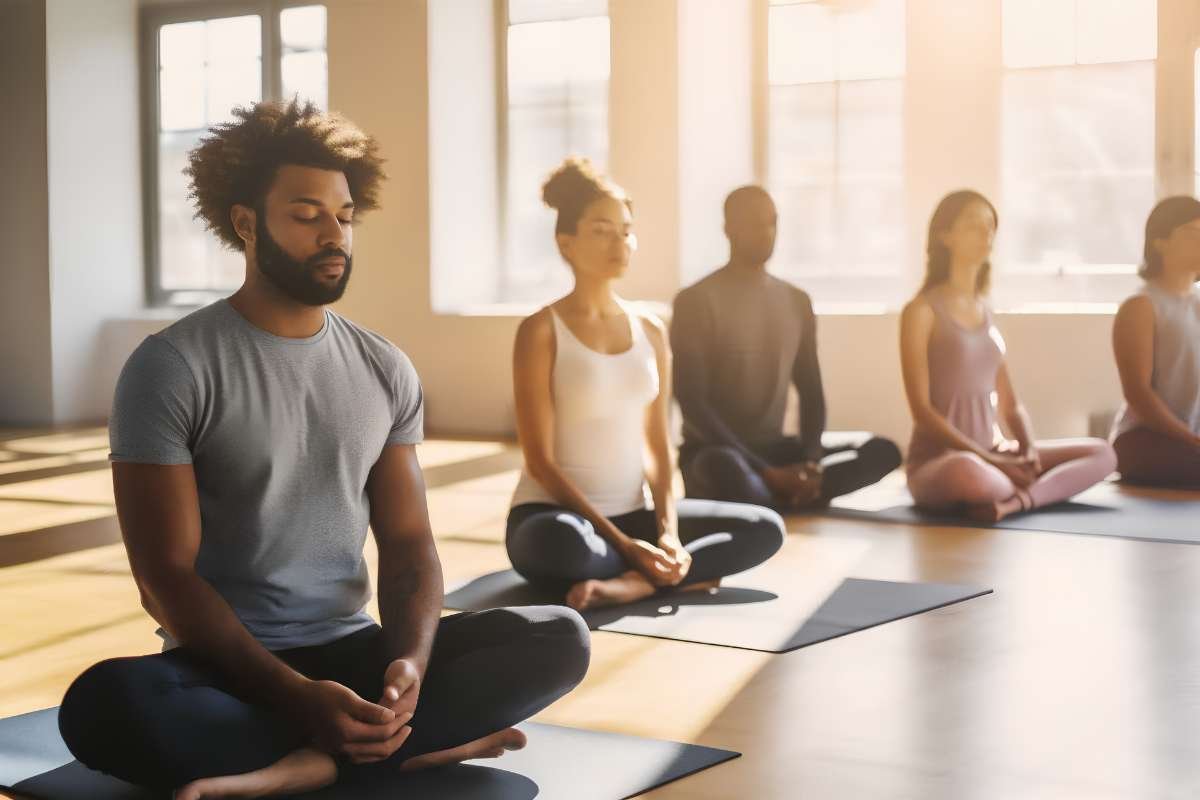
You do not need an hour of free time or a gym membership to start. The most effective approach for mental health is consistency, not duration.
Start with a low-threshold commitment of 5 to 10 minutes a day. Focus specifically on your breathing (Pranayama) or simple, seated stretches. By prioritizing sensation over form, you avoid the performance anxiety that can sometimes come with learning new physical movements.
When should you seek professional help for anxiety?
Yoga is a supportive tool, but it should not replace medical treatment for severe anxiety or panic disorders.
If your anxiety is interfering with your ability to work, maintain relationships, or complete daily tasks, you should consult your primary care provider or a mental health professional.
Professional therapy, such as Cognitive Behavioral Therapy (CBT), remains the gold standard for clinical anxiety.
Your doctor can help you determine the right balance of professional care and complementary wellness practices, such as yoga, to ensure you have a safe and effective plan.
Conclusion:
Adding yoga for anxiety into your routine is a gentle, evidence-backed way to support your mental well-being. Whether you start with just five minutes of deep breathing or a restorative pose before bed, remember that consistency is your best ally in building long-term stress resilience. This practice is a powerful tool for your wellness toolbox, one that works best when used mindfully alongside professional care whenever you need it most.
FAQs
1. Do I need to be flexible to practice yoga for anxiety?
No. Yoga focuses on nervous system regulation rather than physical performance. You do not need to touch your toes or master complex poses to receive the health benefits.
2. How often should I practice to feel a difference?
Even brief, consistent sessions as little as 10 minutes a day can help improve your baseline stress levels over time. Consistency is more effective for long-term health than the length of individual sessions.
3. Can yoga replace my anxiety medication?
No. Yoga is a complementary tool designed to work alongside medical care. Always consult your healthcare provider before changing your treatment plan or medication.
4. Is it normal to feel emotional during yoga?
Yes. Movement can release stored tension in the body, which may lead to an emotional response. If you feel overwhelmed, it is okay to stop and rest in a comfortable position until you feel ready to continue.
5. How does yoga help with sleep-related anxiety?
Yoga Nidra and restorative poses help shift the body into a state of deep relaxation. By lowering cortisol levels before bed, these practices can help calm the racing thoughts that often prevent restful sleep.