Yoga for calm works best when you combine slow breathing with gentle poses like Legs-Up-The-Wall and Child’s Pose. This guide walks you through a simple 15-minute routine, plus quick fixes for sleep, anxiety, work stress, and kids. Follow along, and you’ll learn exactly which poses to use, how long to hold them, and when to skip them. This will help you calm a busy mind.
Your shoulders are up near your ears. Your thoughts are racing. You’ve tried deep breathing, but it only helps for a minute.
If this sounds familiar, you’re not alone. Many people search for quick, real ways to settle down without medication or a 90-minute class. Yoga for calm is one of the most researched and accessible tools for this. You don’t need flexibility, a fancy mat, or an hour to feel the difference.
This article gives you a short, structured sequence you can do today, plus scenario-specific tweaks for sleep, panic, work stress, and kids. We’ll also look at why yoga actually calms the nervous system, not just the mind.
What does a 15-minute yoga for calm flow look like?
This sequence, called the Calm Flow, uses six poses done slowly with breath cues. Total time: about 15 minutes, including rest. Move at your own pace: if a pose needs more time, take it.
| Pose | Breath Cue | Time | Purpose |
| Seated breathing (Sukhasana) | Inhale 4 counts, exhale 6 counts | 2 min | Settles the nervous system before movement |
| Cat-Cow (Marjaryasana-Bitilasana) | Inhale to arch, exhale to round | 2 min | Releases spine tension, links breath to motion |
| Child’s Pose (Balasana) | Slow nasal breathing | 2 min | Grounds the body, lowers heart rate |
| Standing Forward Fold (Uttanasana) | Exhale as you fold | 2 min | Eases neck and shoulder tightness |
| Legs-Up-The-Wall (Viparita Karani) | Natural breath, extend exhale | 4 min | Activates rest-and-digest response |
| Final relaxation (Savasana) | No cue, just observe breath | 3 min | Let the nervous system fully settle |
Here’s how to do each yoga for calm pose, step by step, with tweaks and who should be careful.
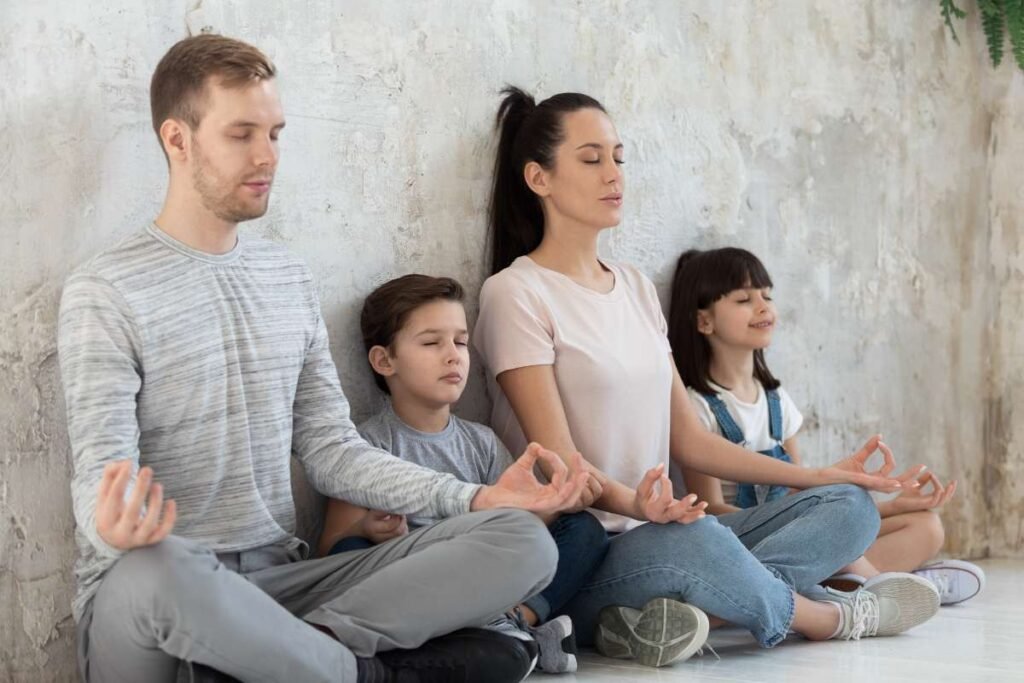
1. Seated breathing (sukhasana)
This is where the practice starts. Before you move your body at all, you slow your breath. This tells your brain it’s safe to relax, and it sets the pace for the rest of the sequence.
Steps:
- Sit cross-legged on the floor or on a chair with feet flat.
- Keep your spine tall but not stiff.
- Breathe in through your nose for 4 counts.
- Breathe out for 6 counts.
- Repeat for 2 minutes.
Sit in a chair if your hips or knees feel tight on the floor. If you feel lightheaded, breathe normally instead of counting.
2. Cat-cow (marjaryasana-bitilasana)
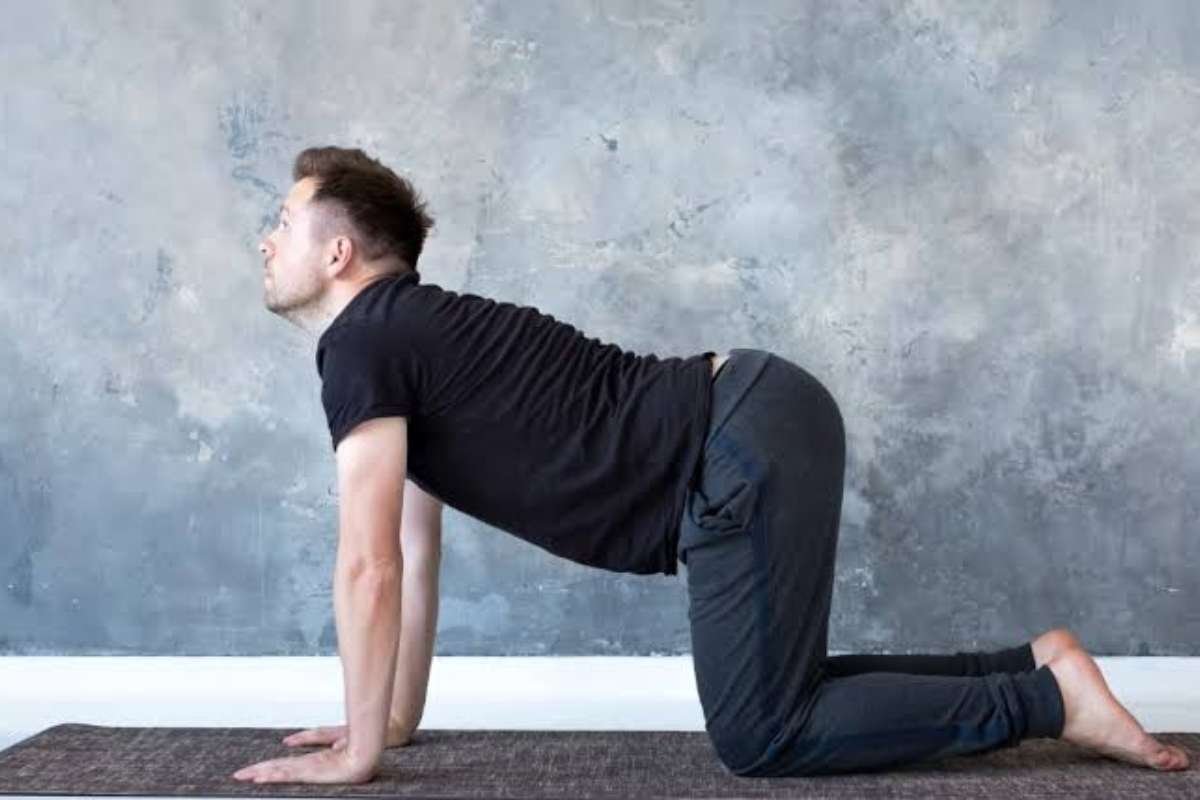
This gentle back-and-forth motion loosens a stiff spine. It also teaches your body to link breath with movement, which is a key skill for staying calm under stress.
Steps:
- Get on hands and knees, wrists under shoulders, knees under hips.
- Breathe in, drop your belly, lift your chest and tailbone (Cow).
- Breathe out, round your spine, tuck your chin (Cat).
- Move slowly between the two for 2 minutes.
Sit in a chair and arch and round your spine the same way if kneeling hurts. If you have a recent back injury or disc problem, use the seated version of this yoga for calm instead, or consult a doctor.
3. Child’s pose (balasana)
This pose folds your body inward, which can feel safe and grounding. Many people find their breathing slows down on its own once they settle into it.
Steps:
- Kneel on the floor, big toes touching, knees apart.
- Sit back on your heels and fold forward.
- Rest your forehead on the floor or a pillow, arms stretched forward or by your sides.
- Breathe slowly through your nose for 2 minutes.
Place a folded blanket between your calves and thighs, or under your forehead, for comfort. If you have knee pain, place a cushion behind your knees. Or skip this pose and rest in a seated fold instead.
READ MORE:
- Understanding the Science Behind Yoga for Anxiety and Stress Relief
- Stressed Out? This Yoga for Stress Guide Backed by Science Will Help
4. Standing forward fold (uttanasana)
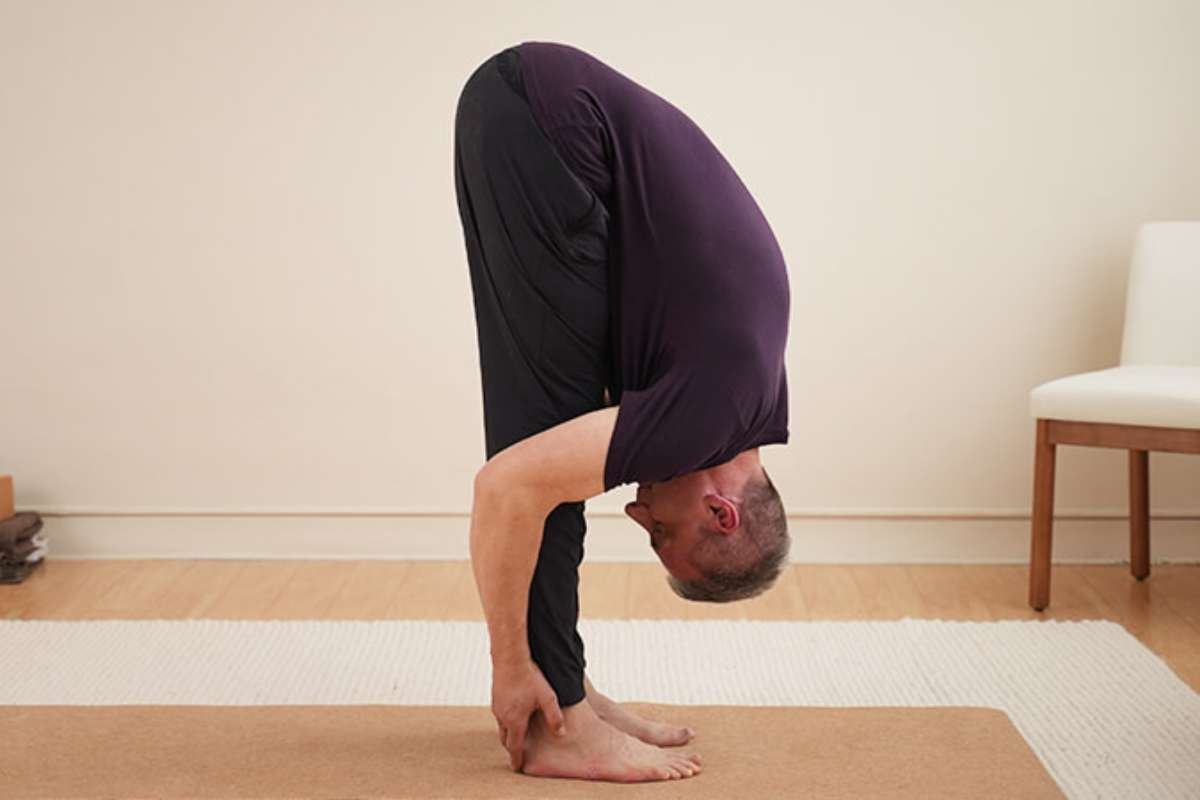
This fold releases tight spots in your neck, shoulders, and lower back. It’s a yoga for calm that many people hold without noticing while waiting in line or standing at a desk. That’s why it’s easy to fit into a normal day.
Steps:
- Stand with feet hip-width apart.
- Breathe out as you hinge at your hips and fold forward.
- Let your head and arms hang, knees soft.
- Hold for 2 minutes, breathing normally.
Bend your knees a lot, or rest your hands on a chair seat or yoga blocks instead of the floor. Be careful if you feel dizzy when your head is below your heart, or if you have low blood pressure. Come up slowly, or skip this pose and do a seated fold instead.
5. Legs-up-the-wall (viparita karani)
This is one of the most calming poses in yoga. Letting your legs rest above your heart tells your nervous system to switch into rest mode, which slows your heart rate and eases tension.
Steps:
- Sit sideways next to a wall.
- Swing your legs up the wall as you lie back.
- Rest your arms by your sides, palms up.
- Close your eyes and breathe naturally for 4 minutes, making your exhale a bit longer than your inhale.
No wall space? Rest your calves on a chair seat or the edge of your bed instead. Be careful if you are pregnant or have a serious eye condition. Skip this pose, or prop your hips on a cushion instead of going fully upside down.
6. Final relaxation (savasana)
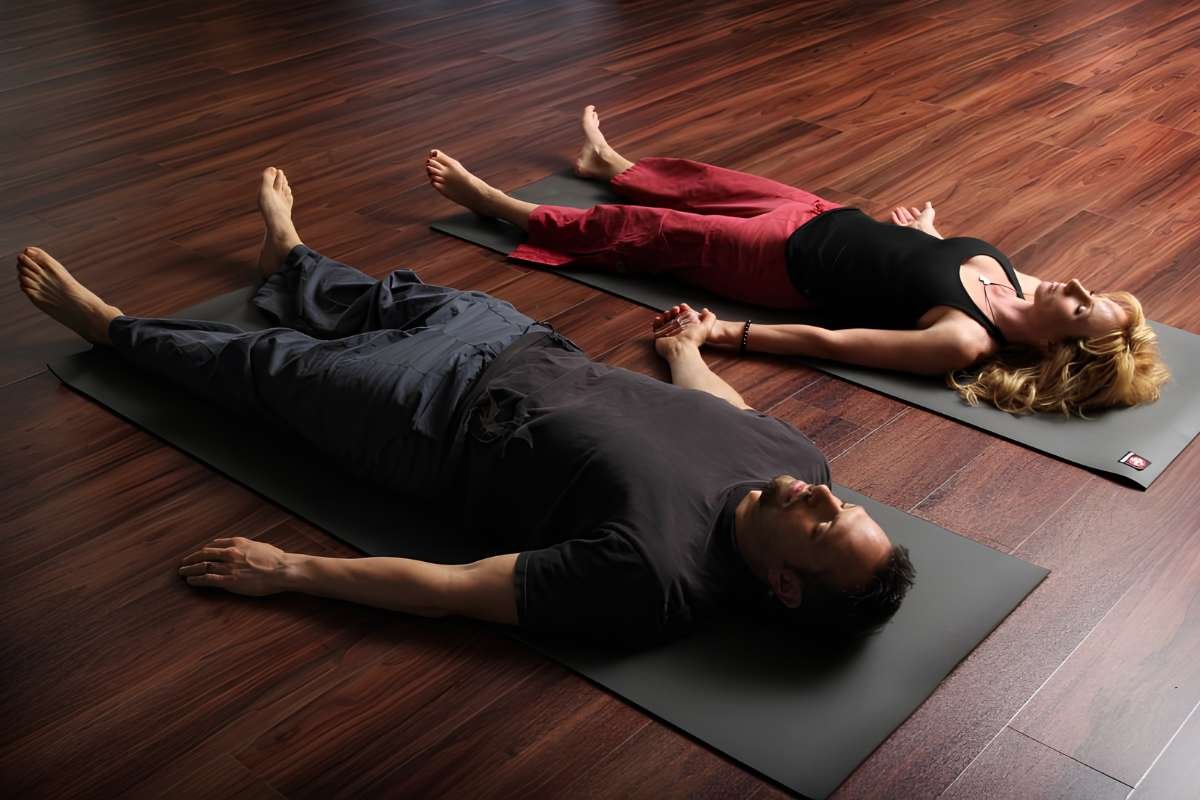
This final pose gives your whole body time to absorb the calm you just built. There’s nothing to do here except rest and let your nervous system settle.
Steps:
- Lie flat on your back, legs relaxed and slightly apart.
- Let your arms rest by your sides, palms up.
- Close your eyes.
- Simply notice your breath for 3 minutes, without trying to change it.
Place a folded blanket under your knees or head if your lower back feels tight. Be careful if you are pregnant. Lie on your left side instead, with a pillow between your knees.
Which yoga for calm practice fits your situation?
Not every stressful moment needs the same response. Here’s how to adjust yoga poses for calm depending on the situation.
Before Sleep: Keep movement minimal and light. Try Legs-Up-The-Wall for 5 minutes, followed by lying on your back with a hand on your belly, breathing slowly for 5 more minutes. Skip strong backbends or twists, since they can be stimulating rather than soothing.
During a Panic or Anxiety Spike: Skip full poses. Sit or lie down and focus only on extending your exhale longer than your inhale, for example, inhale for 4 counts and exhale for 8. This alone activates the parasympathetic nervous system. Once your heart rate slows, gentle Child’s Pose can help ground you further.
Workplace Stress, in 5 Minutes: At your desk: seated Cat-Cow (10 rounds), then Eagle Arms (cross arms, hold, breathe, switch sides), finishing with two minutes of hands-on-belly breathing. No mat needed, and it works even in work clothes.
Kids and Teens: Shorten instructions and use imagery. “Breathe like you’re smelling a flower, then blow out birthday candles” works better than technical cues. Keep sequences under 10 minutes and add playful poses like Cat-Cow (“angry cat, happy cow”) to hold attention.
How does yoga for calm work?
Yoga combines slow movement, controlled breathing, and focused attention. This combination changes how the body responds to stress. Research from the National Center for Complementary and Integrative Health shows that yoga practice is linked to lower cortisol levels and reduced activity in the sympathetic nervous system, the part responsible for the fight-or-flight response.
Slow, extended exhales in particular signal safety to the vagus nerve, which helps shift the body out of alert mode. A Harvard Health report on relaxation techniques explains that breath-focused practices can lower heart rate and blood pressure within minutes. That’s part of why even a short yoga routine, done consistently, can measurably shift your baseline stress response over time, not just in the moment.
Conclusion
You don’t need an hour of yoga for calm practices to feel better. A short, well-planned sequence can lower stress in your body, no matter what’s causing it. Maybe it’s a racing mind before bed. Maybe it’s five tense minutes at your desk. Either way, the right poses can help.
Start with the 15-minute Calm Flow above. Adjust each pose to fit your body, and skip anything that doesn’t feel right.
What matters most is showing up often, not staying long. Five honest minutes each day will do more for your calm than one long session once a month. Give it a try this week, and notice how your body feels before and after.
FAQs
1. Which yoga is best for a calm mind?
Restorative poses like Legs-Up-The-Wall and Child’s Pose, paired with slow breathing, are most effective for calming the mind quickly.
2. Which yoga helps during an anxiety attack?
Skip poses at first and focus only on extending your exhale longer than your inhale; add gentle grounding poses like Child’s Pose once your breathing slows.
3. Can yoga help me fall asleep faster?
Yes, gentle poses like Legs-Up-The-Wall combined with slow belly breathing before bed can lower heart rate and prepare the body for sleep.
4. Is there a yoga routine I can do at my desk?
Yes, seated Cat-Cow, Eagle Arms, and two minutes of slow breathing can be done in work clothes in under 5 minutes.
5. How long before I notice yoga’s calming effects?
Many people feel calmer within a single session. But consistent yoga for calm practice over 2 to 4 weeks tends to produce more lasting changes in stress levels.