Cardiovascular disease is the leading cause of death worldwide, with an estimated 19.8 million deaths in 2022. Warning signs of heart disease are not always dramatic, and chest pain is not the only symptom to know. Some develop gradually, while others are subtle and easily mistaken for indigestion, fatigue, or normal aging. A symptom alone does not diagnose heart disease. What matters is how it feels, when it occurs, whether it is new or worsening, and what accompanies it.
This guide covers 10 warning signs of heart disease and explains when each warrants medical attention or emergency care.
Warning Signs of Heart Disease: What to Watch For
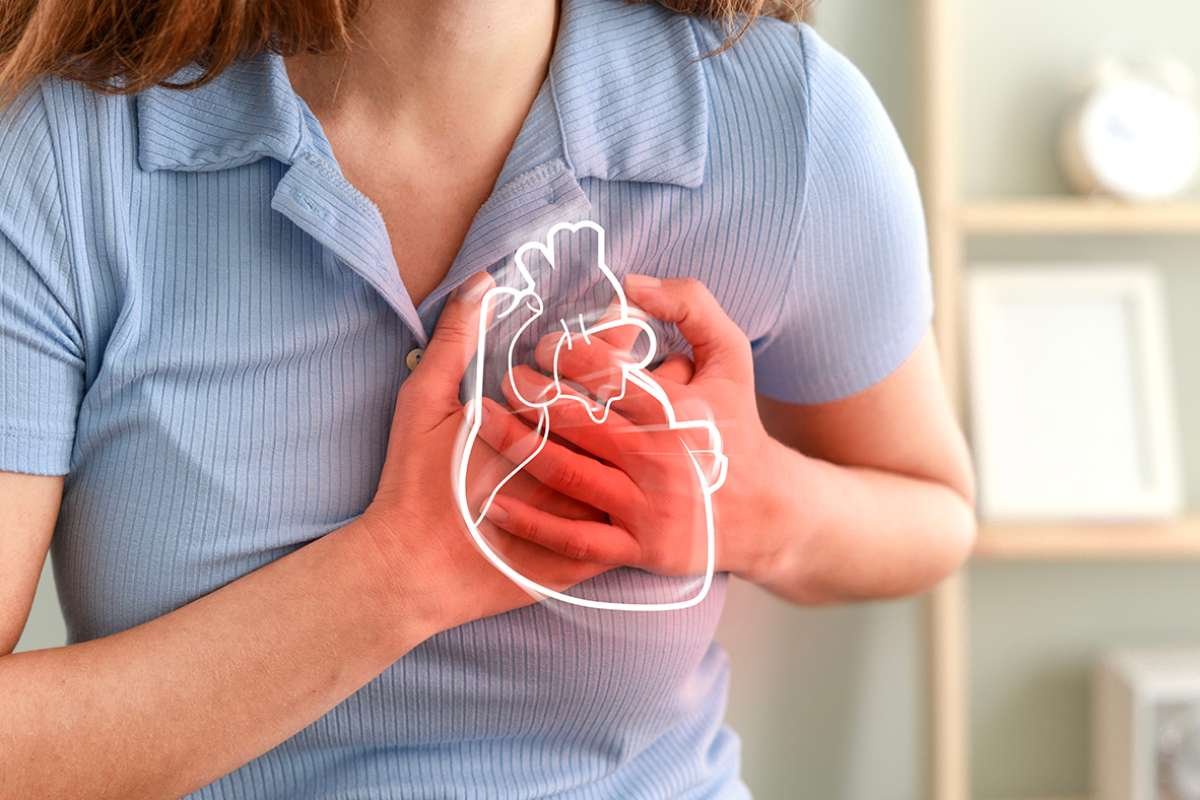
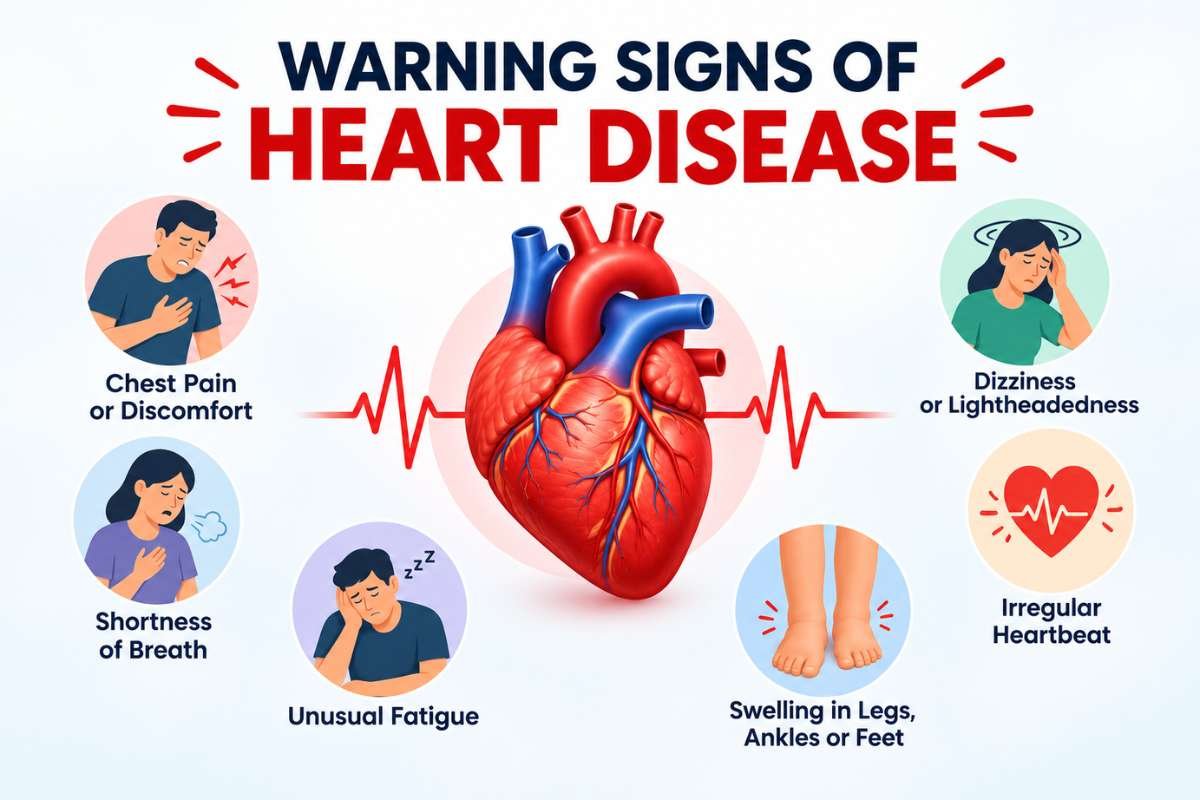
The warning signs of heart disease can include chest discomfort, shortness of breath, unusual fatigue, palpitations, dizziness, swelling, and reduced ability to exercise.
Not every symptom means heart disease. Many of these signs overlap with digestive issues like acid reflux. With respiratory conditions such as asthma. And musculoskeletal problems like strained muscles. Symptoms can also vary depending on the specific heart condition involved. It can include coronary artery disease, arrhythmias, heart failure, or valve disease.
Recognizing these warning signs early can help you decide whether to seek routine medical evaluation or emergency care:
Possible warning sign → medical evaluation:
If you notice persistent or recurring symptoms like mild chest discomfort, occasional shortness of breath, leg swelling, or unusual tiredness. Schedule an appointment with your doctor for assessment.
Possible heart attack → emergency care:
Call emergency services immediately if you experience chest pressure or pain lasting more than a few minutes. Along with pain spreading to the arms, back, neck, or jaw, severe shortness of breath, cold sweats, nausea, or lightheadedness.
This framework ensures you respond appropriately without unnecessary alarm while prioritizing urgent situations.
10 Warning Signs of Heart Disease You Should Recognize
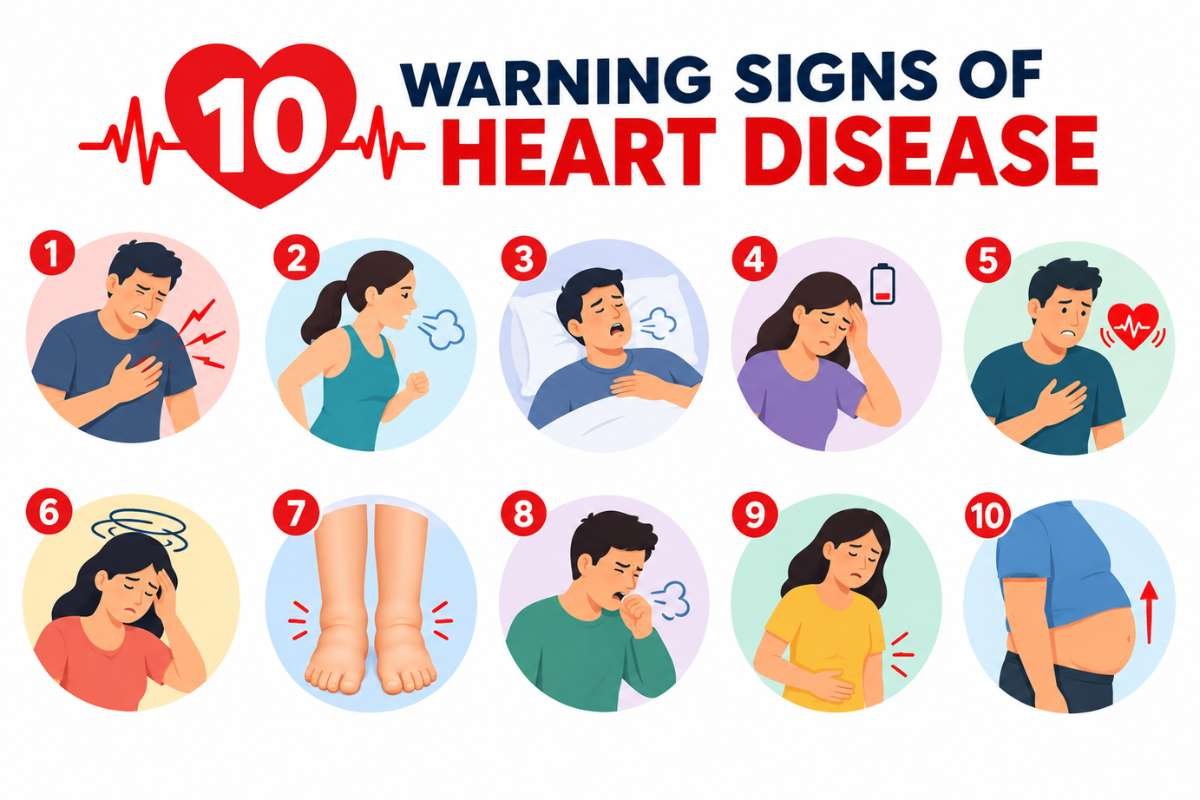
Recognizing Warning Signs of Heart Disease early can help you seek timely care and reduce complications. Below are ten key symptoms to watch for.
1. Chest pressure, pain, or discomfort
Heart-related chest discomfort may feel like pressure, squeezing, tightness, fullness, or heaviness rather than sharp pain. It can occur with physical activity and may spread to the arm, shoulder, back, neck, jaw, or upper abdomen. New or unexplained chest discomfort, particularly when accompanied by shortness of breath, sweating, nausea, or dizziness, requires prompt attention.
2. Shortness of breath during activity
Becoming unusually breathless during routine activities such as walking, climbing stairs, or performing everyday tasks can be a possible sign of a heart problem. New or worsening breathlessness deserves medical evaluation, especially when it is accompanied by chest discomfort, fatigue, dizziness, or swelling.
3. Shortness of breath at rest or when lying down
Breathing difficulty while resting, lying flat, or waking up gasping for air can occur with conditions such as heart failure. These symptoms should not be ignored, particularly if they are new, worsening, or interfering with sleep or daily activities.
4. Unusual fatigue or weakness
New or unexplained fatigue that makes normal activities more difficult can occur with some heart conditions. Fatigue is not specific to heart disease, but it becomes more concerning when it is persistent or occurs alongside symptoms such as breathlessness, chest discomfort, dizziness, or reduced exercise tolerance.
5. Heart palpitations
Palpitations may feel like your heart is racing, fluttering, pounding, or beating irregularly. They can occur for many reasons, including stress, caffeine, medications, or changes in heart rhythm. Recurrent or prolonged palpitations, especially when accompanied by chest discomfort, dizziness, fainting, or shortness of breath, should be medically evaluated.
Also read: Warning Signs of a Heart Attack for Women: Symptoms You Should Never Ignore
6. Dizziness or fainting
“Dizziness, lightheadedness, or fainting can occur with some heart conditions, including abnormal heart rhythms. Recurrent episodes, fainting during physical activity, or dizziness accompanied by chest discomfort or palpitations warrant prompt medical assessment.
7. Swollen ankles, feet, or legs
Persistent swelling in the ankles, feet, or legs can occur when fluid builds up in the body, including in some people with heart failure. Swelling that is new, worsening, or accompanied by breathlessness or rapid weight gain should be discussed with a healthcare professional.
8. Persistent cough or wheezing
A persistent cough or wheezing can have many causes, but it may occur with fluid buildup in the lungs associated with heart failure. Coughing that is worse when lying down or accompanied by breathlessness or swelling warrants medical evaluation. Pink or blood-tinged, frothy mucus with significant breathing difficulty requires urgent medical attention.
9. Nausea or indigestion-like discomfort
Nausea, vomiting, or discomfort that feels like indigestion can sometimes occur with heart problems, including during a heart attack. These symptoms are more concerning when they occur with chest pressure, shortness of breath, cold sweating, unusual weakness, or pain in the arm, back, neck, or jaw.
10. Sudden weight gain or abdominal swelling
Rapid, unexplained weight gain over a short period can indicate fluid retention and may occur with heart failure. New abdominal swelling can also occur with fluid buildup. Report these changes to a healthcare professional, particularly when they occur with leg swelling or increasing shortness of breath.
Also read: 7 Effective Home Remedies for Heartburn: Restore Comfort Without Medications
Which Symptoms Could Mean a Heart Attack?
Some symptoms require emergency attention because they can signal a heart attack rather than a gradual heart condition. While many warning signs of heart disease warrant medical evaluation, the patterns below need immediate emergency care.
| Possible warning sign | What makes it urgent |
| Chest pressure or discomfort | Lasts several minutes, goes away and returns, or occurs with other symptoms |
| Pain or discomfort elsewhere | In one or both arms, back, neck, jaw, or stomach |
| Shortness of breath | With or without chest discomfort |
| Cold sweating | Especially with chest discomfort, nausea, or lightheadedness |
| Nausea or vomiting | Particularly alongside other heart-attack symptoms |
| Lightheadedness or dizziness | Especially with chest discomfort, weakness, or fainting |
| Unusual fatigue | Particularly when sudden or accompanied by other symptoms |
The American Heart Association recommends calling emergency services immediately if you experience heart-attack warning signs, even if you’re unsure whether you’re having a heart attack.
When Should You See a Doctor About These Symptoms?

Seek prompt medical evaluation if your symptoms are new or unexplained, repeatedly occur with activity, or are becoming more frequent or severe. Specifically, contact your doctor if:
- Breathlessness is worsening or occurs during ordinary activities
- Fatigue is interfering with normal daily activities
- Palpitations keep recurring, last longer, or are accompanied by dizziness
- Swelling in your ankles, feet or legs persists or worsens
- Symptoms are becoming more frequent or severe over time
Don’t self-diagnose. Many warning signs of heart disease overlap with digestive, respiratory, musculoskeletal and other conditions, so symptoms require clinical context for accurate assessment. The British Heart Foundation emphasizes that breathlessness, swelling, fatigue and palpitations can have causes other than heart disease.
A proper evaluation combines your symptom pattern, medical history, risk factors, and physical examination to reach a better assessment. Your doctor may order tests like blood work, an electrocardiogram, or imaging to determine the underlying cause.
Also read: Heart Palpitations vs Arrhythmia: Are Your Symptoms Harmless or a Warning Sign?
Conclusion:
Warning signs of heart disease can be easy to dismiss, but patterns matter more than any single symptom. Chest pressure, breathlessness, unusual fatigue, palpitations, dizziness, or swelling deserve attention, especially when they are new, recurring, or worsening. If symptoms point to a possible heart attack, such as chest discomfort lasting several minutes, pain spreading to the arm or jaw, cold sweats, or severe breathlessness, call emergency services immediately. For gradual or persistent symptoms, a timely medical evaluation can clarify the cause and guide treatment.
Notice a symptom that worries you? Book an appointment with your doctor today..
FAQ:
1. What are the most common warning signs of heart disease?
Common warning signs include chest discomfort, shortness of breath, unusual fatigue, palpitations, dizziness, and swelling in the legs or ankles.
2. Is shortness of breath a warning sign of heart disease?
Shortness of breath can be a warning sign, particularly when it is new, persistent, worsens with activity, or occurs with other heart-related symptoms.
3. Are heart palpitations always a sign of heart disease?
No, palpitations can have many causes, but recurring episodes or palpitations accompanied by dizziness, fainting, or chest discomfort warrant medical evaluation.
4. Can heart disease cause dizziness or fainting?
Yes, some heart conditions can cause dizziness or fainting, particularly when they affect heart rhythm or blood flow.
5. Can swollen ankles be a warning sign of heart disease?
Persistent swelling in the ankles, feet, or legs can occur with some heart conditions but can also have other causes.