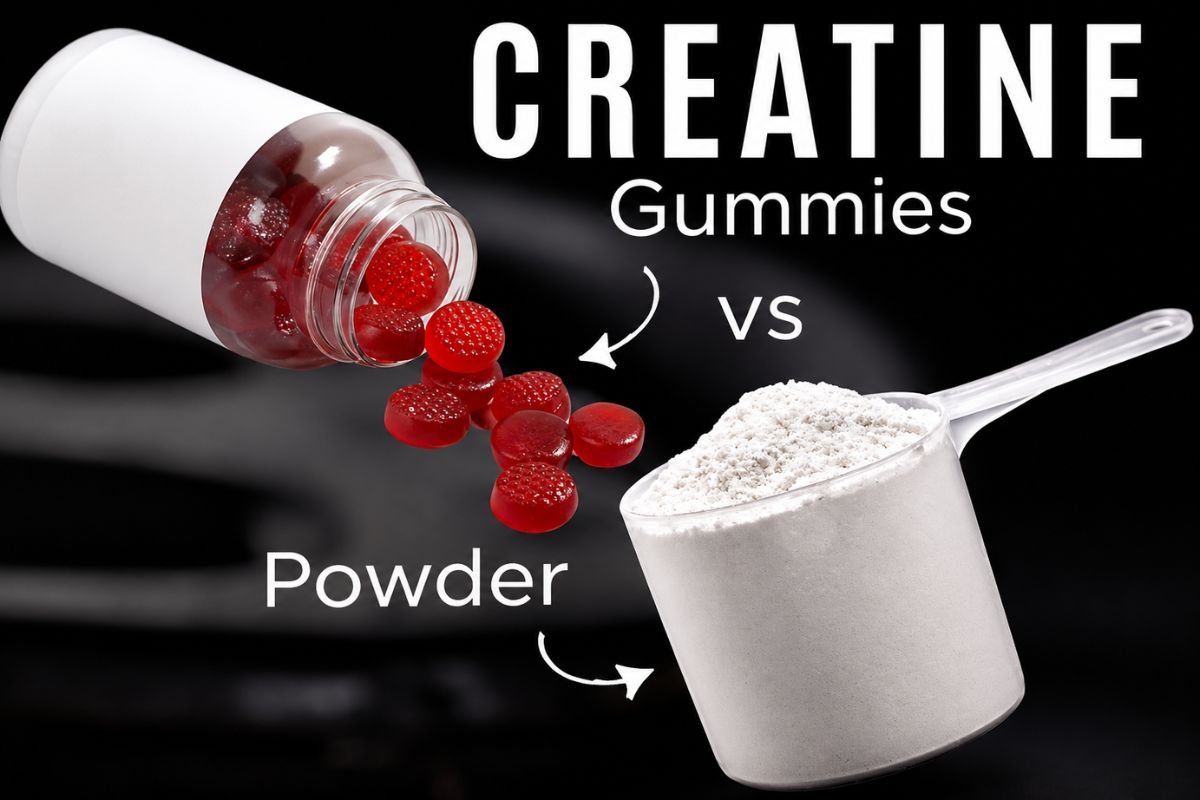
Creatine powder has long been a popular supplement for strength gains, but gummies promise similar benefits without the gritty shake. So, in the Creatine Gummies vs Powder debate, which option actually works? Research supports a daily maintenance dose of 3–5 grams of creatine monohydrate for healthy adults, but gummies may require several pieces to deliver the same amount. Can gummies offer comparable benefits, or are you paying extra for convenience?
This guide compares their effectiveness, dosage, ingredient quality, cost, and safety to help you choose a supplement that fits your fitness goals and routine.
Which is more effective between creatine gummies and powder?

Creatine gummies can support muscle performance similarly to powder if they deliver an adequate amount of creatine monohydrate. The delivery format matters less than the actual creatine content, product quality, and consistent intake.
Creatine monohydrate is the most extensively researched form. It helps replenish adenosine triphosphate (ATP), which supplies muscles with energy during short, high-intensity activities such as weightlifting and sprinting. Research shows that supplementation can improve strength, power, and exercise performance over time.
A 2026 randomized study involving 32 female beach volleyball athletes found that 10 weeks of 5 g daily creatine monohydrate in gummy form improved jump height and change-of-direction performance. However, the study did not compare gummies with powder and found no significant improvements in lean body mass or skeletal muscle mass. These findings offer early evidence for gummy-form creatine, but they do not establish that it produces the same muscle-growth outcomes as powder.
When comparing creatine gummies vs powder, prioritize an adequate daily dose, clear labeling, and consistent use. Powder remains the more extensively researched delivery format.
How Do Creatine Gummies and Powder Compare?
Both formats can help increase muscle creatine stores when they provide enough creatine monohydrate. However, they differ in convenience, dosage flexibility, ingredients, and cost.
| Comparison factor | Creatine gummies | Creatine powder |
| Convenience | Ready to consume | Requires mixing |
| Dosage | Fixed per gummy | Flexible measurement |
| Cost | Generally higher | Generally lower |
| Ingredients | May contain sweeteners and additives | Unflavoured versions may contain only creatine |
| Portability | Easy to carry | Requires a container |
| Research support | Limited research on gummy formulations | Extensive research on creatine monohydrate, primarily using powder |
Choosing between formats
Gummies suit people who dislike mixing supplements or prefer a portable option. However, reaching the standard daily dose may require several gummies, increasing the amount of sugar, sweeteners, or other ingredients consumed.
Powder is usually more economical and allows flexible dosing. Compare products by the grams of creatine monohydrate they deliver rather than their price per serving.
Neither format automatically offers better absorption. The actual creatine content, formulation quality, and consistency of use matter more than whether the supplement comes in a gummy or powder form.
Also Read: Do Protein Shakes Work without Exercise?
How Much Creatine Do You Need and How Do You Match the Dose?
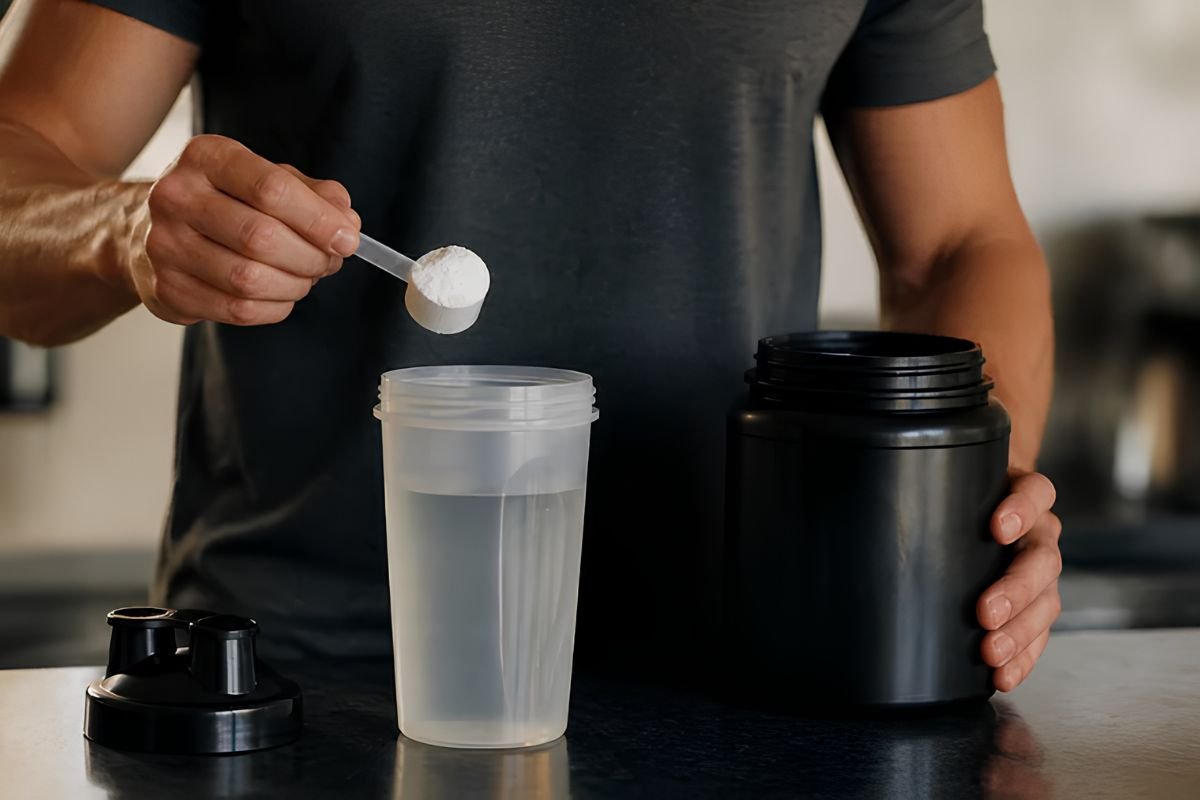
A commonly used maintenance dose for healthy adults is 3–5 g of creatine monohydrate daily. A loading phase of approximately 20 g daily, divided into four smaller doses, for 5–7 days is optional. Taking 3–5 g daily without loading can also increase muscle creatine stores over several weeks.
When comparing creatine gummies and powder, do not assume one scoop equals one gummy. Check the Supplement Facts panel for the exact creatine content per serving.
| Product | Creatine per unit | Amount for 5 g daily |
| Powder | 5 g per scoop | 1 scoop |
| Gummies | 1 g per gummy | 5 gummies |
This is an example, not a universal serving recommendation. Always calculate the amount using the actual product label and follow its instructions.
Consistency matters more than timing. Choose a format that allows you to maintain an appropriate daily intake.
Also Read: 15 High Protein Snacks Worthy of Your Snack Drawer
How to Choose the Right Creatine Supplement Safely
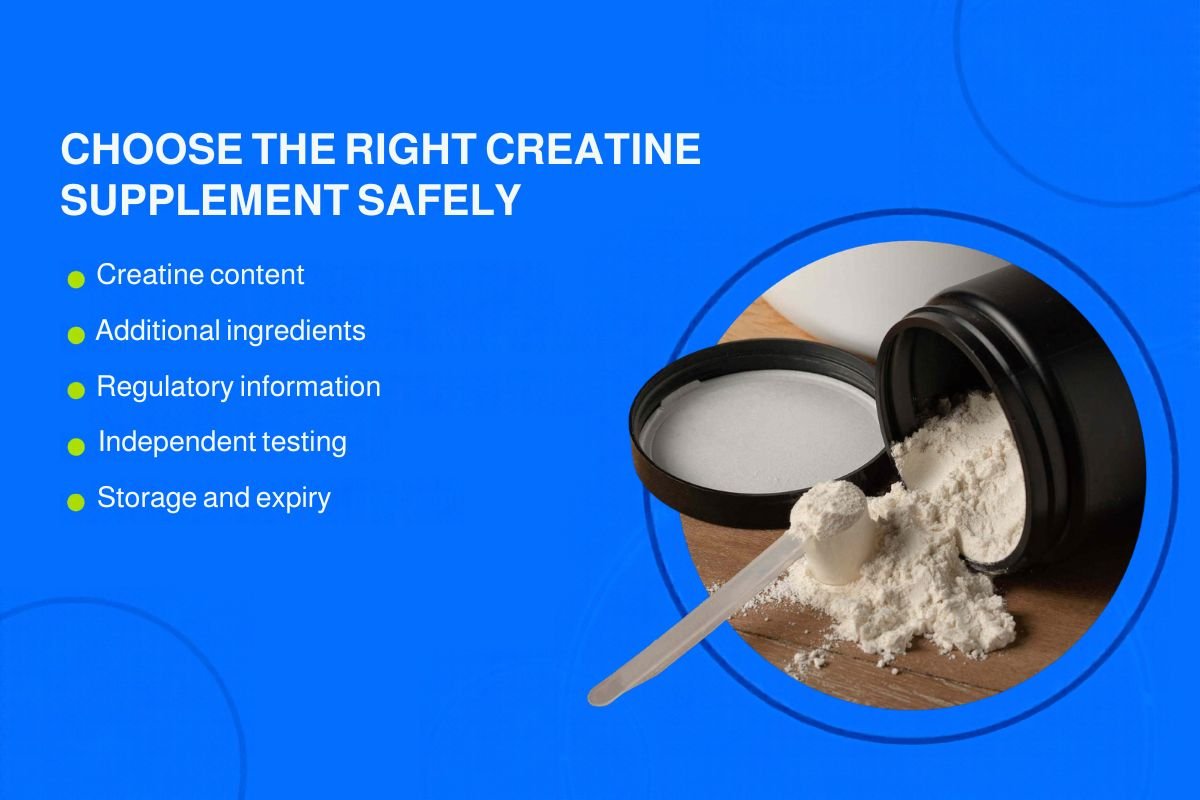
Choose a supplement based on its ingredients, dosage, and quality rather than marketing claims. Before buying, check.
- Creatine content: Confirm the amount of creatine monohydrate per full serving and the number of gummies or scoops required.
- Additional ingredients: Check added sugars, calories, sugar alcohols, sweeteners, and fillers.
- Regulatory information: For Indian products, check the manufacturer’s details, applicable FSSAI licence information, and batch identification.
- Independent testing: Prefer products with verifiable, batch-specific laboratory reports or certificates of analysis. An FSSAI licence indicates regulatory compliance, not independent proof of a product’s effectiveness or potency.
- Storage and expiry: Follow the manufacturer’s storage instructions and check the expiry date.
Safety
Both formats may cause water retention and mild digestive discomfort. Creatine-related water retention primarily occurs within muscles, while added sweeteners or sugar alcohols in gummies may cause additional digestive issues.
Creatine is metabolized into creatinine, which is measured in certain kidney-function tests. Supplementation can influence blood creatinine readings, so inform your healthcare professional about creatine use before testing. An elevated result should still be evaluated rather than automatically attributed to supplementation.
People with kidney disease, existing medical conditions, or those taking medication should consult a healthcare professional before starting creatine.
Also Read: Best Protein Powders for Women in 2026 (Top Picks for Every Goal)
Conclusion:
In the creatine gummies vs powder choice, the format matters less than the dose. Powder is usually cheaper, easier to measure, and backed by deeper research, while gummies win on convenience if they deliver a full 3-5 g of creatine monohydrate daily. Always check the Supplement Facts panel, compare cost per gram of creatine, and pick the option you will actually take every day. If you have kidney issues or take medication, talk to a healthcare professional first.
Ready to choose? Check the label on your current supplement and calculate your daily dose today.
FAQ:
1. Are creatine gummies as effective as creatine powder?
Yes, potentially, if they deliver an adequate and stable dose of creatine. However, direct research on gummy formulations is limited.
2. Do creatine gummies cause more side effects than powder?
Creatine-related effects are generally similar, but added sugars and sweeteners may cause additional digestive discomfort.
3. How many creatine gummies equal one scoop of powder?
It depends on the creatine content per gummy and the powder serving size. Compare the actual grams of creatine on both labels.