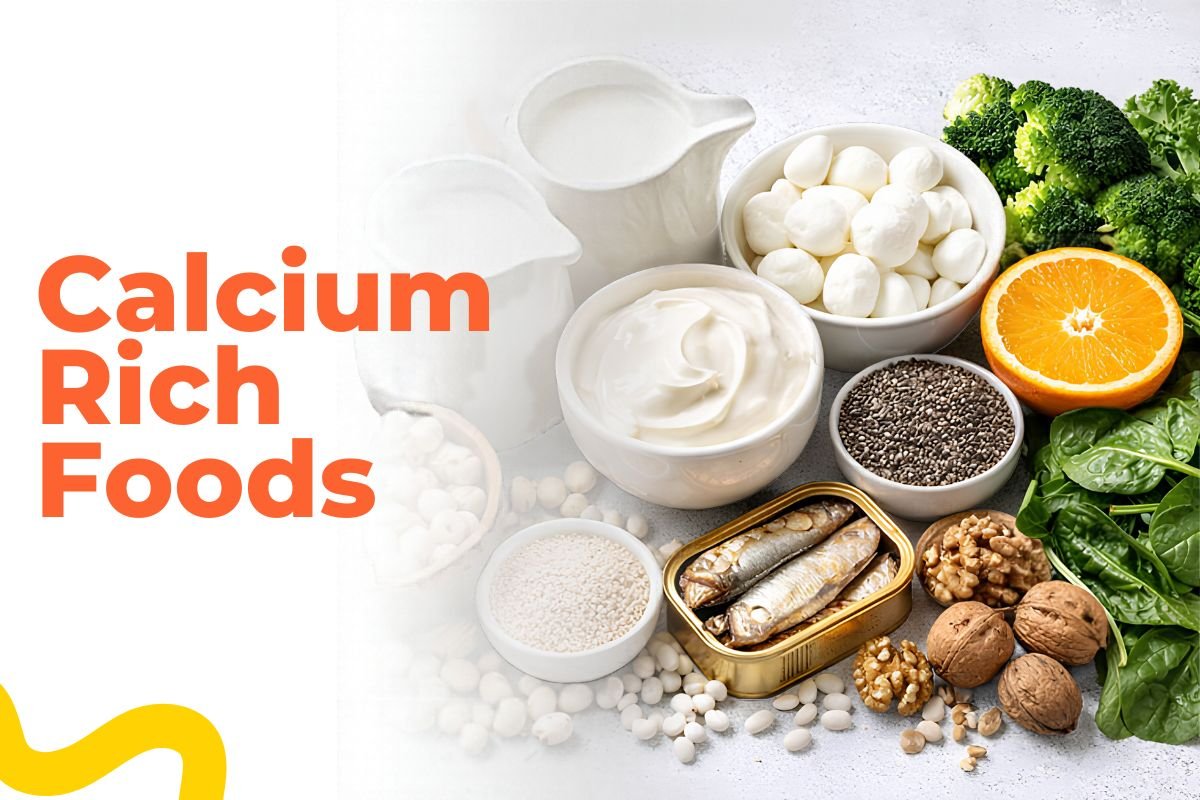
Most adults need about 1,000 mg of calcium daily, yet roughly half of people worldwide fall short, and that gap puts bone health at risk. If you assume milk is your only option, here’s the good news: it isn’t.
Both dairy and plant-based sources are a vital part of a balanced diet and can help you reach your calcium target. A cup of milk provides about 300 mg, while a cup of cooked collard greens delivers around 270 mg.
In this guide, you’ll learn 20 calcium-rich foods, their calcium content per serving, daily requirements by age, and practical tips to absorb more of what you eat.
20 Calcium-Rich Foods to Add to Your Daily Diet
Including a variety of calcium-rich foods makes it easier to meet your daily calcium needs, especially if you avoid dairy. Milk, yogurt, cheese, leafy greens, seeds, fish with edible bones, and fortified foods all contribute calcium. Here are 20 options, along with their approximate calcium content per serving.
Dairy and Fortified Alternatives
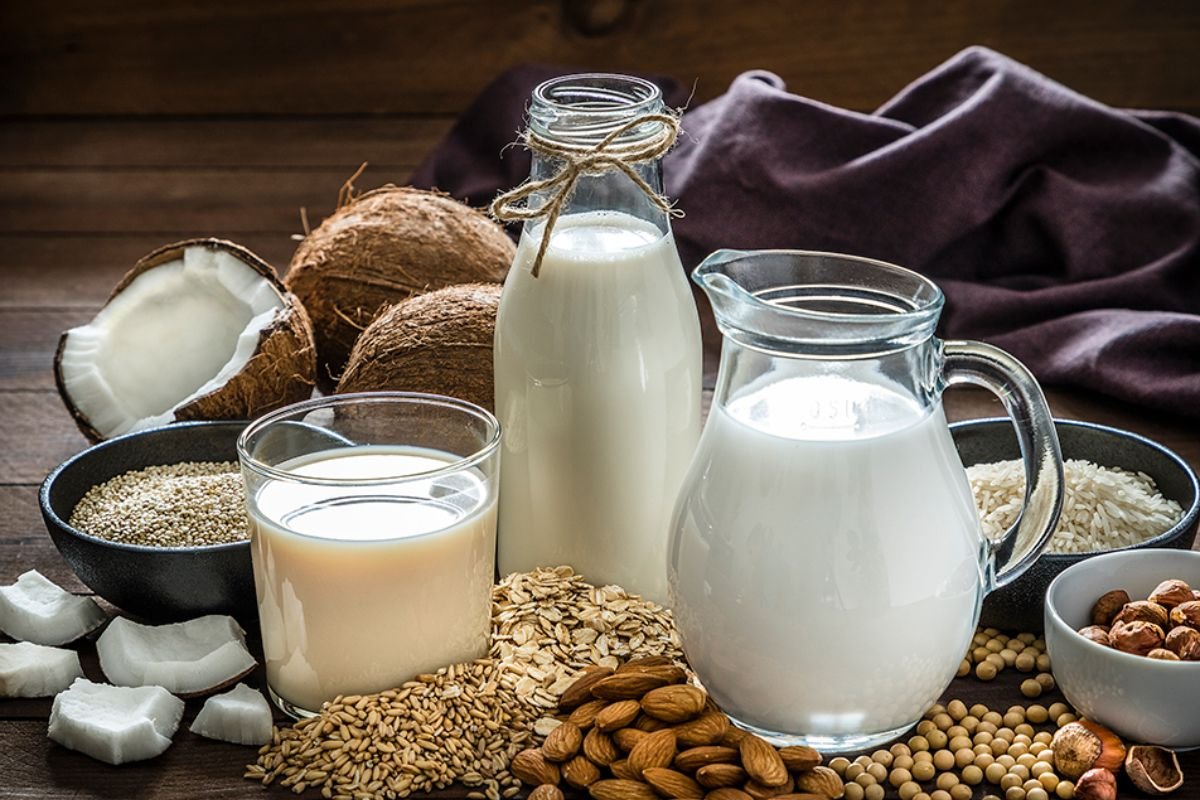
- Milk: One cup of cow’s milk provides approximately 299 mg of calcium.
- Plain Low-Fat Yogurt: An 8-ounce serving contains approximately 415 mg of calcium.
- Part-Skim Mozzarella Cheese: A 1.5-ounce serving provides approximately 333 mg of calcium.
- Fortified Soy Milk: One cup can provide approximately 299 mg of calcium. Check the Nutrition Facts label because amounts vary by brand.
- Cheddar Cheese: One ounce provides approximately 200 mg of calcium.
Seeds, Nuts, and Legumes
- Sesame Seeds: One tablespoon of tahini, made from sesame seeds, provides approximately 64 mg of calcium.
- Chia Seeds: One tablespoon contains approximately 76 mg of calcium.
- Almonds: One ounce, or about 23 almonds, provides approximately 76 mg of calcium.
- Chickpeas: One cup of cooked chickpeas contains approximately 80 mg of calcium.
- Soybeans: Half a cup of cooked soybeans provides approximately 131 mg of calcium.
Leafy Greens and Vegetables
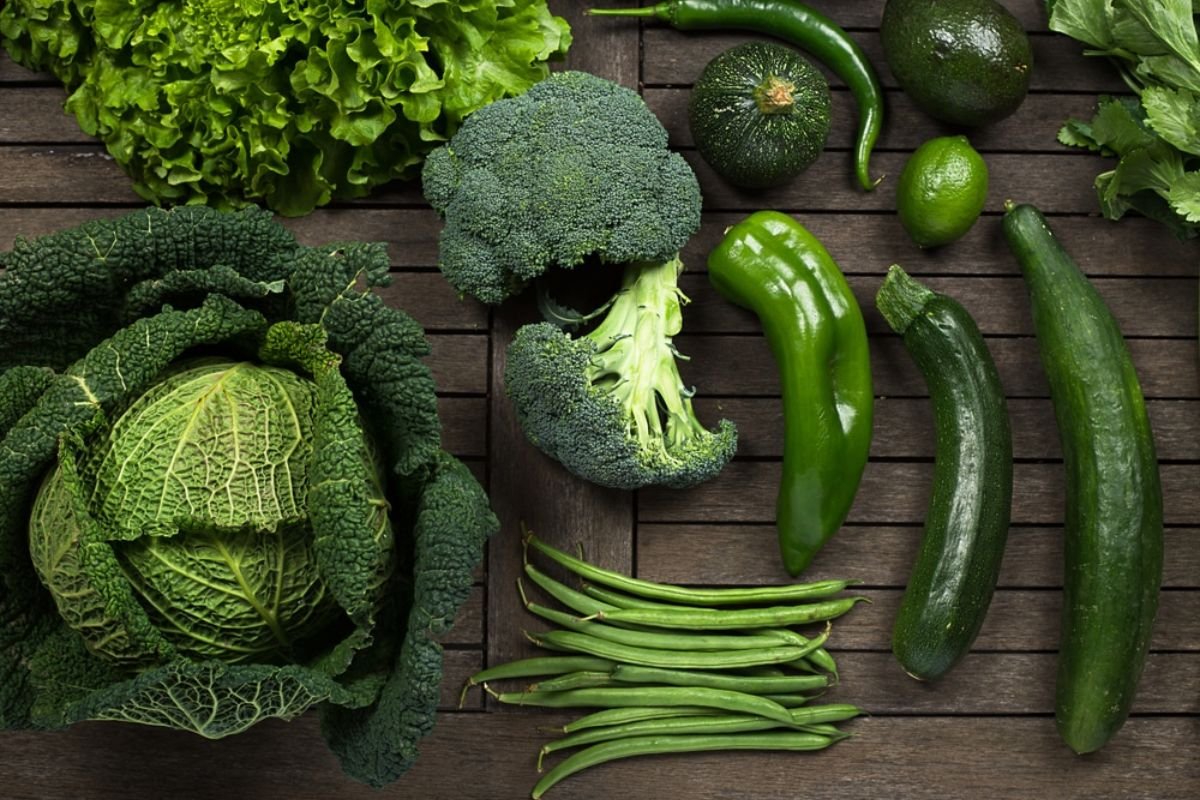
- Cooked Collard Greens: Half a cup provides approximately 134 mg of calcium.
- Cooked Turnip Greens: Half a cup contains approximately 99 mg of calcium.
- Cooked Kale: One cup provides approximately 94 mg of calcium.
- Bok Choy: One cup of raw bok choy contains approximately 74 mg of calcium.
- Cooked Broccoli: One cup provides approximately 62 mg of calcium.
Fish, Fruits, and Other Sources
- Sardines with Edible Bones: A 3-ounce serving provides approximately 325 mg of calcium.
- Canned Salmon with Bones: A 3-ounce serving contains approximately 181 mg of calcium.
- Dried Figs: Two dried figs provide approximately 65 mg of calcium.
- Calcium-Fortified Orange Juice: One cup can provide approximately 349 mg of calcium. Check the label because amounts vary by product.
- Calcium-Set Firm Tofu: Half a cup can provide approximately 253 mg of calcium when prepared with calcium sulfate. Check the product label, as calcium content depends on the coagulant used.
Also Read: Eat Your Way to Wellness: 12 Everyday Foods Rich in Vitamins
Quick Comparison
| Food | Serving size | Calcium |
| Plain low-fat yogurt | 1 cup (8 oz) | 415 mg |
| Fortified orange juice | 1 cup | 349 mg |
| Part-skim mozzarella | 1.5 oz | 333 mg |
| Sardines with bones | 3 oz | 325 mg |
| Milk | 1 cup | 299 mg |
| Calcium-set firm tofu | ½ cup | 253 mg |
| Cheddar cheese | 1 oz | 200 mg |
| Cooked collard greens | ½ cup | 134 mg |
Calcium values are approximate and may vary by brand, food variety, serving size, and preparation. Fortified products and calcium-set tofu can differ considerably, so check their Nutrition Facts labels.
How Much Calcium Do You Need Every Day?
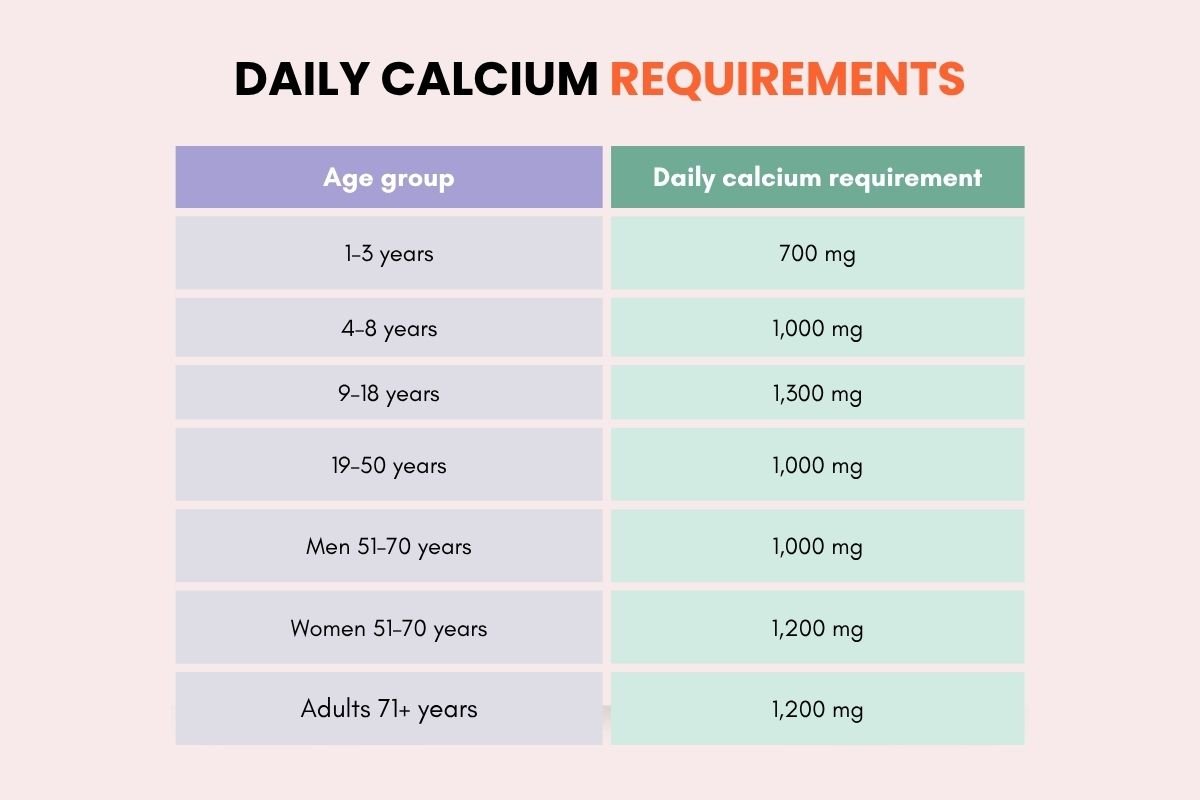
Your daily calcium needs depend mainly on your age and life stage. Adolescents need more during rapid bone growth, while women over 50 and adults over 70 need more to help protect bone health. Infants (0-12 months) have an Adequate Intake of 200-260 mg, met through breast milk or formula. Pregnant or breastfeeding women need 1,300 mg (ages 14-18) or 1,000 mg (ages 19-50).
Daily calcium requirements
| Age group | Daily calcium requirement |
| 1–3 years | 700 mg |
| 4–8 years | 1,000 mg |
| 9–18 years | 1,300 mg |
| 19–50 years | 1,000 mg |
| Men 51–70 years | 1,000 mg |
| Women 51–70 years | 1,200 mg |
| Adults 71+ years | 1,200 mg |
Why Is Calcium Important for Your Body?
Your body needs calcium for strong bones and teeth, normal muscle movement, nerve communication, and blood clotting. About 99% of the body’s calcium is stored in bones and teeth, where it provides structural strength. The remaining calcium circulates in the blood and soft tissues, supporting essential functions.
What calcium does
- Bone and teeth health: Calcium gives bones and teeth their strength and structure.
- Muscle function: It supports muscle contraction and relaxation.
- Nerve signalling: It helps transmit signals between nerves.
- Blood clotting: It plays an essential role in normal clotting.
Getting enough calcium-rich foods helps maintain these everyday functions.
How to Improve Calcium Absorption Naturally

You can improve calcium absorption naturally by getting enough vitamin D, choosing lower-oxalate calcium sources, and eating a varied diet. These habits help your body use the calcium in foods more effectively.
Get enough vitamin D
Vitamin D helps the intestines absorb calcium and maintain healthy blood calcium levels. Good sources include fortified milk, fortified plant milks, fatty fish, and egg yolks. Sunlight exposure also helps the body make vitamin D.
Also Read: Vitamin D vs. D3 Explained: The Difference That Matters for Your Health
Choose calcium sources with better bioavailability
Not all calcium-rich foods release calcium equally during digestion. The amount your body absorbs depends on the food source, serving size, and individual factors.
For example, the body absorbs approximately 27% of the calcium in milk, compared with about 5% in spinach. Spinach contains oxalates, natural compounds that bind calcium and reduce its absorption. In contrast, low-oxalate vegetables such as kale, bok choy, and broccoli generally provide calcium that is easier for the body to absorb.
Phytates, found in beans, nuts, seeds, and whole grains, can also reduce calcium absorption to some extent. However, these foods still contribute valuable calcium alongside fiber, protein, and other nutrients. You don’t need to avoid them; include a variety of calcium sources in your diet to meet your daily needs
Check fortified food labels
Read the Nutrition Facts label for calcium in milligrams and the % Daily Value per serving, rather than relying only on front-of-pack claims.
Also Read: The Happy Diet: Here are the 7 types of foods that could boost your serotonin levels
Conclusion:
Meeting your daily calcium target doesn’t have to mean drinking more milk. As this guide shows, calcium-rich foods come in many forms, from yogurt and sardines to calcium-set tofu, amaranth leaves, and chia seeds. Mixing dairy and plant-based options makes it easier to reach your goal, whatever your diet looks like.
Remember that absorption matters as much as quantity. Pair your meals with enough vitamin D, choose lower-oxalate greens like kale and bok choy, and check fortified food labels for the calcium listed per serving.
FAQ:
1. Which food has the highest calcium content?
Certain cheeses, calcium-set tofu, yogurt, and small fish eaten with their bones are among the richest calcium sources.
2. What are the best calcium-rich foods for vegetarians?
Ragi, sesame seeds, paneer, curd, almonds, amaranth leaves, and calcium-set tofu are useful vegetarian calcium sources.
3. Which fruits are naturally rich in calcium?
Dried figs, oranges, and some varieties of kiwi provide calcium, although most fruits contain less calcium than dairy products.
4. Are sesame seeds a good source of calcium?
Yes, sesame seeds contain calcium and can contribute to your daily intake when consumed in appropriate portions.
5. Which leafy vegetables contain the most calcium?
Amaranth leaves, kale, bok choy, and collard greens are useful calcium sources, with absorption varying by vegetable.