Key Takeaway:
- The rabid bat Vista restaurant incident prompted a public health warning after a bat that landed on a restaurant table tested positive for rabies.
- Officials urge anyone who touched the bat or had saliva exposure to seek immediate medical care for preventive treatment.
- The case marks the 22nd rabid bat identified in San Diego County this year, though officials say increased encounters do not necessarily mean higher rabies rates.
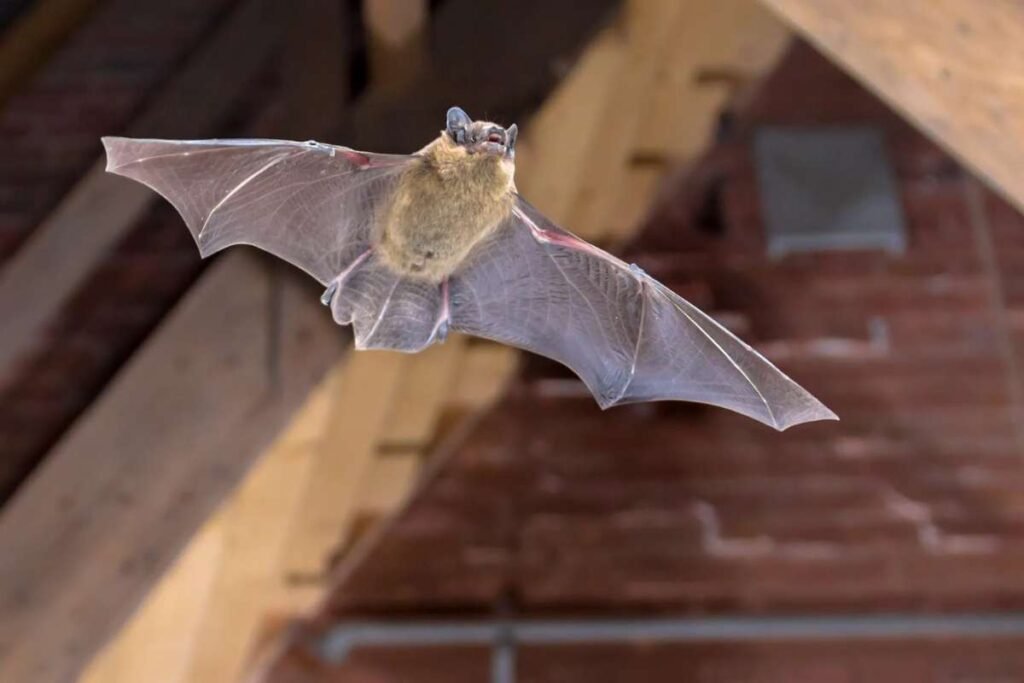
A bat that landed on a family’s table at a Vista restaurant tested positive for rabies, prompting San Diego County health officials to urge anyone who touched the animal to seek medical care immediately because early treatment can prevent the disease.
Health Officials Urge Anyone Who Touched Bat to Seek Care
The rabid bat Vista restaurant incident occurred around 1 p.m. Sunday, July 19, at the Yellow Deli Restaurant in Vista, where a bat landed on a table as a family was eating. Another diner wrapped the bat in a towel and took it to the Humane Society in Oceanside, after which it was transferred to the county’s public health laboratory for testing.
The bat later tested positive for rabies. As of Thursday, county officials said they had received no reports of anyone having direct contact with the animal.
Following the rabid bat Vista restaurant incident, San Diego County Public Health Services said only people who touched the bat or had direct exposure to its saliva are considered at risk. Officials urged anyone who may have handled the bat to contact a health care provider immediately to determine whether post-exposure treatment is needed.
County Tracks Rising Human-Bat Encounters
The rabid bat Vista restaurant incident marks the 22nd confirmed rabid bat identified in San Diego County this year.
Emily Trumbull, a veterinarian with the county’s Epidemiology Unit, said officials have seen more interactions between people and bats this year, although that does not necessarily mean rabies is becoming more common among bats.
“We work closely with animal health partners throughout the county in order to monitor for rabies among a variety of species,” Trumbull said. “We test animals that may be suspicious for rabies, or that could be putting someone at high risk because of the type of exposure they had to these animals.”
County officials said animals are routinely monitored through surveillance and testing when public exposure is suspected.
Trumbull said rabies exposure occurs through a bite or when saliva from an infected animal enters the eyes, nose, mouth or another mucous membrane, as highlighted by the rabid bat Vista restaurant incident.
Officials Search for Family and Stress Prevention
Health officials are attempting to contact the family whose table the bat landed on to explain the potential risk and determine whether they qualify for post-exposure prophylaxis, the preventive treatment given after possible rabies exposure.
Although human rabies cases are rare, the disease is almost always fatal once symptoms develop. Officials said prompt medical treatment before symptoms appear is highly effective at preventing infection, even though symptoms can take weeks or months to develop.
Trumbull also urged residents to avoid handling bats, noting they play an important role in the ecosystem.
“Bats are protected wildlife, and they’re very important to our ecosystem,” Trumbull said. “So it’s really important to never touch a bat. It’s important to respect the space of wildlife and stay a safe distance away from them.”
She added that if a bat can be safely recovered and tested, the results can help determine whether exposed individuals require preventive treatment.
County health officials emphasized that the public is not at general risk from the rabid bat Vista restaurant incident and that only people with direct contact with the bat should seek medical evaluation.
Visit Healthcare 360 Magazine to read more.