Key Takeaway:
- Speech Patterns and Brain Aging may reveal signs of biological and brain aging.
- Larger speech age gaps are linked to cognitive impairment and Alzheimer’s biomarkers.
- Researchers say speech-based aging tools need further validation before clinical use.
Researchers studying 2,928 Spanish-speaking adults find that speech patterns linked to older-than-expected age also correlate with biological aging, brain changes, and cognitive impairment.
Study Uses Machine Learning To Analyze Speech
A team of neuroscientists from Adolfo Ibáñez University in Chile uses machine learning to examine hundreds of acoustic and linguistic features of speech. The study includes participants from Argentina, Chile, Colombia, Mexico and Peru, including healthy adults and people with mild cognitive impairment, Alzheimer’s disease and frontotemporal dementia.
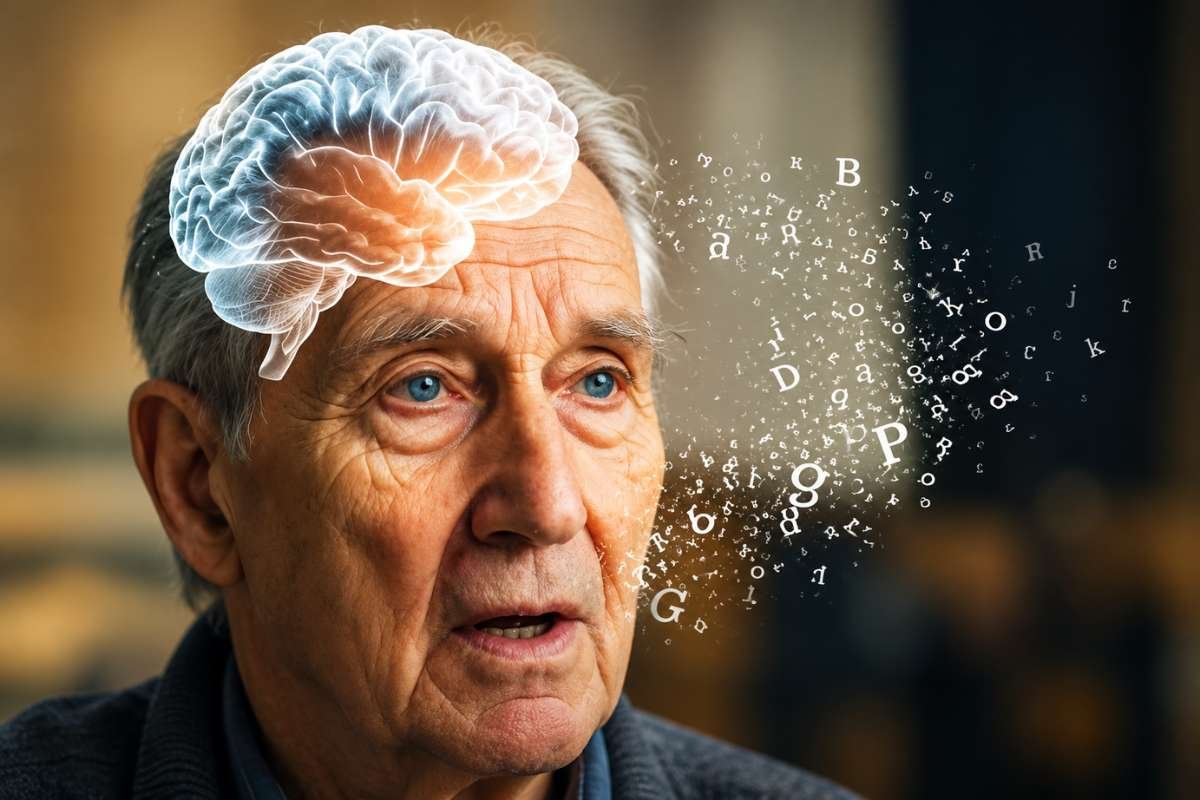
Researchers examine Speech Patterns and Brain Aging through speech rate, pauses, pitch, vocabulary, semantic precision, and the organization of verbal output. They use these measures to estimate chronological age and calculate a “speech age gap,” or the difference between a person’s actual age and the age estimated from their speech.
The findings, published Sept. 30 in Science Advances, show that people with larger speech age gaps also have markers associated with faster biological aging. Researchers assess biological aging using three DNA methylation-based epigenetic clocks and examine brain structure and function through neuroimaging.
Older-Sounding Speech Tracks Cognitive Changes
Larger Speech Patterns and Brain Aging age gaps are associated with lower global cognitive performance, executive function, functional abilities, and several forms of memory. The association also extends to non-language cognitive measures, suggesting the findings are not limited to a person’s ability to perform language tests.
The researchers also find differences across clinical groups. Healthy participants generally show smaller speech age gaps, while larger gaps appear among people with Alzheimer’s disease and forms of frontotemporal dementia.
Among participants with Alzheimer’s disease, the speech-derived measure is associated with higher blood levels of p-tau217, a biomarker associated with Alzheimer’s pathology. Researchers say the finding adds to evidence that speech characteristics may reflect changes occurring beyond speech and language itself.
“Our voice appears to contain much more information about aging than we previously recognised,” said Agustin Ibanez, a study author and professor at Trinity College Dublin, in a statement released by the university. He said speech captures signals associated with cognition, the brain, systemic biology and social environment.
Researchers Urge More Testing Before Clinical Use
The study also links accelerated speech aging with measures of social conditions, including education, financial circumstances, food insecurity, health care access and early-life experiences. Researchers say these findings suggest speech may reflect a combination of biological and social factors accumulated over a lifetime.
The researchers say Speech Patterns and Brain Aging measures could eventually complement more expensive assessments involving MRI scans, blood samples and specialized laboratory tests. Speech can be recorded remotely and repeatedly, potentially making such measures easier to deploy in settings with limited access to advanced medical technology.
However, the researchers caution that the speech clock is not currently a diagnostic test for dementia. The study is primarily cross-sectional, so it cannot determine whether an older-than-expected speech profile predicts future cognitive decline or dementia.
Ibanez said further research should test the approach longitudinally and across additional languages, cultures, and more natural speaking environments before clinical implementation.
Visit more of our news! Healthcare 360 Magazine