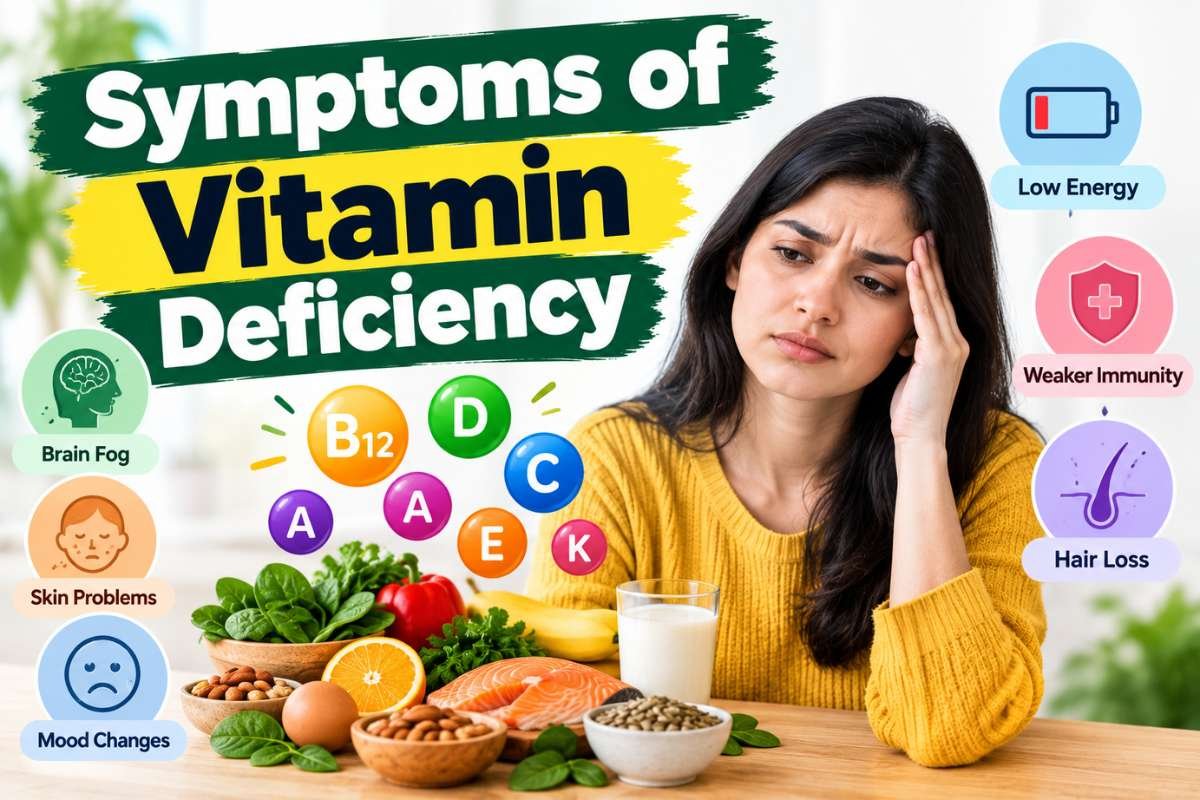
Feeling unusually tired, losing hair, or battling recurring mouth sores? These can signal a vitamin deficiency, but they can also have other causes. Roughly 2 billion people worldwide are affected by deficiencies in essential micronutrients, including vitamins and minerals. This guide covers the key symptoms of vitamin deficiency, from B12-related numbness to vitamin D-related bone pain.
You’ll learn why symptoms vary by vitamin and severity. Why different deficiencies often look alike, and why a symptom alone can’t pinpoint the cause. You’ll also see how to spot patterns and what to do next.
Symptoms of Vitamin Deficiency: What Signs Should You Watch For?
Vitamin deficiencies can cause different symptoms depending on the nutrient involved and the severity of the deficiency. Common Signs of Vitamin Deficiency may include:
| Symptom pattern | Possible vitamin links |
| Fatigue or weakness | Vitamins B12, folate, B6, C or D |
| Hair loss or brittle nails | Biotin; other nutritional or medical causes are also possible |
| Mouth ulcers, sore tongue or cracked mouth corners | B vitamins or folate |
| Bleeding gums or slow wound healing | Vitamin C |
| Numbness or tingling | Particularly vitamin B12; other causes are possible |
| Bone pain or muscle weakness | Vitamin D |
| Vision changes, especially poor night vision | Vitamin A |
| Easy bruising or bleeding | Vitamins C or K |
These associations are based on symptoms reported with various vitamin deficiencies, including fatigue, hair and skin changes, eye problems, nerve symptoms, tongue changes, bleeding, and weaker bones.
Important: These symptoms are not specific to vitamin deficiency. Fatigue, for example, can also result from poor sleep, anemia, thyroid conditions, infections, or other health problems. A healthcare professional may recommend a medical history, examination, and blood tests before confirming a deficiency.
Which Vitamin Deficiencies Can Cause These Symptoms?
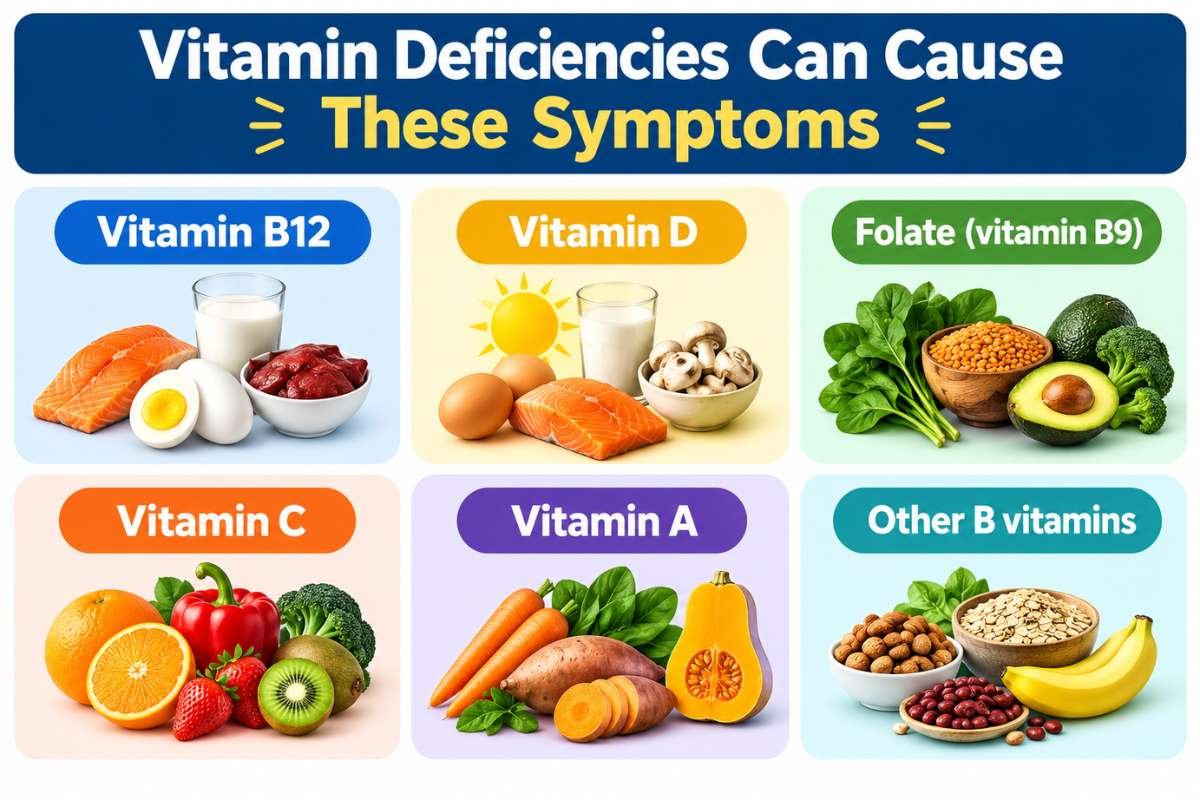
The Symptoms of Vitamin Deficiency depend on the nutrient involved, how low its level is, and how long the deficiency has lasted. The most relevant possibilities include:
Vitamin B12:
May cause fatigue, weakness, tingling or numbness, balance problems, cognitive changes, and a sore tongue. Some people may also experience vision or mood changes.
Vitamin D:
May be linked to bone pain, muscle weakness, and possible fatigue.
Folate (vitamin B9):
May cause fatigue and weakness related to anemia, along with pale skin and shortness of breath.
Vitamin C:
May cause bleeding gums, easy bruising, and slow wound healing.
Also read: Vitamin C Rich Foods That Actually Work Better Than Supplements
Vitamin A:
May cause poor night vision and dry, irritated eyes. Severe deficiency can damage vision.
Other B vitamins:
Low levels of B1, B2, B3, B6, or biotin may cause different combinations of neurological, skin, oral, or digestive symptoms.
Vitamin B12 and folate deficiencies can cause anemia, which may lead to tiredness, dizziness, pale skin, and shortness of breath. B12 deficiency may also cause neurological symptoms such as numbness, unsteady movement, confusion, or forgetfulness.
These symptoms do not confirm a deficiency. Similar problems can result from non-vitamin-related anemia, thyroid disease, medication effects, infections, or other conditions. A healthcare professional can identify the likely cause through an examination and appropriate blood tests.
Why Vitamin Deficiency Symptoms Can Be Easy to Miss
Vitamin deficiencies do not always cause sudden or obvious changes. Symptoms may develop gradually, especially when the body has stored reserves of a nutrient.
Early symptoms may also be vague, such as tiredness, weakness, headaches, or changes in mood. Different deficiencies can produce similar symptoms, making it difficult to identify the cause based on symptoms alone. Some people may have low vitamin levels but no noticeable symptoms at first, as can occur with vitamin B12 or vitamin D deficiency.
A deficiency is not always caused by a poor diet. Digestive conditions, surgery, certain medicines, or problems absorbing nutrients can prevent the body from using vitamins properly. For instance, pernicious anemia can interfere with vitamin B12 absorption.
This is why symptoms of vitamin deficiency should be treated as possible warning signs, not a diagnosis. Having fatigue, tingling, or hair changes does not automatically mean you have a vitamin deficiency. A healthcare professional may need to review your diet, medical history, and medicines and order blood tests to confirm the cause.
Who Is More Likely to Develop a Vitamin Deficiency?

Certain people have a higher risk of deficiency because they consume fewer vitamins or do not absorb them properly. Risk factors include:
- Following a highly restrictive diet or eating little dietary variety.
- Following a vegan diet, particularly without a reliable vitamin B12 supplement or fortified foods. Some vegetarians may also be at risk.
- Being pregnant or breastfeeding, when nutrient requirements increase.
- Being an older adult, as appetite, diet quality, and nutrient absorption may change with age.
- Having gastrointestinal conditions such as celiac disease, Crohn’s disease, or other disorders that affect absorption.
- Taking certain medicines that interfere with vitamin absorption or metabolism.
- Having had gastrointestinal or bariatric surgery, which can reduce nutrient absorption.
- Using alcohol heavily or over a long period. Alcohol can affect nutrition and interfere with vitamin absorption, particularly thiamine absorption.
- Having an autoimmune condition that affects nutrient absorption, such as pernicious anemia.
People with these risk factors may notice symptoms of vitamin deficiency. Mayo Clinic also identifies older age, digestive conditions, autoimmune disease, surgery, and alcohol use as risks for vitamin deficiency anemia.
Also read: Best Vitamin D Supplements: Avoid These Common Mistakes in 2026
How Are Vitamin Deficiencies Diagnosed?
A healthcare professional usually begins by reviewing:
- Your symptoms and medical history.
- Your usual diet and lifestyle.
- Medicines and supplements you take.
- Health conditions that may affect digestion or nutrient absorption.
- Any previous gastrointestinal or weight-loss surgery.
Blood tests are commonly used to check vitamin levels and look for related problems. Tests may include a complete blood count, vitamin B12, folate, or vitamin D levels. It depends on your symptoms and risk factors. Some deficiencies can appear on routine blood work before obvious symptoms develop.
Additional tests may be needed when the results are unclear. For example, a methylmalonic acid blood or urine test can help assess vitamin B12 deficiency. Folate-related testing may include homocysteine levels, a blood-cell examination, or a reticulocyte count.
When Should You See a Doctor?

This is especially important if you have ongoing fatigue or weakness, unexplained hair loss, repeated mouth ulcers, easy bruising, unusual bleeding, significant weight changes, or vision problems.
Persistent numbness or tingling, balance difficulties, memory changes, or problems with coordination should also be assessed promptly. These may appear among the symptoms of vitamin deficiency, but they can also indicate other medical conditions. Vitamin B12 deficiency, in particular, can affect the nervous system. It may cause numbness, balance problems, confusion, or memory changes. Some neurological problems can become permanent if treatment is delayed.
Do not assume that sudden or severe symptoms are caused by a vitamin deficiency. Seek urgent medical care for sudden vision loss, severe weakness, confusion, difficulty walking, major bleeding, chest pain, or trouble breathing. A clinician can assess the symptoms and use appropriate tests to identify the cause.
Also read: Eat Your Way to Wellness: 12 Everyday Foods Rich in Vitamins
Conclusion:
Symptoms of vitamin deficiency can be easy to overlook. Fatigue, tingling, hair changes, or mouth sores often develop slowly and overlap with many other health conditions. That’s why noticing a pattern matters more than focusing on a single sign. Your risk factors, diet, and medical history all help explain what may be going on.
Most deficiencies are treatable once the cause is identified, and early action can prevent complications, especially with B12. Avoid self-diagnosing or starting high-dose supplements without guidance.
If your symptoms persist, worsen, or have no clear explanation, speak with a healthcare professional and ask about blood testing. Appropriate testing can help clarify whether a deficiency is contributing to your symptoms.
FAQ:
1. What are the most common symptoms of vitamin deficiency?
Briefly mention fatigue, weakness, skin/hair changes, mouth problems, neurological symptoms, and other common patterns.
2. Can vitamin deficiency cause extreme tiredness?
Explain that several deficiencies, including B12 and folate deficiency-related anemia, can contribute to fatigue, but fatigue has many possible causes.
3. Should you take vitamins if you have these symptoms?
Don’t automatically start high-dose supplements based only on symptoms; identify the likely deficiency and appropriate treatment first.
4. How do you know if you have a vitamin deficiency?
Symptoms can raise suspicion, but appropriate laboratory testing and clinical evaluation are generally needed to confirm it.
5. Can vitamin deficiency cause hair loss?
Yes, some nutritional deficiencies can contribute to hair loss, but hair loss has many possible causes and isn’t enough to identify a deficiency.