Inside every cell of the human body, millions of proteins are constantly at work. They act as builders, messengers, and regulators, keeping our biology in balance. When these proteins function properly, the system runs smoothly. But when a protein becomes faulty – overactive, misfolded, or present at the wrong time – it can lead to serious diseases, including cancer, autoimmune disorders, and neurodegenerative conditions.
For decades, medicine has tackled this problem by inhibiting harmful proteins. Traditional drugs are designed to bind to a protein and reduce its activity, much like dimming a faulty light. While this approach has been effective, it has clear limits. Some disease-causing proteins are difficult to block, adapt over time, or continue causing harm even when only partially suppressed.
A new idea is now transforming this approach: instead of controlling bad proteins, what if we could remove them entirely?
Targeted protein degradation therapies do just that. Rather than merely slowing a protein down, these therapies mark it for destruction, directing the cell’s own cleanup system to break it apart. The difference is simple but powerful. If inhibitors dim the light, degraders unscrew the bulb and throw it away.
This shift represents a major change in drug development. By harnessing the cell’s natural disposal machinery, targeted protein degradation offers a smarter and more direct way to treat diseases, especially those that have long resisted traditional therapies.
Why Traditional Therapies Sometimes Fall Short?
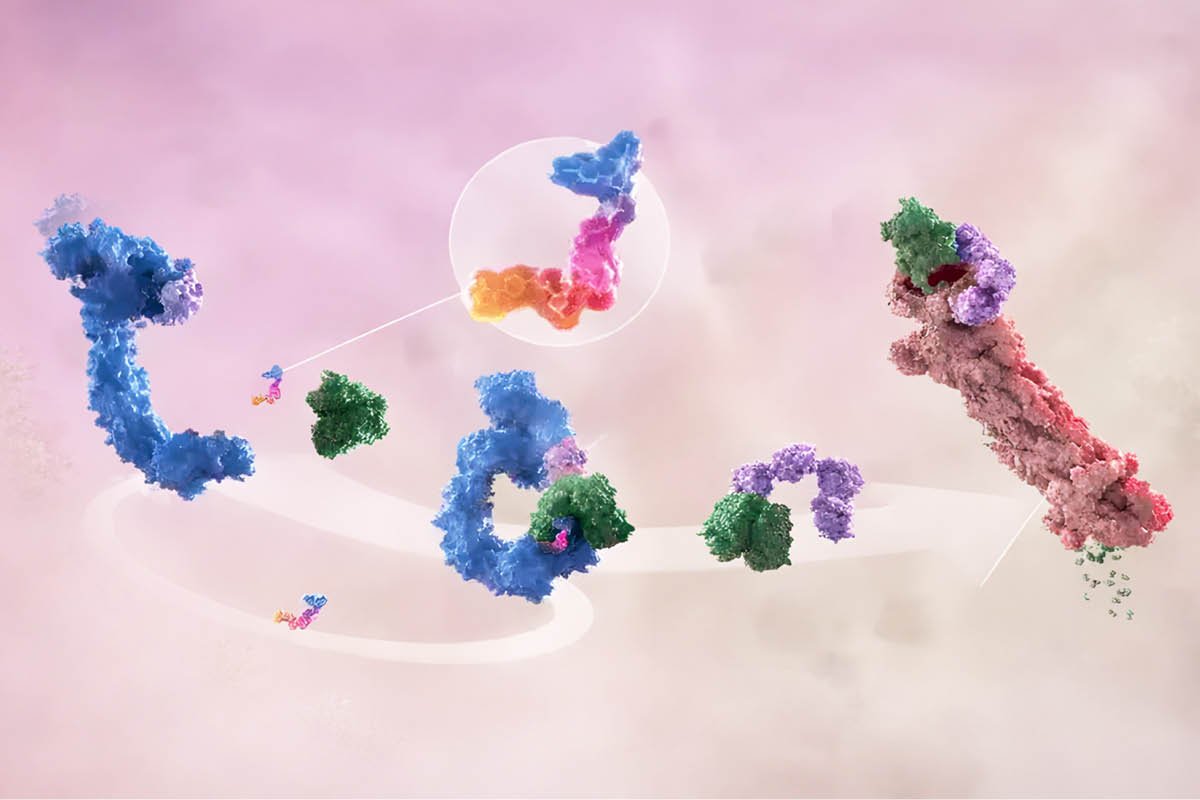
For decades, conventional drugs have fought disease by blocking harmful proteins. Small-molecule inhibitors and biologics work by sitting in a protein’s active site and preventing it from doing its job. This inhibition-focused strategy has been successful for many conditions, but it also has important limitations.
One major challenge is that most proteins in the human body – up to about 75–80% – don’t have the well-defined “pockets” needed for traditional inhibitors to latch on effectively. These proteins, including many transcription factors and scaffolding proteins, have long been labelled “undruggable” because inhibitors simply can’t bind to them in a way that stops their activity.
Another problem is resistance. When a protein is only inhibited rather than removed, cells can develop changes – mutations or alternative pathways – that reduce the drug’s effectiveness. Cancer cells, for example, often develop mutations that weaken inhibitor binding, allowing the disease to come back stronger.
There are also practical issues with traditional drugs: they usually need to be present at high doses and constantly occupy the target to work, which can increase side effects and toxicity.
These shortcomings made scientists realize that merely blocking proteins wasn’t enough. A paradigm shift was needed, a way not just to disable harmful proteins temporarily but to eliminate them entirely. That shift is what led to the development of targeted protein degradation therapies, which destroy disease-causing proteins rather than just slowing them down.
The Cellular “Trash System”: A Primer
Cells have built-in systems to clean house by breaking down and recycling damaged or unwanted proteins, much like a recycling plant turns trash into useful materials. This keeps cells healthy, prevents toxic buildup, and supplies building blocks for new proteins. The two main pathways are the ubiquitin-proteasome system for quick, targeted cleanup and lysosomal autophagy for larger-scale recycling.
1. Ubiquitin-Proteasome System
This pathway handles short-lived or faulty individual proteins. First, enzymes tag the protein with small ubiquitin molecules, like sticking a “trash” label on it. The proteasome, a barrel-shaped machine, then grabs the tagged protein, unfolds it, and chops it into tiny peptides inside its core. These bits get reused to build fresh proteins, maintaining tight control over cell functions.
2. Lysosomal Autophagy
Autophagy acts like a garbage bag for bulk disposal, targeting damaged organelles, protein clumps, or long-lived proteins. A membrane pouch called an autophagosome forms around the waste, seals it up, and fuses with the lysosome, a sac full of digestive enzymes. Inside the autolysosome, enzymes dissolve everything into reusable amino acids, sugars, and fats, helping cells survive stress like nutrient shortages.
Why It Matters
Both systems work together but specialize: the proteasome for precision, autophagy for volume. When they falter, diseases like cancer or neurodegeneration can arise from protein pileups. Cells constantly balance protein making and breaking to stay efficient and adaptable.
Targeted Protein Degradation: The Big Idea
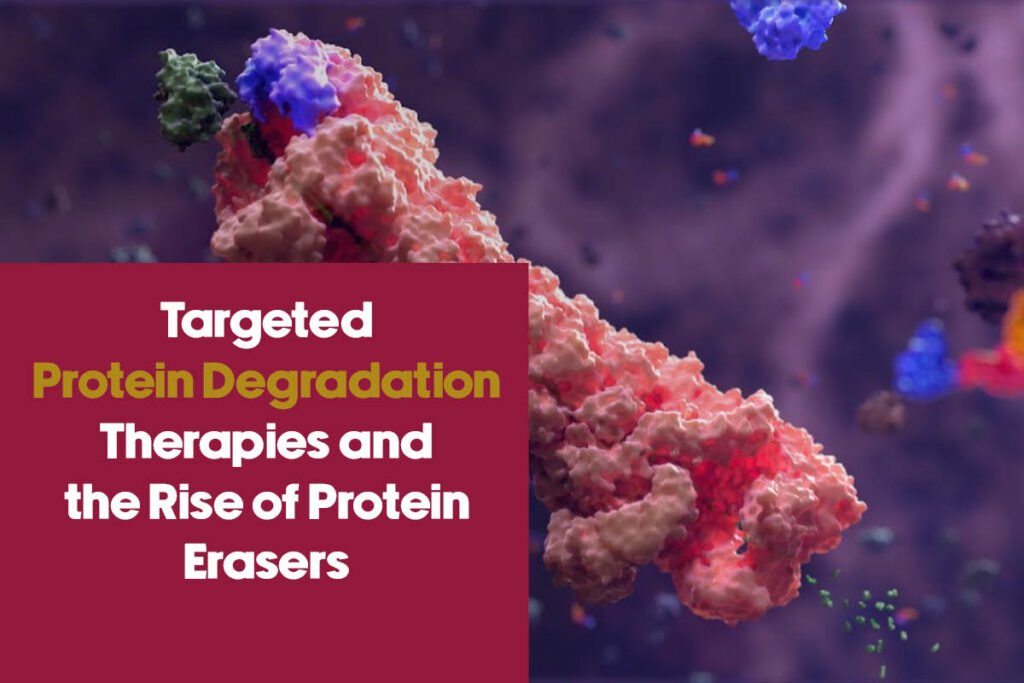
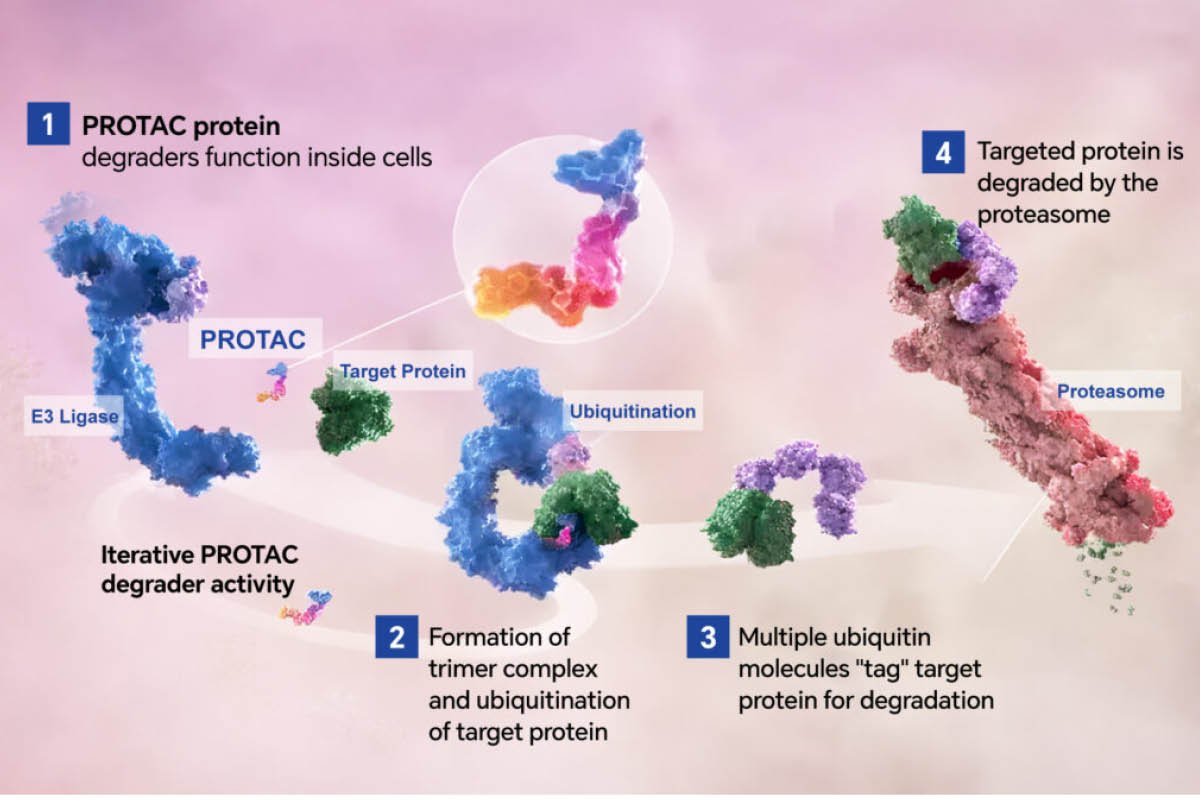
Targeted protein degradation (TPD) harnesses a cell’s natural trash system to destroy harmful proteins linked to diseases like cancer or Alzheimer’s. Instead of just blocking a protein’s action, TPD uses small molecules – often called PROTACs – to tag the bad protein with ubiquitin, sending it straight to the proteasome for complete breakdown and recycling.
How TPD Works
These molecules act like a molecular tether. One end sticks to the disease protein, while the other recruits an E3 ligase enzyme. This brings the target close enough for ubiquitination, marking it for shredding by the proteasome. The degrader molecule then lets go and can repeat the process catalytically, working at low doses over time.
Key Difference from Inhibitors
Traditional drugs are like putting a gag on a machine; they occupy the protein’s active site to stop it temporarily, but the protein stays around. TPD eliminates the protein entirely, wiping out all its functions, even “undruggable” ones without clear binding pockets. This leads to longer-lasting effects and hits proteins that inhibitors can’t touch.
The Two Stars of TPD
Targeted protein degradation (TPD) features two standout approaches: PROTACs and molecular glues. Both hijack the cell’s ubiquitin-proteasome system to destroy disease-causing proteins, but they do it differently.
1. PROTACs (Proteolysis-Targeting Chimeras)
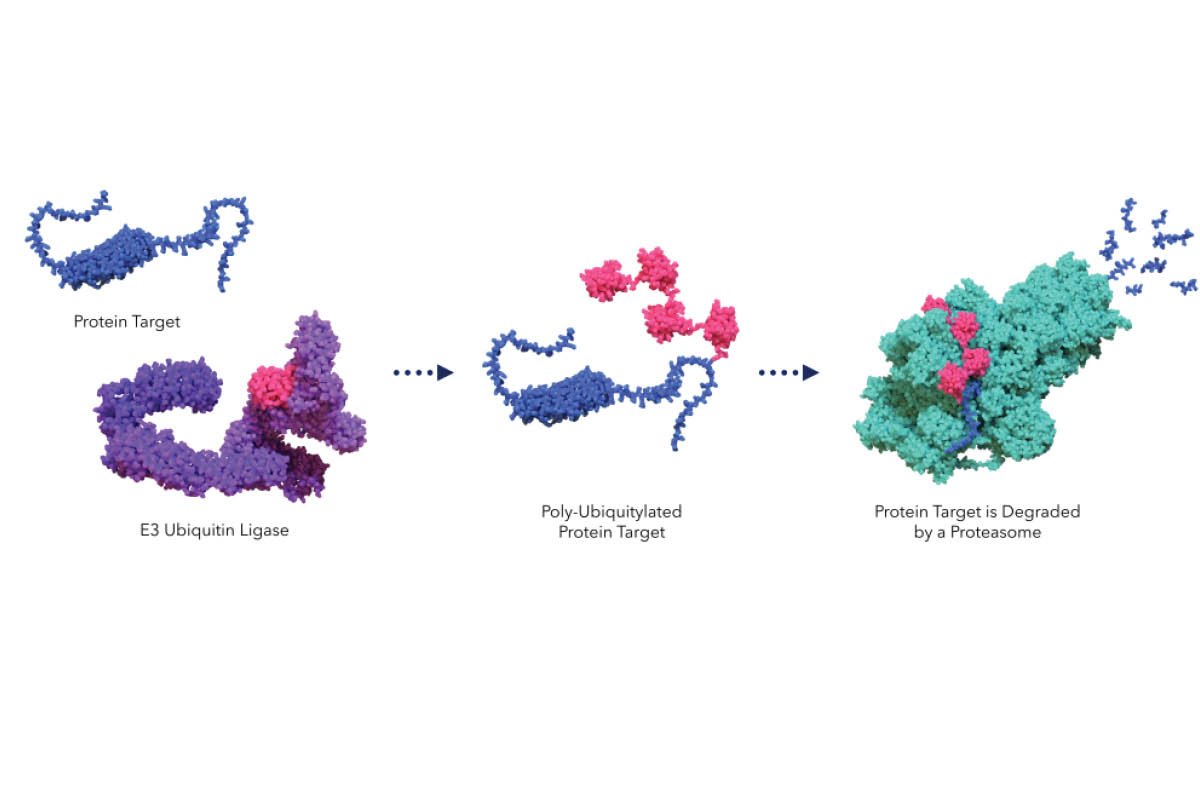
PROTACs are bifunctional molecules shaped like a dumbbell. One end binds to the target protein (like a rogue enzyme in cancer), while the other links to an E3 ligase—the cell’s tagging enzyme. This forces the pair together, adding ubiquitin tags to the target and sending it to the proteasome for shredding. Their excitement comes from catalytic action: one PROTAC molecule can destroy many proteins, working at low doses. They also tackle “undruggable” proteins lacking good binding pockets for traditional drugs.
2. Molecular Glues
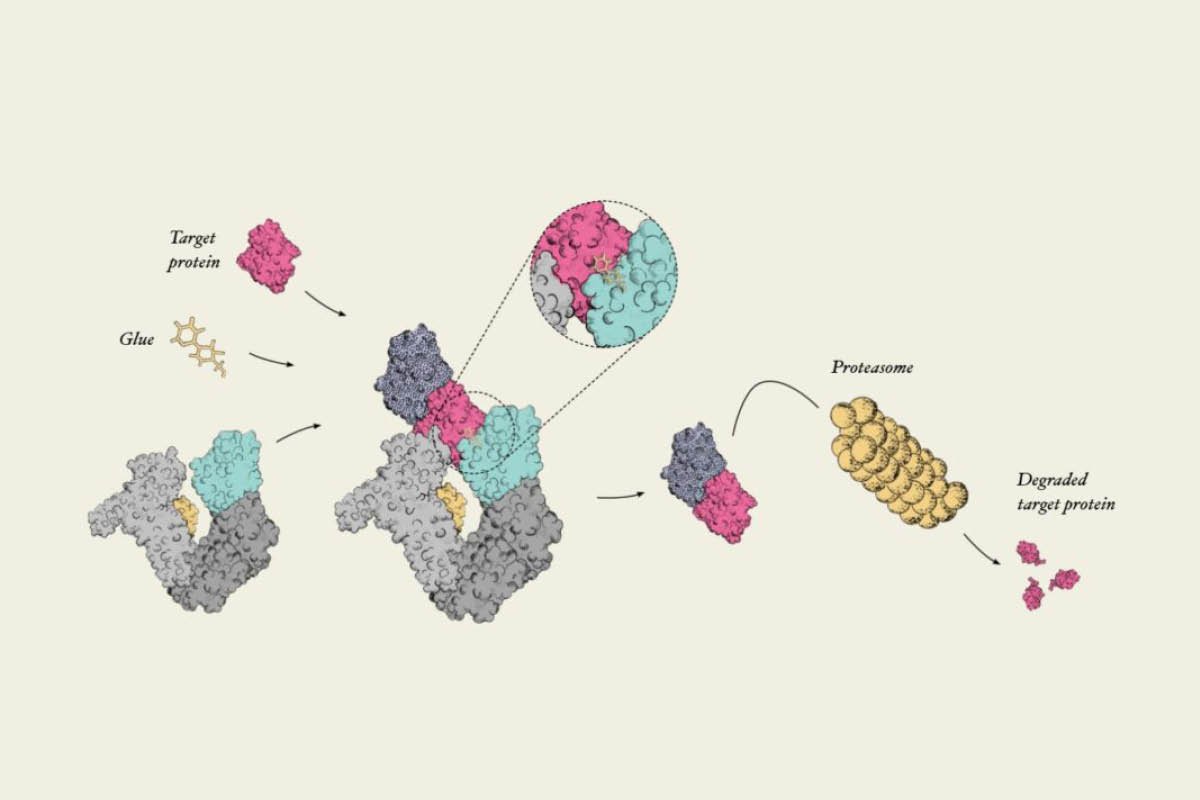
Glues are simpler, single, small molecules, not chimeras. They don’t link directly but reshape an E3 ligase or target protein’s surface, gluing them into a tight embrace for ubiquitination.
Examples include thalidomide derivatives that degrade transcription factors. Benefits include a smaller size for better cell entry, improved drug-like properties (solubility, oral bioavailability), and often serendipitous discovery leading to potent, selective effects.
These stars expand TPD’s reach beyond conventional inhibitors, promising new treatments for tough diseases.
Beyond PROTACs and Glues: New Frontiers
Targeted protein degradation (TPD) is expanding beyond PROTACs and glues into new tools that tap lysosomal pathways, reaching proteins the proteasome can’t touch, like those outside cells, on membranes, or in clumps.
1. AUTACs and Autophagy Degraders
AUTACs (Autophagy-Targeting Chimeras) use small molecules to tag proteins or organelles with ubiquitin-like signals, pulling them into autophagosomes for lysosomal breakdown. Similar autophagy-based degraders, like ATTECs and AUTOTACs, directly tether targets to autophagy receptors (LC3 or p62), enabling destruction of aggregated proteins or damaged mitochondria linked to diseases like Huntington’s.
2. LYTACs and AbTACs
LYTACs (Lysosome-Targeting Chimeras) clear extracellular proteins by binding them and a lysosomal receptor (like CI-M6PR), triggering endocytosis and digestion in lysosomes. AbTACs (Antibody-based TPD) use bispecific antibodies to yank cell-surface proteins into endosomes for lysosomal shredding. These hit secreted or membrane targets are untouchable by intracellular systems.
These frontiers broaden Protein Degradation Therapies TPD’s scope to “undruggable” extracellular and aggregate culprits, promising therapies for cancer, neurodegeneration, and more.
Real-World Impact: Clinical Progress and Success Stories
Targeted protein degradation therapies like PROTACs and molecular glues are advancing rapidly in clinical trials, especially for hard-to-treat cancers. Over 40 PROTAC candidates are in human testing as of early 2026, with three in Phase 3: ARV-471 (vepdegestrant) for ER-positive breast cancer, BMS-986365 for prostate cancer via androgen receptor (AR) degradation, and BGB-16673 for hematologic malignancies targeting BTK.
Key Success Stories
ARV-471, from Arvinas and Pfizer, showed strong Phase 3 results in 2025. In VERITAC-2, it beat fulvestrant on progression-free survival in breast cancer patients with ESR1 mutations after prior endocrine therapy, earning FDA Fast Track status and NDA review (PDUFA June 2026). BMS-986365 targets AR in prostate cancer, addressing resistance, while BGB-16673 fights B-cell cancers like lymphomas by degrading mutated BTK, offering hope where inhibitors fail.
Early Evidence and Future Promise
Phase 1/2 data reveal good tolerability, deep target degradation, and tumor shrinkage, even in “undruggable” cases. This could transform oncology by fully eliminating proteins, overcoming resistance, and enabling low dosing. If approved, TPD may redefine treatments for breast and prostate cancers and blood malignancies by 2027, expanding to neurodegeneration next.
The Promise for Other Diseases
Targeted protein degradation (TPD) holds great promise beyond cancer, targeting toxic proteins in neurodegenerative diseases, inflammation, and infections. By clearing misfolded or overactive proteins, TPD could slow disease progression where traditional drugs fall short.
1) Neurodegenerative Diseases
In Alzheimer’s and Parkinson’s, PROTACs aim to degrade tau tangles or alpha-synuclein aggregates that kill neurons. Proof-of-concept degraders have cleared pathological tau in patient cells and alpha-synuclein fibrils in models, improving neuron health. These approaches tackle “undruggable” aggregates, with brain-penetrant candidates advancing in preclinical tests.
2) Inflammatory and Autoimmune Disorders
TPD targets cytokines like TNF-alpha or JAK kinases driving rheumatoid arthritis and lupus. Degraders induce complete removal, potentially reducing inflammation more effectively than inhibitors and combating resistance. Early studies show selective degradation in immune cells, hinting at safer autoimmune therapies.
3) Infectious Diseases
Against viruses like HIV or bacteria, targeted protein degradation degrades viral proteins or host factors aiding pathogens. PROTACs targeting HIV integrase or bacterial virulence factors have shown viral clearance in cells, offering new antiviral strategies less prone to mutation-driven resistance.
Overall, TPD’s event-driven action promises durable effects across these areas, with neurodegeneration programs nearing the clinic by the late 2020s.
Challenges and Limitations
Targeted protein degradation (TPD) technologies like PROTACs face real hurdles in becoming everyday medicines. Their large size, poor solubility, and tricky cell entry often limit bioavailability, meaning less drug reaches the target and more gets cleared from the body quickly.
1. Drug Design Hurdles
PROTACs are bigger than typical drugs – often 800-1200 daltons with flexible linkers – violating “Rule of Five” guidelines for oral drugs. This leads to low permeability across the gut or cell membranes and fast metabolism. Off-target effects also worry scientists: widespread E3 ligases might tag wrong proteins, causing toxicity, while the “hook effect” (too much drug reduces efficacy) complicates dosing.
2. Rational Design Complexity
Predicting how PROTACs form the key target-E3 complex is tough without crystal structures. Trial-and-error dominates, slowing progress.
Emerging Solutions
Computational tools and AI speed things up by screening virtual libraries, predicting ternary complex stability, and optimizing linkers. Smaller PROTACs, new E3 ligases, and nanocarriers improve properties. Machine learning models now design brain-penetrant degraders, cutting development time.
These advances tackle core limits, paving TPD’s path to the clinic despite challenges.
A New Era of Precision Protein Control
Targeted protein degradation (TPD) is racing toward a brighter future with smarter tools and broader reach. Researchers are crafting degraders that work only in specific tissues by recruiting localized E3 ligases, minimizing side effects. AI and machine learning accelerate design, predicting optimal linkers and complexes from vast datasets, slashing trial-and-error time.
Future Directions
Expect smaller, orally bioavailable PROTACs and glues, plus hybrid modalities blending lysosomal and proteasomal paths. Tissue-specific strategies, like liver-targeted LYTACs or brain-penetrant degraders, target organs precisely. AI platforms now generate degrader libraries virtually, enabling rapid hits for rare mutations.
Personalized Medicine Impact
TPD fits patient-specific profiles by degrading mutant proteins, like personalized tau degraders for Alzheimer’s variants. This eradicates root causes in untreatable diseases – neurodegeneration, fibrosis, genetic disorders – offering cures where inhibitors merely pause symptoms.
Targeted protein degradation marks a bold new chapter in medicine, shifting from blocking proteins to erasing them entirely. Cells’ trash systems, once basic biology, now power precision therapies. The takeaway: we’ve upgraded from temporary control to total eradication, transforming impossible fights into winnable battles.
Visit Healthcare 360 Magazine For The Most Recent Information.