Are you feeling tired a little too often?
Struggling to stay focused?
Or just not having the same energy you are used to?
You might notice it in small ways first. It does not always feel serious at the beginning, but over time, it starts to affect how you move through your day. What you eat quietly plays a much bigger role than you think.
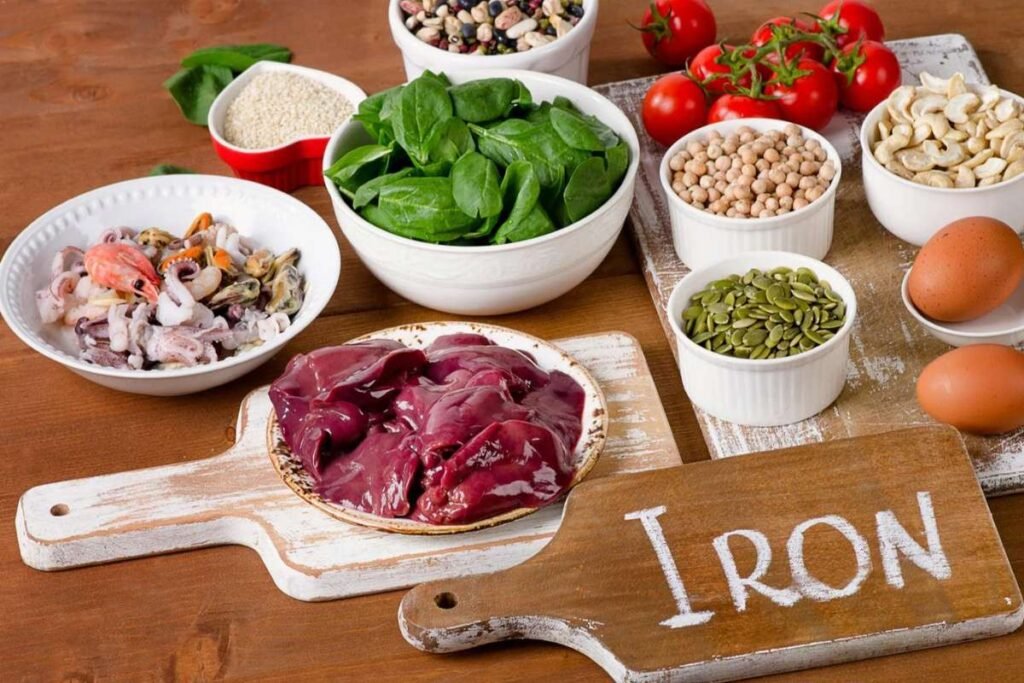
Energy levels are closely tied to what your body receives on a daily basis. When your meals lack certain nutrients, your system feels it in subtle but constant ways. This is where iron-rich foods become especially important, helping your body produce healthy red blood cells and maintain steady oxygen flow. With the right balance in your diet, you can feel more active, focused, and steady throughout the day.
So, today we will take a look at some foods that are rich in iron. But first, we must understand the different types of iron that exist in the foods that we consume.
What are the Types of Iron Found in Foods?
Iron in food comes in two main forms. These are heme iron and non-heme iron. Your body handles each type in a different way. This affects how much iron you absorb from a meal.
Heme Iron
Heme iron comes from animal-based foods. You will find it in meat, poultry, and fish. Your body absorbs this type more easily than other forms. Most people absorb about 15-35% of heme iron.
This type does not depend much on other foods. It enters the body with fewer limits. Because of this, it helps raise iron levels faster. People with low iron often benefit from these sources.
Non-Heme Iron
Non-heme iron comes from plant-based foods. You will find it in beans, lentils, grains, nuts, seeds, and leafy greens. Your body absorbs this type at a lower rate. Most people absorb about 2-20% of non-heme iron.
Many factors affect how well you absorb it. Vitamin C can help your body take in more iron. Foods like citrus fruits, tomatoes, and peppers support this process. At the same time, tea, coffee, and calcium-rich foods can reduce absorption.
The main difference lies in how your body processes each type. Heme iron enters the bloodstream more easily. Non-heme iron needs support from other nutrients.
Here are 40 Iron-Rich Foods That Can Help Boost Your Energy
Food choices shape how well your body maintains iron levels. Some foods provide higher amounts, while others add small but steady support over time. A mix of animal and plant sources can help you build a balanced diet. The list below groups foods by type, so you can choose what fits your meals best.
Poultry and Seafood
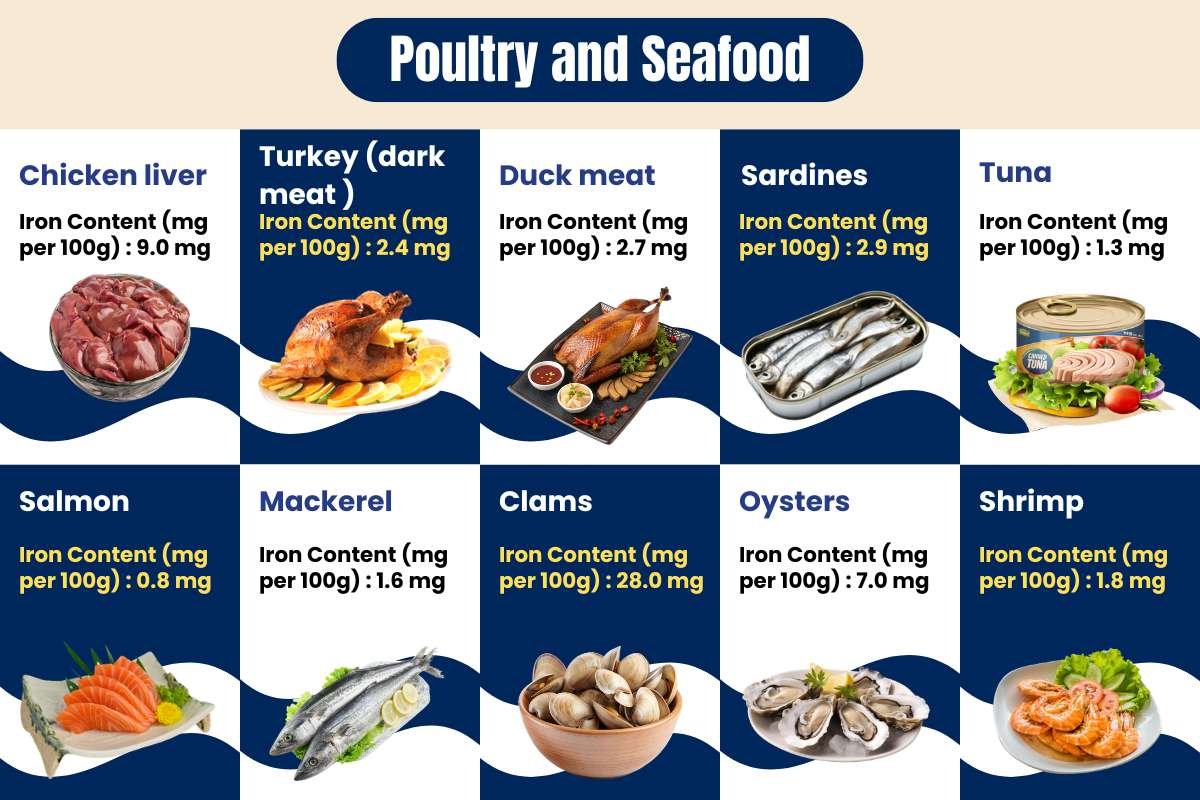
This group includes animal-based iron-rich foods that provide heme iron. Your body absorbs this type more easily than plant sources. This makes these foods useful when you need to improve iron levels. They also provide protein and support muscle health.
Some foods in this group contain much higher iron than others. Organ meats like chicken liver are rich in iron. Shellfish such as clams and oysters also offer very high amounts. These foods can help raise iron levels more quickly.
Fish and lean meats provide moderate amounts of iron. Options like sardines, mackerel, and duck meat add a steady intake. Even lower sources of iron-rich foods like salmon and tuna still support daily needs. Eating a mix of these foods helps maintain balance.
| Sr.No | Food Item | Iron Content (mg per 100g) |
| 1 | Chicken liver | 9.0 mg |
| 2 | Turkey (dark meat) | 2.4 mg |
| 3 | Duck meat | 2.7 mg |
| 4 | Sardines | 2.9 mg |
| 5 | Tuna | 1.3 mg |
| 6 | Salmon | 0.8 mg |
| 7 | Mackerel | 1.6 mg |
| 8 | Clams | 28.0 mg |
| 9 | Oysters | 7.0 mg |
| 10 | Shrimp | 1.8 mg |
READ MORE:
- Eat Your Way to Wellness: 12 Everyday Foods Rich in Vitamins
- Feeling Low? These Are the Best Foods for Mental Health You Should Eat
Fruits and Vegetables
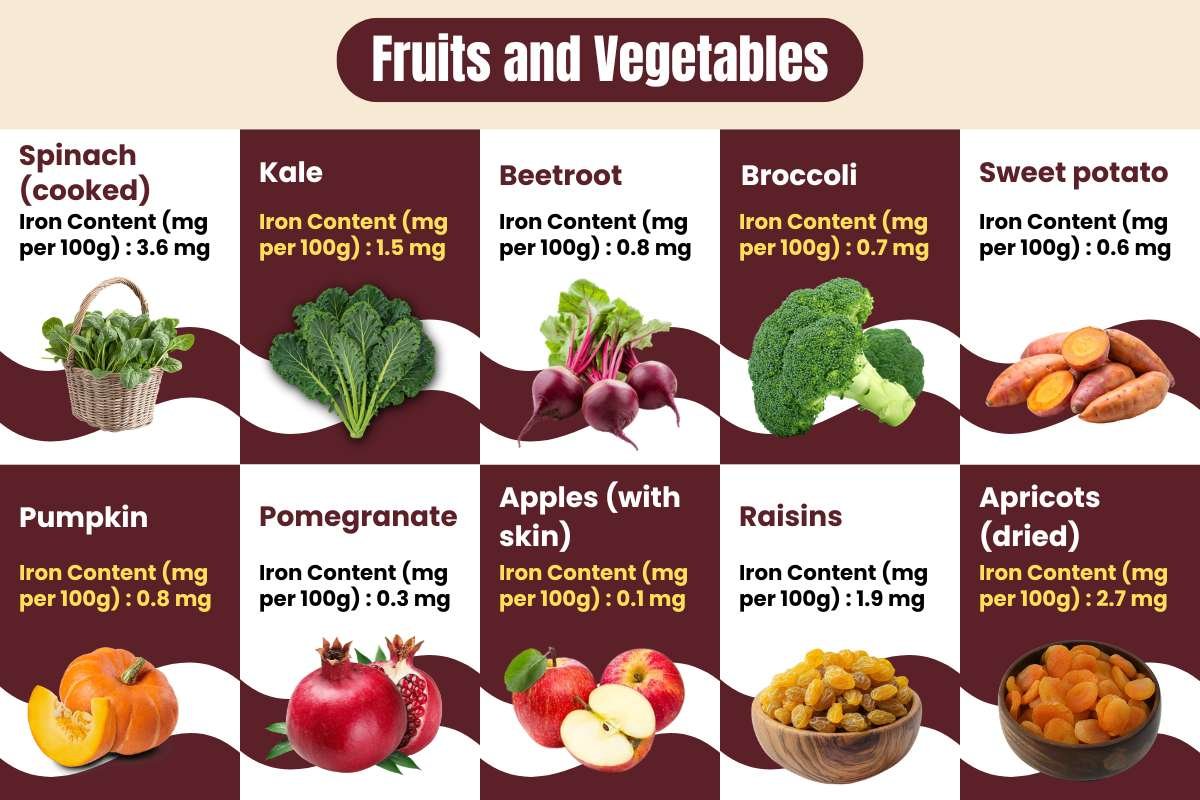
This group includes plant-based foods that provide non-heme iron. Your body absorbs this type at a lower rate than animal sources. Still, these foods add to your daily intake and support overall health. Many of them also provide fiber, vitamins, and antioxidants.
Leafy greens like spinach and kale offer more iron than most vegetables. Cooking can help improve how your body uses this iron. Other vegetables, such as beetroot, broccoli, and pumpkin, add smaller amounts but still support intake. Eating a mix of these helps build a balanced diet.
Fruits usually contain lower iron, but some stand out. Dried fruits like raisins and apricots provide higher amounts in smaller portions. Fresh fruits such as apples and pomegranates add small amounts but support overall nutrition. Pairing these iron-rich foods with vitamin C-rich options can help improve absorption.
| Sr.No | Food Item | Iron Content (mg per 100g) |
| 1 | Spinach (cooked) | 3.6 mg |
| 2 | Kale | 1.5 mg |
| 3 | Beetroot | 0.8 mg |
| 4 | Broccoli | 0.7 mg |
| 5 | Sweet potato | 0.6 mg |
| 6 | Pumpkin | 0.8 mg |
| 7 | Pomegranate | 0.3 mg |
| 8 | Apples (with skin) | 0.1 mg |
| 9 | Raisins | 1.9 mg |
| 10 | Apricots (dried) | 2.7 mg |
Breads and Cereals
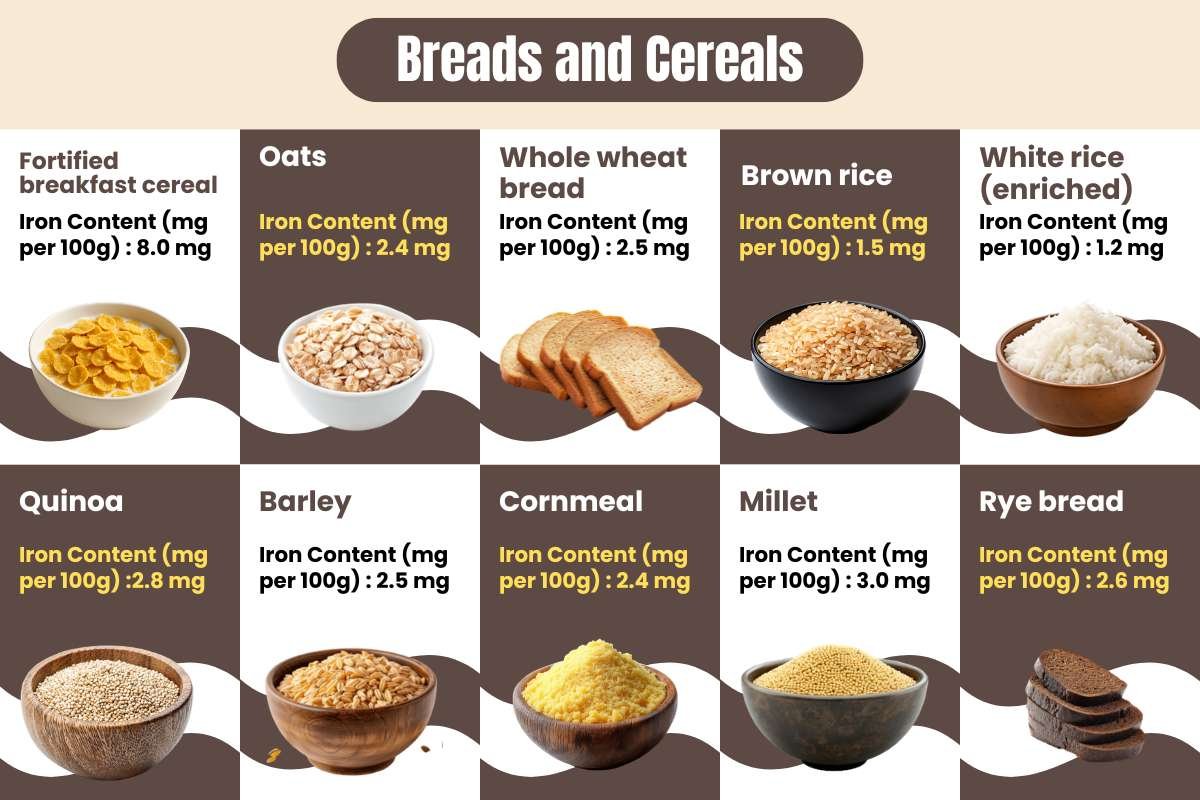
This group includes grain-based foods that provide non-heme iron. Many of these iron-rich foods are eaten daily, which makes them a steady source of iron. Your body absorbs this type at a lower rate than animal sources. Still, regular intake of these foods can support overall iron levels.
Some options offer higher iron due to fortification. Breakfast cereals often have added iron, which increases their value. Whole grains like oats, millet, and quinoa also provide good amounts. These foods can help improve intake when included in daily meals.
Staples like rice, bread, and cornmeal provide moderate amounts of iron. Enriched versions may contain more iron than regular forms. Eating a mix of whole and fortified grains helps build a balanced diet.
| Sr.No | Food Item | Iron Content (mg per 100g) |
| 1 | Fortified breakfast cereal | 8.0 mg |
| 2 | Oats | 4.3 mg |
| 3 | Whole wheat bread | 2.5 mg |
| 4 | Brown rice | 1.5 mg |
| 5 | White rice (enriched) | 1.2 mg |
| 6 | Quinoa | 2.8 mg |
| 7 | Barley | 2.5 mg |
| 8 | Cornmeal | 2.4 mg |
| 9 | Millet | 3.0 mg |
| 10 | Rye bread | 2.6 mg |
Beans and Other Foods
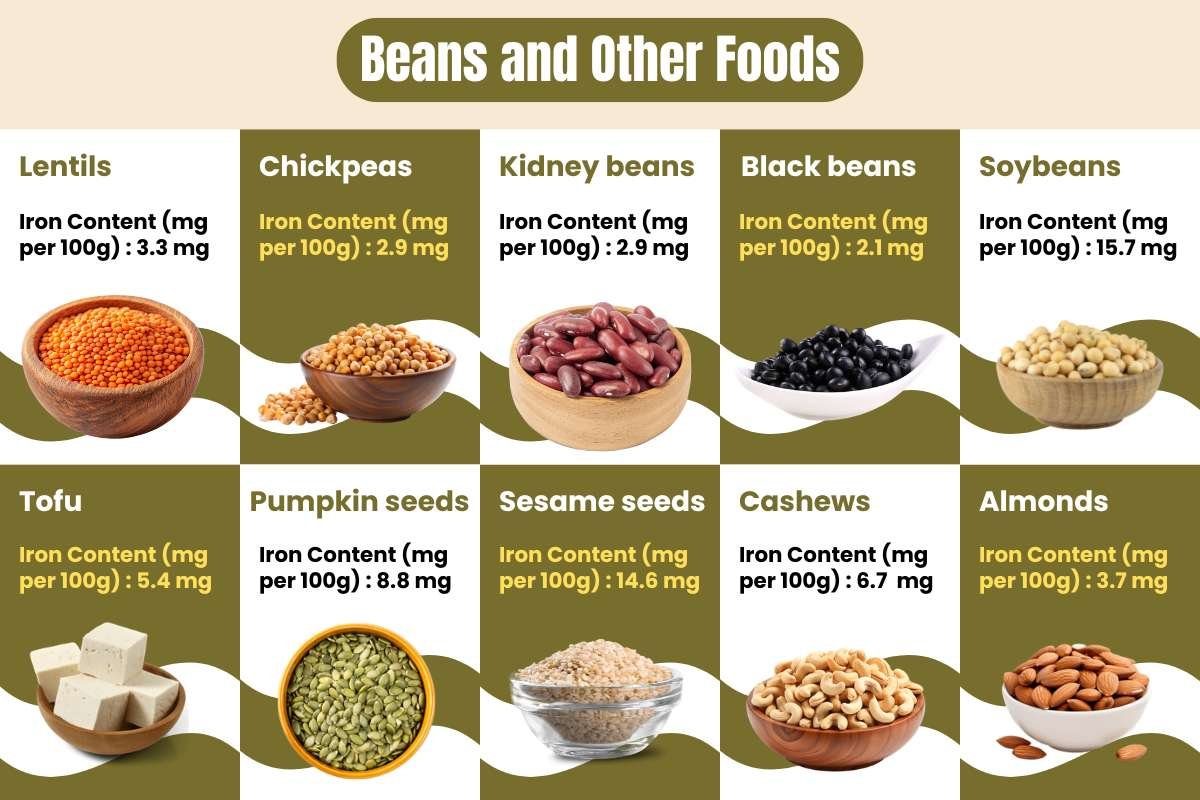
This group includes plant-based foods that provide non-heme iron. Many of these foods are rich in nutrients and support overall health. They also offer protein, fiber, and healthy fats. Regular intake can help improve daily iron levels.
Legumes such as lentils, chickpeas, and beans are some iron-rich foods that provide steady amounts of iron. Soy-based foods like soybeans and tofu offer higher levels compared to most plant foods. These options are useful for people who do not eat meat. Including them often can support better intake.
Seeds and nuts stand out in this group of iron-rich foods. Pumpkin seeds and sesame seeds provide high amounts in small servings. Nuts like cashews and almonds also add to daily intake. Pairing these foods with vitamin C items can help improve absorption.
| Sr.No | Food Item | Iron Content (mg per 100g) |
| 1 | Lentils | 3.3 mg |
| 2 | Chickpeas | 2.9 mg |
| 3 | Kidney beans | 2.9 mg |
| 4 | Black beans | 2.1 mg |
| 5 | Soybeans | 15.7 mg |
| 6 | Tofu | 5.4 mg |
| 7 | Pumpkin seeds | 8.8 mg |
| 8 | Sesame seeds | 14.6 mg |
| 9 | Cashews | 6.7 mg |
| 10 | Almonds | 3.7 mg |
How Much Iron Do You Need?
Your daily iron need depends on age, sex, and life stage. The body needs iron to make red blood cells and carry oxygen. Needs increase during growth, menstruation, and pregnancy. Getting the right amount each day helps prevent low iron levels.
Adult men need about 8 mg of iron per day. Adult women between 19 and 50 years need about 18 mg per day. This higher need is due to blood loss during menstruation. After age 50, women need about 8 mg per day, similar to men.
Pregnant women need more iron to support the baby. The daily need rises to about 27 mg per day. Breastfeeding women need around 9 to 10 mg per day. Children and teenagers also need more iron during growth years.
Diets that contain plant-based iron-rich foods may need more careful planning. Non-heme iron is harder for the body to absorb. Because of this, people who eat only plant foods may need a higher intake.
What are Some Signs of an Iron Deficiency?
Iron deficiency can develop slowly. The signs may feel mild at first. Over time, they can affect daily life and energy levels.
- Feeling tired often, even after rest
- Weakness and low energy during simple tasks
- Pale skin or a dull appearance
- Shortness of breath during light activity
- Dizziness or lightheaded feeling
- Frequent headaches
- Cold hands and feet
- Brittle nails or hair fall
- Fast or irregular heartbeat
- Poor focus or trouble concentrating
- Craving non-food items like ice or clay
When Should You Contact a Doctor?
Some signs need medical attention. Do not ignore symptoms that last for a long time or get worse. Early care can help prevent serious health issues.
- Fatigue that does not improve with rest
- Shortness of breath during normal activity
- Chest pain or fast heartbeat
- Severe dizziness or fainting
- Ongoing headaches or weakness
- Pale skin that does not improve
- Heavy or irregular menstrual cycles
- Known low iron levels without improvement
A doctor may suggest blood tests to check your iron levels. They can guide you on diet changes or supplements if needed.
READ MORE:
- Is Your Diet Linked To Your Brain? Try These Brain Boosting Foods For A Healthy Brain
- Can Changing Your Diet Help You De-Stress? Here Are 20 Stress-Reducing Foods To Combat Anxiety
Conclusion:
Think about how your body feels at the end of a long day. The difference between feeling drained and feeling steady often comes down to the small choices you make without thinking. What you eat, how consistent you are, and whether your body is getting what it needs all play a part in that feeling.
Over time, adding iron-rich foods to your meals can support better energy and overall balance. It is not about quick fixes or sudden changes, but about building a routine that works for you. When your body gets the support it needs, you start to feel the difference in ways that make everyday life easier.
FAQs
1. What are some common iron-rich foods?
Foods like spinach, lentils, red meat, tofu, and fortified cereals are known for their iron content. Adding a mix of these can help maintain healthy levels.
2. How do I know if I need more iron?
Common signs include fatigue, weakness, pale skin, and difficulty concentrating. A simple blood test can confirm your levels.
3. Can I get enough iron from a vegetarian diet?
Yes, but you may need to be more mindful. Plant-based iron-rich foods combined with vitamin C can improve absorption.