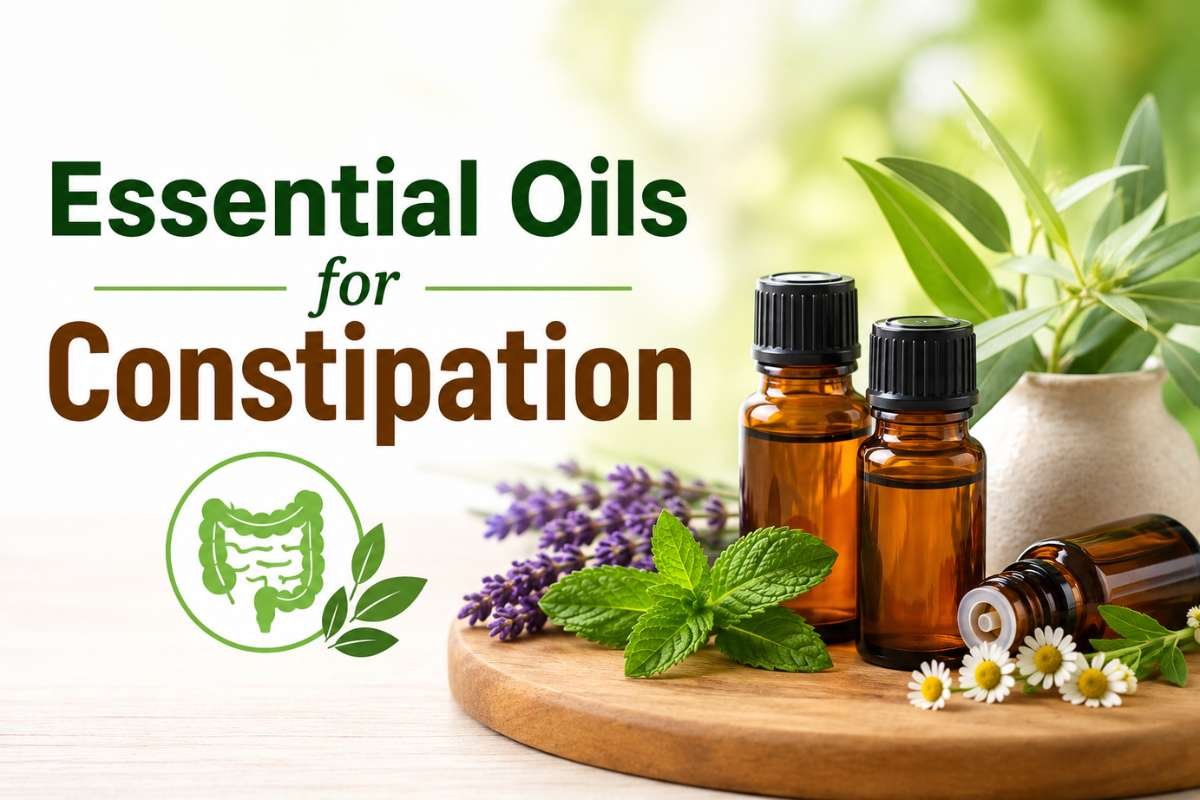
Essential Oils for Constipation might be beneficial for some, but there is limited research and no evidence that essential oils alone are a dependable constipation treatment. Common in adults worldwide, functional constipation affects 10-12% of people, and many are seeking gentle, non-pharmacological solutions. People often try essential oils. There are some aromatics like ginger, lavender, and peppermint. They may help relax gut muscles and ease abdominal discomfort when used in diluted massage blends. The evidence, however, is mainly for the benefit of abdominal massage alone, not the oils.
This article will help you identify promising oils, how to use them safely, and what the data says so far.
Table of Contents
Essential Oils for Constipation: Do They Actually Work?

Evidence is limited. Some research suggests aromatherapy combined with abdominal massage may improve constipation symptoms, but evidence for essential oils used alone is much weaker. Essential oils should therefore be presented as a complementary option, not a replacement for established constipation management.
Human studies provide the strongest clinical evidence. An older randomized trial in older adults found that abdominal massage using a blend of rosemary, lemon, and peppermint oils improved bowel frequency and quality of life compared to massage with carrier oil alone. However, because the intervention combined oils with massage, it cannot prove the oils alone caused the improvement.
Mechanistic evidence shows some oils contain compounds with antispasmodic or digestive effects. Peppermint oil, for example, has demonstrated efficacy for irritable bowel syndrome symptoms in clinical trials. But laboratory or mechanistic findings don’t automatically demonstrate clinical effectiveness for constipation specifically.
Traditional use also influences popularity. Ginger, fennel, peppermint, and other oils have long been associated with digestive complaints across cultures. Traditional use, however, does not equal clinical proof.
The evidence is more supportive of aromatherapy and abdominal massage as a complementary approach than of any essential oil as a proven constipation treatment on its own. For those exploring Essential Oils for Constipation naturally, this distinction matters: massage technique and consistent application appear more important than the specific oil chosen.
Which Essential Oils Have the Most Evidence?
Rather than ranking oils by popularity, here is an evidence-oriented comparison of the most frequently discussed options for digestive support.
1. Peppermint oil
It has the strongest clinical backing, but primarily for irritable bowel syndrome (IBS), not ordinary constipation. Multiple randomized trials and meta-analyses show enteric-coated peppermint oil reduces abdominal pain and overall IBS symptom severity. Its active compound, menthacarin, relaxes intestinal smooth muscle by blocking calcium channels. However, IBS evidence does not automatically translate to effectiveness for functional constipation.
2. Ginger oil
This oil is traditionally associated with digestion and gastrointestinal motility. Clinical studies demonstrate that ginger extract (not essential oil) accelerates gastric emptying and improves functional dyspepsia symptoms. The distinction matters: evidence supports ginger as a food or standardized extract, not necessarily ginger essential oil applied topically or inhaled.
3. Fennel oil
It has long been used for digestive discomfort. Preclinical and limited clinical data suggest antispasmodic activity via potassium channel modulation, with one randomized trial showing improved IBS symptoms and quality of life. Direct clinical evidence for constipation specifically remains limited.
Rosemary oil and lemon oil
They were included together in the aromatherapy-abdominal massage study in older adults. Neither has standalone clinical trials proving effectiveness for constipation; evidence exists only as part of a combination intervention.
| Oil | Why it’s discussed | Evidence strength for constipation |
| Peppermint | Antispasmodic/digestive effects | Limited |
| Ginger | Digestive/motility research | Limited |
| Fennel | Traditional digestive use | Limited |
| Rosemary | Studied in aromatherapy combination | Limited, combination evidence |
| Lemon | Studied in aromatherapy combination | Limited, combination evidence |
For those exploring essential oils for constipation naturally, this table clarifies that no single oil has strong, standalone clinical proof for treating constipation.
How to Use Essential Oils for Constipation Safely?

Essential oils are highly concentrated plant extracts and require careful handling. Never apply undiluted oil directly to the skin. Always mix with an appropriate carrier oil such as fractionated coconut, jojoba, or sweet almond oil at 1–2% dilution (roughly 1–2 drops per teaspoon of carrier). Patch-test first by applying a small amount to your inner forearm and waiting 24–48 hours to check for irritation.
For abdominal application, gentle massage is the actual physical intervention that may support bowel motility. The essential oil serves primarily as an aromatic adjunct, not the therapeutic agent itself. Avoid presenting any specific massage routine as medically proven; simply use light, clockwise circular motions for 2–3 minutes if desired.
Aromatherapy via inhalation differs fundamentally from topical or internal use. Use a diffuser according to manufacturer instructions and ensure adequate ventilation. Do not inhale directly from the bottle for prolonged periods, and discontinue if you experience headache, nausea, or respiratory irritation.
Also read: Does Castor Oil Help Constipation? What Happens When You Take It
What NOT to do:
- Do not swallow essential oils unless specifically directed by a qualified healthcare professional. Even “food-grade” oils can be toxic when concentrated.
- Don’t add essential oils to water and assume that makes them safe to ingest; oils do not dissolve in water and can still irritate mucous membranes.
- Don’t apply concentrated oils to the abdomen, broken skin, or sensitive areas.
When using essential oils for constipation, prioritize safety over speed. Stop use immediately if symptoms worsen or if you experience red-flag signs such as severe pain, bleeding, or persistent changes in bowel habits.
Essential Oil vs. Abdominal Massage: What May Be Helping?
The available study evidence does not necessarily isolate the effect of the essential oils themselves. Abdominal massage alone may influence bowel activity through mechanical and neurophysiological mechanisms, stimulating mechanoreceptors, enhancing parasympathetic tone, and promoting colonic motility. Aromatherapy may contribute to relaxation and stress reduction, which can indirectly support digestive function.
The frequently cited 2005 randomized study is particularly useful here: participants received abdominal massage with a blend of rosemary, lemon, and peppermint oils, rather than essential oils as a standalone treatment. Because the intervention combined physical massage with aromatherapy, it is inappropriate to conclude that one particular oil independently “stimulates the bowel.”
| What the research supports | What it does not prove |
| Aromatherapy massage may help some people with constipation | That applying one essential oil alone will reliably relieve constipation |
| Abdominal massage can reduce constipation severity by 28–55% | That any specific oil is necessary for the effect |
| Relaxation from aromatherapy may support digestive comfort | That essential oils work without massage |
Risks, Side Effects, and Who Should Avoid Essential Oils:

“Natural” does not mean risk-free. Essential oils can cause skin irritation, allergic contact dermatitis, and photosensitivity. Citrus oils like lemon, bergamot, and lime, which may trigger severe burns if skin is exposed to sunlight within 12–24 hours of application. Inhalation can provoke respiratory irritation, headaches, or asthma attacks in sensitive individuals.
“Essential oils are not safe to consume and can cause significant poisoning even if small amounts are ingested… The use of undiluted essential oils on sensitive skin or in the nostrils can irritate or burn.” — Western Australian Poisons Information Centre (WAPIC)
Who should avoid or use extreme caution:
Infants and young children:
Never use essential oils on babies under 3 months. Avoid peppermint, eucalyptus, rosemary, and wintergreen in children under 6 due to risk of respiratory depression and seizures.
Pregnancy and breastfeeding:
Certain oils may trigger contractions or pass into breast milk. Consult your obstetrician before use; avoid ingestion entirely.
Asthma or respiratory conditions:
The American Lung Association recommends that people with asthma or COPD avoid diffusers entirely.
Pets:
Many oils, including tea tree, citrus, peppermint, and eucalyptus. They are toxic to cats and dogs via inhalation, skin contact, or ingestion.
Medication interactions:
Some oils may interact with blood thinners, diabetes medications, or hormone therapies.
Essential safety rule: Never assume natural means safe to ingest. Some essential oils for constipation can be toxic when consumed, even in small amounts. Always dilute for topical use and discontinue immediately if irritation occurs.
What to Try Alongside Essential Oils for Constipation?
Essential oils should be considered complementary, not the foundation of constipation management. Established self-care measures have far stronger evidence and should form the core of your approach.
First-line strategies supported by clinical guidelines:
- Adequate fluid intake: Aim for 1.5–2 liters daily, especially when increasing fiber.
- Gradually increasing dietary fiber: Target 25–35 grams per day from whole foods (fruits, vegetables, legumes, whole grains) or supplements like psyllium. Increase slowly to avoid bloating.
- Regular physical activity: Aerobic exercise such as brisk walking, jogging, or cycling stimulates gut motility and reduces colonic transit time.
- Responding to bowel urges: Don’t delay when you feel the need to have a bowel movement.
- Medication review: Some drugs, including opioids, anticholinergics, calcium channel blockers, and iron supplements. They can cause constipation. Discuss alternatives with your healthcare professional.
- Evidence-based laxatives when appropriate: Osmotic laxatives like polyethylene glycol (PEG) are recommended over stimulant laxatives for chronic constipation.
This approach positions aromatherapy as a supportive adjunct rather than a primary solution, significantly more aligned with clinical evidence than articles suggesting essential oils alone can resolve constipation.
Also read: Zepbound Constipation: Why It Happens and What Can Help
Conclusion:
Essential oils for constipation can provide gentle, aromatic support when safely used along with proven strategies. But they are not a stand-alone solution. The evidence is supportive of abdominal massage per se, with essential oils as an adjunctive but not primary therapeutic agent. First, fiber, fluids, movement, and timely bowel habits should be emphasized. If you choose to investigate aromatherapy, use caution, mix properly, and discontinue if irritation occurs.
Always consult with your healthcare provider before trying any new remedy, especially if you have any underlying conditions or take medications. And please, pass this guide along to anyone seeking evidence-based, safety-first information on natural digestive support.
FAQ:
1. Which essential oils can help with constipation?
Certain essential oils for constipation, such as ginger oil, peppermint oil, and fennel oil, may help encourage bowel movements when diluted with a carrier oil and massaged onto the abdomen.
2. How to relieve constipation in 30 minutes?
To get fast relief from constipation in roughly 30 minutes, use fast-acting rectal treatments like glycerin suppositories or saline enemas.
3. How do you stimulate a bowel movement quickly?
To stimulate a bowel movement quickly, drink a hot caffeinated beverage like coffee, take a fast-acting over-the-counter glycerin suppository or saline enema, eat a serving of prunes or prune juice, or do light physical movement like a brisk walk.
4. How do Japanese people avoid constipation?
Japanese people prevent and treat constipation through a traditional diet rich in dietary fiber, daily consumption of fermented probiotic drinks, and active lifestyle habits.
5. What drink clears constipation?
Prune juice is a top natural choice for constipation due to its sorbitol content, which draws water into the colon to soften stool. While remedies like essential oils for constipation (such as peppermint oil used in abdominal massage) are also popular, prune juice provides direct dietary relief to keep digestion moving.