Key Takeaway:
- Paracetamol use during pregnancy was associated with smaller ovaries and testes in infants.
- The study does not prove paracetamol caused these changes or that they affect future fertility.
- Experts recommend caution but say pregnant women should still use paracetamol when needed for severe pain or high fever.
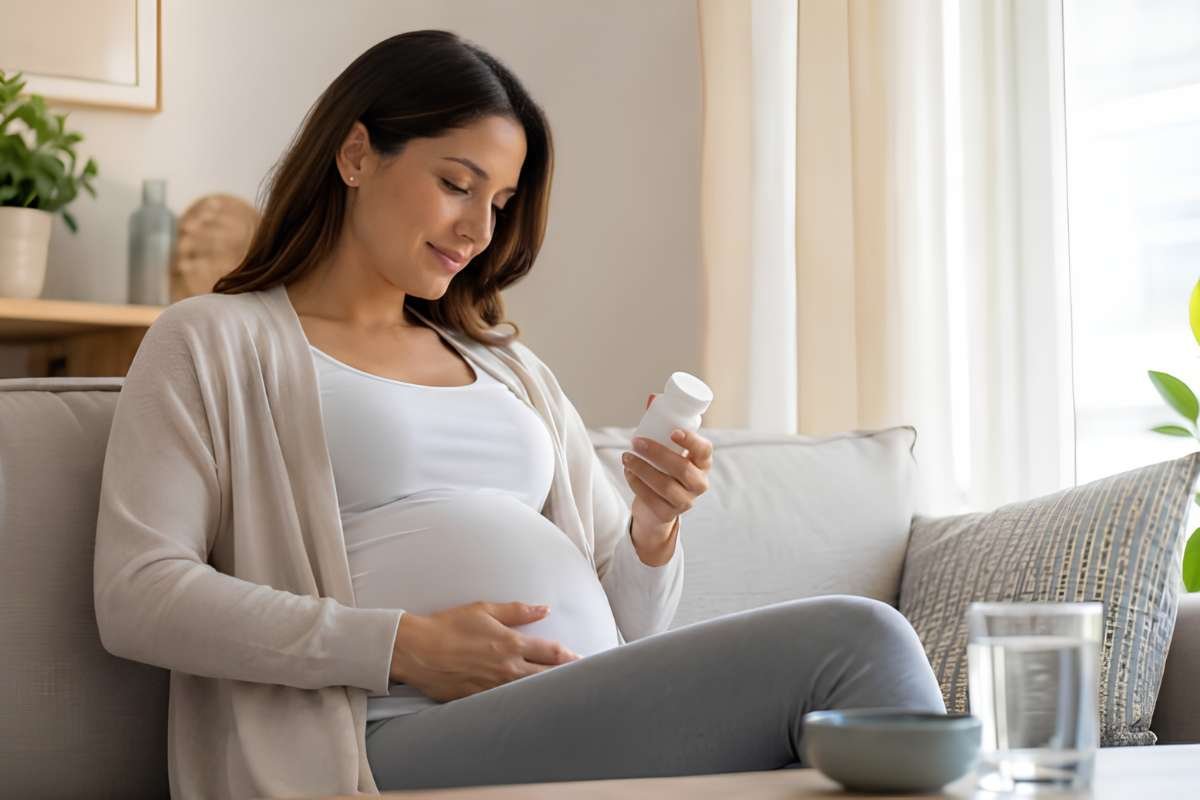
A Danish study has linked paracetamol use during pregnancy with smaller ovaries in infant girls and testes in boys, though researchers say the findings do not prove the painkiller caused the differences.
Study Finds Smaller Ovaries In Exposed Girls
Researchers at Copenhagen University Hospital–Rigshospitalet followed 685 pregnant women who reported medication use every two weeks during their first trimester. Researchers later examined 302 daughters at about three months old.
Girls exposed to paracetamol before birth had ovaries that were, on average, 40% smaller by volume than those of unexposed girls. They also had 13% smaller uteruses and 23% fewer ovarian follicles, the structures that support immature eggs.
Higher paracetamol doses were associated with larger differences in Paracetamol Use During Pregnancy, Margit Bistrup Fischer, a researcher at Copenhagen University Hospital–Rigshospitalet, said. None of the women exceeded the recommended daily maximum of 4,000 milligrams.
A separate analysis of 1,210 girls born in Copenhagen between 1997 and 2002 also found an association between fetal exposure to paracetamol and smaller ovaries during adolescence.
The researchers said the findings do not establish whether the differences affect fertility later in life. Animal studies have linked similar reproductive changes with reduced fertility and earlier reproductive aging, but researchers said those effects cannot yet be assumed to occur in humans.
“We cannot say anything about the reproductive consequences for these girls,” Fischer said.
Researchers Also See Changes In Boys
The team also found smaller testicular volume among boys whose mothers reported Paracetamol Use During Pregnancy. A separate paper on the boys has been accepted by the same journal but has not yet been published, Fischer said.
“We do see a difference, on average, in the boys as well,” Fischer said. “They have a reduced testicular volume.”
Researchers cautioned that the finding does not show that paracetamol will affect male fertility. Long-term follow-up would be needed to determine whether the differences persist or have reproductive consequences.
Séverine Mazaud-Guittot of France’s National Institute of Health and Medical Research, who co-authored research in 2022 on paracetamol and isolated human ovaries, said the findings warrant caution but not alarm.
“It is still too early to sound the alarm, and to remove this tool from the therapeutic arsenal for treating pain and fever,” she said.
Also Read: What to Eat When You’re Expecting: The Best Foods for Pregnancy
Experts Urge Caution Over Cause And Effect
Researchers said other factors could explain the associations. Women who take medication during pregnancy as part of Paracetamol Use During Pregnancy may have infections or other illnesses that affect fetal development, and they may differ in diet, behavior or genetics from women who do not take the drug.
Brian Lee of the University of Pennsylvania said the study could not eliminate those factors.
“I would not jump to the conclusion that the statistical association observed is a causal association,” Lee said.
Dimitrios Siassakos of University College London also questioned the statistical findings, saying multiple analyses increase the possibility of finding an association by chance. Fischer acknowledged that possibility but said adjusting for multiple testing could also hide a genuine effect.
Fischer said pregnant women should continue using paracetamol when needed for high fever or severe pain because untreated illness can pose risks. However, she said many women in the study used it for headaches or musculoskeletal pain that might have been managed with rest, heat treatment or physiotherapy.
“We should have a dialogue about when paracetamol is actually necessary,” Fischer said.
Lee also said the findings do not alter evidence concerning autism. Large studies involving millions of pregnancies have not established a link between paracetamol use during pregnancy and autism, he said.