Yes, dark chocolate can offer health benefits, but not every bar delivers them equally. The credit goes to cocoa’s flavanols, bioactive compounds linked to better blood flow and lower blood pressure. In the COSMOS trial of 21,442 adults, cocoa extract supplementation was associated with a 27% lower risk of death from cardiovascular disease, although it did not significantly reduce total cardiovascular events. Higher cocoa percentages usually mean more cocoa solids and less sugar, yet percentage alone doesn’t guarantee flavanol content.
This guide breaks down the evidence-backed health benefits of dark chocolate, what to check on the label, and how much is actually worth eating.
Health Benefits of Dark Chocolate: What Does the Evidence Show?
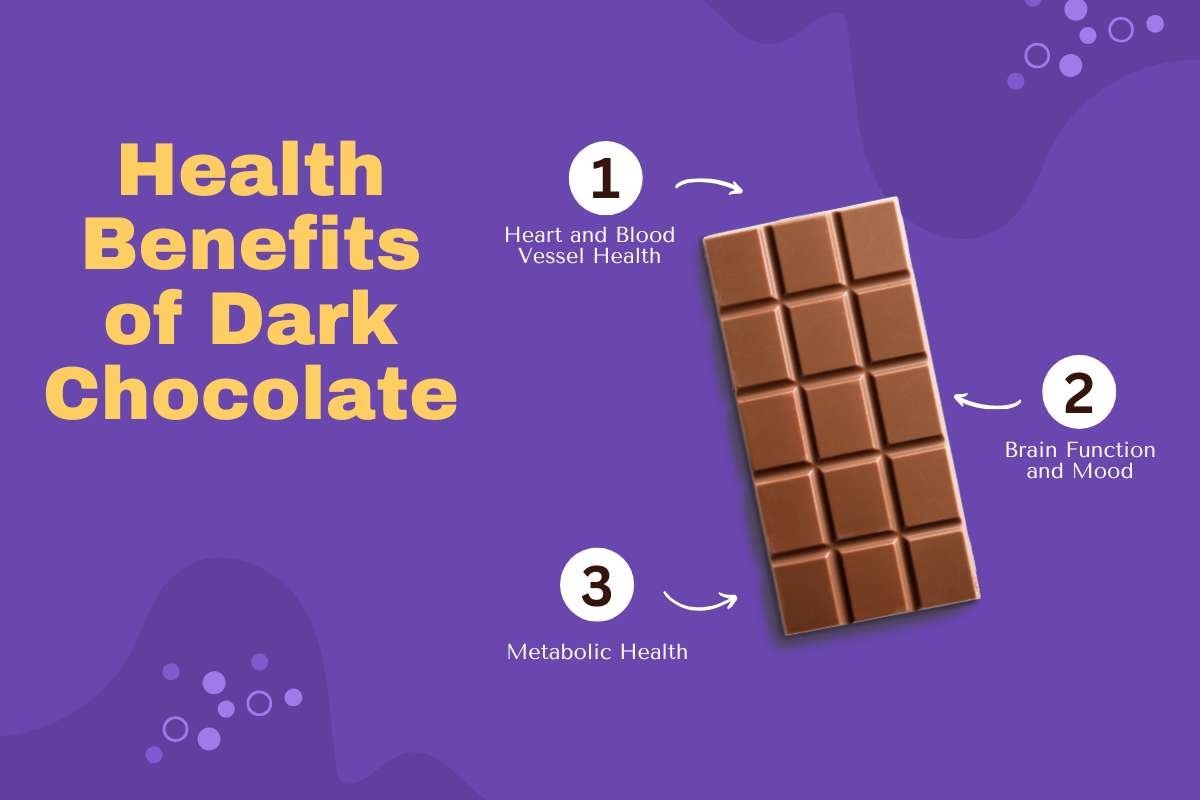
Dark chocolate may support heart and blood vessel health, and research also suggests possible benefits for brain function and metabolic health.
Heart and Blood Vessel Health
Cocoa flavanols help the body make nitric oxide, which relaxes blood vessels and improves blood flow. A meta-analysis of randomized trials found that chocolate or cocoa improved flow-mediated dilation (a measure of vessel relaxation) and lowered diastolic blood pressure by about 1.6 mm Hg. Effects on LDL cholesterol were only marginal. These are risk markers, not proof that chocolate prevents heart disease. The COSMOS trial (21,442 adults) used a cocoa extract, not chocolate. It did not significantly reduce total cardiovascular events, though cardiovascular deaths were 27% lower.
Brain Function and Mood
Better blood flow may benefit the brain, and small studies link flavanols to short-term gains in attention and stress response. The evidence is promising but limited. Dark chocolate is not a treatment for depression, anxiety, or cognitive disease.
Metabolic Health
The same meta-analysis found lower insulin resistance after cocoa intake. That doesn’t make chocolate a diabetes treatment or a “blood sugar food,” and its sugar and calories still count.
Taken together, many of the potential cardiovascular benefits of dark chocolate are attributed to cocoa flavanols. Research on cocoa flavanols should not automatically be read as proof that eating any dark chocolate prevents chronic disease.
Why Cocoa Content and Flavanols Matter
Cocoa flavanols are the bioactive compounds most consistently linked to chocolate’s vascular effects, but not all chocolate delivers them equally. Cocoa flavanols are the compounds behind most of the health benefits of dark chocolate, but not every bar delivers them equally. Processing and cocoa percentage both affect how many flavanols make it into the final product.
What Are Cocoa Flavanols?
- Naturally occurring plant compounds (a subgroup of flavonoids) found in cocoa beans.
- One key reason cocoa is studied for vascular effects: they support nitric oxide (NO) production, helping blood vessels relax and improving blood flow.
- Not the same as “antioxidants = disease prevention”: flavanols have specific vascular mechanisms (e.g., endothelial function, blood pressure modulation) rather than a general antioxidant shield against all diseases.
Also read: 7 Effective Home Remedies for Heartburn: Restore Comfort Without Medications
Does a Higher Cocoa Percentage Mean More Benefits?
- A 70%+ cocoa product can be a practical starting point because it generally contains more cocoa solids and less room for sugar, but the percentage alone doesn’t tell you how much flavanol remains after processing.
- Higher cocoa generally means less room for sugar, which can improve the overall nutrient profile.
- But percentage alone isn’t a perfect measure of flavanol content; studies show weak or no consistent correlation between cocoa solids % and actual flavanol levels.
- Processing matters: Dutch (alkalized) processing can substantially reduce flavanols, as highlighted by Harvard’s Nutrition Source.
Dark vs. Milk vs. White Chocolate
| Dark Chocolate | Milk Chocolate | White Chocolate | |
| Cocoa solids | Higher | Lower | None |
| Flavanols | Generally higher | Generally lower | Minimal |
| Sugar | Usually lower | Usually higher | Usually high |
| Potential health value | Higher | Lower | Limited |
Health Benefits of Dark Chocolate for Heart, Brain, and Metabolic Health
Research links cocoa flavanols to several physiological effects. But most evidence comes from short-term trials and observational studies rather than proof that everyday dark chocolate prevents disease. When people discuss the health benefits of dark chocolate, they’re often referring to these intermediate markers, not guaranteed clinical outcomes.
| Potential benefit | What research suggests | What you shouldn’t assume |
| Blood pressure | May modestly support vascular function and lower systolic BP by a few mmHg in some trials. | It doesn’t replace blood pressure medication or lifestyle treatment. |
| Heart health | Associated with favorable cardiovascular markers (endothelial function, lipids, platelet activity). | It isn’t proven to prevent heart disease or heart attacks by itself. |
| Brain function | May improve cerebral blood flow and some cognitive measures in small studies. | It isn’t a dementia or Alzheimer’s treatment. |
| Glucose metabolism | Some studies show improved insulin sensitivity and related markers. | It isn’t a diabetes treatment or substitute for medical care. |
| Mood | Some studies report short-term mood-related or stress-buffering effects. | It isn’t an anxiety or depression treatment. |
How to Choose Dark Chocolate for Better Nutrition
Picking dark chocolate wisely helps you capture potential upsides while limiting sugar, unwanted fats, and contaminants. That’s a practical way to support the health benefits of dark chocolate without relying on marketing claims.
Check the Cocoa Percentage
- Use 70%+ cocoa as a practical starting point.
- Higher percentages aren’t automatically “better” if the taste is unpleasant or it encourages overeating.
Check Added Sugar and Ingredients
Look for:
- Lower added sugar (check the Nutrition Facts, not just the front label).
- Cocoa/cocoa mass high on the ingredient list.
- Minimal unnecessary ingredients; avoid hydrogenated oils and long additive lists.
- Don’t rely solely on front-of-package “healthy” or “superfood” claims.
Northwestern Medicine specifically advises checking cocoa percentage, added sugar, and hydrogenated oils.
Consider Processing
- Natural (non-alkalized) cocoa generally retains more flavanols.
- Alkalized/Dutch-processed cocoa can lose a substantial portion of flavanols as pH increases.
What About Heavy Metals?
- Cocoa can contain cadmium and lead depending on soil, sourcing, and processing.
- This doesn’t mean all dark chocolate is unsafe, but long-term daily intake of high-metal products is a concern.
- Where possible, choose brands or manufacturers that test for contaminants and disclose results.
Harvard Health specifically recommends considering products tested for heavy metals.
How Much Dark Chocolate Should You Eat?

There’s no universal “prescription” amount, but most expert guidance points to small, consistent portions rather than large daily bars. A small portion of about 10–30 g can be a practical way to enjoy dark chocolate while keeping calories and sugar in check, although there is no universally established daily amount.
This amount keeps calories, saturated fat, and sugar in check. Both add up quickly: even 30 g can supply 150-180 kcal and several grams of sugar, depending on the brand and cocoa percentage.
Your ideal portion depends on your overall diet, energy needs, and health goals. “More” does not mean “more benefits”; larger servings mainly increase energy intake without proven extra upside.
Useful reader takeaway: Think of dark chocolate as a nutrient-containing treat, not a supplement.
Also read: The Crucial Role of Nutrition in Heart Health: A Comprehensive Guide
Who Should Be Careful With Dark Chocolate?
Most adults can enjoy small amounts of dark chocolate, but some people should be more cautious. While discussions often focus on the health benefits of dark chocolate, certain groups need to consider side effects, contaminants, and overall diet context.
- Caffeine-sensitive individuals: Dark chocolate contains caffeine and related stimulants that can affect sleep, cause jitteriness, or worsen anxiety in sensitive people, especially if eaten late in the day.
- Reflux or migraine-prone people: For some, chocolate can trigger acid reflux or migraines, though responses vary widely. If you notice a pattern, limiting or avoiding it is reasonable.
- People monitoring calories or sugar: Even high-cocoa chocolate is energy-dense; portions matter for weight management and metabolic health.
- People with diabetes: Portion size and total carbohydrate content still matter; dark chocolate is not a free food and should fit within your meal plan.
- Pregnancy and children: Moderate intake is generally considered safe, but limiting exposure to caffeine and potential heavy metals (lead, cadmium) is sensible, especially with frequent, high-cocoa products.
Conclusion:
Dark chocolate can be a smart treat, but only when you choose and portion it well. The health benefits of dark chocolate come mainly from cocoa flavanols. This may support blood flow, blood pressure, and metabolic markers. The research is promising, but it doesn’t prove that chocolate prevents disease.
Choose 70%+ cocoa with low added sugar and minimal ingredients. Keep portions to about 10- 30 g a day, and be mindful if you’re sensitive to caffeine, reflux, or migraines.
Next time you shop, flip the bar over, check the label, and pick one square of better chocolate over a whole bar of the usual.
FAQ:
Is dark chocolate actually good for you?
Dark chocolate can fit into a healthy diet, and the health benefits of dark chocolate come mainly from cocoa flavanols.
What percentage of cocoa is best in dark chocolate?
Dark chocolate with 70% or more cocoa is a practical choice, although cocoa percentage alone does not guarantee higher flavanol content.
How much dark chocolate should you eat a day?
A small portion of around 10–30 grams can fit into a balanced diet without adding excessive calories and sugar.
Is dark chocolate good for your heart?
Cocoa flavanols may support blood-vessel function and some cardiovascular markers, but dark chocolate should not be considered a treatment or disease-prevention food.
Can dark chocolate help lower blood pressure?
Research suggests cocoa flavanols may have a modest blood-pressure-lowering effect, particularly in people with elevated readings.