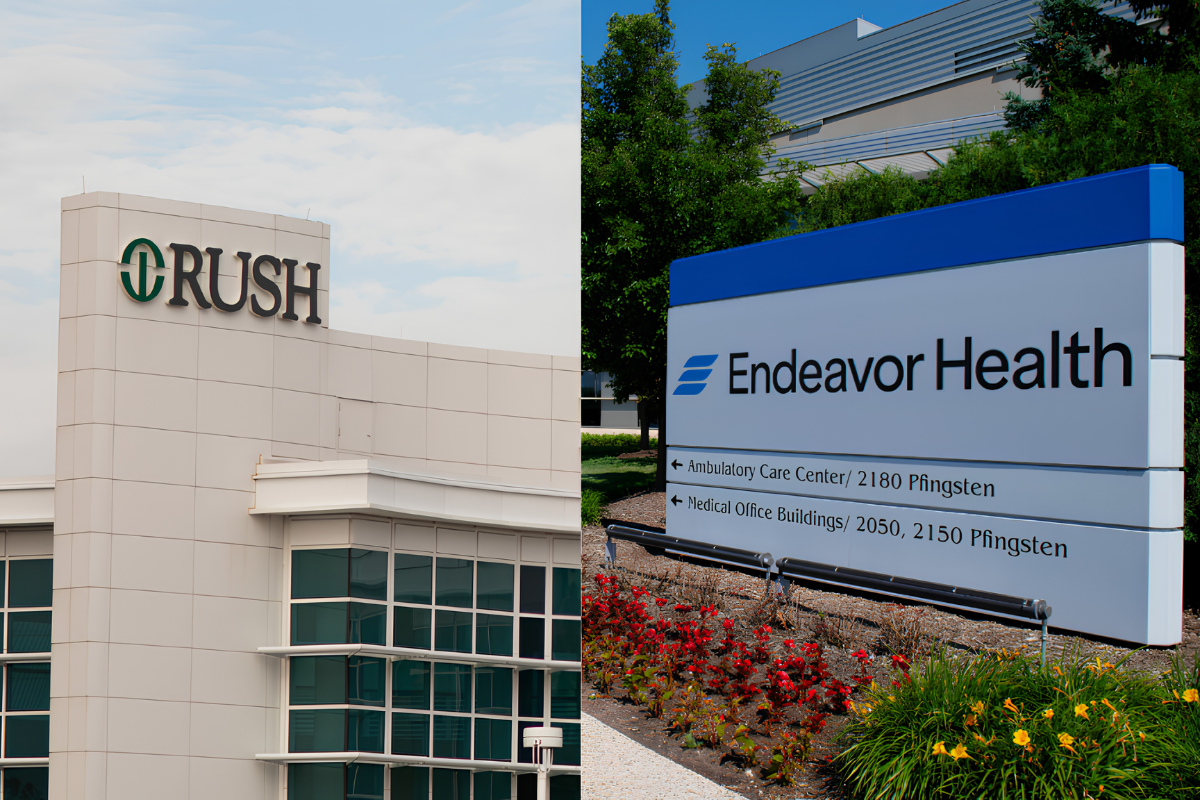
Key Takeaway:
- Major Health Care Merger: The Rush Endeavor merger plans to unite 12 hospitals into one Chicago-area health system, pending regulatory approval.
- $1 Billion Investment: The proposed merger includes funding for medical research, community health programs, and care innovation.
- Workforce and Patient Impact: The merger raises questions about staffing, union representation, patient costs, and access to care.
Rush University System for Health and Endeavor Health announced plans Wednesday to merge their Chicago-area operations, creating a 12-hospital network to expand patient access, research, and community health programs, subject to regulatory approval.
Merger Would Unite 12 Hospitals Under Rush
The proposed system would combine Rush’s three hospitals with Endeavor’s nine hospitals across Chicago and its suburbs. The hospitals would continue operating at their existing locations, with the combined organization adopting the Rush name.
The Rush Endeavor merger marks a major consolidation in the Chicago health care market. The unified nonprofit system is expected to include more than 400 care sites, employ more than 46,000 people, and serve more than 2 million patients annually across Northern Illinois and Northwest Indiana.
The organizations expect to complete the transaction in early 2027, pending regulatory review and approval. Until the merger closes, patients can continue receiving care through the existing systems.
Rush University Medical Center, Rush Copley Medical Center, and Rush Oak Park Hospital currently operate under the Rush system. Endeavor’s facilities include Evanston Hospital, Edward Hospital, Elmhurst Hospital, Swedish Hospital, Skokie Hospital, Glenbrook Hospital, Highland Park Hospital, Northwest Community Hospital, and Linden Oaks Behavioral Health Hospital.
Leaders Target Research and Community Health
The Rush Endeavor merger includes an additional $1 billion investment funded by Endeavor Health to support community partnerships, medical research, academic programs and improvements in care delivery.
Gerald “J.P.” Gallagher, Endeavor Health’s president and CEO, said the partnership could strengthen the organizations’ ability to serve patients across the region.
“Together, Rush and Endeavor Health have an opportunity to create a stronger, more connected health system that sets a new standard for how care is delivered and experienced across our communities,” Gallagher said in a joint announcement.
A significant portion of the investment will support community partnerships addressing social factors that affect health and efforts to improve access for underserved populations. The organizations also plan to expand research and health sciences education.
Dr. Omar Lateef, president and CEO of Rush University System for Health and Rush University Medical Center, said the combined system would build on Rush’s existing community health initiatives.
“As a unified system, we will expand upon the work Rush has done on the West Side of Chicago to strengthen our impact in communities across the region,” Lateef said.
Under the proposed leadership structure, Gallagher would become president and CEO of the combined system. Lateef would serve as CEO emeritus and strategic adviser after the transaction closes. A 20-member board would include equal representation from both organizations.
Nurses Raise Questions About Merger’s Impact
The proposed consolidation comes as nurses at several hospitals organize for union representation, raising questions about how the Rush Endeavor merger could affect employees, staffing, and patient services.
Nurses at Rush University Medical Center voted to unionize earlier in 2026, while nurses at several Endeavor facilities have pursued organizing efforts. Nurses at Edward Hospital in Naperville also announced a petition for a union election, according to local reporting.
Brenda Langford, a Chicago nurse and board member of the National Nurses Organizing Committee, called on regulators to protect hospital services and give nurses a voice in decisions affecting the combined system.
“Hospital mergers are big corporate transactions that result in higher prices, service cuts, and other moves to maximize profits,” Langford said in a statement reported by the Chicago Sun-Times.
The health systems have said patients will continue seeing their established doctors at the same locations without changes to insurance coverage resulting from the announcement. The organizations say the merger could eventually improve access to specialized care and clinical trials.
Regulators must review the proposal before it can proceed. The final effects of the Rush Endeavor merger on staffing, services, and patient costs remain to be determined.
Visit more of our news! Healthcare 360 Magazine