Key Takeaway:
- Whole-food swaps may lower risk: Replacing 10% of ultra-processed food intake with minimally processed foods was linked to a 2% lower bowel cancer incidence.
- Food type matters: Processed meats were associated with higher risk, while whole grains, fiber, and some dairy products were linked to lower risk.
- Association isn’t causation: The observational study does not prove that replacing ultra-processed foods directly prevents bowel cancer.
Replacing 10% of ultra-processed food intake with minimally processed alternatives is associated with a 2% lower incidence of bowel cancer, according to a study of more than 460,000 U.S. adults.
Researchers Find Small but Significant Dietary Association
The study, published Oct. 15 in PLOS Medicine, analyzed data from the NIH-AARP Diet and Health Study, which enrolled adults ages 50 to 71 in 1995 and 1996. Researchers tracked participants’ health outcomes for more than 20 years, during which 10,075 people developed bowel cancer.
The findings suggest that the type of food people eat may matter more than its processing category alone. Researchers found no overall association between total ultra-processed foods consumption and bowel cancer incidence, despite identifying different patterns among specific food groups.
The analysis found that replacing 10% of ultra-processed food intake by weight with minimally processed foods was associated with a 2% reduction in bowel cancer incidence. However, the observational study cannot establish that making the substitution directly causes the reduction.
Erikka Loftfield, the study’s lead researcher, said the results varied considerably depending on the food group examined.
“In this very large cohort of US adults, we saw no association between total UPF intake and incidence of bowel cancer,” Loftfield said in a statement from QIMR Berghofer Medical Research Institute. “However, when we looked at the specific food groups, the results were very different depending on the food type.”
Processed Meats Show Different Results From Whole Grains
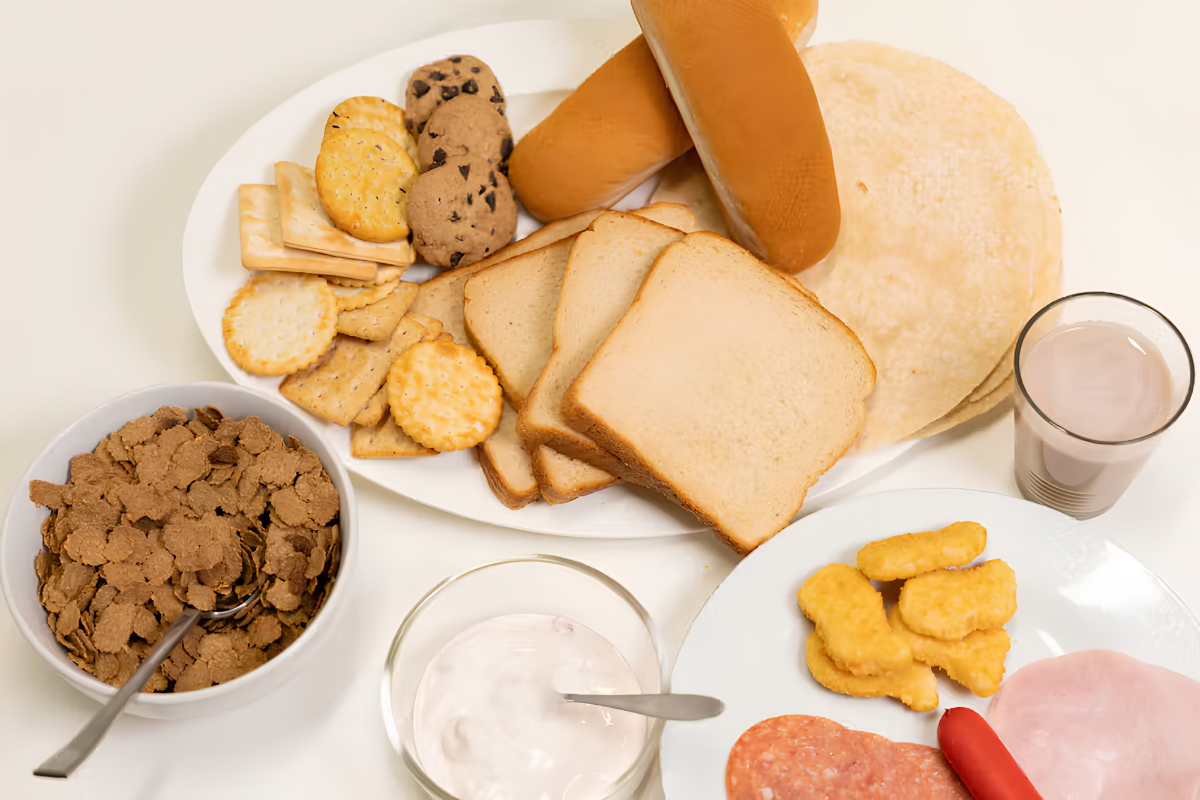
Researchers found that higher consumption of ultra-processed meat products, including hot dogs, was associated with higher bowel cancer incidence. In contrast, higher consumption of whole grains, fiber, dairy products and calcium was associated with lower incidence, including when these nutrients came from some ultra-processed foods.
Breakfast cereals, bread, frozen desserts and milk products, including fruit yogurt, also showed associations with lower bowel cancer incidence. The findings highlight why classifying all ultra-processed foods as equally harmful may overlook important nutritional differences.
Dr. Rosiered Brownson-Smith, a postdoctoral researcher in nutritional sciences at King’s College London who commented on the findings through the Science Media Centre, said the results showed the importance of examining individual food categories.
“This large US cohort study found no association between overall ultra-processed food (UPF) intake and colorectal cancer (CRC),” Brownson-Smith said.
The study used the NOVA classification system, which groups foods according to the extent and purpose of processing. Ultra-processed products can include packaged snacks, sugary drinks, instant meals and processed meats, but the category also covers certain breads, cereals and dairy products.
Researchers Urge Balanced Diets and Further Studies
The researchers accounted for several factors that could influence cancer risk, including smoking, physical activity, alcohol consumption and other demographic and health characteristics. However, dietary intake was estimated using questionnaires, which can introduce measurement errors.
The study also has limitations. Participants were primarily older, white Americans, meaning the results may not apply equally to younger people or more diverse populations. Researchers said further studies in different populations are needed to better understand the relationship between food processing and cancer.
Loftfield cautioned that foods associated with lower bowel cancer incidence may still contain high levels of added sugar, salt or saturated fat, potentially affecting other aspects of health.
Current dietary guidance continues to recommend eating plenty of fruits, vegetables, whole grains and other fiber-rich foods while limiting red and processed meats. Limiting alcohol consumption is also recommended.
The findings support a food-focused approach to dietary choices rather than assuming every ultra-processed product carries the same health risks. Researchers emphasize that the results show associations, not proof that replacing specific foods will prevent cancer.
Visit more of our news! Healthcare 360 Magazine