
Persistent fatigue, unexplained anemia, or recurring bloating don’t always point to a stomach problem. Sometimes they point to celiac disease. About 1% of people worldwide have it, yet many wait six to ten years for a diagnosis because symptoms are easy to mistake for other conditions. Celiac disease symptoms can be digestive, non-digestive, or absent entirely.
In this guide, you’ll learn 10 key symptoms, the less obvious clues most people overlook, and what to do next if you suspect celiac disease. Recognizing the signs is only the first step, since testing is the only way to confirm a diagnosis.
What Are the Most Common Celiac Disease Symptoms in Adults?
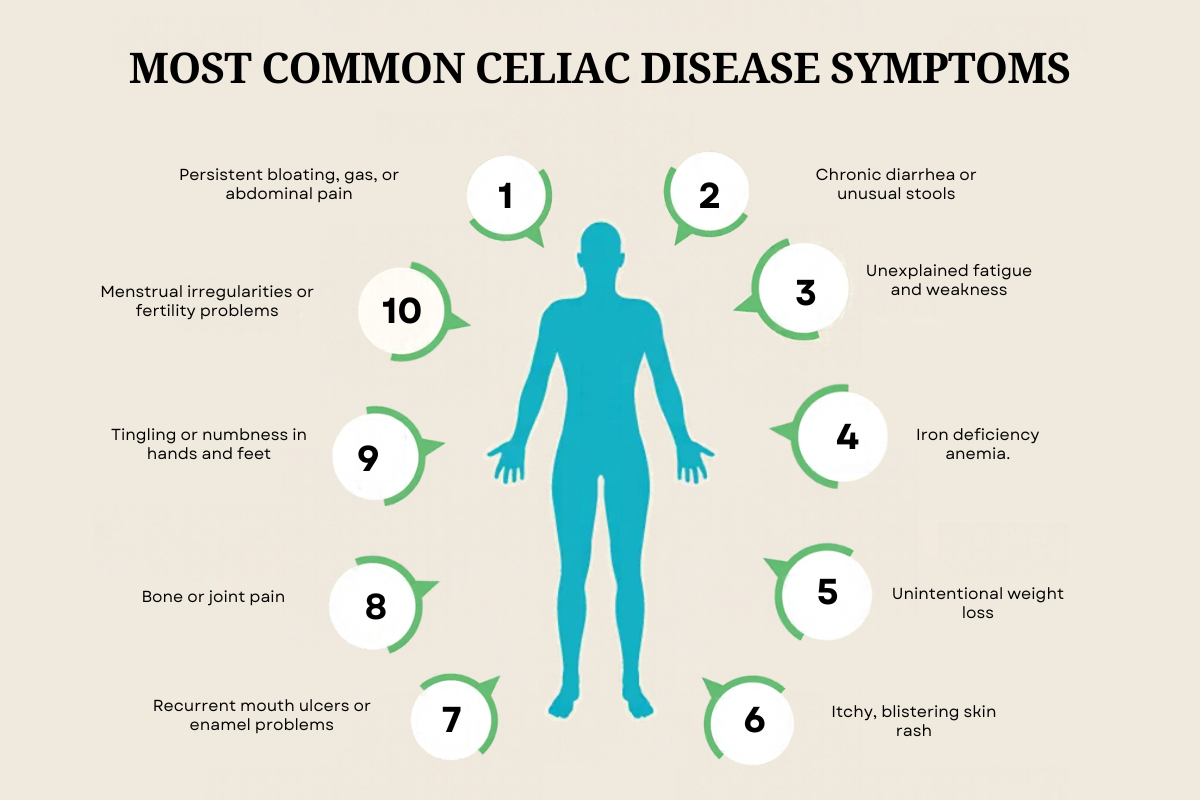
Some celiac disease signs are subtle and can be mistaken for everyday health issues. Celiac Disease Symptoms vary widely, and some people have intestinal damage without obvious digestive complaints.
10 symptoms that can go unnoticed
- Persistent bloating, gas, or abdominal pain. Recurring discomfort after meals can occur, but ongoing symptoms deserve medical evaluation because many conditions cause them.
- Chronic diarrhea or unusual stools. Loose, greasy, bulky, or foul-smelling stools may reflect poor nutrient absorption; constipation can occur instead.
- Unexplained fatigue and weakness. Low iron, folate, or vitamin B12 from impaired absorption may contribute to persistent tiredness.
- Iron deficiency anemia. Unexplained or hard-to-treat iron deficiency can be an important clue and may be the only noticeable sign.
- Unintentional weight loss. When the intestine does not absorb nutrients well, weight can fall. But weight loss has many possible causes and needs assessment.
- Itchy, blistering skin rash. Dermatitis herpetiformis often affects the elbows, knees, buttocks, or scalp and may appear without digestive symptoms.
- Recurrent mouth ulcers or enamel problems. Repeated canker sores and dental enamel defects are possible associated signs, not proof of celiac disease.
- Bone or joint pain. Poor absorption of nutrients such as vitamin D and calcium can contribute to reduced bone density, osteoporosis, or fractures. Ordinary joint pain alone does not indicate celiac disease.
- Tingling or numbness in hands and feet. Peripheral neuropathy can occur in some people, but it warrants assessment for multiple possible causes.
- Menstrual irregularities or fertility problems. Missed periods, irregular cycles, infertility, or recurrent miscarriage are reported associations, but they require individual evaluation because many factors can contribute.
Symptoms alone cannot diagnose celiac disease. Ask a clinician for testing before starting a gluten-free diet.
Also Read: Tired All the Time? These Symptoms of Vitamin Deficiency May Explain Why
Why Celiac Disease Symptoms Can Be Easy to Miss

Celiac disease is easy to miss because celiac disease symptoms differ greatly from person to person and often resemble other common conditions. Some people have mainly digestive issues, while others have fatigue, anemia, skin problems, or no clear symptoms at all.
Why symptoms are missed
- Symptoms differ between people. One person may have bloating and diarrhea; another may have anemia, a rash, or nerve symptoms without digestive complaints.
- Symptoms overlap with other conditions. Fatigue, bloating, weight changes, and anemia can occur with IBS, lactose intolerance, nutritional deficiencies, and other medical problems.
- The connection may not be obvious. A person may seek care for a skin rash, low iron, or tingling without realizing celiac disease could be one possible explanation.
Symptom patterns
| Symptom pattern | What it may involve |
| Digestive | Bloating, diarrhea, constipation, abdominal discomfort |
| Nutritional | Fatigue, iron deficiency, weight loss |
| Skin and mouth | Dermatitis herpetiformis, mouth ulcers |
| Neurological or musculoskeletal | Tingling, balance problems, bone or joint pain |
These patterns can guide clinical evaluation, but they are not a self-diagnosis checklist. Celiac disease is not diagnosed from symptoms alone; appropriate testing is needed.
When Should You See a Doctor About Possible Celiac Disease?

Arrange a medical appointment if celiac disease symptoms persist, are unexplained, or are affecting your daily life. A clinician can review your history and recommend appropriate testing.
When to seek care
Make an appointment if you have:
- Persistent or unexplained digestive symptoms, such as bloating, diarrhea, constipation, or abdominal pain.
- Prolonged fatigue or unexplained iron-deficiency anemia.
- Unintentional weight loss.
- A suspected dermatitis herpetiformis rash. Intensely itchy, blistering skin often on the elbows, knees, buttocks, or scalp.
- Recurrent mouth ulcers or other symptoms that remain unexplained.
- A first-degree relative with celiac disease or a related increased-risk condition.
What testing may involve
Clinicians commonly begin with blood tests for celiac-related antibodies. If results suggest celiac disease, they may recommend an upper GI endoscopy with small-intestinal biopsies to confirm the diagnosis.
Before changing your diet
Do not start or substantially reduce gluten before testing unless your healthcare professional advises it. Accurate blood tests and biopsies generally require that you are still eating gluten, because avoiding it can make results less reliable.
Symptoms alone cannot establish a diagnosis. Persistent or worsening symptoms deserve prompt medical attention.
Also Read: Vitamin D vs. D3 Explained: The Difference That Matters for Your Health
Conclusion:
Celiac disease symptoms can look very different from one person to the next. For some, they show up as bloating and diarrhea. For others, the only clues are fatigue, low iron, a stubborn rash, or tingling in the hands and feet. Because these signs overlap with many common conditions, symptoms alone can’t confirm celiac disease. Testing can.
If any of these signs sound familiar, don’t wait for them to get worse. Keep eating gluten for now, make a note of your symptoms, and book an appointment with your doctor to ask about celiac testing.
FAQ:
1. What are the most common celiac disease symptoms in adults?
Common symptoms include bloating, diarrhea, constipation, abdominal pain, fatigue, and unexplained weight loss.
2. Can celiac disease cause fatigue and weakness?
Yes, celiac disease can contribute to fatigue and weakness through nutrient deficiencies, including iron deficiency.
3. What does a celiac disease rash look like?
Dermatitis herpetiformis typically causes an intensely itchy, blistering rash that often appears on the elbows, knees, buttocks, or scalp.