Key takeaway:
- HPV vaccination at ages 12–13 has been shown to reduce the risk of dying from cervical cancer before age 30 to nearly zero, according to a landmark study in England, reinforcing how the HPV Vaccine Cuts Cervical Cancer Risk.
- No cervical cancer deaths were recorded among women ages 20-24 in England between 2020 and 2024, a first for a five-year period.
- Researchers estimate the HPV vaccine has prevented about 200 cervical cancer deaths in England since its introduction in 2008.
Children who received the HPV Vaccine Cuts Cervical Cancer Risk at ages 12 to 13 face a near-zero chance of dying from cervical cancer before turning 30, according to a landmark study in England, which found the vaccine has already prevented about 200 deaths through 2024.
Study shows sharp decline in cervical cancer deaths
Researchers from Queen Mary University of London, supported by Cancer Research UK, examined cervical cancer mortality and vaccination data among women ages 20 to 34 in England, highlighting how the HPV Vaccine Cuts Cervical Cancer Risk.
The study found cervical cancer deaths have fallen significantly since HPV vaccination was introduced for school-age girls in 2008. Researchers estimated that about 200 deaths had been prevented by the end of 2024 because of the vaccination program.
One of the most notable findings was that no cervical cancer deaths were recorded among women ages 20 to 24 between 2020 and 2024. Researchers said this was the first time no deaths had been reported in that age group during five years.
Without vaccination, researchers estimated that 23 cervical cancer deaths would have occurred during the same period.
“This is the first study of its kind to assess the impact of HPV vaccination on cervical cancer mortality,” the researchers said, noting that the findings demonstrate the long-term benefits of widespread immunization.
HPV remains leading cause of cervical cancer
According to Cancer Research UK, HPV is responsible for nearly all major types of cervical cancer, and while the virus has many strains, 14 are considered high-risk for cancer development — underscoring how the HPV Vaccine Cuts Cervical Cancer Risk.
Two strains, HPV 16 and HPV 18, are responsible for about 70% of cervical cancer cases worldwide. While most HPV infections clear naturally without causing harm, persistent infection with a high-risk strain can raise the likelihood of cancer, making it clear that the HPV Vaccine Cuts Cervical Cancer Risk.
People living with HIV or AIDS, tobacco users, and women with additional sexually transmitted infections face a higher risk of developing cervical cancer.
HPV spreads primarily through close skin-to-skin sexual contact. Transmission can occur through vaginal, anal, or oral sex, genital contact, and the sharing of sex toys.
Health experts say it is possible to contract HPV after a single sexual encounter. Individuals who have never engaged in sexual activity generally face a lower risk of infection.
Health officials urge eligible groups to get vaccinated
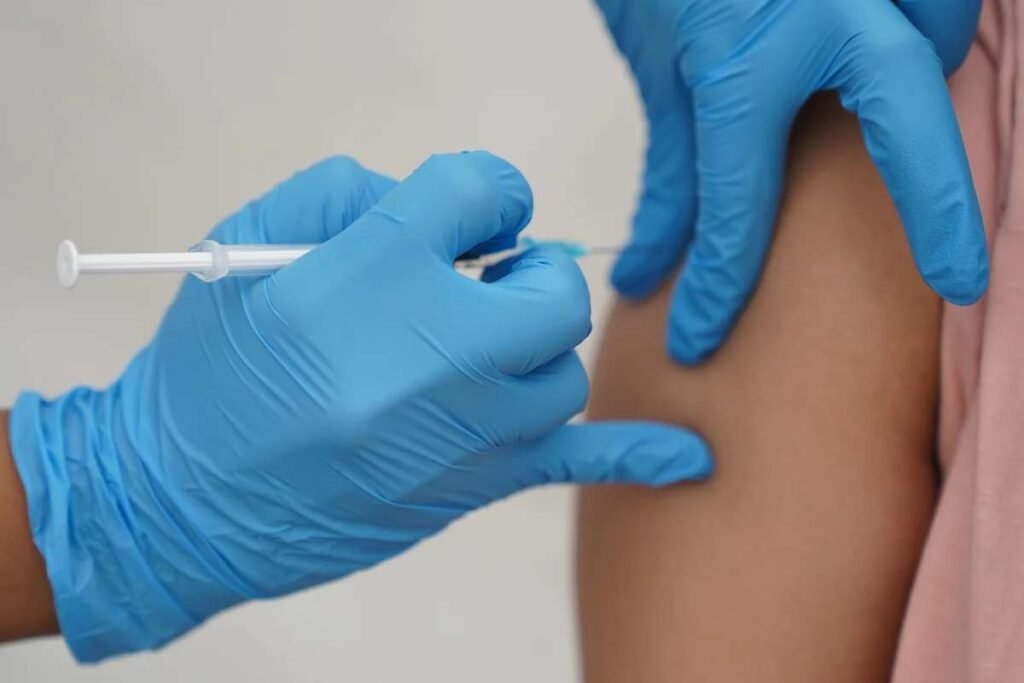
The HPV vaccine is administered as an injection in the arm and is routinely offered to children ages 12 to 13 through school vaccination programs.
People aged 24 and younger who missed vaccination during childhood may still receive the vaccine by contacting their general practitioner or school health services.
The NHS also recommends vaccination for groups considered at higher risk of HPV infection, including people living with HIV, sex workers, and men who have sex with men.
The number of doses required depends on age and immune system function. Most people under age 25 receive a single dose, while those with weakened immune systems may require up to three doses over a year.
Health officials advise that individuals who have experienced a severe allergic reaction to a previous dose or a vaccine ingredient should not receive the vaccine.
Researchers said the findings offer strong evidence that the HPV Vaccine Cuts Cervical Cancer Risk by reducing deaths and could help advance the long-term goal of eliminating the disease as a public health threat.
Visit Healthcare 360 Magazine For The Most Recent Information.