Key takeaway:
- GLP-1 drugs such as Ozempic and Zepbound were associated with a 59% lower Obesity-Related Cancer Risk compared with relying solely on diet and exercise counseling.
- Researchers found reduced risks across several cancers, including breast, ovarian, kidney, colorectal and pancreatic cancers.
- Experts say the findings are promising, but longer-term studies are needed, and diet, exercise and cancer screening remain essential.
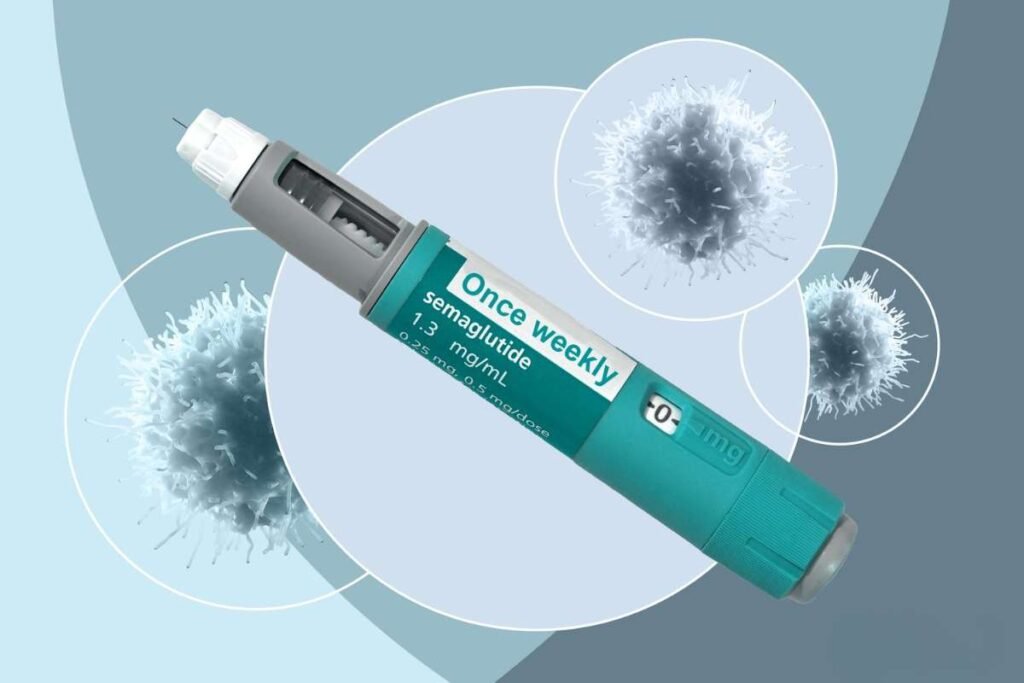
People with obesity who use GLP-1 medications such as Ozempic and Zepbound show a 59% lower Obesity-Related Cancer Risk compared to those receiving diet and exercise counseling, according to a new study published in Annals of Oncology.
Study finds significant drop in obesity-related cancer risk
Researchers analyzed health data from 161,798 adults with obesity, with an average age of about 47 years. Half of the participants used GLP-1 receptor agonists, while the other half received counseling on diet and exercise.
After two years of follow-up, people taking GLP-1 medications showed a significantly lower risk of developing obesity-associated cancers compared with those who received lifestyle counseling alone.
The reduction varied by cancer type. Researchers reported a 37% lower risk of multiple myeloma, 40% lower risk of pancreatic cancer, 42% lower risk of endometrial cancer, and 49% lower risk of colorectal cancer. Larger reductions were observed for thyroid cancer at 62%, kidney cancer at 72%, ovarian cancer at 74%, and breast cancer at 83%.
The study marks the first large analysis examining the association between GLP-1 use and cancer risk in people with obesity who do not have Type 2 diabetes.
Experts cite weight loss and metabolic benefits
Researchers cautioned that the study found an association, not proof, that the medications prevent cancer. The follow-up period also lasted only about two years.
Dr. Anton Bilchik, surgical oncologist and chief of medicine at Providence Saint John’s Cancer Institute, said obesity is a well-established risk factor for several cancers.
“It is reasonable to think that the weight-loss effects of GLP-1 medications may contribute to a lower cancer risk,” Bilchik said.
Tracy Crane, director of lifestyle medicine, prevention, and digital health at Sylvester Comprehensive Cancer Center, said several biological mechanisms may be involved.
“The most likely explanation is not one single pathway, but a cluster of metabolic improvements,” Crane said. She explained that GLP-1 medications can promote weight loss, improve insulin regulation, reduce inflammation, and alter fat tissue biology — all of which contribute to lowering Obesity-Related Cancer Risk.
Bilchik added that the drugs may also help regulate immune function, potentially improving the body’s ability to respond to cell mutations that could develop into cancer.
Crane said other factors may influence the findings, including greater access to preventive care and stronger adherence to medical recommendations among patients prescribed the medications.
Doctors’ stress lifestyle changes remain essential
Medical experts emphasized that the findings should not replace established cancer prevention strategies.
Dr. Mir Ali, medical director of MemorialCare Surgical Weight Loss Center at Orange Coast Medical Center, said healthy eating remains a critical part of weight management.
“The majority of weight loss involves diet,” Ali said, while noting that exercise helps preserve muscle mass and supports metabolism.
Bilchik said regular physical activity and a nutrient-dense diet can reduce cancer risk beyond their effects on weight loss. Exercise may lower inflammation and support immune health, while diets rich in fiber, lean proteins, and whole foods can improve blood sugar control and overall cellular health.
Crane said patients should view medications as one component of a broader health strategy.
“The message is not GLP-1s instead of diet and exercise,” Crane said. “The ideal strategy is GLP-1s, when clinically appropriate, plus lifestyle.”
Researchers emphasized that longer-term studies are needed before physicians can recommend GLP-1 medications specifically for cancer prevention in people with obesity who do not have diabetes, as the evidence on reducing Obesity-Related Cancer Risk is still emerging.
Visit Healthcare 360 Magazine For The Most Recent Information.