Key Takeaway:
- Daraxonrasib nearly doubled survival, extending average survival from 6.6 months to 13.2 months in advanced pancreatic cancer patients.
- The daily Pancreatic Cancer Pill caused fewer severe side effects than standard chemotherapy, making treatment more tolerable for patients.
- Experts call the findings a potential game-changer, offering new hope for a cancer with one of the highest mortality rates.
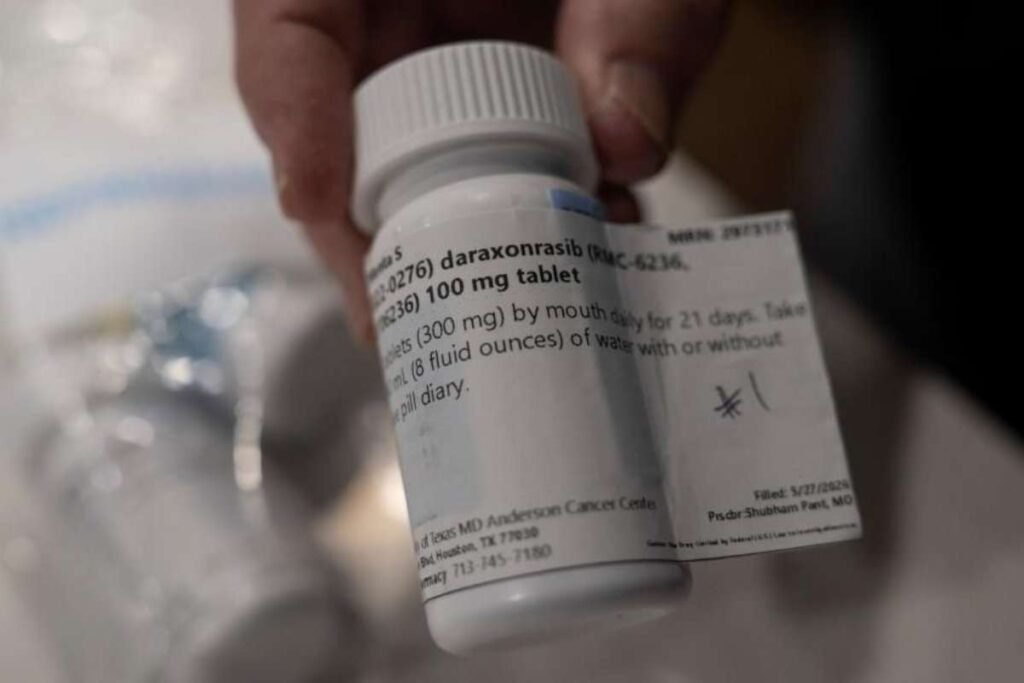
A new daily Pancreatic Cancer Pill called daraxonrasib has shown remarkable promise, nearly doubling survival time for patients with advanced pancreatic cancer. Results from a 500-patient international clinical trial, presented Monday in Chicago, highlight this breakthrough as a source of new hope against one of the deadliest forms of cancer.
Daraxonrasib Extends Survival in Global Clinical Trial
Researchers reported that patients receiving the Pancreatic Cancer Pill lived an average of 13.2 months, compared with 6.6 months for those treated with standard chemotherapy. The findings were presented at the annual meeting of the American Society of Clinical Oncology in Chicago.
The trial enrolled 500 patients across North America, Europe, and Asia. Of those participants, 248 received daraxonrasib, while 252 were treated with chemotherapy.
The drug targets the mutated KRAS gene, which is found in more than 90% of pancreatic tumors and plays a key role in driving cancer growth. By blocking the gene’s activity, researchers say the treatment helps slow disease progression and limit the spread of cancer.
“These results are landscape-changing for metastatic pancreatic cancer patients with a KRAS mutation,” said Rachna Shroff, chief of the Division of Hematology and Oncology at the University of Arizona Cancer Center.
Researchers Report Fewer Severe Side Effects
In addition to extending survival, daraxonrasib produced fewer severe side effects than chemotherapy, researchers said.
Severe side effects occurred in 43.6% of patients taking the Pancreatic Cancer Pill, compared with 57.5% of those receiving chemotherapy. The treatment is designed to be taken once daily.
Experts say the combination of longer survival and improved tolerability could make the drug an important new option for patients facing advanced disease.
Pancreatic cancer remains one of the most difficult cancers to treat because it is often diagnosed at a late stage. Symptoms frequently do not appear early and can resemble those of other illnesses, making detection challenging.
Experts Call Findings a Major Step Forward
Advocates and cancer specialists described the study as one of the most significant advances in pancreatic cancer treatment in years.
“Some of the most exciting developments we have seen in pancreatic cancer for a very long time,” said Anna Jewell, director of services, research, and innovation at Pancreatic Cancer UK.
“More time with those we love most is truly priceless. We must do everything possible to ensure the most promising new treatments are available here in the UK,” she added.
According to Cancer Research UK, about 11,500 people are diagnosed with pancreatic cancer annually in Britain, and roughly 10,200 die from the disease. More than half of patients die within three months of diagnosis.
Common symptoms include jaundice, itchy skin, dark urine, pale stools, unexplained weight loss, fatigue, and fever. Health experts say awareness and earlier detection remain critical challenges in improving outcomes.
Researchers noted that further studies and regulatory reviews will determine how quickly the Pancreatic Cancer Pill becomes widely available to patients. Still, the trial results are already raising hopes for a disease that has long seen limited progress in treatment.
Visit Healthcare 360 Magazine For The Most Recent Information.