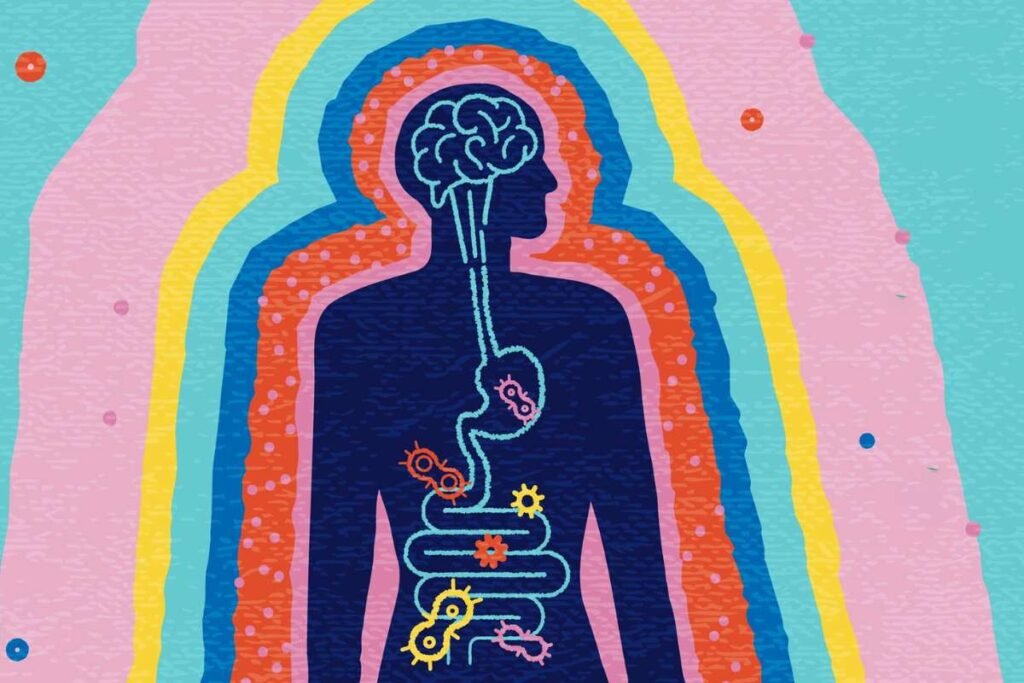
A Gut Bacteria Study conducted by scientists at Stanford University and the University of Pennsylvania reveals that age-related changes in gut microbes disrupt brain communication and may drive memory decline. The findings provide evidence that cognitive aging could be reversible through gut-brain signaling.
Researchers say the findings from the Gut Bacteria Study, published in the journal Nature, identify a biological pathway linking gut microbes, immune responses, and memory function. The study suggests that memory decline may not be fixed but influenced by signals traveling between the gastrointestinal system and the brain.
The research centers on the gut microbiome, an ecosystem of trillions of microorganisms known to affect digestion and immunity. Scientists increasingly view the microbiome as a critical regulator of overall health, including cognitive performance during aging.
Scientists Link Aging Gut Microbes to Memory Decline
The Gut Bacteria Study found that aging mice accumulated higher levels of a bacterium called Parabacteroides goldsteinii. When immune cells in the gut detected this buildup, they triggered inflammation that disrupted communication between the vagus nerve and the hippocampus, the brain region responsible for memory formation.
The vagus nerve acts as a major communication pathway connecting organs to the brain and regulating functions such as heart rate and blood pressure. Researchers said interference along this pathway impaired memory-related brain activity.
“We wanted to understand why some very old people remain cognitively sharp while others experience decline beginning in their 50s or 60s,” said Christoph Thaiss, an assistant professor of pathology at Stanford University. “The timeline of memory decline is not hardwired; it’s actively modulated in the body.”
Mouse Experiments Show Memory Loss Can Be Reversed
To test the theory, scientists studied two groups of mice: young mice aged two months and older mice aged 18 months. After the groups lived together, younger mice adopted the microbiome of the older animals.
The younger mice subsequently performed worse in maze navigation tests designed to measure memory and learning ability. Researchers then treated the mice with a broad-spectrum antibiotic to alter their gut bacteria.
Following treatment, the younger mice regained their earlier performance levels, suggesting that changes in gut-brain communication could reverse cognitive decline in animals.
“The degree of reversibility of age-related cognitive decline just by altering gut-brain communication was a surprise,” Thaiss said. “We tend to think of memory decline as a brain-intrinsic process.”
The findings led researchers to describe the gut microbiome as a potential “remote control” influencing brain activity and memory formation.
Researchers See Path Toward Future Human Treatments
Although the Gut Bacteria Study was conducted in mice, scientists say the discovery builds on existing medical approaches. Vagus nerve stimulation is already approved by the U.S. Food and Drug Administration as a treatment for conditions such as epilepsy and depression.
Researchers believe targeting gut bacteria or improving gut-brain signaling could eventually offer new therapies for age-related cognitive decline in humans.
“We hope that ultimately these findings can be translated into the clinic to combat age-related cognitive decline in people,” Thaiss said.
Experts caution that further research and human clinical trials are needed before treatments become available. Still, the Gut Bacteria Study provides new insight into why cognitive aging varies widely among individuals.
The findings reinforce a growing scientific view that brain health depends not only on neurons but also on systems throughout the body, particularly the gut and immune system.
Visit Healthcare 360 Magazine For The Most Recent Information.