Key Takeaway:
- FDA approves first Moderna mRNA flu vaccine: Moderna’s mFlusiva is authorized for adults aged 50 and older.
- Higher effectiveness: Clinical trials found mFlusiva was about 27% more effective than a standard flu shot.
- Access may face hurdles: Limited insurance coverage is possible until CDC vaccine recommendations are issued.
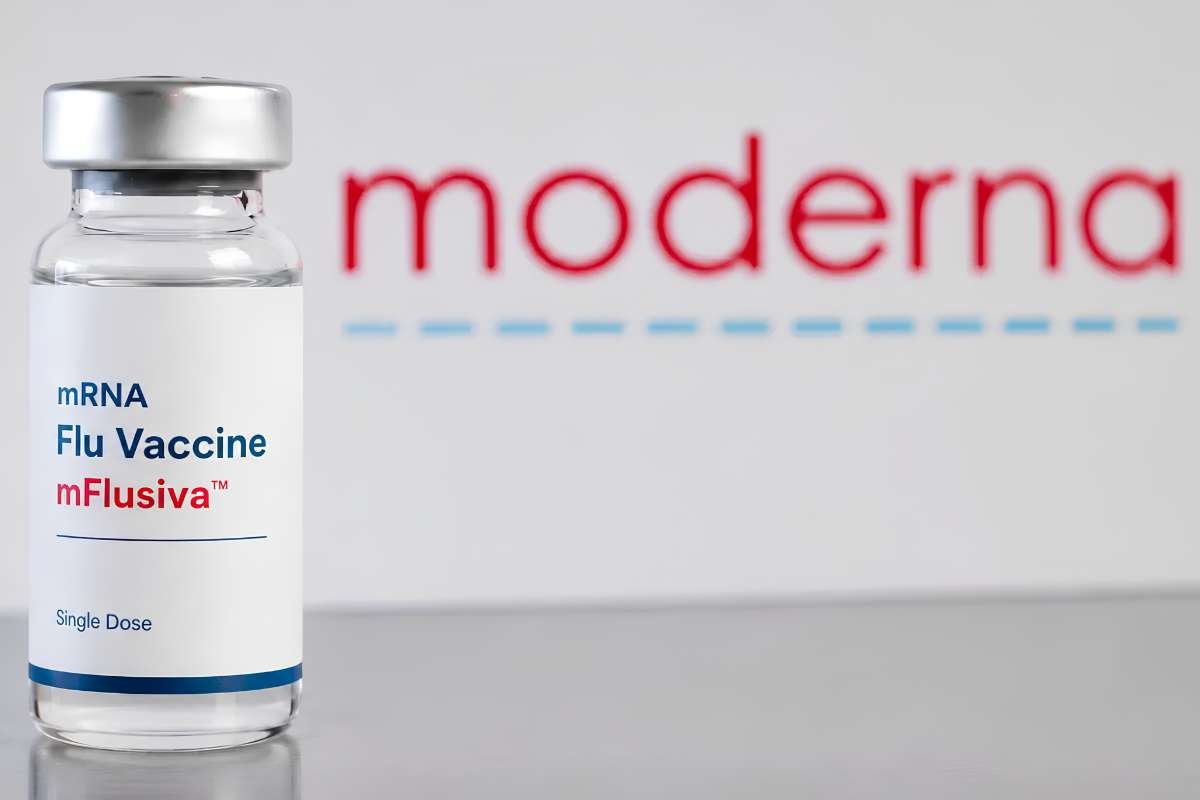
The U.S. Food and Drug Administration has approved the Moderna mRNA flu vaccine, mFlusiva, for adults age 50 and older after trials showed it was about 27% more effective than a standard flu shot, while requiring an additional study in adults 65 and older.
FDA Clears First mRNA Flu Vaccine for Older Adults
The U.S. Food and Drug Administration on Wednesday approved the Moderna mRNA flu vaccine, mFlusiva, the nation’s first influenza vaccine using messenger RNA technology, marking a milestone in flu prevention and vaccine development.
The approval covers adults ages 50 to 64 and adults 65 and older. Moderna said the FDA requires the company to conduct an additional clinical trial in the older age group as a condition of approval.
The decision follows a late-stage clinical trial involving more than 40,000 participants across 11 countries, including the United States. Moderna said mFlusiva demonstrated about 27% greater effectiveness than a standard flu vaccine. The most common side effects included injection-site pain, fatigue and headaches, which were generally mild to moderate.
Faster Production Could Improve Seasonal Flu Protection
Scientists have long supported using mRNA technology for influenza vaccines because it can significantly reduce manufacturing time. Moderna said the Moderna mRNA flu vaccine can be produced within two to three months after selecting circulating flu strains, compared with about six months for conventional vaccines.
“If you’re choosing the strain half a year before, how good can we be at sharpshooting?” said Dr. Ofer Levy, director of the Precision Vaccines Program at Boston Children’s Hospital.
Influenza continues to cause hundreds of thousands of hospitalizations and tens of thousands of deaths annually in the United States, according to the Infectious Diseases Society of America. Older adults and young children remain among those at highest risk for severe illness.
Levy said existing flu vaccines typically provide moderate protection.
“We wish it were higher, quite frankly,” he said, referring to traditional flu vaccine effectiveness, which generally ranges from 22% to 56%, according to the Mayo Clinic.
Recommendation Uncertainty May Limit Vaccine Access
The approval comes despite political scrutiny surrounding mRNA vaccines. Health and Human Services Secretary Robert F. Kennedy Jr. has repeatedly criticized the technology and previously halted nearly $500 million in federal funding for mRNA vaccine research.
Earlier this year, the FDA briefly declined to review the Moderna mRNA flu vaccine application before reversing its decision and requesting additional data for adults 65 and older. Agency officials cited concerns that Moderna compared mFlusiva with a standard-dose flu vaccine instead of the high-dose version recommended by the Centers for Disease Control and Prevention for older adults. Moderna has said the FDA previously approved the trial design.
In June, the FDA’s independent vaccine advisory committee unanimously recommended approval of mFlusiva.
Moderna said the Moderna mRNA flu vaccine will be available for the upcoming fall flu season. However, distribution could face challenges because the CDC’s Advisory Committee on Immunization Practices has been unable to meet after a federal judge blocked the panel from convening.
Levy said physicians can legally prescribe mFlusiva without the committee’s recommendation. However, he warned that insurance coverage and public vaccine distribution could be limited because many private insurers, Medicaid and federal vaccination programs rely on the committee’s recommendations.
“That is a serious concern,” Levy said.
Visit Healthcare 360 Magazine to read more.