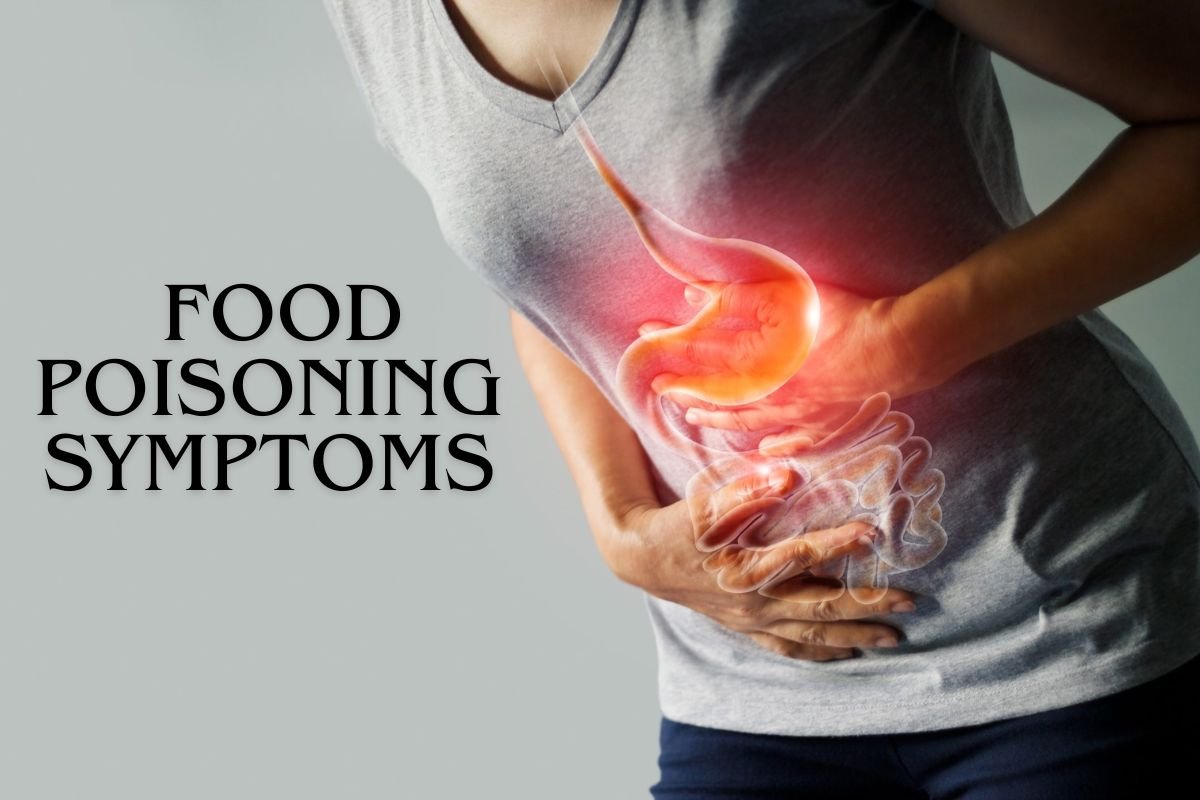
Have you developed stomach cramps, nausea, vomiting, diarrhea, or fever after eating something? These could be early food poisoning symptoms, particularly if the food or water was contaminated. According to the CDC, Salmonella infection can cause symptoms within 6 hours to 6 days after exposure, while Staphylococcus aureus can trigger symptoms within 30 minutes to 8 hours. Food poisoning occurs when you consume food or water carrying harmful bacteria, viruses, or toxins. Symptoms vary from person to person depending on age, immunity, and how much you consumed.
This guide covers common food poisoning symptoms, typical timelines, how to tell them apart from stomach flu, and when to seek medical attention.
Food Poisoning Symptoms and Their Early Warning Signs
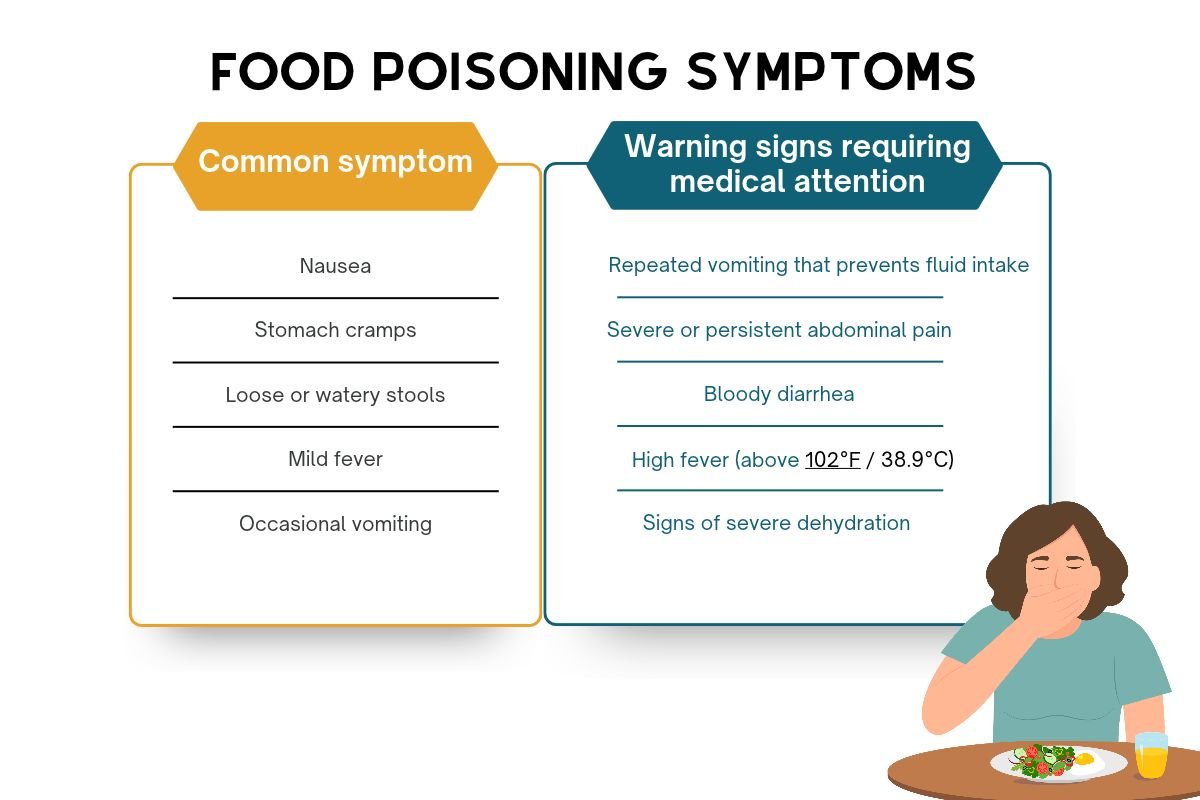
The most common food poisoning symptoms include diarrhea, stomach cramps, nausea, vomiting, and fever. Some people may also experience headaches, weakness, or dizziness.
These symptoms vary with the organism responsible, so not everyone has the same signs or timing. Early symptoms may begin with nausea, stomach discomfort, or cramps before diarrhea or vomiting develops, but this sequence does not happen for everyone.
| Common symptoms | Warning signs requiring medical attention |
| Nausea | Repeated vomiting that prevents fluid intake |
| Stomach cramps | Severe or persistent abdominal pain |
| Loose or watery stools | Bloody diarrhea |
| Mild fever | High fever (above 102°F / 38.9°C) |
| Occasional vomiting | Signs of severe dehydration |
Dehydration can cause a dry mouth, reduced urination, dizziness when standing, and unusual weakness. Seek prompt medical care for these signs, especially in young children, older adults, pregnant people, or anyone unable to keep fluids down.
Unusual neurological symptoms, such as blurred vision, tingling, or muscle weakness. Certain foodborne toxins can cause these symptoms and require urgent medical assessment.
Also Read: Foodborne Illness: Causes, Symptoms, Prevention, and Treatment
How Soon Do Food Poisoning Symptoms Start and How Long Do They Last?
Food poisoning symptoms can begin within 30 minutes to several days after consuming contaminated food. Recovery may take a few hours to several days, depending on the cause and severity.
They do not always point to the most recent meal. Different organisms have different incubation periods, the time between eating contaminated food and becoming ill. So, the responsible food may have been eaten hours or even days earlier.
| Organism | Typical symptom onset |
| Staphylococcus aureus | 1–6 hours |
| Clostridium perfringens | 6–24 hours |
| Norovirus | 12–48 hours |
| Salmonella | 6 hours–6 days |
| Campylobacter | 2–5 days |
Some infections resolve quickly because they involve preformed toxins, while infections that multiply in the gut, such as Salmonella or Campylobacter, may last longer and sometimes need medical care.
These are typical incubation periods, not a way to diagnose the organism or predict an individual’s recovery time.
What Causes Food Poisoning?

Food poisoning occurs when someone consumes food or water contaminated with harmful bacteria, viruses, parasites, or toxins. Food Poisoning Symptoms usually develop after these contaminants enter the digestive system through unsafe food or drink.
- Bacteria: Salmonella and some E. coli strains can contaminate undercooked poultry, meat, eggs, or untreated water.
- Viruses: Norovirus can spread through contaminated food or water, or through contact with an infected person.
- Parasites and toxins: Parasites may come from undercooked meat or seafood, while toxins can form when food is stored improperly.
- Common contamination routes: Undercooked food, unsafe drinking water, poor hand hygiene, improper refrigeration, and cross-contamination.
To reduce contamination risks, follow the food safety practices recommended by FSSAI. Keep raw and cooked foods separate, use different chopping boards for raw meat and ready-to-eat foods, cook food thoroughly, and refrigerate perishable items properly. These precautions help prevent cross-contamination and the growth of harmful microorganisms.
Food Poisoning vs. Stomach Flu
Food poisoning and stomach flu can cause similar digestive symptoms, but their causes, exposure routes, and typical timelines can differ. Food Poisoning Symptoms alone cannot reliably tell the two apart.
| Factor | Food poisoning | Stomach flu |
| Cause | Contaminated food or water | Usually a viral infection |
| Symptoms | Diarrhea, cramps, nausea, vomiting, fever | Diarrhea, cramps, nausea, vomiting, fever |
| Onset | Minutes to days, depending on cause | Often 1–3 days after exposure, depending on the virus |
| Duration | Varies from hours to days or longer | Often several days |
| Contagiousness | Depends on the organism | Often contagious |
Norovirus can cause foodborne illness and also spread easily from person to person through contact with vomit or stool. Therefore, someone can have “food poisoning” and “stomach flu” at the same time, and timing alone cannot confirm the cause.
Also Read: When Your Stomach Says “Keep It Simple,” Try These Easy to Digest Foods
When Should You See a Doctor for Food Poisoning Symptoms?

Seek medical attention if you experience bloody diarrhea, persistent vomiting, severe dehydration, a high fever, or symptoms that do not improve. Food Poisoning Symptoms can sometimes signal a more serious infection or complication.
- Bloody diarrhea, or diarrhea lasting more than three days.
- Fever above 102°F (38.9°C).
- Frequent vomiting that prevents you from keeping fluids down.
- Dehydration signs: reduced urination, dry mouth, dizziness, or confusion.
- Severe abdominal pain or neurological symptoms.
Neurological symptoms such as blurred vision, difficulty swallowing, or muscle weakness need urgent medical assessment.
Infants and young children, adults over 65, pregnant people, and individuals with weakened immune systems may develop complications more easily. They should seek medical advice promptly if symptoms develop or worsen.
Routine consultation is appropriate for persistent or concerning symptoms; emergency warning signs, including severe dehydration, confusion, severe pain, or neurological symptoms, require immediate care.
Also Read: How to Stop Loose Motions Instantly Using Natural Solutions?
Conclusion:
Most cases of food poisoning clear up within a few days, but knowing what to look for makes all the difference. Food poisoning symptoms like nausea, cramps, vomiting, and diarrhea can start within hours or take days to appear, depending on the cause. Watch for warning signs such as bloody diarrhea, a fever above 102°F, or dehydration that doesn’t improve, and don’t wait to get medical help if they appear. Children, older adults, and pregnant people should be extra cautious. The next time something you eat doesn’t sit right, stay hydrated and monitor how you feel. If symptoms worsen, consult a doctor.
FAQ:
1. Can food poisoning symptoms start within 30 minutes of eating?
Yes. Certain toxin-producing bacteria, such as Staphylococcus aureus, can cause symptoms within 30 minutes to 8 hours.
2. Can food poisoning cause symptoms two or three days later?
Yes. Some infections, including Salmonella and Campylobacter, can take several days to cause symptoms.
3. Can you have food poisoning without vomiting?
Yes. Food poisoning does not always cause vomiting. Some people experience diarrhea, abdominal cramps, or fever without vomiting.