Medical education requires learners to develop accuracy, confidence, and sound judgment long before they encounter real patients. As healthcare practices become more complex, training methods must offer safe and effective ways to prepare students for clinical responsibilities. Virtual reality has emerged as a modern instructional approach that supports skill development through realistic simulation. By allowing repeated practice in controlled settings, it helps learners translate medical knowledge into clinical action while maintaining patient safety and educational consistency.
What Virtual Reality Means for Medical Training
Virtual reality in medical training is a simulation-based learning method that places users inside a fully computer-generated clinical environment. Through the use of head-mounted displays and interactive tools, learners can examine virtual patients, perform procedures, and respond to clinical situations as they would in real settings.
These simulations are designed to reflect authentic medical conditions, workflows, and decision-making processes. VR enables hands-on practice without physical risk, allowing learners to refine technical skills, clinical reasoning, and situational awareness through repetition and guided feedback within a structured virtual setting.
The First Steps of Virtual Reality in Medical Training
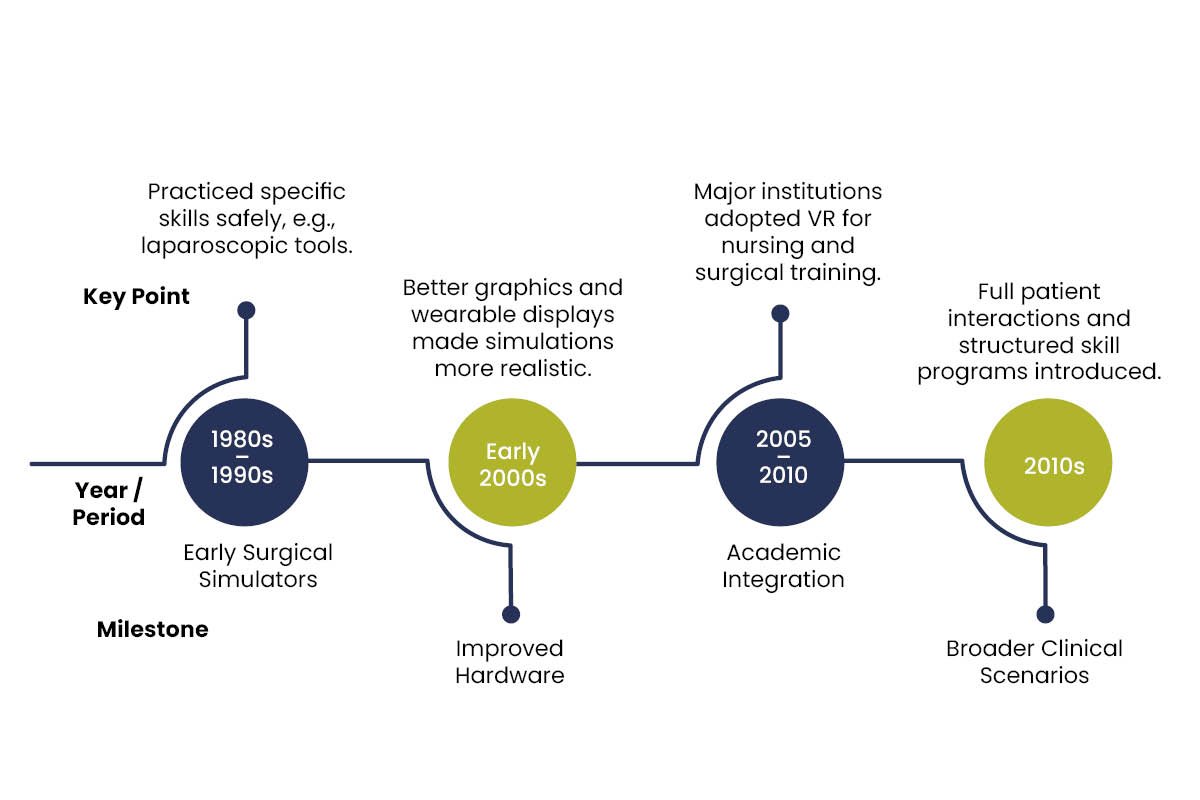
Medical VR began with targeted surgical simulators and gradually expanded into broader clinical scenarios. Key milestones highlight how technological improvements and academic adoption shaped its early use:
| Year / Period | Milestone | Key Point |
| 1980s–1990s | Early Surgical Simulators | Practiced specific skills safely, e.g., laparoscopic tools. |
| Early 2000s | Improved Hardware | Better graphics and wearable displays made simulations more realistic. |
| 2005–2010 | Academic Integration | Major institutions adopted VR for nursing and surgical training. |
| 2010s | Broader Clinical Scenarios | Full patient interactions and structured skill programs introduced. |
This format makes the evolution of VR in medical education clear and easy to scan while connecting smoothly to the previous section on its practical use.
What Makes Virtual Reality a Valuable Training Tool
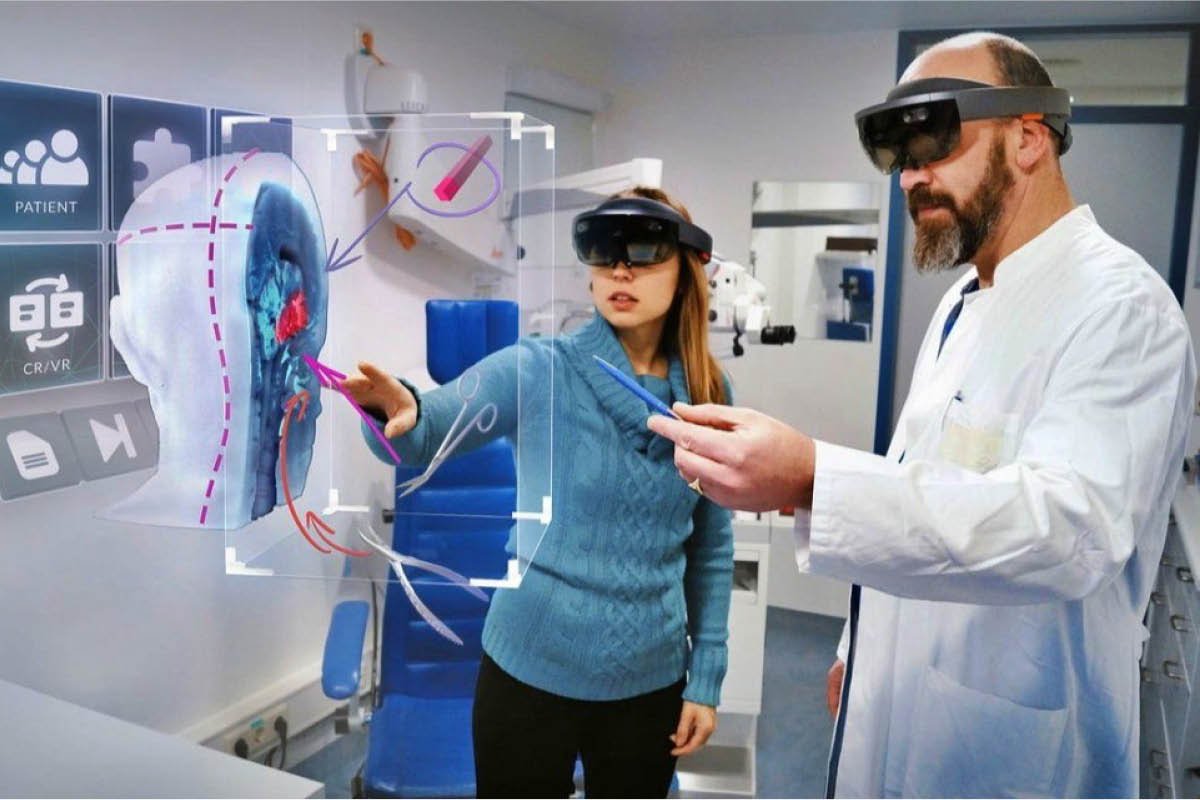
Virtual reality plays a meaningful role in preparing medical learners for real clinical responsibilities. It supports practical understanding by placing users inside realistic care situations where decisions carry visible outcomes. This approach encourages active participation and thoughtful practice, helping learners gain confidence through experience rather than observation alone.
1. Immersive experiential learning
Learners engage directly with clinical situations, allowing medical concepts to be understood through action and situational awareness rather than passive study.
2. Safe environment for high-risk practice
Clinical errors can be explored and corrected without patient harm, giving learners the freedom to practice complex procedures with accountability and reflection.
3. Scalable and repeatable training
Training scenarios can be practiced repeatedly without physical limitations, allowing consistent skill development at an individual pace.
As these benefits take shape in real learning environments, attention turns toward the concrete results that virtual reality has delivered within medical education.
Measurable Outcomes of Virtual Reality Training
Over the years of application in medical education, virtual reality has produced clear and observable outcomes. Its use has expanded across disciplines, showing measurable improvements in how learners train, practice, and prepare for patient care.
1) Clinical learning outcomes:
Research spanning more than two decades shows improved knowledge retention, procedural accuracy, and clinical judgment among learners trained through VR. Increased confidence and technical precision are consistently reported.
2) Surgical and procedural training:
VR supports hands-on practice for procedures such as fracture management and complex surgical tasks, allowing learners to receive immediate feedback without patient involvement.
3) Communication and soft skills:
Simulated patient interactions help learners practice sensitive conversations and bedside behavior where tone, timing, and response matter.
4) Training consistency:
Embedded protocols ensure uniform instruction, helping institutions maintain consistent competency standards across programs.
These outcomes highlight a shift toward broader use, leading naturally to questions about limitations and future considerations in medical training.
Addressing Barriers in Virtual Reality Adoption
Despite its progress, virtual reality faces practical barriers within medical education. High initial costs and technical requirements once limited access, though shared platforms and institutional partnerships now reduce financial pressure through reusable content. Curriculum alignment presents another challenge, as VR must support established training goals rather than function in isolation.
Many programs address this by placing VR modules alongside labs and clinical rotations. Faculty readiness also affects adoption, since unfamiliar tools can slow acceptance. Targeted training and performance data help demonstrate educational value. VR also has limits, performing better in complex scenarios than in basic tactile skills, which encourages blended training approaches.
What Research Reveals About VR Effectiveness
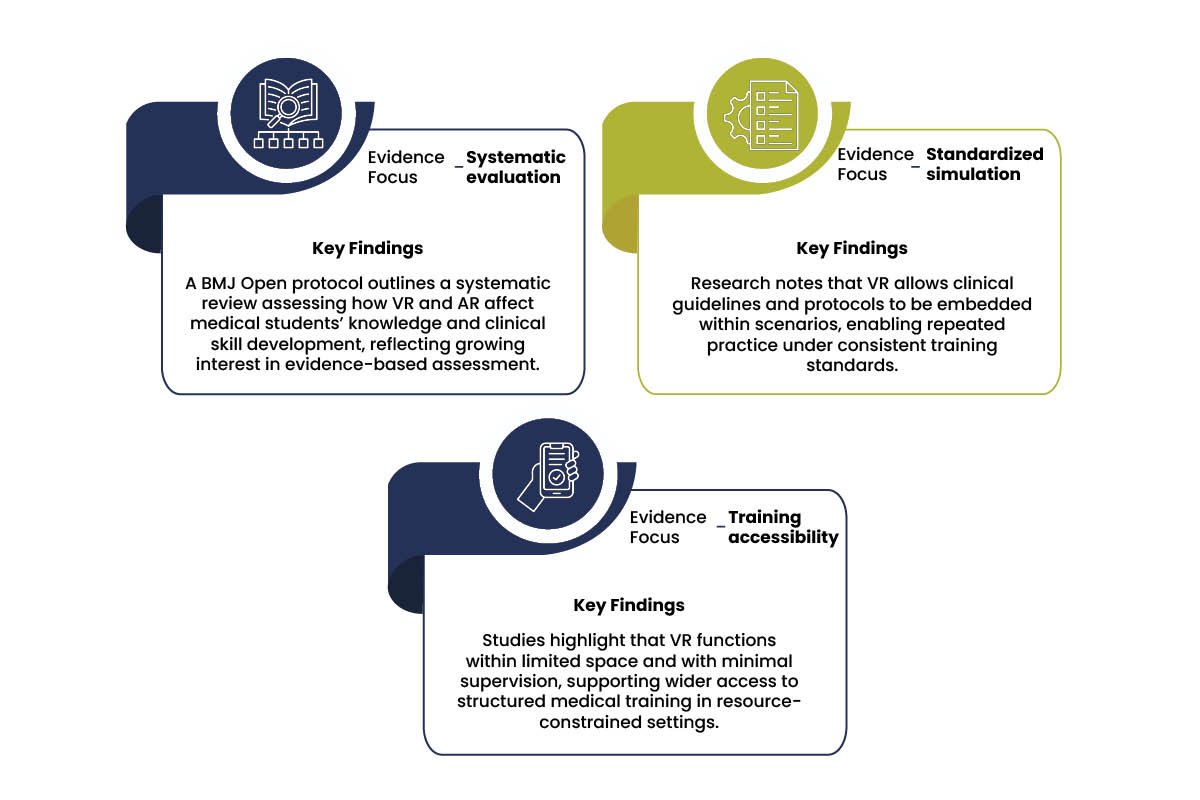
Research literature provides structured support for the educational value of virtual reality in medical training. Peer-reviewed studies and systematic reviews examine its role in knowledge acquisition, skill accuracy, and training consistency. The findings below summarize how published evidence frames the contribution of VR to medical education.
| Evidence Focus | Key Findings |
| Systematic evaluation | A BMJ Open protocol outlines a systematic review assessing how VR and AR affect medical students’ knowledge and clinical skill development, reflecting growing interest in evidence-based assessment. |
| Standardized simulation | Research notes that VR allows clinical guidelines and protocols to be embedded within scenarios, enabling repeated practice under consistent training standards. |
| Training accessibility | Studies highlight that VR functions within limited space and with minimal supervision, supporting wider access to structured medical training in resource-constrained settings. |
The research highlights VR’s tangible effects on learning, demonstrating its potential to reshape how medical training is delivered.
Practical Impact of VR on Clinical Readiness
Virtual reality is redefining how medical learners prepare for clinical practice. It allows rehearsal of emergency responses, surgical steps, and critical decision-making in immersive scenarios that traditional training cannot replicate. Students gain exposure to rare or complex cases they might never encounter in real life, bridging important learning gaps.
Networked VR sessions enable learners from different locations to collaborate, enhancing teamwork and interprofessional understanding. Built-in assessment tools track accuracy, decision speed, and progress, giving educators clear insight into performance. These capabilities make VR a powerful method for improving readiness, confidence, and measurable outcomes in modern medical training.
These real-world applications highlight VR’s potential, opening the way to explore how it may shape the future of medical training.
What’s Next? Future of VR in Medical Training
Virtual reality is poised to transform medical education with immersive, adaptive, and widely accessible experiences. AI will create virtual patients that adjust to learner performance, while haptic feedback adds realistic touch and resistance. Remote VR sessions enable global collaboration, and platforms increasingly support assessment and credentialing.
Daily, repeated practice promotes consistent skill development. By integrating technical, cognitive, and communication training, VR offers a holistic learning model and expands equitable access to medical education worldwide.
Core Takeaways:
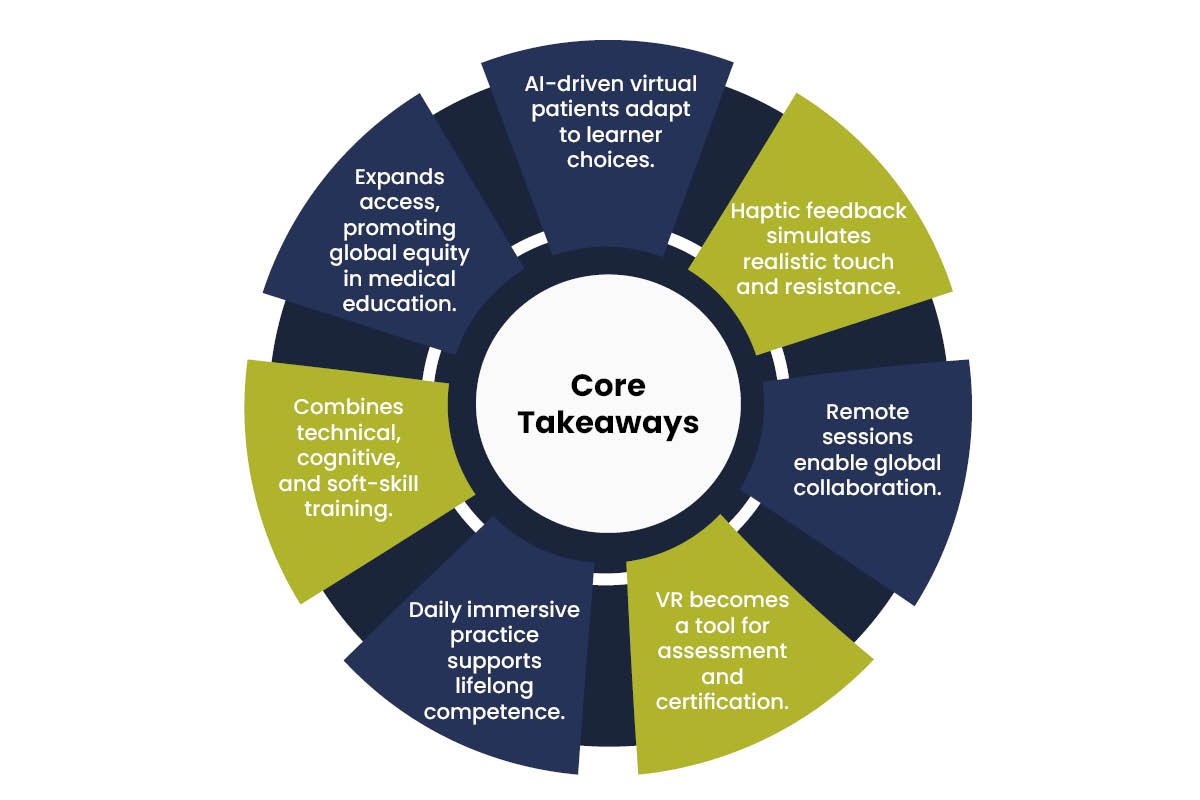
- AI-driven virtual patients adapt to learner choices.
- Haptic feedback simulates realistic touch and resistance.
- Remote sessions enable global collaboration.
- VR becomes a tool for assessment and certification.
- Daily immersive practice supports lifelong competence.
- Combines technical, cognitive, and soft-skill training.
- Expands access, promoting global equity in medical education.
Conclusion
Virtual reality has become a practical and impactful tool in medical training, offering immersive, safe, and repeatable experiences that enhance technical skills, clinical judgment, and communication. By combining realistic scenarios with assessment and global accessibility, VR bridges gaps in exposure and prepares learners for real-world challenges. Its continued development promises more personalized, collaborative, and equitable training, marking a significant step toward the future of medical education.
Visit Healthcare 360 Magazine For The Most Recent Information.