Key Takeaway:
- Daraxonrasib FDA approval follows a phase 3 trial for previously treated metastatic pancreatic cancer.
- FDA approved the drug in August 2026, marking a major step in targeting RAS-driven cancers.
- Researchers are now focused on reducing side effects, delaying resistance, and improving survival.
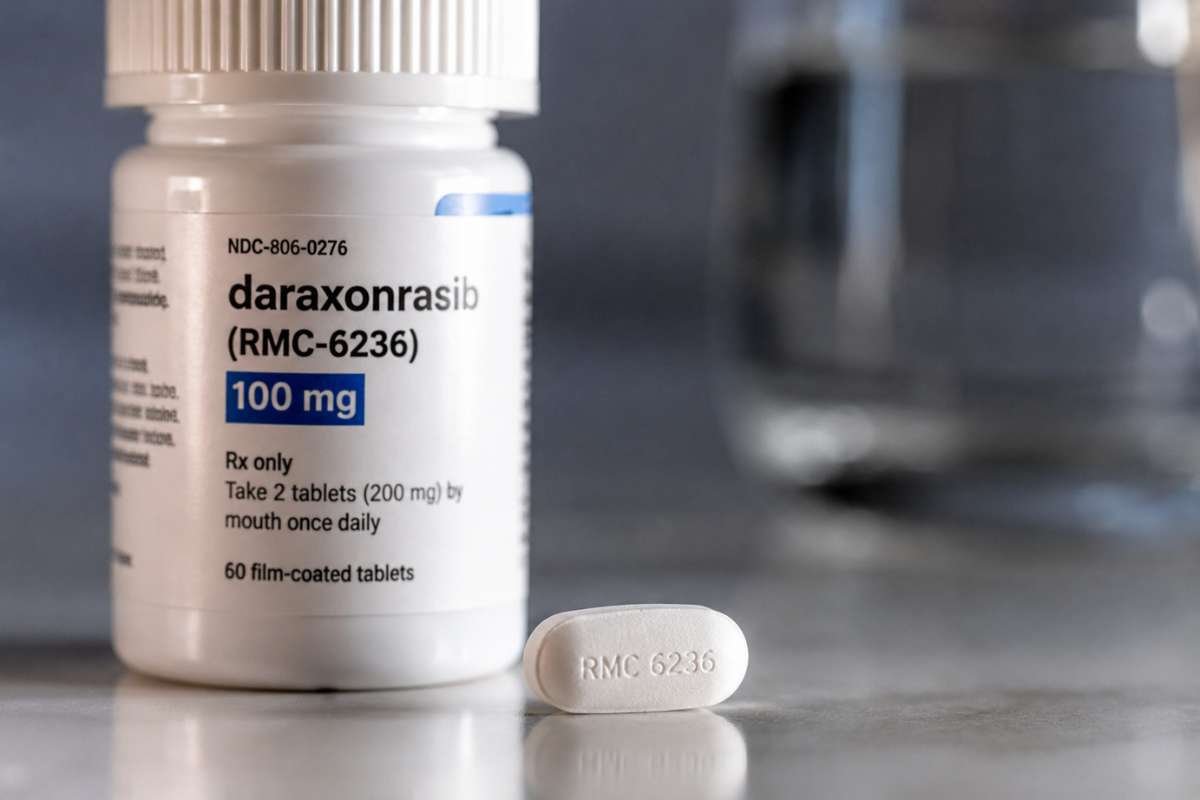
The FDA approved daraxonrasib in August for metastatic pancreatic cancer after a phase 3 trial found patients lived nearly twice as long as those receiving chemotherapy.
Researchers Finally Target KRAS
The daraxonrasib FDA approval marks a major development in efforts to target RAS, a family of proteins that regulate cell growth. Mutations in KRAS occur in more than 90% of pancreatic cancers, making the protein a longstanding focus of cancer researchers.
Pancreatic cancer remains difficult to detect and treat, with an overall five-year relative survival rate of 13%. Tumors often spread before diagnosis, while the disease has historically responded poorly to several available treatments.
Geneticist Channing Der helped identify RAS genes as human cancer genes in the early 1980s while studying how cancer cells transform normal cells. The discovery opened a new area of research but also exposed the difficulty of targeting RAS with drugs.
“This marked the very first identification of human cancer genes,” said Der, now a professor of pharmacology at the University of North Carolina at Chapel Hill.
For decades, scientists struggled because KRAS lacks an obvious pocket where conventional drugs could attach. Multiple attempts failed in laboratory and clinical testing, leading some companies and researchers to abandon RAS programs.
Scientists Turn ‘Undruggable’ Into A Target
A breakthrough came in 2013, when chemist Kevan Shokat and colleagues identified a hidden pocket in the KRAS G12C mutation and showed that a molecule could bind to it.
The discovery did not immediately produce a successful drug, but it demonstrated that KRAS could be targeted. It also helped accelerate investment and research into RAS-directed treatments.
“It’s like Mount Everest. It’s sitting there. Everybody knows that you have to climb it,” said Shokat, a professor at the University of California San Francisco and academic co-founder of Revolution Medicines, which developed daraxonrasib.
The FDA later approved sotorasib and adagrasib for certain patients with KRAS G12C-mutated non-small cell lung cancer. But that mutation is uncommon in pancreatic cancer, requiring researchers to develop another strategy.
Daraxonrasib takes a different approach following the daraxonrasib FDA approval. It binds to a chaperone protein and then attaches to RAS, triggering a reaction that can switch the cancer-driving protein from its active state.
In a phase 3 trial involving 500 patients with metastatic pancreatic cancer who had received at least one previous chemotherapy treatment, those taking daraxonrasib had a median overall survival of 13.2 months, compared with 6.7 months for those receiving chemotherapy.
Approval Brings Hope And New Questions
Pancreatic cancer specialist Brian Wolpin presented the trial results at the American Society of Clinical Oncology meeting in Chicago in May. The survival findings prompted an emotional response from researchers and physicians in the audience.
Wolpin said the results were especially meaningful because many pancreatic cancer patients he treated over two decades had died from the disease.
“I’ve taken care of a lot of people with pancreatic cancer over the past 20 years, and the vast majority of them are not alive,” Wolpin said. “It’s a hard disease.”
Daraxonrasib also kept cancer under control longer and improved quality of life compared with chemotherapy. However, patients experienced side effects including severe rash and mouth sores.
The drug is not a cure, Wolpin said, and researchers are studying how to reduce side effects, prevent resistance and improve survival.
The FDA approval has also renewed attention on the decades of publicly funded basic research that helped scientists understand RAS biology. Kimryn Rathmell, former director of the National Cancer Institute, said sustained investment was critical to moving RAS research into drug development.
“If any one of those pieces was lost in the funding ecosystem, we would not be where we are today,” Wolpin said.
Researchers now hope lessons from the daraxonrasib FDA approval can lead to more effective RAS-targeting drugs. At least 79 RAS-targeting drugs are reportedly being tested in 238 clinical trials worldwide.
Visit Healthcare 360 Magazine For The Most Recent Information.